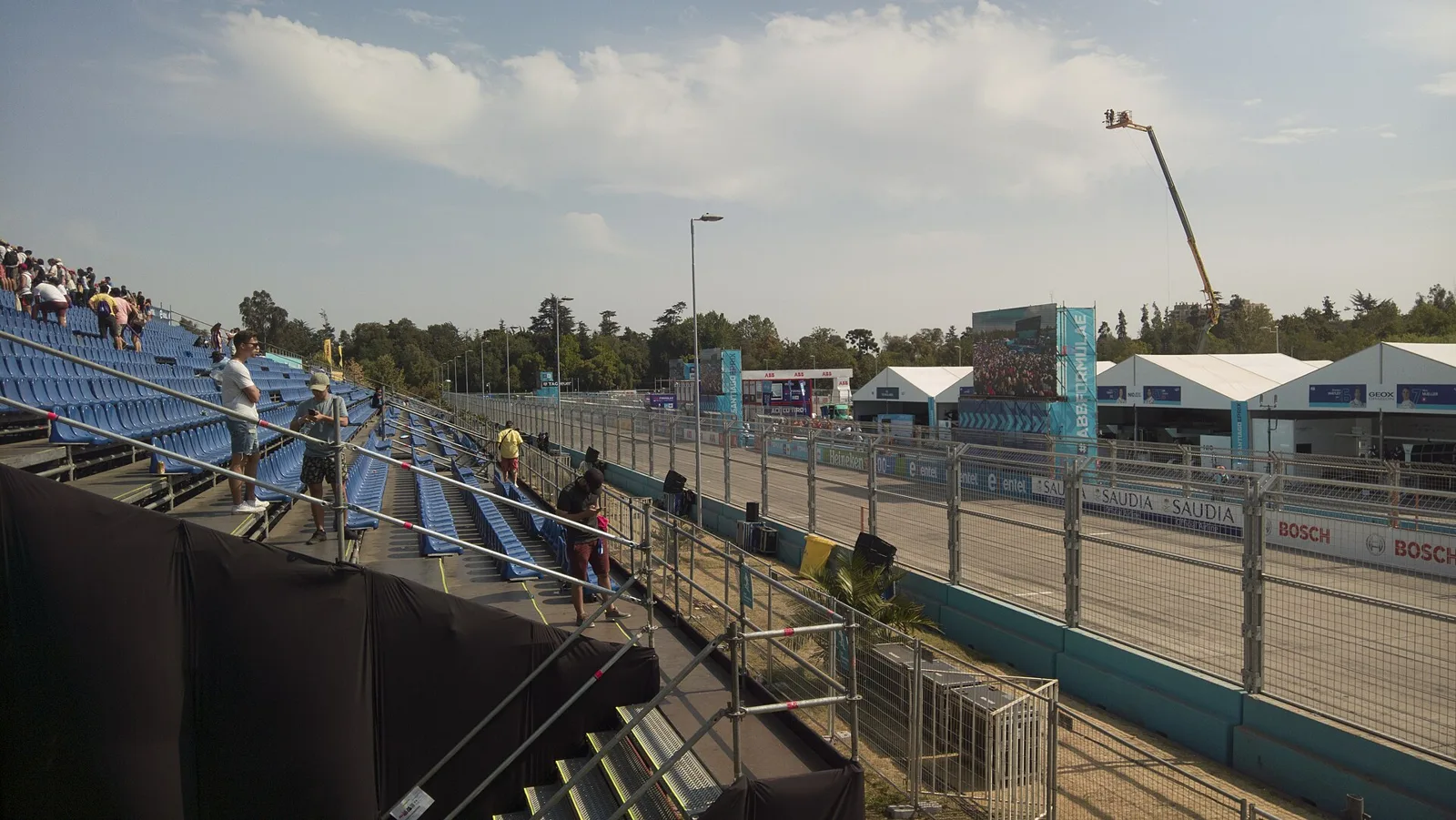
A rebuilt circuit, a protest-hit calendar and a last-lap pass that gave Maximilian Gunther his first Formula E win at Parque O'Higgins.
Maximilian Gunther won the 2020 Santiago ePrix from second on the grid, edging Antonio Felix da Costa by just over two seconds seconds. Mitch Evans, the pole sitter, finished third and Stoffel Vandoorne moved to the top of the drivers' standings.
The 2020 Santiago ePrix was the third stop of the 2019-20 Formula E season, the third time the event had run, held on 18 January 2020 at the Parque O'Higgins Circuit in Santiago, Chile. Maximilian Gunther won for BMW i Andretti Motorsport, becoming the youngest race winner in the championship's history. The victory also reshuffled the drivers' table, with Stoffel Vandoorne moving to the top.
Who won the 2020 Santiago ePrix?
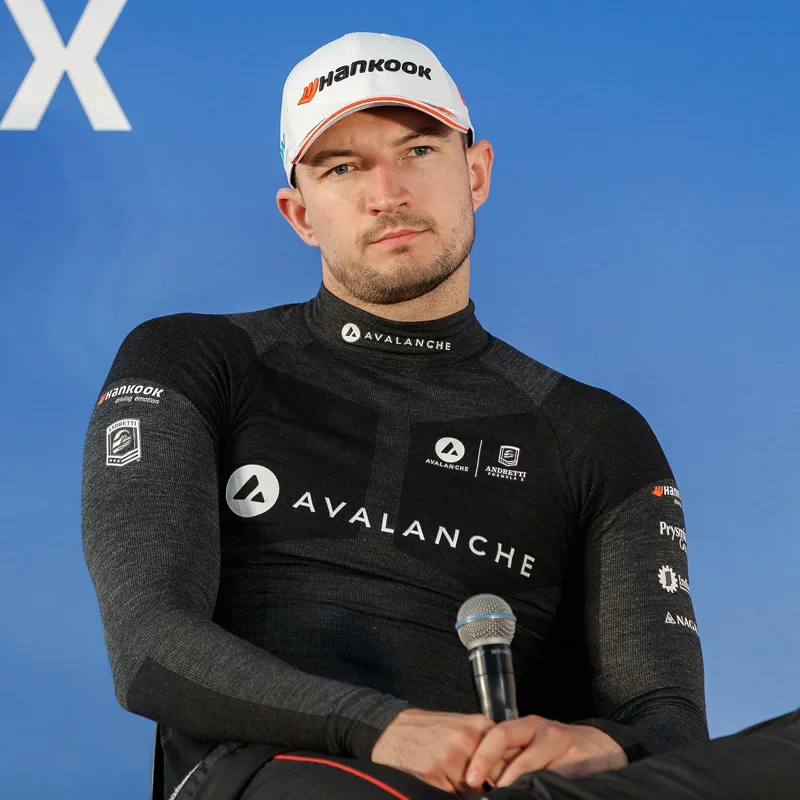
Maximilian Gunther won the race from second on the grid, finishing just over two seconds ahead of Antonio Felix da Costa at the flag. Mitch Evans, who had taken pole, finished third. The win was Gunther's first in Formula E, and at his age it made him the youngest winner the series had produced.
Gunther's victory came after a long fight at the front. He lost ground at the start, when Pascal Wehrlein forced his way past him at the tight approach to turn two, but he recovered through the middle stage of the race. Attack Mode, the power boost that drivers had to activate in a designated zone, was the tool he used to make his moves.
A last-lap pass at turn nine gave Maximilian Gunther a win by just over two seconds and the youngest winner's record in Formula E.
When and where was the race held?
On 18 January 2020 the event ran on the Parque O'Higgins layout in Santiago. It came third in the 2019-20 season and was the event's third running. The date came from a finalised calendar that was announced on 5 October 2019.
The provisional calendar had been announced on 15 June 2019, with 14 races across 12 cities. Santiago had first been planned as the fourth round, but the finalised calendar moved it up to round three. A December round to be decided later was cancelled as part of the update.
Did the protests in Chile threaten the event?
Concerns grew in November 2019, when protests in Chile led to postponed football fixtures and the cancellation of the APEC and COP25 summits planned for the city. The Copa Libertadores final had been relocated to Lima, and Rally Chile was called off. Formula E launched the event on 13 November, although the race was privately funded and did not rely on government money.
Formula E said it would keep monitoring the situation, and it reaffirmed its commitment to racing in the city. The decision reflected the view that the race could be run safely, and the series continued with its plans for the season.
What changed on the Parque O'Higgins circuit?
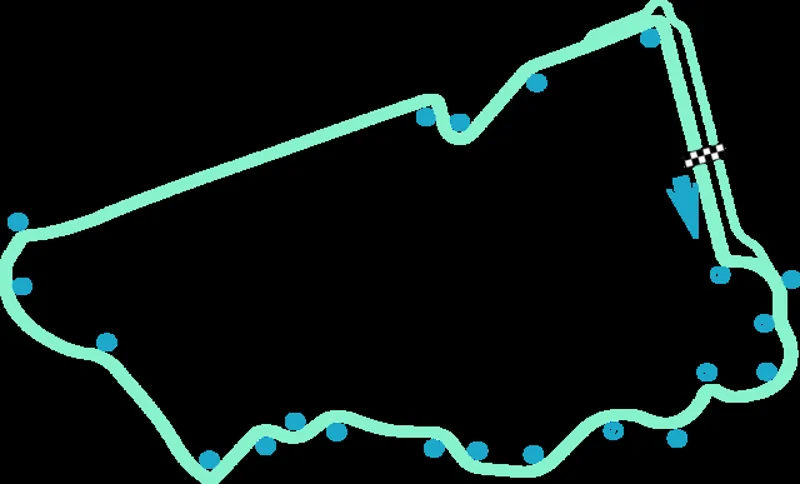
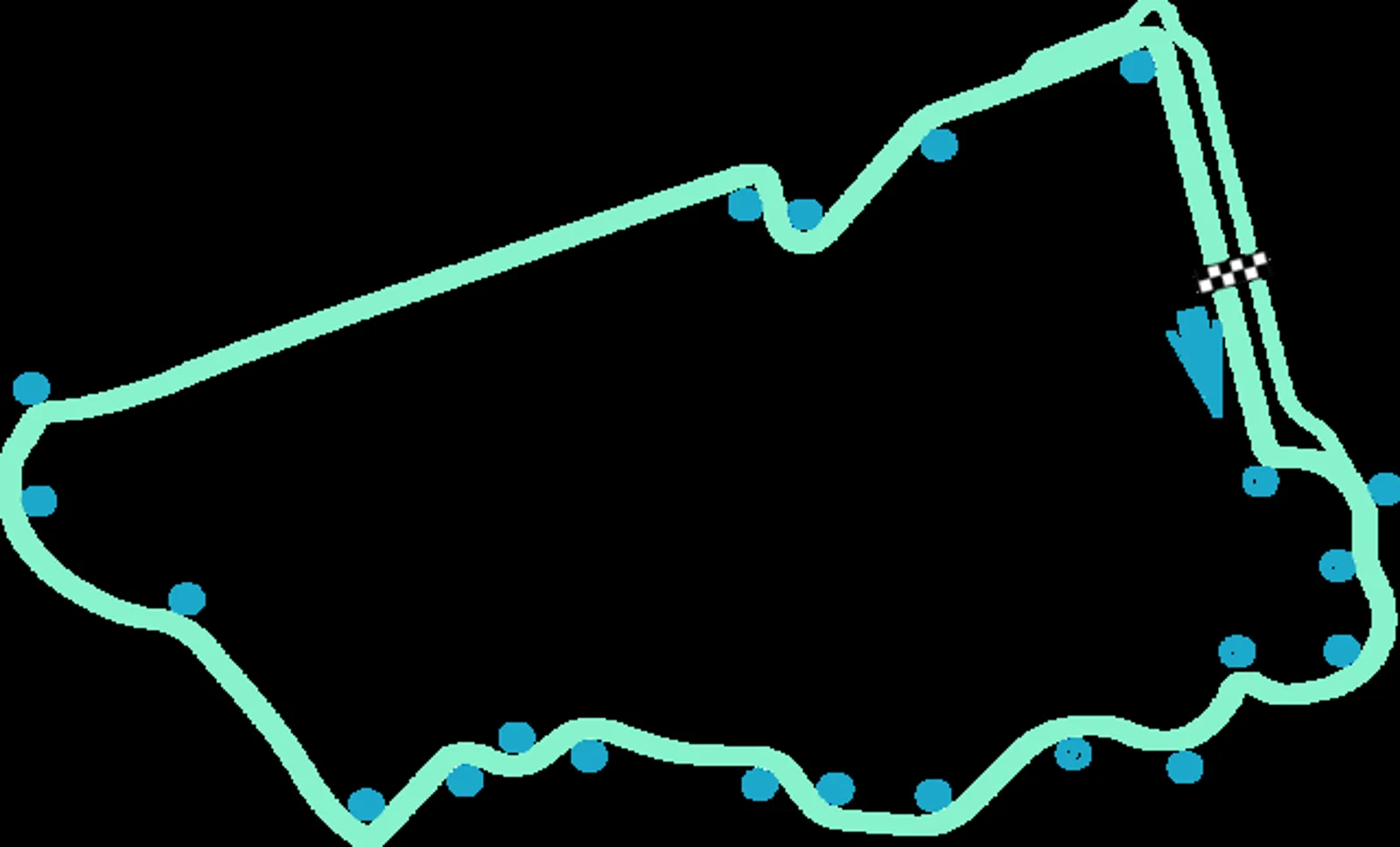
Several changes were made to the track before the race. The chicane on the curving back straight was removed, and the pits were relocated to the inside of the layout. The former first corner, a sweeping right-hander, was modified, and a new left-hander was added ahead of it to slow the approach.
The final sector also changed, with the zig-zag section reversed compared with the previous year. Formula E was trying to cut the number of chicanes across its calendar after the 2019 Swiss ePrix, where a pile-up at the first corner blocked the track and caused a long red flag period.
Who took pole for the Santiago race?
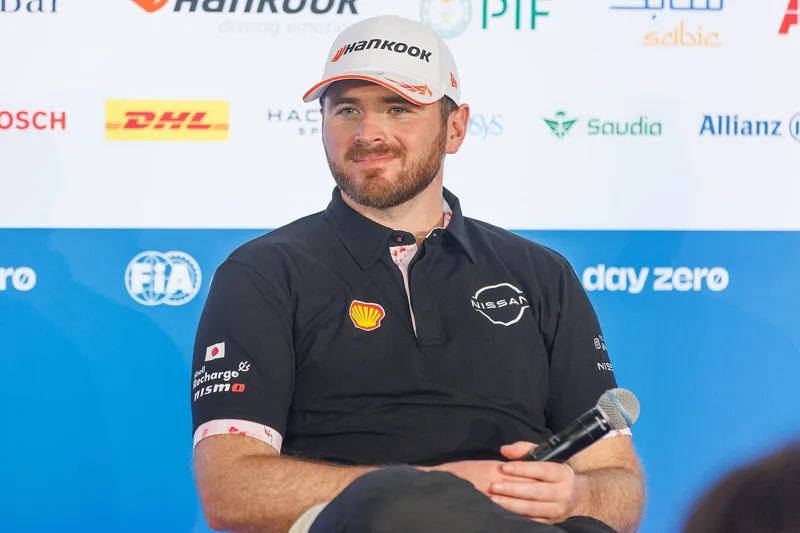
Mitch Evans took pole, the second pole for Jaguar Racing in the championship. He topped the timesheets in both qualifying groups and in the Superpole shootout, and he beat Maximilian Gunther by nearly three tenths of a second. His final sector was the quickest on the circuit by a clear margin, which was impressive given that he had been the last driver to leave the pits.
Gunther had been on course for his first pole, because he was fastest in the first two sectors and headed Pascal Wehrlein on provisional pole by nearly six tenths. The Mahindra driver had gone out first for his Superpole lap, and he posted a time slower than his group effort. Edoardo Mortara was fastest in group two but qualified seventh overall, and Felipe Massa came fourth in Superpole.
Further back, Sebastien Buemi finished sixth in the shootout after two slow sectors, and Jean-Eric Vergne qualified eleventh, more than a second behind his teammate. Robin Frijns spun on his flying lap in group two, which cost him time. Ma Qinghua crashed in the second practice session and could not take part in qualifying, so he was allowed to start from the rear of the field.
How did the race unfold?
Evans held the lead off the line, but Wehrlein passed Gunther at turn two in the early moves. The race then went quiet until Alexander Sims stopped on track around the 40th minute. A full-course yellow followed, and it was lifted around the 37th minute of the race clock, once the stewards had removed his car.
Within one lap of the restart, Oliver Rowland clipped Sam Bird, breaking the front wing and sending Bird spinning. Rowland pitted to replace the wing. Gunther then used Attack Mode to move past Edoardo Mortara into third, and he also took the power boost to pass Wehrlein for second.
The battle between the two Venturi drivers changed the order behind the leaders. Mortara lunged at Felipe Massa at turn ten and put him into the wall, which dropped Massa to seventh. Jean-Eric Vergne moved into fifth, but his front wing broke with seven minutes to go and he had to pit.
At the front, Gunther passed Evans on the approach to turn nine for the lead. Antonio Felix da Costa then passed Evans at turn eight and set about catching Gunther. At the turn-ten hairpin Da Costa forced Gunther wide and took the lead, but Gunther was nursing battery temperatures and kept the pressure on.
On the last lap Gunther came back at turn nine and pulled away from Da Costa, winning by just over two seconds. It was a result that depended on energy management as much as outright pace, and the late move underlined how close the two cars had been.
How did the result change the championship?
Alexander Sims retired with collision damage and dropped to second in the drivers' standings on 35 points, which allowed Stoffel Vandoorne to move to the top with 38 points. Sam Bird finished tenth, picked up a fastest-lap point and stayed third on 28 points. Gunther's win moved him to fourth on 25 points.
Lucas di Grassi recovered from 22nd on the grid to finish seventh, which netted six points and kept him fifth on 24 points. The teams' table saw BMW i Andretti Motorsport lead with 60 points, ahead of Mercedes-Benz EQ on 56, Envision Virgin Racing on 38, Audi Sport Abt Schaeffler on 32 and Panasonic Jaguar Racing on 31.
| Position | Driver and team | Note |
|---|---|---|
| 1st | Maximilian Gunther, BMW i Andretti | From 2nd on the grid, just over two seconds seconds clear |
| 2nd | Antonio Felix da Costa, DS Techeetah | Lost the lead on the final lap |
| 3rd | Mitch Evans, Panasonic Jaguar | Pole sitter, finished on the podium |
| 4th | Pascal Wehrlein, Mahindra | Moved up after a penalty to a rival |
Were there penalties in Santiago?
Several drivers were penalised. Nyck de Vries lost five seconds because his coolant temperature fell below the required minimum, and that cost him his first podium. Nico Muller was hit with ten extra seconds after causing a collision, and Sebastien Buemi and Jerome d'Ambrosio each picked up a 30-second time penalty linked to the throttle pedal map.
The most significant ruling was the disqualification of Andre Lotterer, whose car ran at 230.51 kW against a 200 kW ceiling. Lotterer's result was removed, and it was one of several technical issues that shaped the classification of the race.