A rain-hit weekend in Riyadh, a first pole for Antonio Felix da Costa and a 0.462-second win that gave BMW its first Formula E victory as a manufacturer.
Antonio Felix da Costa won the 2018 Ad Diriyah ePrix from pole for Andretti BMW, beating Jean-Eric Vergne by 0.462 seconds. Jerome d'Ambrosio was third for Mahindra in the first round of the season.
The 2018 SAUDIA Ad Diriyah E-Prix was the first round of the 2018-19 Formula E Championship and the first Formula E race held in the Middle East. Antonio Felix da Costa won the 33-lap race from pole for Andretti, with Jean-Eric Vergne second for Techeetah and Jerome d'Ambrosio third for Mahindra, in front of a crowd of about 23,000. The win was BMW's first as a Formula E manufacturer.
When and where was the 2018 Ad Diriyah ePrix held?
The race took place on 15 December 2018 on the Riyadh Street Circuit in Diriyah, north-west of the Saudi capital. The event was the inaugural Ad Diriyah ePrix, and it was the first time the championship had raced in the Middle East. The date followed an announcement on 17 May 2018, when the series said it would race in the kingdom's capital.
A 10-year contract had been signed by the General Sports Authority and the Saudi Arabian Motor Federation, and it made the round the season-opening race. The race was part of the Saudi Vision 2030 plan to diversify the economy away from oil and into public service sectors. Riyadh had also hosted the Race of Champions earlier that year.
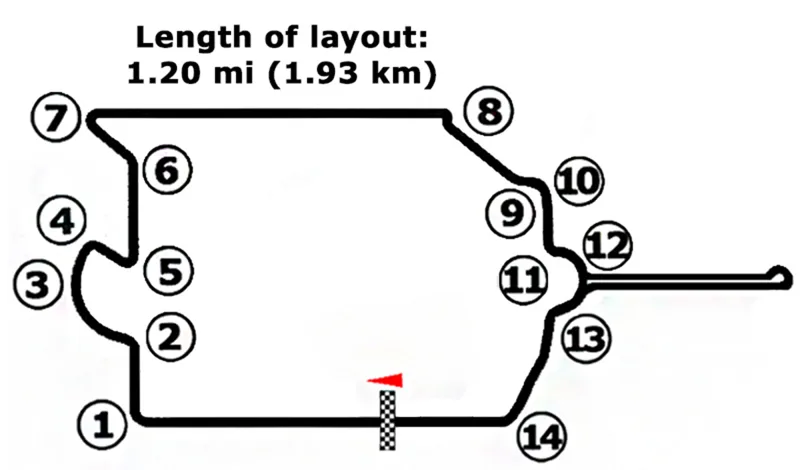
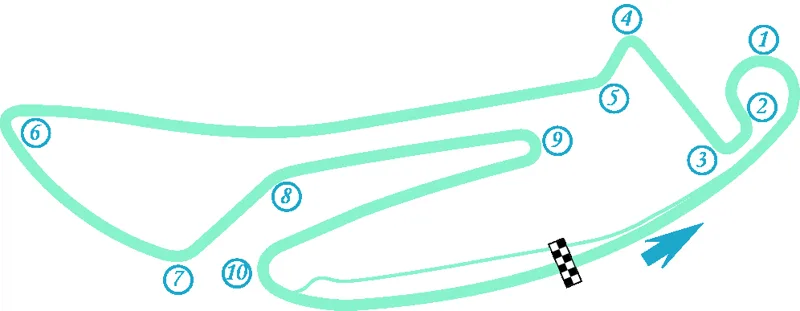
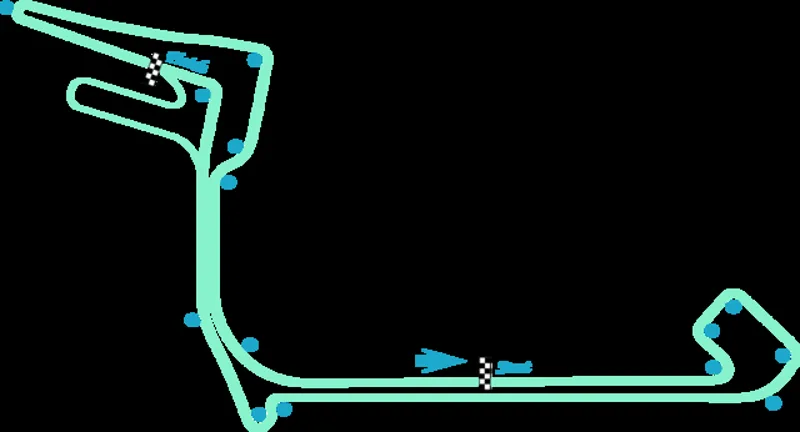
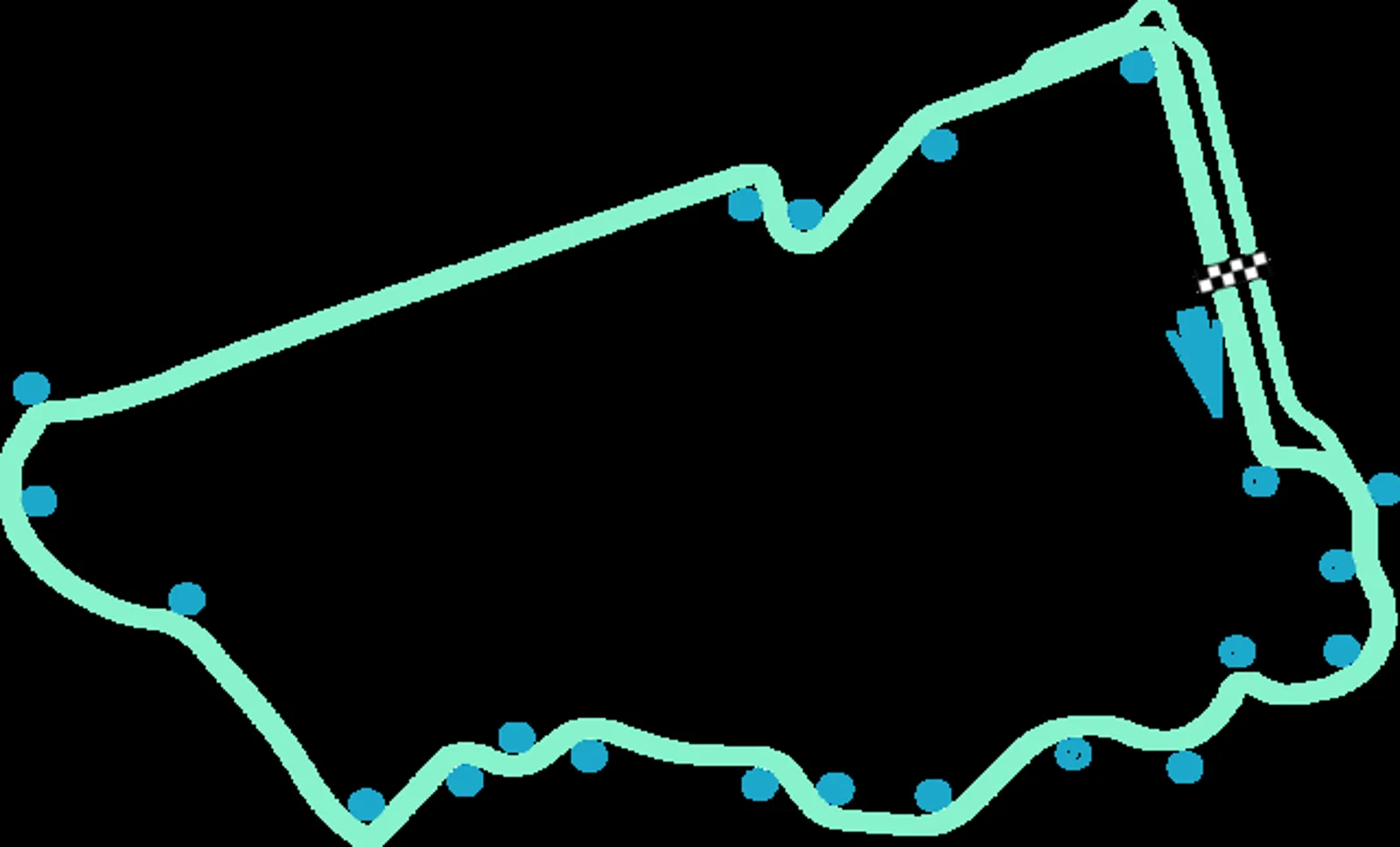
The 21-turn circuit was unveiled on 25 September 2018. At 2.847 km (1.769 mi), it was designed by contractor Samer Issa-El-Khour, and its many flowing corners and high-speed turns were unusual for a Formula E street circuit. Construction was carried out with UNESCO and the Diriyah Gate Development Authority, to protect the area's heritage.
The round was not without controversy. Critics raised concerns about Saudi Arabia's record on women, minorities and migrant workers, and about the country's reliance on oil. Alejandro Agag, the series' chief executive, said the event was a chance for Formula E to contribute to change in the country.
Saudi Arabia had lifted its ban on women driving in June 2018. As part of the FIA Women in Motorsport initiative, teams were encouraged to field women drivers in the post-race test the day after the race, and nine women took part.
A 0.462-second win, a first pole and BMW's maiden Formula E victory opened the series in Saudi Arabia.
What changed with the new car and the rules?
The race introduced a new machine that took over from the older car, which had raced since the series began in 2014. The new Spark SRT05e, known as the Gen2, had no conventional rear wing, with its aerodynamic elements built into the chassis and floor. It also carried a halo for driver head protection, and it was designed to last the whole race on a battery developed by McLaren Applied Technologies.
The maximum power a driver could use in the race rose from 180 kW (240 hp) to 200 kW (270 hp), and drivers could use up to 250 kW (340 hp) in practice and qualifying. Attack Mode was a new feature, giving an extra 25 kW (34 hp) to drivers who passed through a designated zone off the racing line. Races were no longer run to a set number of laps, and instead lasted 45 minutes plus one lap.
Which drivers were new to the grid?
HWA Racelab made its debut with Stoffel Vandoorne and Gary Paffett, and BMW entered as a manufacturer with Andretti, employing Alexander Sims and Antonio Felix da Costa. Nissan replaced Renault at e.Dams-Nissan, keeping Sebastien Buemi and adding Oliver Rowland to fill the seat of Nico Prost.
Felipe Massa made his series debut with Venturi, partnering Edoardo Mortara, and he took over from Tom Dillmann, who moved to NIO to replace Luca Filippi. Robin Frijns joined Virgin in place of Alex Lynn, and Jerome d'Ambrosio joined Mahindra alongside Pascal Wehrlein, who could not race for another team until the end of the year under his Mercedes contract. Felix Rosenqvist drove his final event before moving to IndyCar.
How did the rain shape practice?
Torrential rain fell in Riyadh overnight and came back just as the first session was due to start. Marshals could not clear the standing water, so the FIA put the session off and then scrapped it 20 minutes in. The second practice was also cancelled 25 minutes after its planned start, because the water on the circuit could not be cleared.
Vergne proposed a hybrid practice, in which drivers would set laps at a reduced power limit of 250 kW to decide the starting order. Other drivers supported the idea, because they had been given little preparation in the changeable weather. The result was a 35-minute practice period, followed soon after by a two-group qualifying session on a saturated track.
Frijns posted a benchmark time, but a 17-minute red flag followed when a brake fault sent Mortara into the turn one barrier. With ten minutes left the running resumed, and Vandoorne posted the quickest time at 1 minute, 18.868 seconds. Rosenqvist hit the turn one wall with little speed and damaged his nose cone, and Massa had to avoid him.
Who took pole for the inaugural race?
Felix da Costa took his first pole position with a lap of 1 minute, 17.728 seconds in the half-hour qualifying session, which was split into two groups of eleven cars. Dillmann had set the second-fastest time at first, but that lap was later invalidated for exceeding the permitted number of laps. Lopez was the second driver to record a lap in group one.
Di Grassi had the quickest time of those outside the top ten, and he called his car undriveable. Rosenqvist was slowest overall after he lost control and hit the outside barrier at the edge of turn 21. Several drivers had their times deleted for technical reasons, including Dillmann and Turvey for missing data logger sensors, and Frijns, Bird, di Grassi and Rowland for exceeding 250 kW of power.
Following a driver meeting, the attack-mode zone was shifted 23 m (75 ft) nearer the start line, and its boundary lines were repainted larger. Mortara received a three-place grid penalty for breaching the battery software guide. The grid was led by Felix da Costa, then Lopez, Buemi and Vandoorne.
How did the first lap and the early laps unfold?
Felix da Costa overshot his starting slot as he looked away from the pole, and he had to reverse before the lights changed. He kept the lead into turn one, while Buemi passed the struggling Lopez. Mortara then crashed into the turn one barrier while locking his brakes, and he reversed before pitting for a new front wing.
Rosenqvist retired on his eighth lap with a rear transmission failure, and Paffett retired on lap 10 after an error put him into a barrier. Vergne pressed Felix da Costa in the middle laps and passed him for the lead on the 14th lap, after the two ran close together. Vergne then led, with Felix da Costa close behind.
Why did the race turn on power penalties?
At one point Techeetah looked set to finish first and second, until Vergne and Lotterer were both handed drive-through penalties for breaking the power ceiling during energy harvesting. A software problem had used more electrical energy than the supplier guide allowed. Vergne's lead disappeared and he slipped to fifth, while Lotterer dropped to seventh.
Felix da Costa regained the lead, with Lopez second and d'Ambrosio third. Lopez then lost his suspension and retired at the exit of turn 14. A full-course yellow was followed by the safety car, which ran for three laps while the wreckage was removed. Several drivers, including Felix da Costa and Vergne, used attack mode a second time before racing resumed.
The restart on lap 30 saw Felix da Costa lead d'Ambrosio and Vergne, and Vergne went past d'Ambrosio on the main straight to take second. Felix da Costa used his FanBoost on lap 32 to increase his lead, and Lotterer set the fastest lap of the race at 1 minute, 12.591 seconds for a point.
How did the final lap decide the win?
At the start of the last lap, Felix da Costa was 1.507 seconds clear of Vergne. Vergne closed up and tried an out-braking move that saw him lock his brakes, so Felix da Costa held the lead through the final three corners. He won by 0.462 seconds, BMW's first win as a manufacturer and his second career victory.
D'Ambrosio finished third despite diffuser damage from earlier contact with Lotterer. Evans came fourth and Lotterer fifth, with the e.Dams-Nissan cars of Buemi and Rowland in sixth and seventh. Abt and di Grassi finished eighth and ninth, and Piquet closed out the top ten. Of the 22 starters, 19 finished the race.
| Position | Driver | Team |
|---|---|---|
| 1st | Antonio Felix da Costa | Andretti BMW |
| 2nd | Jean-Eric Vergne | Techeetah |
| 3rd | Jerome d'Ambrosio | Mahindra |
| 4th | Mitch Evans | Jaguar |
| 5th | Andre Lotterer | Techeetah |
What did the result do to the standings?
Felix da Costa led the drivers' championship after the opening round on 28 points, made up of 25 for the win and three for pole. Vergne was ten points adrift in second, and d'Ambrosio sat three points lower still in third. Evans was fourth on 12 points, and Lotterer fifth on 11 points after his fastest-lap point.
In the teams' table Techeetah led with 29 points, one ahead of Andretti on 28. Mahindra, e.Dams-Nissan and Jaguar were one point apiece in the chase for third to fifth, with twelve races left in the season.
How did the drivers and writers react?
Felix da Costa called the result a perfect start to the season, and he said the emotion from his team made the win feel real. Vergne described his second place as a taste of what Techeetah would deliver, and he said he aimed for podiums and a first win of the season.
Lopez said the team had been competitive, and that he hoped to fight at the next round in Marrakesh. Evans called fourth a bittersweet result, while Buemi said he could not fight the Techeetah cars and had done his best to lose the least time.
The media were divided. One writer said the rules farrago at the end was the last thing the series needed, while another compared the spectacle to a building site hidden behind screens. Abt called attack mode a lose mode, while Bird suggested a system where a driver loses six to eight seconds for more power later on.