A rain-soaked CART race in Queensland, a red flag, a 40-lap finish that split the teams and a first win for Mario Dominguez.
The 2002 Honda Indy 300 was won by Mario Dominguez at Surfers Paradise on 27 October 2002. The race was cut from 70 laps to 40 after rain and a crash, and a late decision on the finishing lap count is widely remembered as a turning point in CART's officiating.
The 2002 Honda Indy 300 was a CART race run at Surfers Paradise in Queensland on 27 October 2002. Rain, a multi-car pileup and a 40-lap finish that was fixed late in the day turned a planned 70-lap race into one of the most disputed results in the series' history. Mario Dominguez won his first CART race for Herdez Competition.
What happened at the 2002 Honda Indy 300?
The race was the 17th of 19 CART events that season and the twelfth running of the Surfers Paradise event. It was also the only race of the year held in Australia. Patrick Carpentier finished second for Forsythe Racing, and Paul Tracy took third for Team Kool Green on a day when many leaders struggled for visibility.
Originally scheduled for 70 laps, the race was cut to 50 after a multi-car crash on the first start and then to 40 when officials decided the distance. Dominguez inherited the lead in the closing stages and led the final four laps, having pitted four times.
A race cut from 70 laps to 40, won by a driver who had led only four of them, and the rule change that followed.
Why did the race matter for the championships?
Cristiano da Matta had already won the Drivers' Championship after the Miami race, a fact he celebrated by running the number one on his car for the final three events. The race was therefore less about the title than about the Constructors' and Manufacturers' battles and the reputation of the series.
Lola had clinched the Constructors' Championship at Denver, while Toyota was close to securing the Manufacturers' title. Reynard was the other major chassis maker in the field, and the gap between the two chassis makers was wide enough that Lola's position was not in doubt.
What was the background to the Surfers Paradise round?
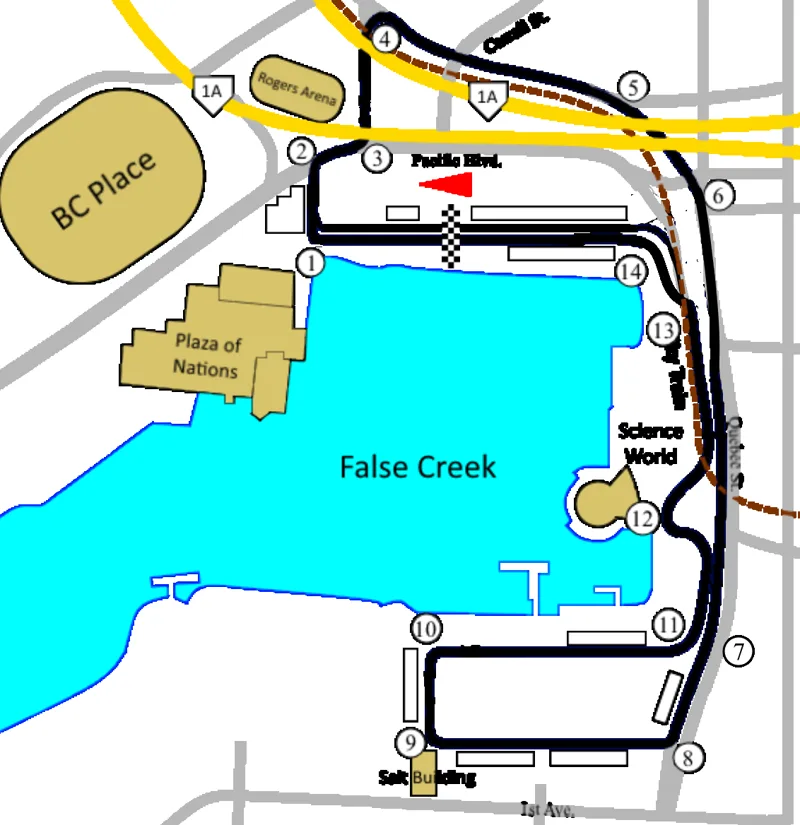
The event had been confirmed for the 2002 CART schedule in November 2001. The Surfers Paradise street circuit has 12 turns and measures 4.498 km (2.795 miles), and this was the twelfth annual edition, dating back to 1991.
The organisers expected more than 300,000 people across the weekend and erected new grandstands because of growing ticket demand. Fans were allowed onto pit road on 20 October, a week before the race, and a new contract was signed on 24 October to keep the event on the calendar through 2008.
The event also faced a sponsorship blow. On 25 October Chris Pook, CART's president, said FedEx would leave as title backer after 2002. Pook also denied rumours of a merger with Formula One, saying he had simply taken advice from Bernie Ecclestone.
How did practice and qualifying go?
Two practice sessions preceded the race. The first, on Friday morning, lasted 80 minutes, and da Matta set the fastest lap at 1 minute 32.977 seconds. Temperatures were above 27 degrees Celsius (80 degrees Fahrenheit) on the Friday, under clear skies.
The Saturday morning session ran for 75 minutes and included three stoppages, two for incidents. Da Matta again led at 1 minute 31.514 seconds, while Kenny Brack, Scott Dixon, Bruno Junqueira and Adrian Fernandez followed. Christian Fittipaldi spun without contact at the first turn, and officials extended the red flag to repair the surface near turn six.
Qualifying was split into two sessions, with the fastest driver in each earning a championship point and a front-row start. Junqueira won the Friday session at 1 minute 31.515 seconds, six hundredths of a second ahead of Tracy, and his lap set a new track record.
On Saturday afternoon da Matta set a preliminary lap of 1 minute 31.251 seconds in the practice before qualifying. In the 40-minute qualifying session, Brack set a lap nearly six tenths quicker than Junqueira's Friday time, but da Matta went faster and then Junqueira replied, before da Matta finished with the pole.
Who took the pole and why was it important?
Da Matta's final lap of 1 minute 30.204 seconds gave him pole for Sunday's race, his seventh and last of the 2002 season. The lap also broke the track record, beating Junqueira's Friday time and Franchitti's mark from 1999.
The record lap was almost a second and a half quicker than Franchitti's old mark. Many drivers credited the change to a small alteration in the course: before the race, the wall at the left side of the first turn's exit had been moved back four feet, letting drivers run 16 km/h (10 miles per hour) faster than in previous years.
What caused the pileup at the start?
Rain began during the Sunday warm-up, and the slick track caused spins and crashes for several drivers, including Tracy, Michel Jourdain Jr., Mario Dominguez and Dario Franchitti. Only Christian Fittipaldi and Tora Takagi completed a full lap, with Fittipaldi fastest at 2 minutes 12.443 seconds.
The race started at 2:05 PM local time, under a single-file rolling start ordered for safety. Junqueira got past pole sitter da Matta, but as the leaders neared turn one a crash broke out behind them. Vasser appeared to make contact with the back of Fernandez's car as he slowed on the front straight, and several drivers piled in.
Andretti collided with the rear of Tagliani's car, sending his own car airborne and upside down. Takagi and Carpentier were T-boned by Dominguez at full speed. Vasser and Takagi both landed upside down, and Fernandez and Takagi were stretchered to Gold Coast Hospital. Takagi was given precautionary X-rays for pelvis pain.
How did the red flag and the decision to shorten the race work?
The red flag was thrown quickly, and many drivers said visibility had been too low for safe running. CART officials announced that the start had been waved off and that all drivers except the two injured men could use their backup cars. Most teams did so, while Dominguez's team repaired the suspension on his primary car.
The race was cut to 50 laps, with 35 laps needed to make it official. Postponing was not an option because the cars had to reach Fontana, California, by Tuesday for conversion to superspeedway specification for the 500-mile race the following weekend. The course also had to be cleared by the next morning under contract.
CART president Chris Pook met drivers during the stoppage to discuss safety concerns. After an 81-minute delay the sixteen remaining drivers returned to the grid and restarted. The green flag waved at 3:43 PM local time on lap 4, and da Matta pulled away from the field.
How did the race unfold after the restart?
Brack made a pass for third on Kanaan early on, while Dominguez went into the runoff on lap 6. A lap later Tracy spun at turn nine and clipped the wall and Tagliani. Rain returned and visibility dropped, and a full-course caution was called on lap 10. The rest of the race was run under caution.
Da Matta was among the drivers who pitted on lap 11, handing the lead to Junqueira. Servia's engine caught fire on the same lap, and he retired after leaving the track in turn four. He was the first of the sixteen restarters to retire.
Strategy then came to the fore. Andretti expected a stop at the halfway point, so he pitted on lap 16, hoping the race would end before the mandatory stop window came around. Da Matta led again after Junqueira made his first stop on lap 19.
Dixon reported a voltage fault and pitted on lap 21, retiring three laps later. Da Matta led until lap 30, when he had to rejoin the pit road sequence, and then he spun on lap 34, ending any win hopes. Dominguez, who had made four stops in all, took the lead for the finish.
Why was the 40-lap finish so controversial?
The race had been expected to end at 36 laps, the halfway mark of the original distance. Andretti and many other teams had planned their strategy around that figure. On or around lap 35, CART officials announced that the race would run to 40 laps so that every driver would make two stops.
That change forced most teams to pit on lap 37. Dominguez, whose last stop had been on lap 22, was in front for the final four laps. He won with an average speed of 89.880 km/h (55.849 mph), the slowest winning average in a CART race since 1926, excluding the Pikes Peak Hill Climb.
What did the drivers and officials say?
Dominguez was in disbelief on the podium and credited his team's strategy. Tracy called the day a bad hand from the weather and said it was a shame for the teams and for the Gold Coast fans who had come out to watch.
Andretti, who finished ninth in his last race at Surfers Paradise, said the conditions were horrible and that he had thought the race would be called at 36 laps. His team co-owner, Kim Green, said the team had planned for 36 laps and called the officiating the worst he had seen.
Chief steward Chris Kneifel defended the decision, saying any lap chosen would have pleased some drivers and disappointed others. Robin Miller of ESPN called the result an embarrassing mess and linked it to the decisions by Honda and Toyota to leave the series at the end of 2002.
Which rule changed after Surfers Paradise?
The rulebook was changed for the 2003 season so that races could be stopped before the halfway point, with only half points awarded. That change followed the controversy at Surfers Paradise, which had already damaged confidence in CART's officiating.
How did the points and standings look after the race?
Da Matta's championship total stood at 219 points after the race, 75 ahead of Junqueira. Franchitti kept third with 135 points, while Carpentier, on 131, and Fittipaldi, on 116, completed the top five in the standings.
Toyota secured the Manufacturers' Championship with Brack's fourth place, with two races still to run. Honda finished behind Toyota in the table. Lola finished the Constructors' table well ahead of Reynard.
| Position | Driver | Note |
|---|---|---|
| 1st | Mario Dominguez | First career win; four pit stops; led the final four laps |
| 2nd | Patrick Carpentier | Forsythe Racing |
| 3rd | Paul Tracy | Team Kool Green |
| 4th | Kenny Brack | Secured Toyota's Manufacturers' Championship |
| 5th | Tony Kanaan | Top-five finish |
What were the injuries and aftermath?
Fernandez suffered two thoracic fractures in his first-lap crash. Dr Steve Olvey, CART's director of medical affairs, said the fractures did not need surgery, and Fernandez was released from hospital but had to wear a cervical collar. He missed the next race at Auto Club and was later banned from the season finale in Mexico City.
Takagi had minor pelvic fractures but drove in the final two races. Dominguez earned $100,000 in prize money for the win, and his victory was the first for Herdez Competition since the team entered CART in 1986.
Who covered the race?
Speed Channel carried the race live from 2:00 PM local time. Bob Varsha provided play-by-play, with Tommy Kendall and Scott Pruett as colour commentators,.