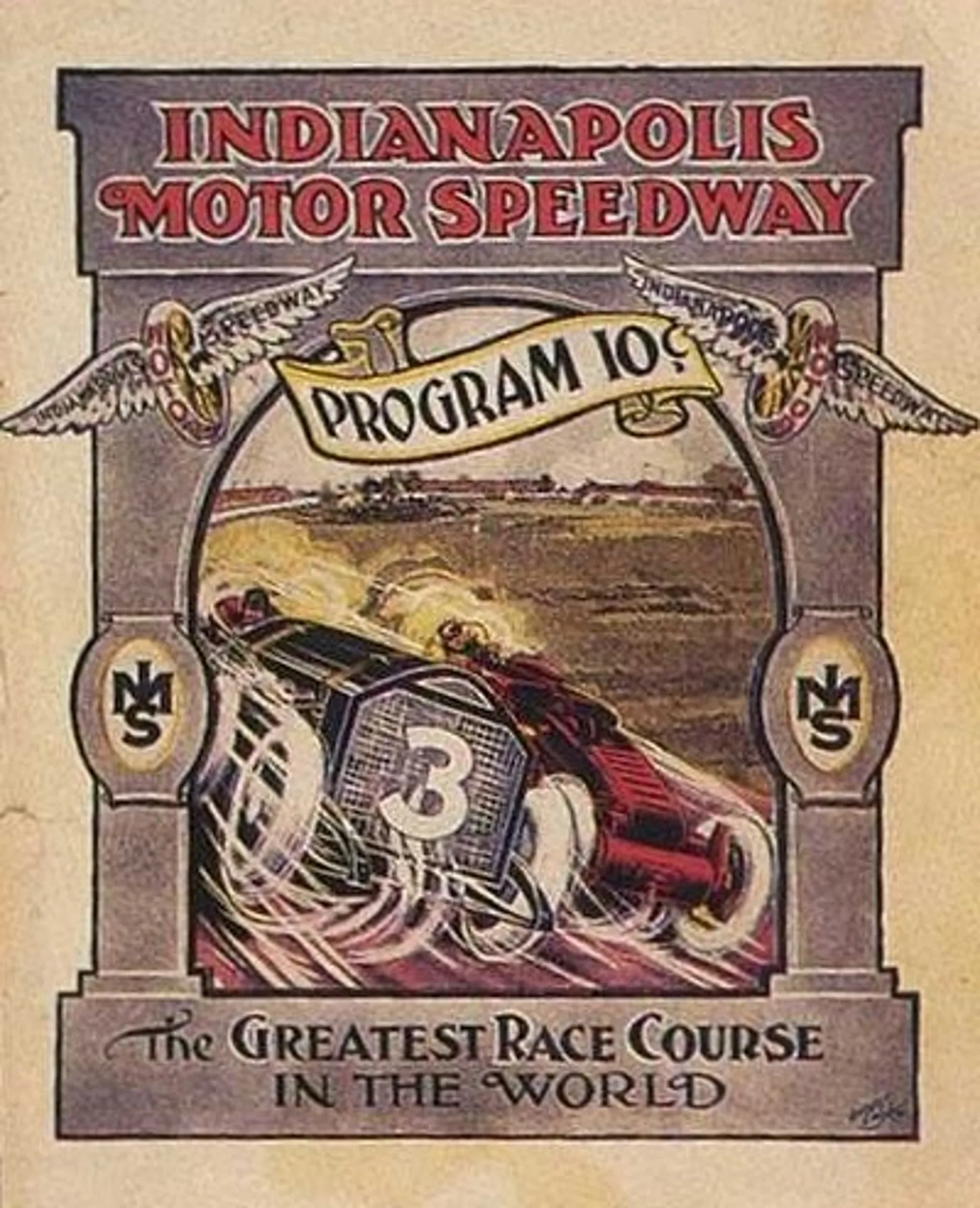
How the first Indianapolis 500 was planned, qualified and won by Ray Harroun, and why the result is still argued over.
Ray Harroun won the inaugural Indianapolis 500 on May 30, 1911, covering 800 km (500 miles) in 6 hours 42 minutes in a Marmon Wasp. The race is also remembered for a fatal crash on lap 12 and for the rear-view mirror on Harroun's car.
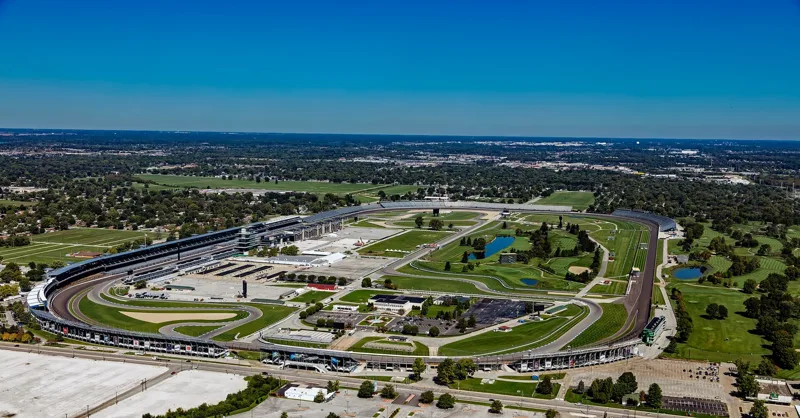
The 1911 Indianapolis 500 was the first running of the race, held at the Indianapolis Motor Speedway on Tuesday, May 30, 1911. Ray Harroun won the 800 km (500 miles) event in a Marmon Wasp, yet the day is equally remembered for his rear-view mirror and a fatal crash on lap 12.
Why did the Speedway stage one big race?
Crowds at the Speedway's smaller meets shrank through the 1910 season, so its owners decided to replace the programme with a single major event. That event was designed to draw teams from America and Europe and to become one of the most prestigious races in the world.
Earlier, the Speedway had scheduled numerous smaller races across 1909 and 1910. Attendance declined as the 1910 season went on, and the Labor Day meet drew some 18,000 people, a figure below the largest previous attendance, which had come on Memorial Day. The owners concluded that too many events had spread the public thin, so they chose to focus their publicity on one race.
Once the decision was made, the plan moved quickly. A single large race would give newspapers and trade magazines one clear subject, and the reports that followed used strong language about the challenges facing drivers and engineers.
One 800 km race, a rear-view mirror and a winner who never raced again: the first Indianapolis 500 in 1911.
Why was the race set at 500 miles?
The race had to fit a window from 10 a.m. until late afternoon, so spectators could arrive before the start and get home before dark. A distance of 800 km (500 miles) fitted that window, within the range of 480 to 800 km (300 to 500 miles) that management considered.
A 24-hour contest was debated and rejected, because potential ticket buyers would leave the grounds well before it ended. A 1,600 km (1,000 mile) endurance race was also weighed, and several manufacturers favoured the endurance format, but the spectator window settled the matter in favour of 500 miles.
The purse was the other consideration. Estimates ran upwards of $30,000, and the winner could expect as much as $12,000, which equals over $400,000 in 2026 dollars. A prize of that size made the event a serious draw for competitors from outside the local area.
The date was chosen with similar care. Memorial Day had produced the largest previous attendance, so it was always the first choice. Independence Day was rejected because parades, picnics and other celebrations already competed for spectators, and a Saturday was avoided because many people, particularly farmers, worked on Saturdays.
Lem Trotter, a business associate, pointed out that Memorial Day followed haying, the late-spring farming task, after which farmers had a break. Trotter argued that the choice would interfere as little as possible with the regional economy. The owners accepted the advice, and the race was announced for May 30 with a 500-mile distance.
How was the entry list controlled?
The entry fee rose to $500 per car from the earlier $1 per mile, and no prize money was offered to finishers below tenth place. Even so, interest was strong, and by the deadline of May 1, 1911, 46 cars had been nominated from the United States and Europe.
Entry blanks came back filled within the month. The first came from the J. I. Case Threshing Machine Company, a car that was to be driven by Lewis Strang. Its place at the head of the entry list was determined by the date of filing, a point that would matter when the grid was set.
Not every nominated car reached the track. The Falcar team from Moline, Illinois did not appear, so the list of cars that could take part was shorter than the list of nominations. The Pope-Hartford team drove its cars from Springfield, Massachusetts, to reach the Speedway, which was a long journey for the period.
The Speedway opened the circuit on May 1, 1911 for free practice during daylight hours to any participant who wanted it. The arrangement was meant to give unfamiliar teams time to learn the brick-paved course. Over the years it became a lasting feature of the event and is still called the Month of May.
How did qualifying work in 1911?
Each car had to show it could sustain at least 75 mph (121 km/h) over a quarter-mile run. Cars that completed the timed run at or under 12 seconds were accepted, and those that fell short could try again, giving each entry three attempts in total.
Qualifying was held on May 27 and 28, 1911. No times or speeds were recorded, only a pass or a fail, so the sessions checked capability rather than ranking the field. Later stories about exact qualifying speeds have grown with the retelling, but no records exist to support them.
Grid positions were not set by speed. Starting order followed the date each entry was filed, so the earliest nominations took the front places. That is a clear contrast with later eras, when speed and points decided the grid.
The purse of $27,550 drew 46 entries, and 40 cars qualified for the field. Rules set a minimum weight of 1,043 kg (2,300 lb) and a maximum engine size of 9.83 litres (600 cubic inches), defining the machines that could take part.
How was the grid laid out?
The 40 cars were arranged in rows of five, with a single car in the final row. The Stoddard-Dayton pace car, driven by Carl Fisher, led the field off in what is believed to be the first mass rolling start of an automobile race.
Under a red flag signalling a clear course ahead, the engines roared through the smoke that hung over the track. Johnny Aitken, driving a National from fourth place on the grid, took the lead and held it until lap 5.
Spencer Wishart then led in a Mercedes after lap 5. David Bruce-Brown's Fiat dominated the first half of the race, and the leading position changed hands several times before the race reached its later stages.
Why did Ray Harroun fit a mirror?
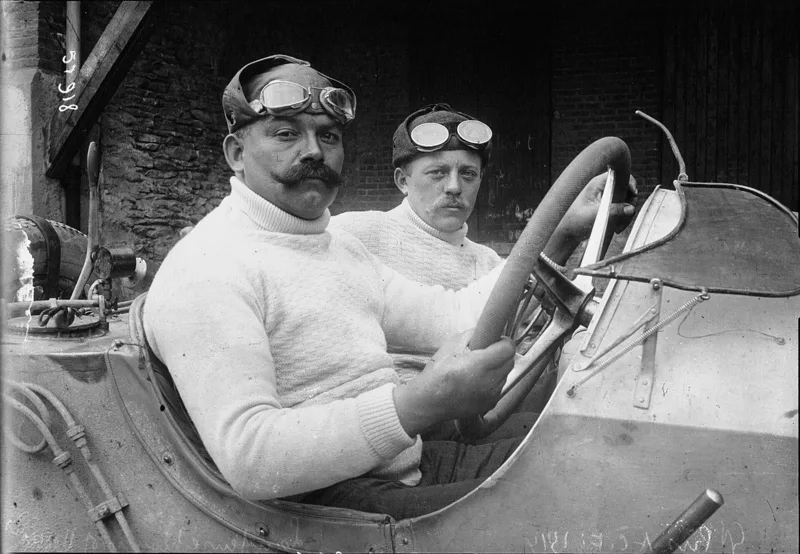
Ray Harroun drove alone without a riding mechanic, and he fitted a cowl-mounted rear-view mirror so he could see the cars behind him. It is believed to be the first mirror on a racing car. Harroun later said the idea came from a mirror he had seen on a horse-drawn vehicle in 1904.
Two-man cars were the norm in that era, with a riding mechanic seated beside the driver and watching the traffic. Harroun broke with that pattern and relied on the mirror instead, so his car carried one driver and no mechanic on the course.
Harroun also said the mirror vibrated constantly on the rough brick surface, which made it largely useless. Whatever its practical value, the mirror is remembered as one of the earliest pieces of equipment fitted to a racing car, and it is one of the best-known details of the race.
How did Harroun manage the race?
Harroun ran a steady 75 mph (121 km/h) pace to reduce tyre wear, and his own testing showed that 75 mph wore the tyres less than 80 mph. He led 88 of the 200 laps, running near the front for nearly all of the day.
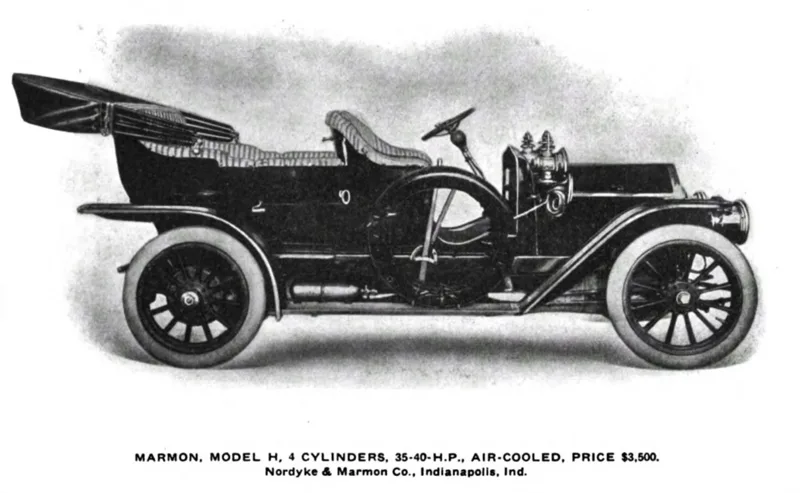
Harroun was relieved by Cyrus Patschke for 35 laps around the halfway point, but he then returned to the car and resumed driving. The Marmon Wasp, a six-cylinder car that Harroun had designed himself, took its name from its sharply pointed, wasp-like tail.
Near the halfway point, Harroun passed David Bruce-Brown for the lead. The steady pace he had chosen to protect his tyres was the basis of the strategy that carried him through the remainder of the race.
Who died in the 1911 race?
Sam Dickson, the riding mechanic for Arthur Greiner, was killed on lap 12. A front wheel came off Greiner's American Simplex, and both men were thrown from the car. Greiner escaped with a broken arm, while Dickson was thrown into a fence 6.1 m (20 feet) from the car.
Reports say Dickson was killed instantly. The crowd swarmed around the body, and the state militia on security duty had to use their guns as clubs to clear a path for the attending doctors.
The accident happened early in a race that was meant to showcase the sport, and it stayed in the record of the event. Dickson's death is part of how the race is remembered, alongside the result and the mirror.
Who won the race, and by how much?
Ray Harroun won in 6:42:08, at an average speed of 120.060 km/h (74.602 mph). He collected the $10,000 first prize. The winning margin was about 1 minute 42 seconds in one account and 1 minute 48 seconds in another.
The race lasted 6 hours and 42 minutes in front of over 85,000 spectators. Harroun's average speed of 74.602 mph was higher than the finishing average of 70.74 mph (113.85 km/h) across the field.
Harroun's tyre trouble came near the halfway point. A tyre failed around the 550 km (340 mile) mark, and Ralph Mulford moved to the front while Harroun pitted for a new tyre, setting up the closing contest for the lead.
After the race, Harroun returned to retirement. He never raced again, so the 1911 event is the one he is remembered for, and the victory remains the centre of the story of the first Indianapolis 500.
Was the result disputed?
Yes, though the dispute is weaker than it first appears. Ralph Mulford, driving a Lozier, reportedly argued that he had lapped Harroun, but officials denied the claim. Historian Donald Davidson says no protests were filed at the end of the race.
Contemporary publications recorded Mulford changing 14 tyres during the race, and he lost at least 14 minutes in the pits. Newspapers said Harroun changed four tyres in three pit stops, and his shorter time in the pits weighed against any track position Mulford might have gained.
Mulford congratulated Harroun in the Detroit Free Press on June 4. He also claimed the solo 500-mile world record, which was a point in his favour, though that claim concerned the distance rather than the race result.
The controversy did not grow until decades later, when internet legends and a 2011 book revived it. Scoring records were destroyed after the race, and in 1999 Phil Harms published a revised box score with estimated lap totals for the cars at the lower end of the order.
What were the race statistics?
The average engine displacement across the field was 460 cubic inches (7.54 litres), well under the 600 cubic inch (9.83 litre) limit. Finishing entries averaged 7:05:27 for the race, at 113.85 km/h (70.74 mph), against the winner's time of 6:42:08.
No full lap qualifying average was recorded, since qualifying times were never kept. The table below summarises the key figures from the race and the field.
| Item | Detail |
|---|---|
| Date | Tuesday, May 30, 1911 |
| Venue | Indianapolis Motor Speedway |
| Distance | 800 km (500 miles) |
| Winner | Ray Harroun, Marmon Wasp |
| Winning time | 6:42:08 |
| Average speed | 120.060 km/h (74.602 mph) |
| Entries and starters | 46 entries; 40 cars qualified |
| Purse | $27,550 |
| First prize | $10,000 |
| Spectators | Over 85,000 |
| Field average engine | 7.54 litres (460 cubic inches) |
Why does the 1911 race still matter?
The race established the Indianapolis 500 as the premier motorsport competition in the United States, and it became one of the most prestigious events in the world almost at once. It replaced a run of smaller meets with one large event that set the template for the decades that followed.
Several traditions began in 1911: the Month of May practice, the three qualification attempts allowed to each car, and the rolling start used to launch the field. Each one shaped how the race is run.
Pit work was slow and heavy in 1911. Wheels could not be removed easily, so tyres were pried off the rims, remounted and inflated by hand in the cramped pit stalls. That process made every stop a long, labour-intensive job for the team.
The mirror, the solo drive and the disputed finish have kept the race in the conversation for more than a century. The first Indianapolis 500 remains a reference point for the events that followed.