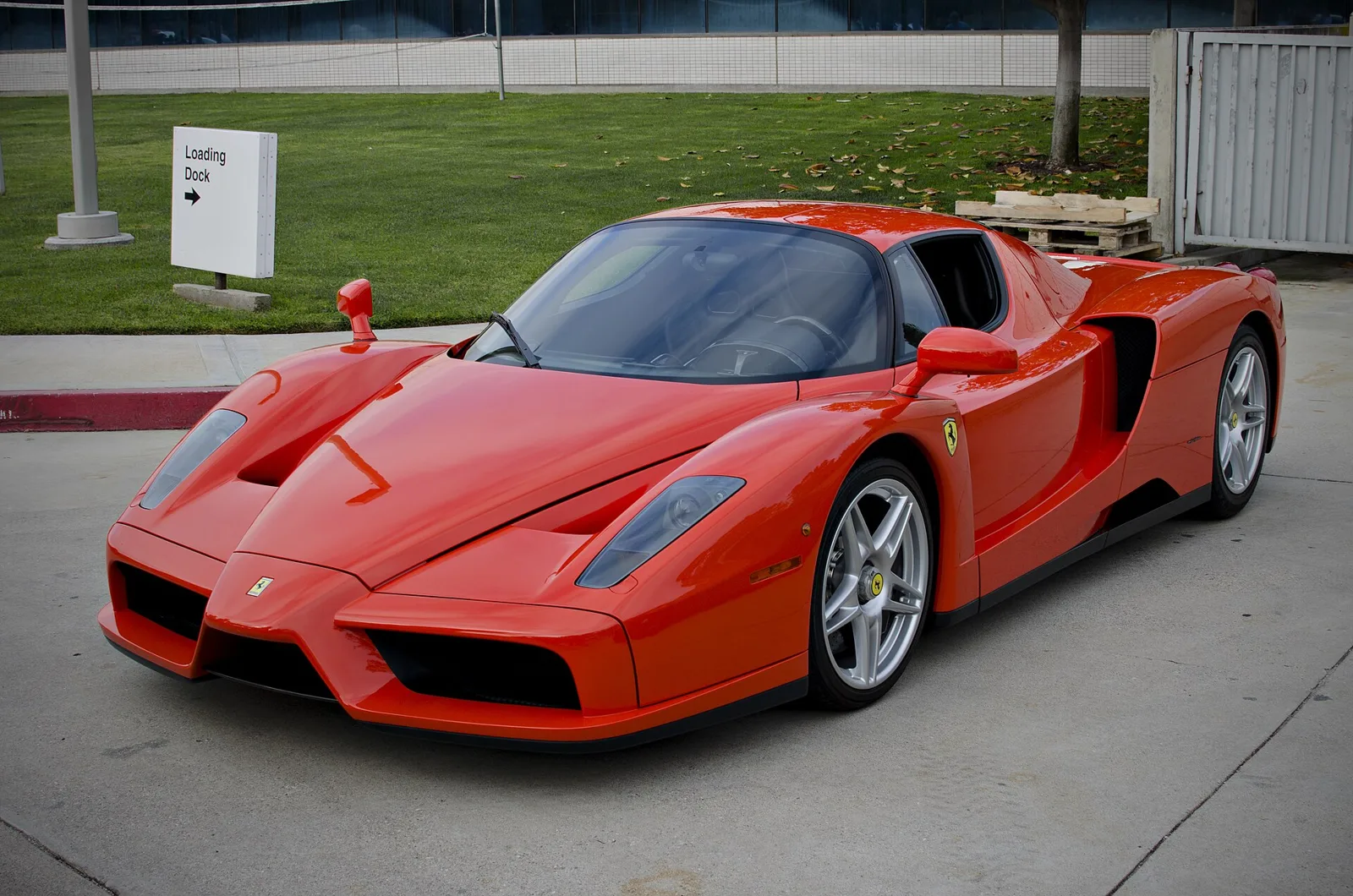
From Ferrari's first battery-electric production car to a Volkswagen supermini promising a sub-30,000-euro starting price, these seven EVs each answer a different question about where electric motoring is heading.
The best electric cars of the 2020s span wildly different price points and purposes: the Ferrari Luce as the brand's first BEV, the BMW iX3 on an all-new Neue Klasse platform, the Hyundai Ioniq 9 as a three-row family SUV, the Volvo EX30 and EX60, the Audi A6 e-tron, and the affordable Volkswagen ID. Polo.
These seven electric cars were chosen because each one answers a different question about the 2020s EV market: how fast can one go, how far, how cheap, and how differently can a legacy brand reinvent itself under one badge.
What makes an electric car one of the best of the 2020s?
The strongest 2020s EVs are not simply the quickest or longest-range cars; they are the ones that forced an entire brand, or an entire segment, to rethink how an electric car should be engineered, priced or positioned.
That is the thread running through this list. A Ferrari with four electric motors and no combustion engine at all is a statement regardless of how buyers received it. A BMW built on a genuinely new computing and chassis platform matters more than its 0-62 time alone suggests. A Volkswagen promising a roughly 25,000-euro starting price matters because affordability, not horsepower, is still the biggest barrier to EV adoption for most buyers.
The Ferrari Luce is not really a car most readers will cross-shop at all; it matters here as a signal of where even the most resistant performance brands are now willing to go.
Why does the Ferrari Luce make the list?
The Ferrari Luce is Ferrari's first production battery-electric car and its first five-seat model, combining four permanent-magnet motors for a combined 1,035 hp (772 kW; 1,049 PS) and a claimed 0-100 km/h time of 2.5 seconds.
Revealed in May 2026 after being previewed under the codename 'Elettrica', the Luce is built in Maranello on a dedicated EV architecture, with a 122 kWh battery pack that forms a structural part of the chassis and an 800V system supporting DC charging up to 350 kW for a claimed range over 500 km (311 mi). Priced at EUR 550,000 in Europe, all 88 units offered at its Chinese launch sold out instantly, even though the car's reveal event drew a notably poor public reception, much of it aimed at the styling and at the symbolic weight of Ferrari building a BEV at all. That tension, between commercial confidence and public scepticism, is exactly why it belongs on a list about where the decade's EVs are heading rather than where they have already settled. Jony Ive and Marc Newson's design studio, LoveFrom, worked alongside Ferrari's own teams on both the exterior and interior, while the dynamics side of the brief falls to three separate chassis systems working in concert: torque vectoring between the motors, four-wheel steering for tighter low-speed turns, and active suspension smoothing everything out underneath. Ferrari revealed the finished car to around 200 journalists at the Vela di Calatrava complex near Rome, with two manettino dials on the steering wheel splitting control between vehicle dynamics and the electric powertrain itself.
Why does the BMW iX3 make the list?
The BMW iX3 is the first car built on BMW's new Neue Klasse platform, pairing a dual-motor all-wheel-drive system making 463 hp (345 kW) with an 800-volt architecture and a 108 kWh battery good for up to 500 miles (800 km) on the WLTP cycle.
What sets it apart is not the 4.9-second 0-100 km/h time but the computing architecture underneath: four onboard 'superbrains', including one called the Heart of Joy that handles every aspect of driving dynamics with no outsourced supplier software and a claimed 1-millisecond latency, letting BMW manage 99% of all braking through regeneration alone. Charging at up to 400 kW adds 231 miles (372 km) of range in just 10 minutes, and the car debuts BMW's new Panoramic iDrive system with a 43.3-inch display built into the hood line. As the first car in an entirely new BMW design and software era, the iX3 represents a bigger shift than its specification sheet alone suggests. That 2025 Munich Motor Show debut also marked the start of BMW's new iDrive X software era, built around the car's Panoramic Vision display, and BMW has paired with Qualcomm on a jointly developed automated-driving system set to debut on the iX3 as well.
Why does the Hyundai Ioniq 9 make the list?
The Hyundai Ioniq 9 is Hyundai's largest electric SUV, a three-row, mid-size crossover built as a battery-electric alternative to the combustion Palisade, with a 110.3 kWh battery delivering a claimed 620 km (390 mi) WLTP range.
It earns its place here on practicality rather than outright spectacle: six- or seven-seat layouts, reclinable 'Relaxation Seats' in the first two rows, swivelling second-row chairs and a 0.259 Cd drag figure achieved partly through an active front air flap. Revealed in November 2024 after a long development that began as the 2021 Hyundai Seven Concept, the Ioniq 9 has since rolled out market by market, from South Korea and the US in early 2025 through to Singapore, Indonesia and Australia, where it launched as the most expensive Hyundai on sale at the time. Few electric SUVs this decade have tried to directly replace a full-size combustion model so deliberately.
Why does the Volvo EX30 make the list?
The Volvo EX30 is the smallest Volvo currently on sale, yet its Twin Motor Performance variant is also the fastest-accelerating Volvo ever built, reaching 0-100 km/h (0-62 mph) in 3.4 seconds.
Beyond that headline figure, the EX30 matters because of what it represents for Volvo's manufacturing strategy and sustainability claims: a body built from 25% recycled aluminium, 17% recycled steel and 17% recycled plastic, and a claimed lifetime carbon footprint of just 30 tonnes (66,000 lb) over 200,000 km (124,000 mi), the lowest of any Volvo to date. Built initially in China and later in Ghent, Belgium and Shah Alam, Malaysia, the EX30 is expected to bring three-quarters of its buyers to the Volvo brand for the first time, even as US tariff pressure and softening EV demand are pushing Volvo to discontinue it there after the 2026 model year in favour of a dedicated US-market replacement planned for 2027.
Why does the Volvo EX60 make the list?
Volvo's new SPA3 platform makes its debut here, underpinning the EX60 as the first model built on this megacast architecture, one that integrates the battery directly into the body and that Volvo plans to use eventually across its entire range, offered with 80, 91 or 112 kWh batteries for up to 810 km (400 mi) of range.
That top-spec P12 variant produces 670 hp and 583 lb-ft of torque, while every version charges from 10% to 80% in just 18 to 19 minutes through a standard NACS port, a first for Volvo, supporting up to 400 kW DC charging. The platform matters more than any single number, though: SPA3's 'Hugin Core' computing system blends Volvo's own software with Nvidia and Qualcomm hardware, and the same underpinnings are earmarked to carry every future Volvo model, making the EX60 less a single product launch than a preview of the whole brand's next decade. Inside, the infotainment system runs on Nvidia's AGX Orin hardware paired with a Qualcomm Snapdragon 8255 chip and built-in Google Gemini, backed by a choice of a 21-speaker standard system or a 28-speaker Bowers & Wilkins setup, with a front frunk adding useful extra storage space. Production itself began at Volvo's Torslandaverken plant.
Why does the Audi A6 e-tron make the list?
The Audi A6 e-tron is a PPE-platform executive EV offered in both Sportback liftback and Avant wagon body styles, with the Sportback's 0.21 drag coefficient claimed as best in class at launch, backed by a 450-pixel rear light bar capable of displaying custom animations.
It makes this list for proving that an electric executive car does not have to sacrifice body-style choice: buyers get a standard A6 e-tron or a performance S6 e-tron in either shape, something few rival EV platforms still bother to offer. Inside, an 11.9-inch OLED gauge cluster sits alongside a 14.5-inch OLED touchscreen with a ChatGPT-assisted voice assistant, and the cabin is entirely leather-free, using recycled materials throughout. Revealed 31 July 2024 with deliveries expected from February 2025, it shares its platform directly with the Q6 e-tron, acting as that car's lower, sleeker sibling. Its family tree runs back to a Sportback concept shown at Auto Shanghai in 2021 and then at Milan Design Week, followed by an Avant concept in March 2022 that used larger diffuser tunnels to sharpen its aerodynamics. The finished production car hides its sensors behind a black-masked grille, offers a privacy filter for the optional passenger screen, and adds an augmented-reality head-up display plus a 20-speaker Bang & Olufsen system for anyone wanting the full specification.
Why does the Volkswagen ID. Polo make the list?
The Volkswagen ID. Polo is expected to start from around EUR 25,000 (about US$29,000), making it one of the most affordable new electric cars in Europe and the first ID.-series Volkswagen to borrow an existing nameplate rather than invent a new one.
Unveiled 29 April 2026 as the production version of the ID.2all concept, it offers a 37 kWh LFP battery with either a 116 bhp (87 kW) or 134 bhp (100 kW) motor, or a larger 52 kWh NMC pack paired with a 208 bhp (155 kW) motor, with a future GTI version expected to follow at 223 bhp (166 kW). Sold alongside the still-available combustion Polo, it belongs on this list precisely because price, not performance, is the figure most likely to decide how quickly ordinary buyers actually switch to electric power. Its family tree runs deeper still: an earlier ID. Life concept had proposed a crossover-shaped supermini before falling out of favour in 2022, and a sportier ID.GTI concept previewed the GTI version expected to follow the standard car onto sale.
How do these seven electric cars compare?
Lined up together, the spread between these seven cars says as much about the 2020s EV market as any individual model does.
| Model | Segment | 0-100 km/h | Range/Price headline |
|---|---|---|---|
| Ferrari Luce | Luxury executive | 2.5 s | EUR 550,000; 500+ km range |
| BMW iX3 | Compact luxury crossover | 4.9 s | Up to 800 km WLTP |
| Hyundai Ioniq 9 | 3-row family SUV | 5.2 s | 620 km WLTP |
| Volvo EX30 | Subcompact crossover | 3.4 s | Smallest Volvo lifetime footprint |
| Volvo EX60 | Compact luxury crossover | n/a | Up to 810 km range |
| Audi A6 e-tron | Executive liftback/wagon | n/a | Best-in-class drag at launch |
| Volkswagen ID. Polo | Supermini | n/a | From about EUR 25,000 |
No single car wins on every axis, which is exactly the point: the Ferrari Luce will never compete on price with the ID. Polo, and the ID. Polo was never designed to chase the Luce's 2.5-second sprint time.
Which of these electric cars should you actually consider?
Pick by what you actually need rather than by headline figures. Buyers chasing maximum range and a genuinely new platform should look at the Volvo EX60 or BMW iX3; buyers who simply want an affordable, no-drama electric car should wait for the Volkswagen ID. Polo.
Families needing three rows have a clear answer in the Hyundai Ioniq 9, while anyone wanting a smaller, more sustainable first EV should look hardest at the Volvo EX30, especially outside the US market it is leaving in 2026. The Audi A6 e-tron suits buyers who still want a wagon option in an electric executive car, a shrinking list in itself. The Ferrari Luce, meanwhile, is not really a car most readers will cross-shop at all; it matters here as a signal of where even the most resistant performance brands are now willing to go.