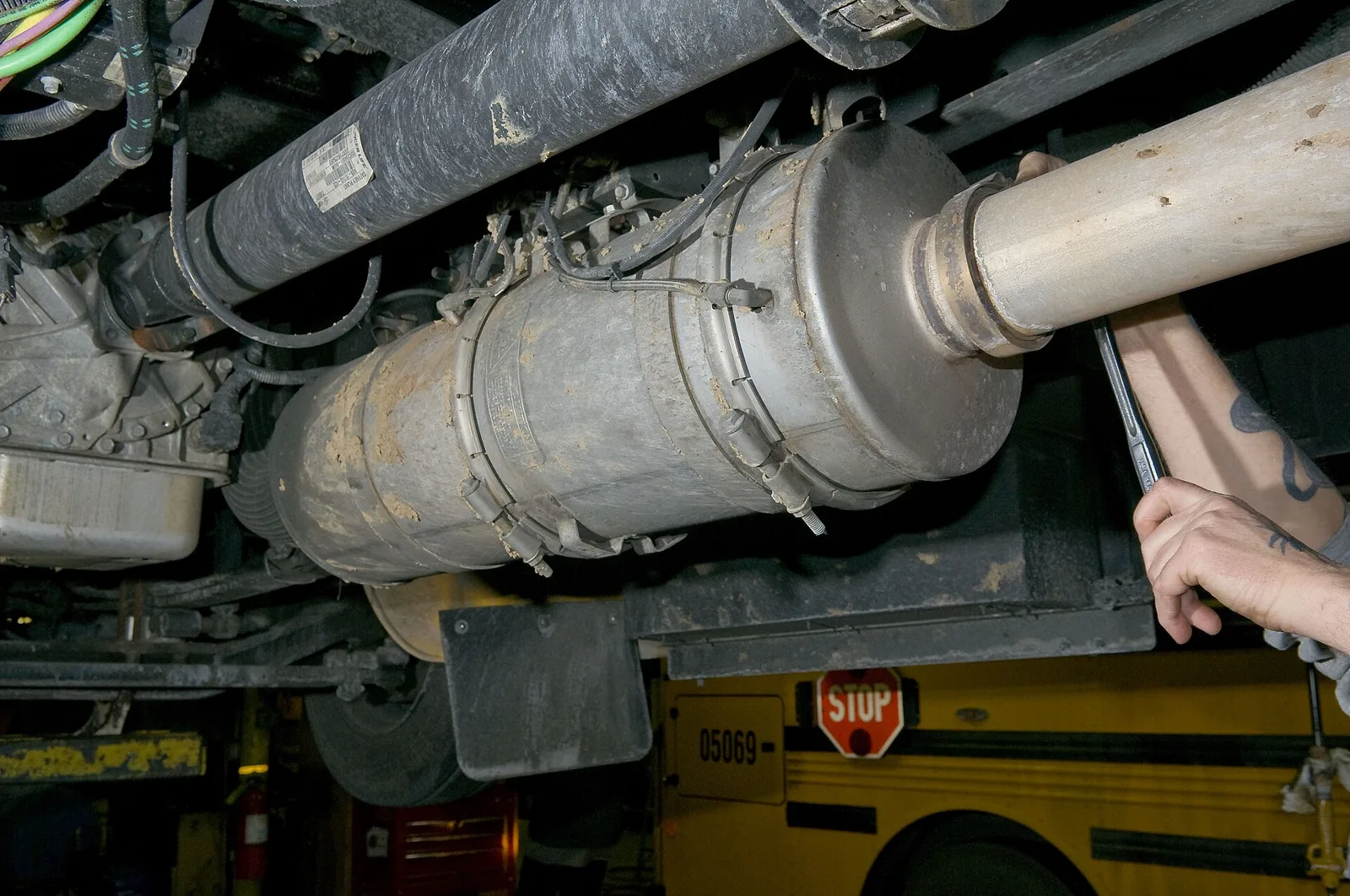
A DPF can only burn itself clean when the exhaust runs hot for long enough, which is why city driving and the DPF warning light so often go together.
A diesel particulate filter is an exhaust device that traps soot from a diesel engine, usually removing 85% or more. It cleans itself by burning the soot off in a process called regeneration, which needs sustained high exhaust temperatures, so frequent short trips can clog it.
The part of a modern diesel car that is meant to clean itself cannot do the job at the speeds of city traffic. Regeneration, the process that burns trapped soot out of a diesel particulate filter, happens at road speeds higher than most urban streets allow. That one mismatch explains almost every complaint about the device.
What is a diesel particulate filter?
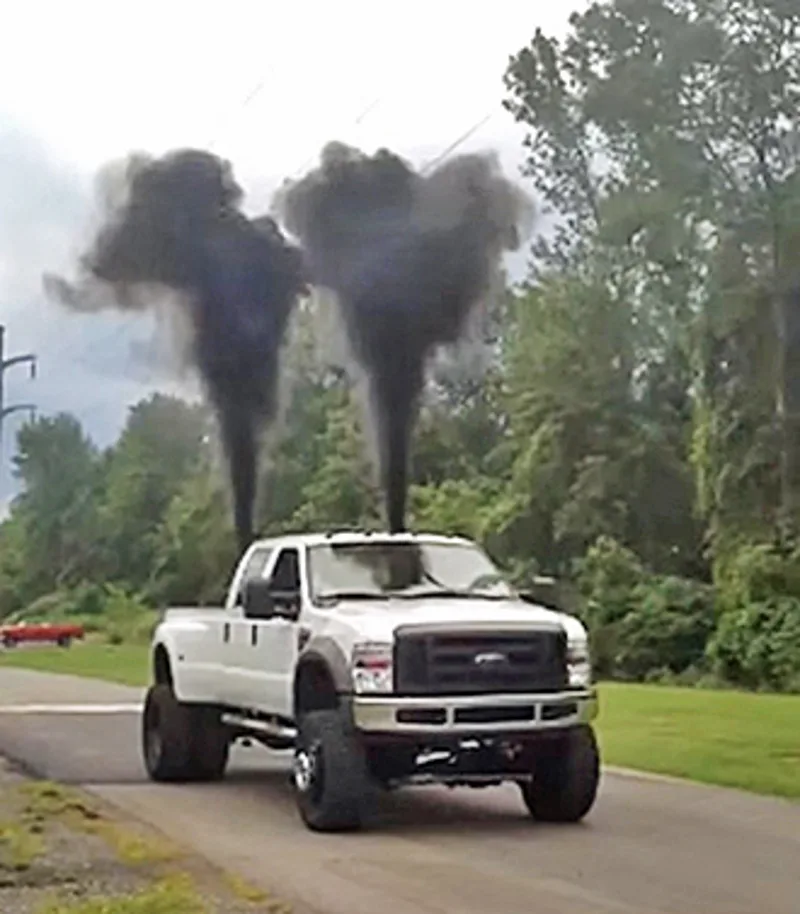
A diesel particulate filter, or DPF, is a device fitted in the exhaust to remove soot from a diesel engine's emissions. The soot is the black carbon left behind when diesel fuel does not burn completely, and some of it is made of nanoparticles smaller than one micrometre. Soot and other particles from diesel engines add to airborne particulate pollution, and that is bad for human health.
Why does a diesel make soot at all? Because of how it lights its fuel. A diesel has no spark plug. It squeezes air until the air is hot enough to ignite atomised fuel sprayed into the cylinder, and it sets its torque by changing how much fuel goes in rather than by throttling the air. The mixture is therefore lean, and that is a large part of why a diesel is so efficient. The price is that the burn is never perfectly tidy. How much soot comes out varies with the type of engine, its age and the emissions specification it was designed to meet. Two-stroke diesels make more particulate for each unit of power than four-strokes, because they burn the fuel and air less completely.
The idea of filtering that soot goes back to the 1970s, when concern grew about the effects of inhaled particulates. Filters have been used on non-road machines since 1980 and on automobiles since 1985.
The part of a diesel meant to clean itself cannot do the job at the speed of city traffic.
How does a DPF trap soot?
Picture a catalytic converter and then block every second channel at one end, alternating so that each open channel is flanked by closed ones. That is the common wall-flow filter. The gas cannot slip straight through, because the plugs force it to pass through the porous walls between channels. The gas gets out; the soot stays behind and collects on the inlet face.
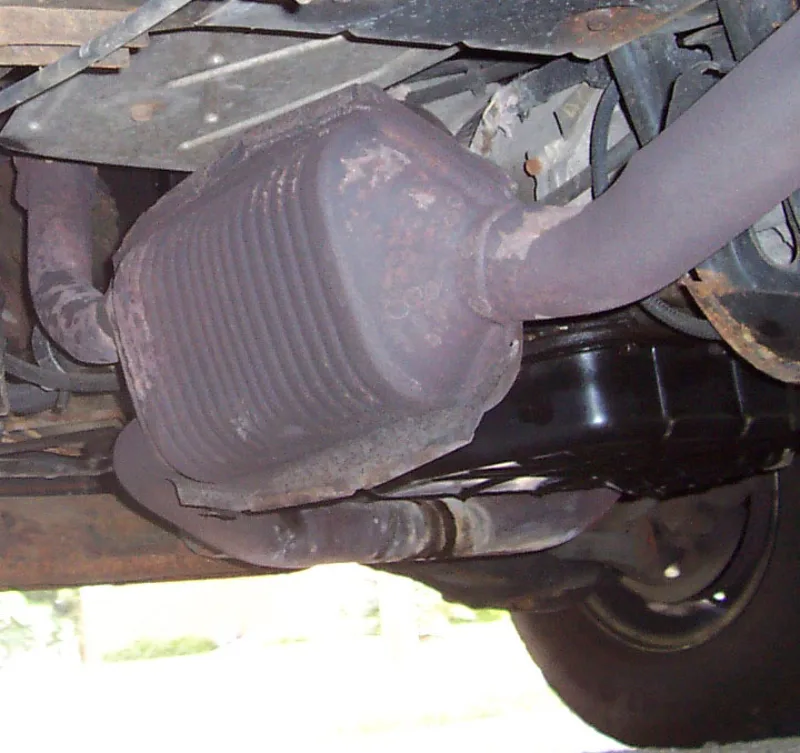
A catalytic converter is a flow-through device, so the comparison is useful. The converter lets gas run straight down open channels and works on it chemically. The filter makes the gas squeeze through a barrier and keeps the solid matter.
A wall-flow filter typically stops at least 85% of the soot, and in favourable conditions it comes close to 100%. Newer filters are described as capturing anywhere from 30% to more than 95% of the harmful soot, and with an optimal filter soot emissions can fall to 0.001 g/km or less. The filter does not hold on to the smallest particles, but maintenance-free designs oxidise the larger ones down to a size that slips through, and particles also tend to clump together in the filter, which cuts both the count and the mass.
Every design has to balance the same list of demands: fine filtration, a minimal pressure drop, low cost, suitability for mass production and durability. Partial filters sit at the cheaper end of that balance. They catch more than 50% of particulate but less than 85%, push back harder on the exhaust than a catalytic converter does, though less than a full filter, and are popular for retrofitting older vehicles.
What is a DPF made of?
| Material | Melting point or key figure | Strengths | Weaknesses |
|---|---|---|---|
| Cordierite wall flow | About 1200 C | Excellent filtration, relatively inexpensive, simple to package | Low melting point; substrates have melted during regeneration |
| Silicon carbide wall flow | 2700 C | Filters particles of 0.2-150 micrometres, efficiency up to 95% | Less thermally stable, harder to package, usually dearer |
| Ceramic fibre | Over 95% by mass, over 99% by number | Lower back pressure than wall flow, handles particles under 100 nm | Must be regenerated regularly or it blocks |
| Metal fibre flow-through | Heated by electric current | Regenerates at low exhaust temperature or flow | More expensive, not interchangeable with ceramic cores |
| Paper | Disposable | Suits coal mines and short indoor jobs | No regeneration strategy |
Cordierite is the most common material. It is the same ceramic used to support catalytic converters, and its thermal behaviour makes it easy to fit in a car. The downside is the melting point, which is low enough that substrates have been known to melt while regenerating. That is mostly a problem when the filter has been loaded more heavily than usual, and passive systems are more exposed to it than active ones, unless something in the system has broken down.
Silicon carbide, usually shortened to SiC, is the second most popular choice. It melts at a far higher temperature, but it is not as stable thermally, which makes packaging harder. Small SiC cores are made in one piece. Larger ones are built in segments joined with a special cement that absorbs the heat expansion before it can reach the housing around them. SiC cores usually cost more than cordierite, though the two are made in similar sizes and one can often replace the other.
Ceramic fibre filters mix several kinds of ceramic fibre into a porous medium that can be shaped almost any way. Because the porosity can be controlled, makers can choose between high flow with lower efficiency or high efficiency with lower volume. Burning off the collected soot produces water and a little CO2, less than 0.05% of what the engine itself emits. Metal fibre cores, woven into a monolith, take a different route. An electric current passed through the metal heats the core, so it can regenerate even when the exhaust is cool or flowing slowly.
Paper cores are the odd ones out. They are thrown away rather than cleaned, and they turn up in coal mines, where the exhaust goes through a water trap for cooling before it reaches the filter, and on diesel machines such as forklifts used briefly indoors.
What happens during DPF regeneration?
Left alone, a filter would eventually fill with soot and choke the engine. Some filters are single-use and are simply replaced once they are full. Most road-car filters instead burn off what they collect, either passively with the help of a catalyst or actively with the engine management system raising the exhaust temperature. That clean-out is called regeneration, and it comes in three forms.
Passive regeneration needs no intervention. It happens during ordinary driving when engine load and the drive cycle push the exhaust temperature high enough to burn soot off the filter walls.
Active regeneration takes over when low engine load and cooler exhaust stop the passive burn from happening. Sensors upstream and downstream of the filter, or a differential pressure sensor, tell the engine computer the filter is filling. It then adds fuel in measured amounts, either injected into the exhaust downstream of the turbo or into the cylinders on the exhaust stroke. That mixture passes through the diesel oxidation catalyst, which creates temperatures high enough to burn the accumulated soot. When the pressure drop across the filter has fallen to a calculated value, the process stops until the soot builds up again.
Forced regeneration is the last resort when pressure in the filter has climbed too far. An operator can trigger it from a dashboard switch, but only if certain interlocks are satisfied: the park brake applied, the transmission in neutral, the coolant at working temperature and no engine-related fault codes. The exact conditions vary by manufacturer and application. If soot has reached a level that could harm the engine or exhaust, a garage may need to run the regeneration manually with a computer program and a diagnostic scan tool.
Some newer diesel engines, in combination vehicles, can also carry out a parked regeneration. The engine raises its speed to around 1400 rpm while stationary to lift the exhaust temperature.
Why do short trips ruin a DPF?
Regeneration depends on heat, and heat depends on how the car is driven. The active process works well for vehicles that cover longer distances with few stops. It works poorly for those that make short trips with many starts and stops, since the exhaust never stays hot long enough to finish the job.
A typical regeneration generally needs a sustained run of 30 to 45 minutes at 50-60 mph (80-100 km/h), repeated every few hundred miles or kilometres of city use. A car used only at low speeds in urban traffic can therefore need occasional trips at higher speed just to clear its filter.
Leave it too long and the consequences escalate. Ignore the warning light and put off a run above 60 km/h (40 mph) for too long, and the filter may fail to regenerate properly. Continued driving past that point may spoil the filter completely, and then it has to be replaced.
Why does a DPF clog, and what does the DPF warning light mean?
Soot is only half the story. When soot is burned off, it turns to gases and ash, and some of that ash stays in the filter. Ash is also a byproduct of the oil an engine consumes in normal running, and unlike soot it can never turn to gas and escape through the walls. It accumulates and raises the pressure ahead of the filter. That rising restriction can end in a blockage.
The filter therefore needs more upkeep than a catalytic converter. The driver is warned before the restriction affects driveability or damages the engine or the filter, and regular maintenance is a necessity: the ash has to be removed either by cleaning the filter or by replacing it. Cleaning is delicate work, because a careless job can damage the ceramic.
Other faults can foul a filter too. If fuel injectors or turbochargers fail and let raw diesel or engine oil reach it, cleaning may be required for that reason as well. An inadequately maintained filter is prone to soot build-up, and the resulting high back pressure can cause engine problems.
Why are DPFs fitted, and what about a DPF delete?
The regulations drove the technology. The first California Heavy Truck rule in 1987 capped particulate emissions at 0.60 g/BHP hour, and progressively tighter standards have followed for light and heavy road vehicles and for off-road engines. Similar regulations have been adopted across the European Union, in several European countries, in most of Asia and across the Americas.
Few jurisdictions have explicitly made filters mandatory, but as limits tighten, every on-road diesel will end up carrying one. For heavy-duty vehicles such as lorries, European Union rules at Euro 6 make filters effectively necessary. Ahead of Euro 5, PSA Peugeot Citroen became the first company, in 2000, to fit them as standard to passenger cars. Euro 5, fully in force from January 2011, requires diesel cars to have one.
Removing a filter, the so-called DPF delete, runs against that direction of travel. In the United Kingdom, changes to the MOT test in 2018 brought tougher scrutiny of diesel cars, including a requirement for a properly fitted and working filter. Driving without one could incur a fine of 1000 pounds.
Governments also pushed older vehicles towards retrofits. California's 2008 statewide truck and bus rule, with variation by vehicle type, size and usage, requires on-road diesel heavy trucks and buses to be retrofitted, repowered or replaced to cut particulate emissions by at least 85%, and approved filters are one way to comply. A 2009 American act funded part of the cost of retrofits. The list of local schemes is long:
- 2001: a retrofit programme in Hong Kong.
- 2002: Tokyo prefecture legislated to keep trucks without filters out of the city.
- 2003: Mexico City began retrofitting trucks.
- 2004: New York City began a retrofit programme for non-road machines.
- 2008: Milan's Ecopass charged a hefty entrance tax on diesels without a filter, whether factory fitted or retrofitted, and London's low emission zone charged vehicles that failed emission standards.
Where this goes next
The dominant diesel emissions story is also wider than soot. Nitrogen oxides climb as an engine approaches its hottest and most efficient operating point, so there is a natural trade-off between efficiency and control of NOx. A filter deals with particulate matter only, and sits alongside other emissions controls rather than replacing them.