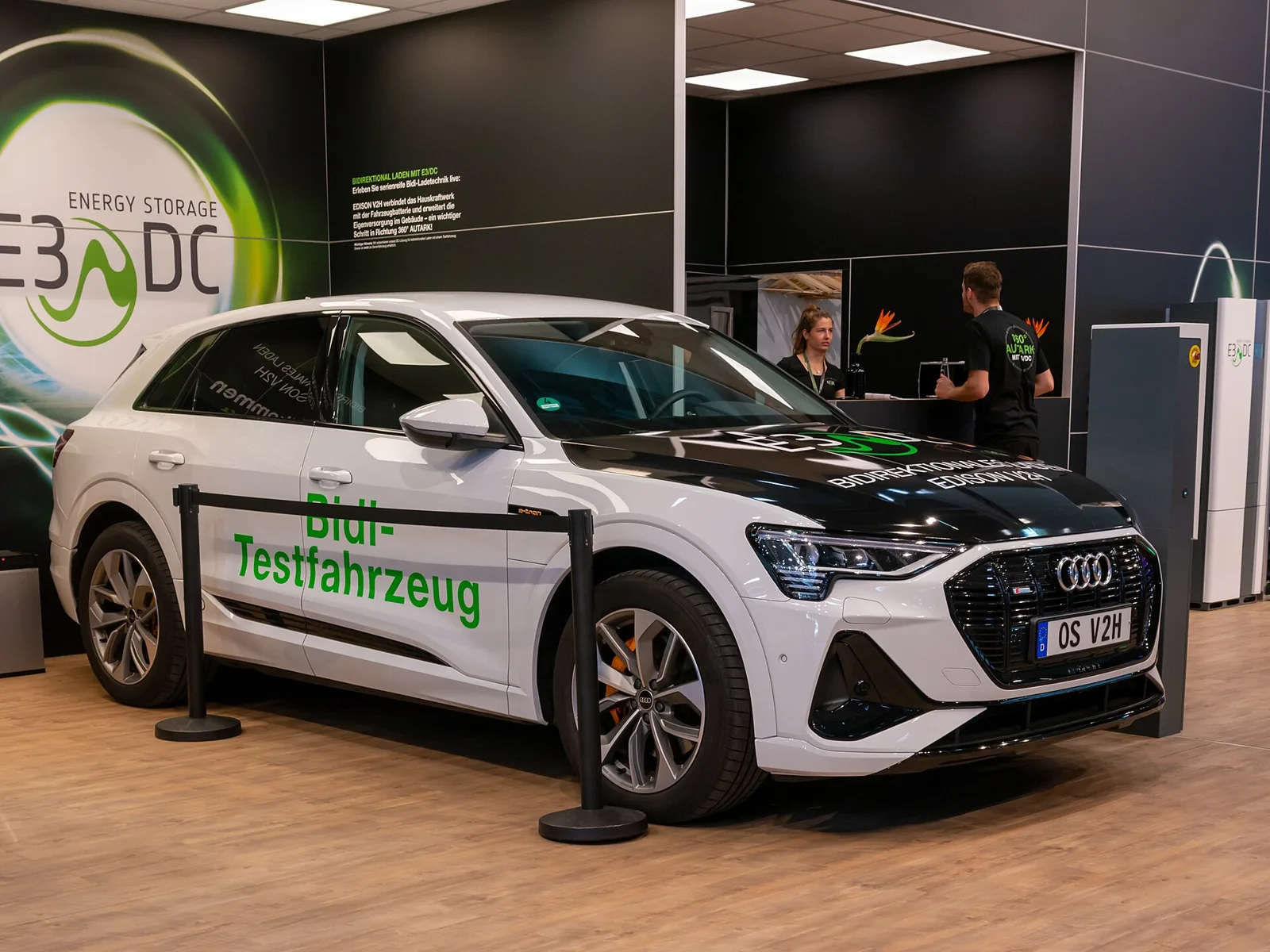
V2G and V2H turn a parked EV into a battery for the grid or the home.
Vehicle-to-grid (V2G) lets a plug-in electric car sell electricity back to the grid or slow its charging at peak times. Vehicle-to-home (V2H) uses the battery to power a house, for several days in an outage. Only certain cars support it, and financial returns in trials have been mixed.
An electric car can generally store more energy than an average home uses in a whole day. That single fact is why energy companies, carmakers and governments keep trying to turn parked electric cars into batteries. Whether it works well enough to pay, and which cars can actually do it, is a messier story.
What is vehicle-to-grid?
Vehicle-to-grid, usually shortened to V2G, is an arrangement where plug-in electric cars are paid to help the electricity network cope with demand. A car can help in two ways: by pushing electricity back out, or by easing off the speed at which it charges at chosen hours. Either way the idea is to flatten the demand peaks that strain the grid and to reduce the chance of disruption when load swings.
Think of the car as a rainwater tank for electricity. You fill it when power is cheap and plentiful, and you draw on it when the supply is tight and prices are high. Under V2G the vehicle becomes a small-scale grid battery, which makes it eligible for feed-in tariffs. A 2015 report found that owners could earn significant payments by charging off-peak, storing the power and selling it back at peak.
Plug-in electric vehicles cover both battery electric cars and plug-in hybrids, since both store electricity in an onboard battery. Some hydrogen fuel cell cars carry V2G functions too. A tank holding 5.6 kg of hydrogen can deliver more than 90 kWh of electricity, while a battery may hold 100 kWh or more.
A short history
The idea is older than most people assume. V2G grew out of vehicle-to-vehicle charging, first offered by AC Propulsion, a Californian firm, in the early 1990s, and its two-seat Tzero could charge in both directions.
An electric car can store more energy than a home uses in a day, and that is the whole reason V2G exists.
V2G, V2H, V2L and V1G: what is the difference?
The letters multiply quickly, but they sort into a few groups.
| Term | What it does | Back to the grid? |
|---|---|---|
| V1G | Smart charging: varies when and how fast the car charges, for example soaking up midday solar | No, one-way |
| V2L | Runs appliances and tools from the car | No, off-grid loads only |
| V2V | One car charges another | No, off-grid loads only |
| V2H | Powers a house, for instance in an outage | No, supplies the home |
| V2B | Powers a building | No, supplies the building |
| V2G | Sends power to the grid, which pays for it | Yes |
The difference between V2G and the rest comes down to synchronisation. V2L and V2V output alternating current that is not locked to the grid's rhythm, so it can only feed equipment that sits outside the network. V2G must match the grid exactly, which is what makes the hardware and the rules more demanding.
Together V2H, V2L, V2V and V2B are sometimes grouped as V2X. One caution: the same V2X label is also used for something unrelated, vehicles communicating with each other and with roads to improve safety. That is a data link, not a power link.
Can an EV power a home?
It can, and this is the use that most owners will meet first. A typical electric car holds more energy than an average household burns through in a day, so a car feeding a house can keep it running for several days in an emergency.
Japan makes the point with numbers. The average Japanese household uses 10 to 12 kWh a day, and a Nissan Leaf with its 24 kWh battery could keep a home supplied for up to two days. Commercial V2H solutions have been on sale in Japan since 2012.
The idea is simple, but the engineering is not. A V2H system needs charging stations with software that talks to the central grid and monitors demand in real time. Solar adds a neat twist: a car charged by solar panels at work during the day could power the house through the night without pulling anything from the grid.
How does V2G help the grid?
Electricity demand is lumpy. Evenings are busy and nights are quiet, and the grid has to be sized for the busiest moment. V2G attacks that problem from both ends. It fills the valley by charging cars at night when demand is low, and it shaves the peak by sending power back when demand is high. Those moves support regulation services, which keep voltage and frequency steady, and spinning reserves, which cover sudden surges.
Because local demand is easy to measure, the balancing can be done on a very local basis. It can also soak up wind and solar. A car that charges at midday to absorb surplus solar output, or stores wind energy that the grid cannot use, turns variable supply into something steadier. Market watchers even have a nickname for the trading side: carbitrage, a mix of car and arbitrage, the buying and selling of power held in a vehicle.
Software holds it all together. Smart meters feed real-time information to charging stations, and charge rates are adjusted to match. That is the smart grid at work: a network that carries information as well as electricity in both directions, unlike the one-way system of big central stations that served the 20th century.
Which cars support V2G and V2H?
Here is the awkward part. Many plug-in vehicles cannot output power at all. As of 2024, most EVs need a separate inverter, different from the one that drives the wheels, to turn battery power into alternating current. Charging in one direction only is technically simpler than pushing power back out.
A handful of models able to move energy out of the battery had arrived by 2023:
- The Ford F-150 Lightning can supply 9.6 kW as V2L or V2H power.
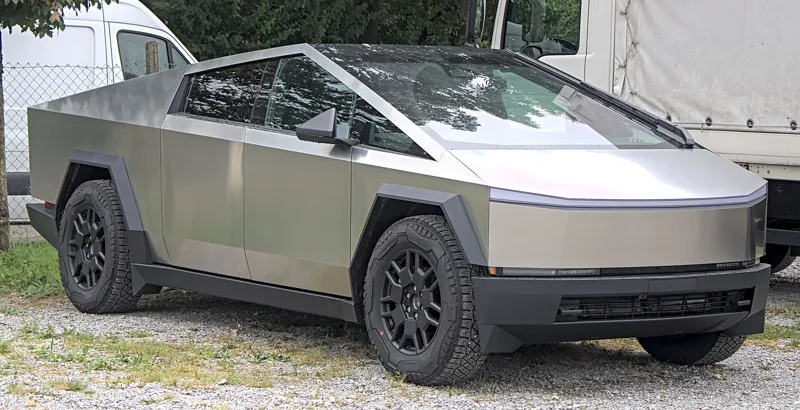
- The Tesla Cybertruck offers 11.5 kW of V2H or V2L.
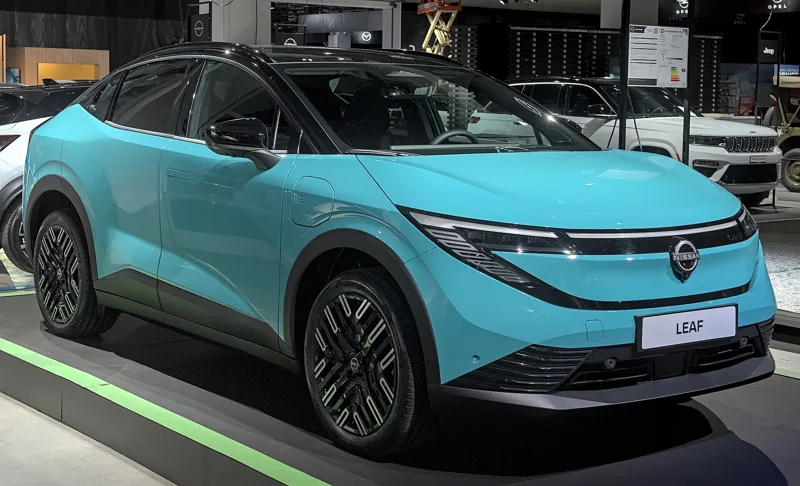
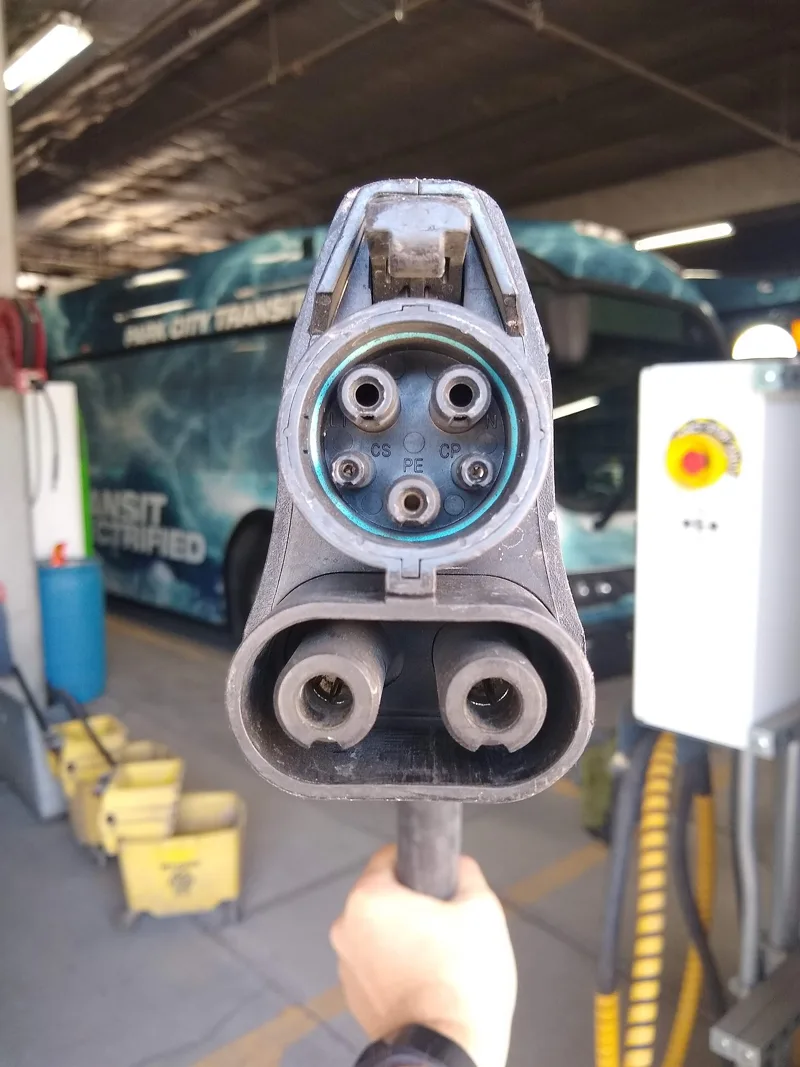
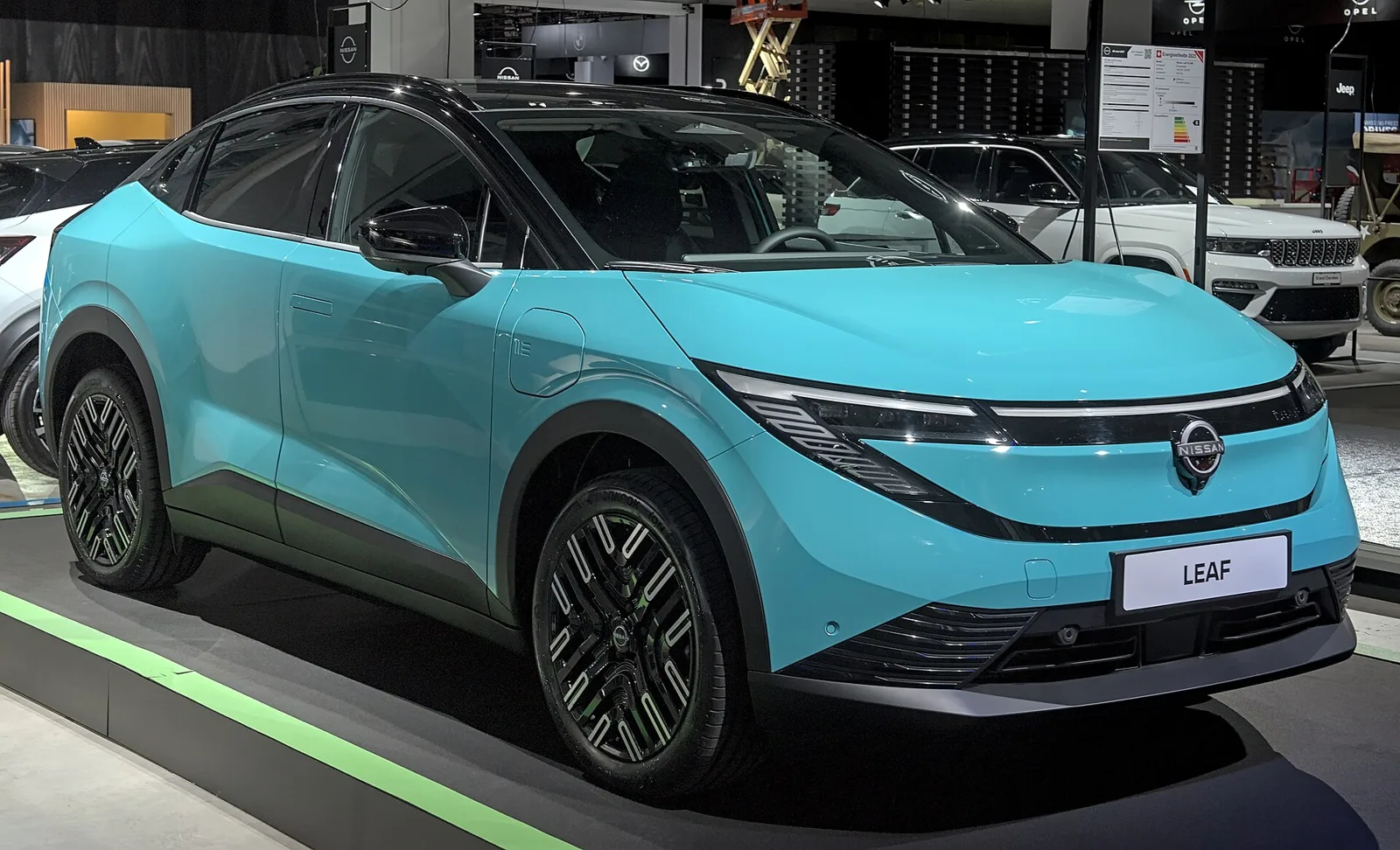
- The second-generation Nissan Leaf, launched in 2017 with a 40 kWh battery and a 50 kW CHAdeMO charging socket, can send power back to the grid. The Leaf e+ from 2019 carries a 62 kWh battery.
Australia shows how narrow the list still is. In 2022 the first V2G charger went on sale there, but roll-out was delayed by regulation, because each State Power Authority must certify chargers as compliant after national approval. High prices have also limited uptake, and as of 2023 only the Nissan Leaf and some Mitsubishi hybrid EVs were approved to use V2G. Since 2020 a team at the Australian National University has been examining how reliable and viable V2G is when rolled out widely.
Could software unlock more cars?
Possibly. Fast DC charging connects the station's transformer directly to the battery. Engineers are working on two-way DC charging in which the conversion between DC and AC takes place inside the station rather than the car. In principle, EVs with no V2G hardware could gain the ability with only a software upgrade. This is a development in progress, not a product you can buy today.
Will vehicle-to-grid pay for itself?
The evidence on payback is mixed. The grid case is strong. Meeting demand at peak times costs far more in many places than at other times, so power from parked cars is a potentially cheaper alternative. It could also help buffer wind and solar, and proponents suggest utilities could avoid building so many extra coal and gas plants to cover peaks.
The owner's case is less certain. V2G needs specialised hardware such as bidirectional inverters, and it loses a significant share of energy along the way. A 2016 pilot in California by Southern California Edison found that the revenue was lower than the cost of running the project, which wiped out its economic benefit.
Where the energy goes
Lithium-ion cells themselves return more than 90% of the energy put in, according to figures dating from 2007. The losses are elsewhere. As of 2016, most were in components other than the battery, above all the power electronics such as inverters. One study put round-trip efficiency for V2G systems between 53% and 62%. Another reported about 70%. Overall efficiency depends on many factors and can vary widely.
What about the battery?
Every rechargeable battery has a finite number of charge cycles, so V2G can reduce battery life. The picture is complicated, since a battery's capacity is shaped by its chemistry, how fast it is charged and drained, temperature, how full it is kept and how old it is. Most studies find that gentler V2G discharge reduces wear, and one even suggested that grid duty could extend a battery's life.
Where V2G is being tried
Real-world trials have come from many countries, and school buses and fleets feature heavily.
- In July 2022 eight electric school buses serving San Diego Gas and Electric territory joined a five-year V2G pilot, with Nuvve software pooling their batteries with others from a neighbouring school district.
- In 2017 the University of California San Diego started its INVENT programme with 50 bidirectional chargers, and in 2018 widened it to a fleet serving the Triton Rides shuttle.
- In 2018 Nissan and Fermata Energy used V2G to supply part of the electricity for the Franklin, Tennessee, base of Nissan North America. In 2020 Fermata's equipment was the first two-way charging system to earn certification under UL 9741, a North American safety standard.
- In Denmark, the Parker project ran from August 2016 to September 2018 with Nissan, Nuvve and others. It tested V2G services across car brands and found economic and regulatory barriers.
- In Germany, The Mobility House, Nissan and the grid operator TenneT used Nissan Leaf cars to store wind power from the north and feed it back at demand peaks, with ten charging stations.
- In 2018 EDF Energy in Britain announced a partnership with Nuvve for up to 1,500 V2G chargers, offering up to 15 MW of storage capacity.
Policy has not always kept pace. In September 2022 the BIDIRECTIONAL Act, designed to deploy electric school buses with V2G capability, was introduced in the US Senate. The bill died in committee.
Why the grid wants this
The pressure behind these trials is real. A US Department of Energy study says growing use of plug-in vehicles and other electrical technology could raise the strain on American grids by as much as 38% by 2050. The electricity system was built as a one-way network of big central stations, and smart-grid technology adds two-way flows of electricity and information. That flexibility makes it easier to absorb variable renewables such as solar and wind. In a grid like that, parked car batteries have an obvious job.
Where this goes next
The pieces are moving. In 2022 the Dutch city of Utrecht began installing thousands of bidirectional chargers ahead of the arrival of vehicles that support two-way flows. Denmark's Edison Project aims to build enough wind turbines for 50% of national power needs and to rely on V2G to protect the grid. In Poland, Solaris opened a test site for charging and discharging at Bolechowo in September 2022.
For an owner the sensible position is cautious. A car that can power a home in an outage is a proven idea in Japan and is reaching the market elsewhere. A car that earns money from the grid is still mostly a pilot project, and the numbers on efficiency, hardware cost and battery wear will decide whether that changes.
.jpg)