Which cars meet the ULEZ standards, what the charge costs, what it did to traffic and air, and how low-emission zones work across Europe and beyond.
The ULEZ is a London zone where an emissions-standard charge of 12.50 pounds a day applies, 24 hours a day, to petrol cars below Euro 4 and diesel cars below Euro 6. Launched in April 2019 in central London, it has covered all 32 boroughs, about 9 million people, since 29 August 2023.
A charge that began in April 2019 on a patch of central London now covers more than 1,500 square kilometres and about 9 million people. The Ultra Low Emission Zone, or ULEZ, grew in two steps in under five years and proved controversial, most of all after the 2023 expansion.
ULEZ compliant cars: what the standards say
The ULEZ does not look at the size of an engine or the age of a car as such. It looks at the European emission standard a vehicle meets. A car or van that clears the bar drives in free. One that does not pays a daily charge.
| Vehicle | Standard it must meet | Roughly which vehicles fail |
|---|---|---|
| Petrol cars and vans | Euro 4 | Most vehicles registered before 2006 |
| Diesel cars and vans | Euro 6 | Most vehicles registered before 2015 |
| Motorcycles | Euro 3 | Most vehicles registered before 2007 |
| Buses, coaches, heavy goods vehicles | Euro VI | Pay 100 pounds a day under the separate London low emission zone |
So the answer to "is my car ULEZ compliant" usually comes down to age and fuel. The gap between the petrol and diesel dates is the practical lesson: a diesel needs a much newer standard than a petrol car does.
A charge that began on a patch of central London now covers about 9 million people.
ULEZ charge: what you pay and when
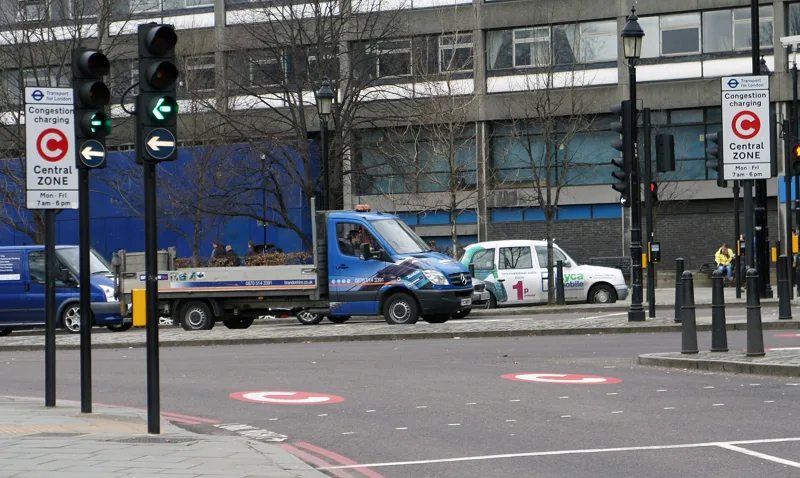
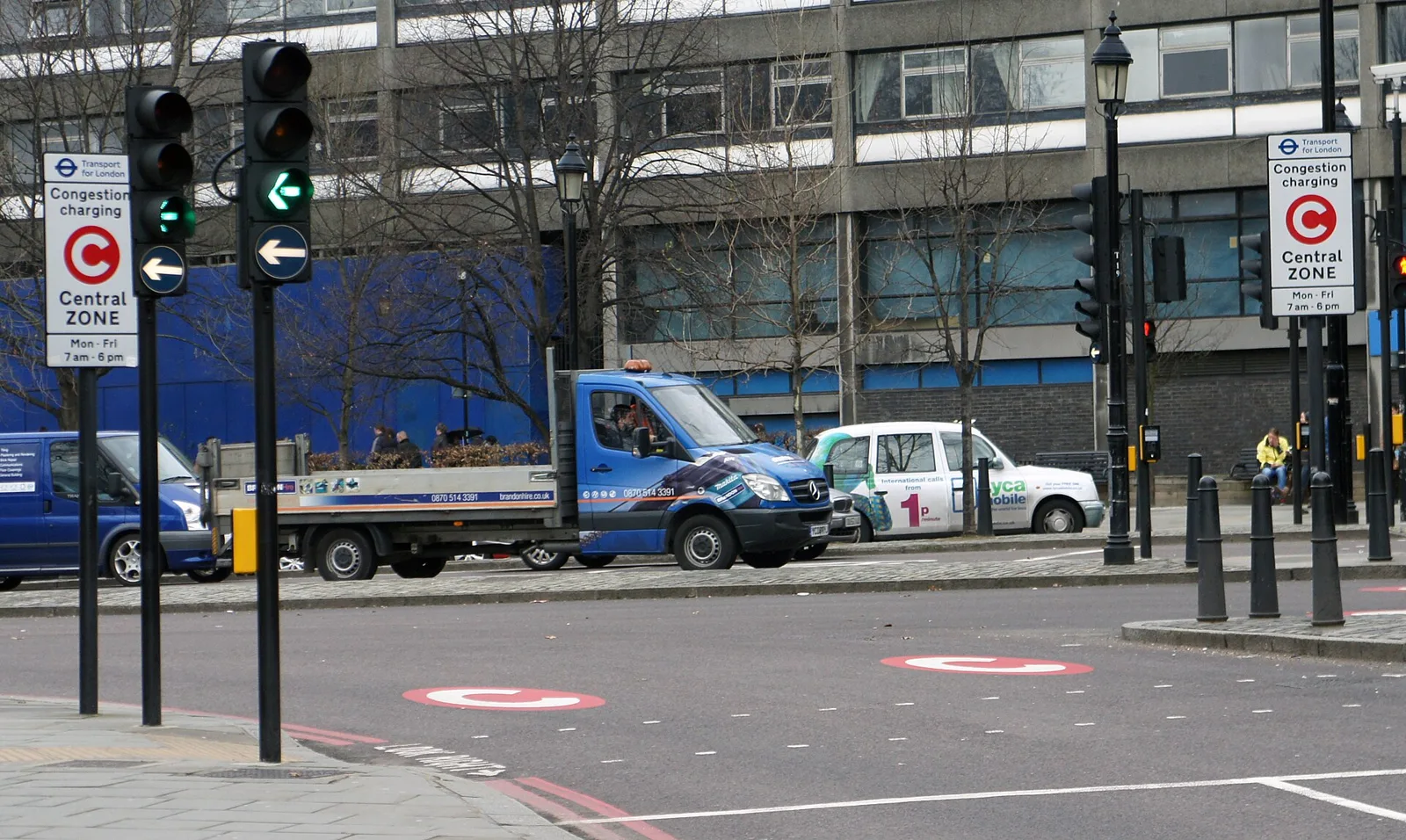
The charge is 12.50 pounds and it applies 24 hours a day, every day of the year except 25 December. It is charged on top of, not instead of, the congestion charge: a driver who has paid the ULEZ and enters central London is still subject to the London congestion charge.
Cameras do the policing. Automatic number-plate recognition reads each plate as the car enters and checks it against a database of vehicles that meet the standard, are exempt, hold a full discount or have paid. Nothing physically stops a non-compliant car; the penalty arrives afterwards.
Some vehicles never pay. Those in the disabled tax class are exempt, as are London-licensed taxis, wheelchair-accessible private hire vehicles and historic vehicles over 40 years old. Agricultural and military vehicles, certain mobile cranes and non-road-going machines such as excavators that are allowed on the highway are also exempt. Residents of the original zone paid nothing until October 2021, provided they held the resident discount on the congestion charge and met the T-Charge standards.
The money funds the transport network and other measures to cut air pollution. The zone raised 224 million pounds in charges and fines in 2022. Income fell month by month through that year as more of the vehicles entering the zone became compliant.
How the ULEZ grew
Boris Johnson was mayor when the plans were announced in 2015, and the original target for the central zone was September 2020. His successor Sadiq Khan brought in a Toxicity Charge, the T-Charge, for non-compliant vehicles from 2017, and the ULEZ replaced it on 8 April 2019, ahead of schedule. At first it covered the same ground as the congestion charge.
On 25 October 2021 it grew to cover Inner London inside the North Circular and South Circular roads, an area containing 3.8 million people. About a million vehicles a day used the enlarged zone, and Transport for London (TfL) estimated that 87% already met the rules. That still left nearly 140,000 vehicles that would have to be replaced or pay: 100,000 cars, 35,000 vans and 3,000 heavy goods vehicles.
The response came quickly. A month into the expansion TfL reported that compliance had risen from 87% to 92%, and that non-compliant weekday vehicles had fallen by over a third, from 127,000 to 80,000. Cars were ahead of vans, at 94% against 78%. After six months TfL put NOx in Inner London at 20% lower than it would have been without the change, with 95% of cars and 83% of vans meeting the standard.
The third step came on 29 August 2023, when the zone expanded to take in all 32 London boroughs and brought an additional five million people inside. The outer boundary follows that of the London low emission zone, with small deviations so that drivers can turn round or take diversions without entering. In March 2022 TfL had estimated that between 20,000 and 40,000 vehicles would come off the road as a result. Khan presented the move as a matter of social justice, pointing out that air pollution hits the poorest communities hardest and that nearly half of Londoners do not own a car.
Scrappage, grants and what happens to old cars
Alongside the charge came a scrappage scheme for people on income support or disability benefit. The original version offered up to 7,000 pounds for a car or van that had operated in the congestion zone, plus up to 2,500 pounds more if it was replaced with an electric vehicle. When the zone grew beyond the congestion charge area the payment for cars was cut to 2,000 pounds. The scheme scrapped at least 12,000 vehicles, and the 61 million pound fund was spent in full by 2022.
Rates announced for 4 August 2023 gave 2,000 pounds for scrapping a car and 1,000 pounds for a motorcycle, with 5,000 pounds for wheelchair-accessible vehicles to scrap or retrofit. Small businesses, sole traders and charities could claim grants of between 5,000 and 9,500 pounds for vans and minibuses, and from 21 August 2023 the scheme was widened to all Londoners, and small businesses could scrap as many as three vans rather than one. Since 2024, cars subject to ULEZ rules can also be donated to Ukraine instead of being scrapped.
What the ULEZ has done to traffic and air
The count of non-compliant vehicles entering the central zone each day fell from 35,578 in March 2019 to 26,195 in April, the month after the charge began, and to 23,054 by July. The share of compliant vehicles climbed from 61% in March 2019 to 74% in September, and reached 85% by December 2020, including 90% of cars, with around 12,000 non-compliant vehicles left, 4,000 of them exempt. The total number of vehicles entering central London each day fell from over 102,000 in February 2017 to 89,000 in April 2019.
Outer London shows the same pattern. Compliance there was 85% in May 2022, when the consultation on expansion was announced. It reached 90.9% in June 2023 and 95.2% in September 2023, after charging began. An April 2024 report found diesel sales in London falling significantly faster than elsewhere in the country, by roughly 40% over four years.
On the air itself, the evidence is not uniform. In November 2021 a study from the Centre for Transport Studies at Imperial College London found smaller reductions in emissions than had been reported, noting a longer-term downward trend in London's air and arguing that the ULEZ alone was not an effective strategy. Later research pointed the other way. Two studies in 2022 found nitrogen dioxide down 12% within the first year compared with the year before, with improvements visible inside 90 days. Between 2019 and 2022 nitrogen oxide emissions in London dropped by 13,500 tonnes, equal to all the emissions from landings and take-offs at Heathrow and London City airports in that period.
A 2025 report from TfL and the Greater London Authority estimated that nitrogen dioxide in 2024 was 27% lower across the city than it would have been without the ULEZ and its expansion, and 54% lower in central London. Exhaust particulate matter from cars and vans was put at 31% lower in Outer London because of the expansion. Figures from the Department for Environment, Food and Rural Affairs showed that London met the legal nitrogen dioxide limit in 2024; King's College London had estimated in 2019 that this would take 193 years.
Health studies have started to appear. A 2026 paper in The Lancet Public Health compared about 1,600 London primary school children aged six to nine with a matched 1,600 in Luton. In 2019 the London children had significantly smaller lungs on average. By 2022 the two groups were similar, and the share with clinically impaired lung function had fallen from 14% to 9% in London, against a smaller fall from 9% to 7% in Luton. A separate 2026 Imperial College study of adults in the original central zone estimated that hospital admissions for cardiovascular disease fell by 9.3% and all-cause emergency admissions by 5.1%. Its authors noted that the short gap before the COVID-19 pandemic made it hard to separate the ULEZ from the earlier T-Charge.
Why the ULEZ became a flashpoint
Opposition has centred on cost. A YouGov poll in April 2019 found 72% of Londoners backed using emissions charging against both air pollution and congestion, but the Federation of Small Businesses said many small firms were very worried about an additional cost burden. In TfL's consultation on the outer expansion, 60% of respondents objected. Among people who lived in outer London the figure was 70%, and among those who worked there, 80%. By July 2023 more Londoners said they backed the expansion than opposed it, though residents of Outer London were evenly divided.
The dispute went to court. In May 2023 Bexley, Bromley, Harrow and Hillingdon councils, together with Surrey County Council, won permission from the High Court to challenge the expansion on grounds including the consultation and the scrappage scheme. The hearing began on 4 July, and on 28 July 2023 the court found the expansion lawful. Since 2023 the enforcement cameras have also been targeted by a campaign of organised vandalism, and by September 2023 attacks had extended to slashing tyres and spraying graffiti on camera vans.
A BBC London Freedom of Information request, filed eight months after the expansion, found that only one in 200 London residents had been affected.
What is a low-emission zone, and how do the rules differ?
A low-emission zone (LEZ) is a defined area where access for some polluting vehicles is restricted or discouraged, with the aim of improving air quality. It may favour bicycles, micromobility vehicles, alternative fuel vehicles, hybrids, plug-in hybrids and zero-emission vehicles. An ultra-low-emission zone sets a stricter standard than an ordinary LEZ. A zero-emission zone (ZEZ) goes furthest: only zero-emission vehicles may enter, so every internal combustion engine is banned, including plug-in hybrids that cannot run on electricity alone.
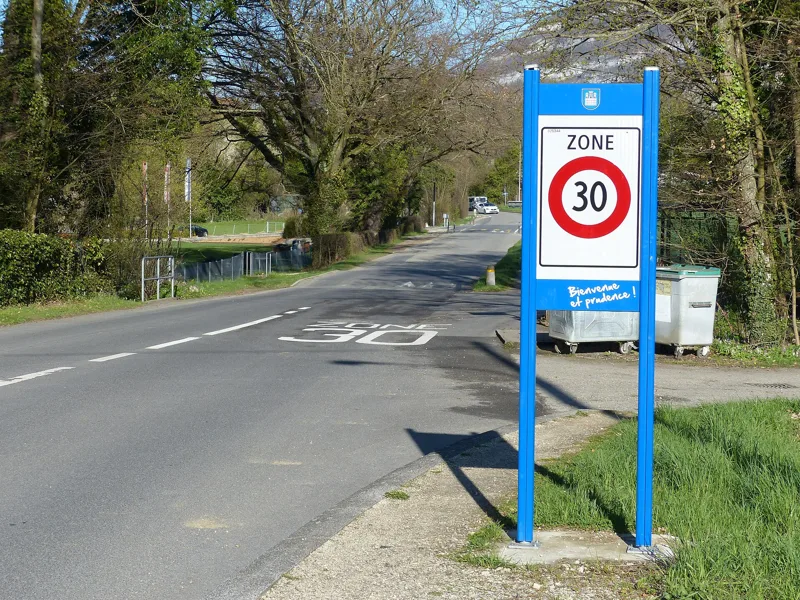
Most do not use barriers. Non-compliant vehicles are typically fined if they enter, unless a daily fee has been paid, and cameras like London's do the checking. The fine or fee works as a deterrent, so owners of non-compliant vehicles try to avoid it.
The intent is to improve air quality, and diesel particulates (PM10) have dropped in most zones, with health improving. Much of the effect comes from people replacing polluting vehicles with ones that meet a higher standard. Not everyone can: a night-shift worker or someone hauling heavy tools may be unable to do without a car or to afford a cleaner one. In some places the zone is therefore enforced only when public transport is available, or electric taxis and cargo bikes are subsidised. The European Federation for Transport and Environment would like LEZs to turn gradually into zero-emission mobility zones, supported by walking and cycling.
Most zones that are not also congestion charges leave the number of vehicles entering unchanged. Milan's is among those that double as a congestion charge, so it can cut the numbers too.
How other cities set their entry rules
By 2019 there were about 250 low-emission zones in Europe, helping to meet health-based air quality limits set by the European Union. Istanbul has none and Moscow's is not enforced. Every LEZ covers heavy vehicles, some also cover diesel vans, and others take in diesel and petrol cars. Italy also controls motorcycles and three-wheelers.
Belgium shows how standards can differ within one country. Antwerp has had a round-the-clock zone since 2017 that admits only diesels above Euro 3 and petrol vehicles above Euro 1. Brussels has covered its whole region since 2018 and admits only diesels above Euro 5, with petrol and gas vehicles needing Euro 3 or better since 2026. Ghent opened one on 1 January 2020. The Antwerp and Brussels zones have been shown to help air quality, health and socio-economic disparities.
France runs Paris from 8am to 8pm on weekdays and requires a Crit'Air sticker meeting the minimum standard; Grenoble, Lyon and Strasbourg also have zones. Germany calls them environmental zones, with 47 in operation or planning, with Berlin, Cologne, Hanover, Mannheim and Stuttgart starting theirs in 2008. The Netherlands limits diesel cars and vans to Euro 4 or better in Amsterdam, The Hague, Utrecht and Arnhem, and diesel trucks and buses to Euro VI. Rotterdam's zone applies to trucks only. Denmark's zones, in Aalborg, Aarhus, Copenhagen, Frederiksberg and Odense, cover vehicles over 3.5 tonnes.
Italy applies its zones to all vehicles, and Milan and Palermo combine them with urban road tolling. Signs do not distinguish a low-emission limited traffic zone from an ordinary one, so drivers are expected to work out from the list of exempt vehicles whether they can enter. In Spain, Pontevedra banned traffic in its core as early as 1999, Malaga and Seville set up zones in 2009, Seville rolled its back in 2011, and Madrid launched in 2018 with Barcelona approving one in 2020. Sweden lists Gothenburg, Lund, Malmo, Helsingborg, Uppsala, Umea and Stockholm, where older heavy diesel trucks and buses can be kept out.
Elsewhere, Sofia introduced the first zone in Eastern Europe on 1 December 2023, barring Euro 1 vehicles from the centre in winter. Hong Kong has limited three major junctions to franchised buses meeting Euro IV since the end of 2015, raised to Euro V from 31 December 2019. Jakarta's Kota Tua old town became a permanent zone on 8 February 2021, with only TransJakarta buses, bicycles, pedestrians and vehicles carrying a special marker allowed in. Beijing has a zone, Warsaw started one in 2024 and Krakow in 2026.
In Britain, London's own low emission zone began in 2008 and covers almost all of Greater London, the largest such zone in the world. It targets older diesel lorries, buses, coaches, vans, minibuses and heavy vehicles derived from lorries and vans, such as motor caravans, and was phased in between 2008 and 2012 with ever tougher standards. Glasgow's zone started at the end of 2018 with local buses, and from 1 June 2023 it reached every vehicle, older petrol and diesel cars included. Norwich and York have introduced zones. Leeds planned one but cancelled it in 2020 after cleaner vehicles became more common.
Where this goes next
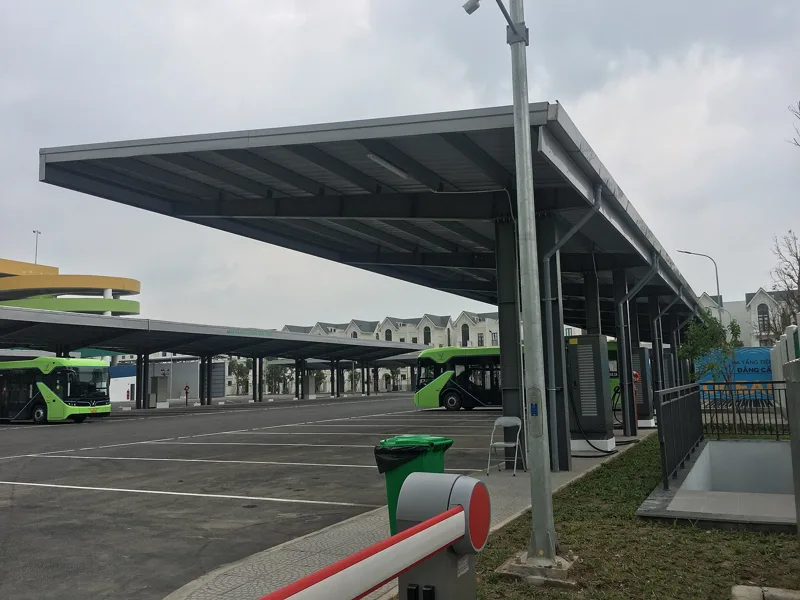
Vietnam planned to start a low-emission zone on 1 January 2025 in the Hoan Kiem and Ba Dinh districts of Hanoi under its Capital Law 2024. Oxford's plan, as proposed, is to start a zero-emission zone in a small area and expand it gradually until it covers most of the city centre by 2035, although any vehicle can enter it on payment of a charge, which makes it closer to a low-emission zone. Jakarta has applied the idea to the Tebet Eco Park on weekends and public holidays, with residents and workers displaying a sticker bearing a QR code.