From an 18-kilometre trial on the M42 in 2006 to a programme halted in 2023: how active traffic management, red crosses and refuge areas replaced the hard shoulder, and what the safety data says.
A smart motorway uses active traffic management, including variable speed limits and lane signals, to raise capacity. Some open the hard shoulder as a lane at busy times, others remove it altogether. The first scheme began on the M42 in 2006, and new schemes were halted in April 2023.
Britain built smart motorways for a decade and a half, then decided to stop. In April 2023 the government announced that the programme was halted permanently, citing financial pressures and a lack of confidence among drivers. By then the technology had spread from a single 18-kilometre (11-mile) trial near Birmingham to motorways around the country, and it had turned the hard shoulder, the lane every driver was taught to keep clear, into either a part-time running lane or no lane at all.
What is a hard shoulder, and what is it for?
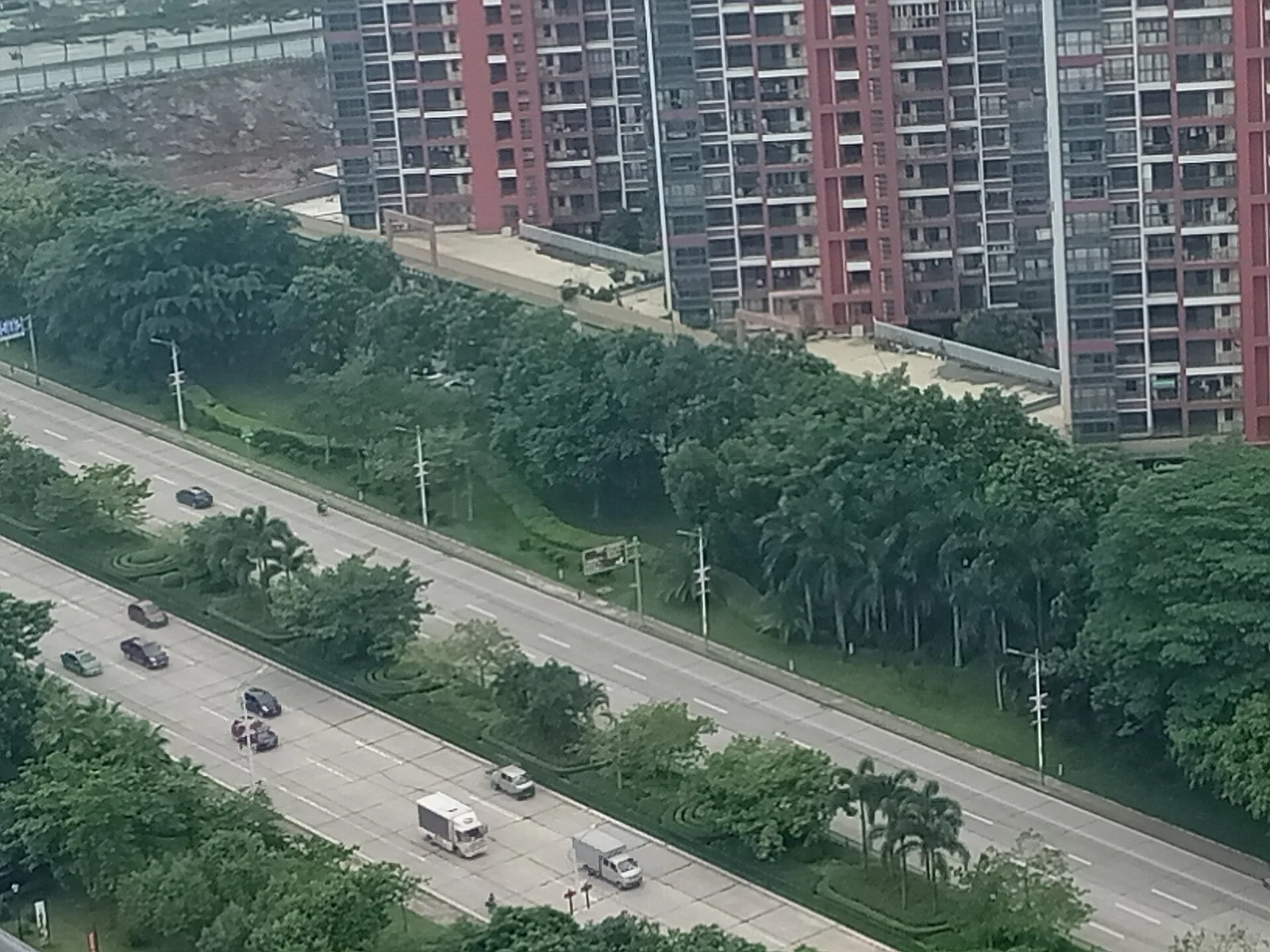
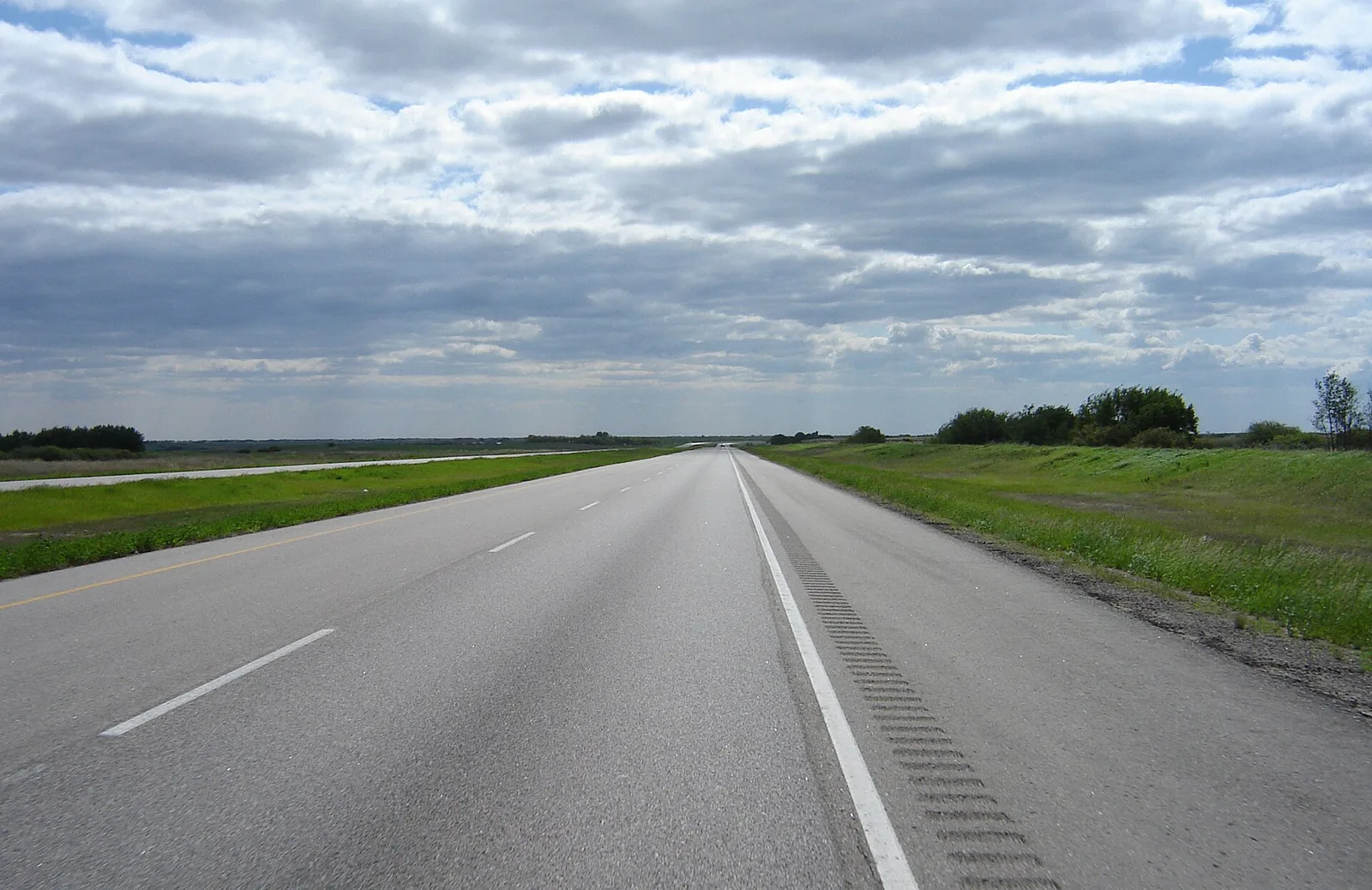
The emergency lane beside a fast road goes by three names. Americans call it the shoulder, the British call it the hard shoulder, and in Australia it is the breakdown lane. Wider freeways sometimes have one beside the central median as well as along the outer edge of each carriageway. Ordinary traffic is not supposed to use it.
Breakdowns are the obvious job. A motorist who pulls onto the shoulder is out of the flow of traffic and a good deal safer. Ambulances, fire engines and police cars use it to bypass jams in some countries, and the extra paved width gives a driver room to swerve around a wrong-way vehicle or recover control before leaving the road. Paved shoulders also drain water away from the road so it does not soak into the foundation, and they add structural support.
The surface matters. Britain's motorway shoulders are paved, though the old name stuck. Older gravel shoulders are sometimes called soft shoulders, and they are less safe in an emergency because the pavement simply stops. On Ontario's Highway 401, the Windsor to London section had gravel edges with a steep slope that were blamed for rollovers when drivers drifted off the asphalt and overreacted. The US Federal Highway Administration encourages a Safety Edge, a compacted 30-degree taper at the end of the pavement, so a driver who runs off can steer back on.
Width is another weakness. On China's Jingjintang Expressway the shoulder is only 2.4 metres (7.9 ft) wide, against a standard lane of 3.7 metres (12 ft) in the United States and Britain. Drivers who stop there end up half in the outside lane, and the result is often a jam and sometimes a crash. In Australia a study by the National Coroners Information System counted 29 closed fatality cases of people struck in an emergency lane after their vehicle had stopped, over the period July 2000 to November 2010, with at least a dozen more still under investigation.
A hard shoulder is the safety feature smart motorways design out, and the argument is about what replaces it.
How does active traffic management work?
Active traffic management, usually shortened to ATM, is a way of squeezing more capacity out of a busy road and smoothing the flow. The toolkit mixes managed lanes, ramp metering, signs whose messages change and speed limits that vary with conditions, and schemes exist in Germany, the UK, Canada and the US.
On the UK's M42, the first scheme, the road is watched by sensor loops set into the surface every 100 metres (328 ft), closer together than usual. A computer reads the flow and picks the best speed limit for the moment, then lights signs on overhead gantries as much as 2 kilometres (1.24 miles) ahead of an incident. Operators in a control room can watch 150 CCTV cameras along the route and change both the limits and the messages on the signs. Digital enforcement cameras on the gantries, run by West Midlands Police, catch drivers who ignore the mandatory limits.
Think of it as a lock on a canal. A lock does not make the water move faster; it controls how much arrives at a time. Slowing traffic early, upstream of a build-up, is the idea behind queue protection, whose main purpose is to reduce rear-end collisions.
How does smart motorway hard shoulder running work?
Whenever the limit has been cut to 60 miles per hour (97 km/h) or less, the hard shoulder may be switched on as an extra lane. To keep that safe, refuge areas were built about every 500 metres (1,640 ft) along the stretch, laid out as lay-bys beside the hard shoulder with SOS phones in them. If a car breaks down on the hard shoulder, operators can shut it. They can also close a lane to give the emergency services access to a crash. The hard shoulder is never opened for the stretch beneath a junction, between the exit and entry slip roads, and close to junctions it is restricted to traffic that is leaving or joining.
The Highways Agency (now National Highways) began using the name smart motorway in 2013 to promote the technology, and it covers several designs. Before that the name was managed motorway, and in Scotland the scheme is called an intelligent transport system. The simplest design is the controlled motorway, with variable speed limits and no hard shoulder running, which describes the M25 between junctions 27 and 30. The next adds a dynamic hard shoulder that opens when needed. The most controversial is all-lane running, usually shortened to ALR, in which the hard shoulder is removed for good and replaced by a full-time running lane, with emergency refuge areas at intervals.
The red cross and the rules of the road
The signs are simple. When a gantry shows a red cross over a lane, that lane is closed, and the cross is a legal requirement under section 36(1) of the Road Traffic Act 1988. A driver who ignores it faces a fixed penalty of 100 pounds and three points. If the case goes to court the fine can be as high as 1,000 pounds and the driver can be banned for 56 days. Compliance with the red cross stands at 92%, a figure that has not fallen since 2019, and drivers surveyed want a zero tolerance approach to those who ignore it.
Some roads also employ stopped vehicle detection, which was present on 18% of smart motorways in 2019. The government says all-lane running roads are designed to work safely without it, but with it the control room can close a lane in as little as a minute.
From one trial on the M42 to a national programme
The technique, hard shoulder running included, was first used in full on the M42 in the West Midlands in 2006, and a pilot on an 18-kilometre (11-mile) stretch near Birmingham began that September. From 2008 a 60 mph (97 km/h) limit was tried southbound from junction 4 to 3A, a 10 mph (16 km/h) rise on the old maximum.
The scheme grew quickly. In 2007 the transport secretary of the day, Ruth Kelly, announced plans to extend it to two sections of the M6 near Birmingham by 2011 at a cost of 150 million pounds, with refuges every 800 metres (0.50 mile). In February 2010 a 2 billion pound contract was announced to carry it onto the M60 and M62 as well as the M1, M4, M5 and M6, awarded to four delivery partners. When Carillion went into compulsory liquidation, its contracts were taken on by Kier in January 2018.
The idea was a cheaper alternative to widening. In 2007 it was estimated that active traffic management could be in place within two years at around 5 to 15 million pounds per mile, whereas widening would take 10 years and cost 79 million pounds per mile.
| Approach | Time | Cost per mile |
|---|---|---|
| Active traffic management (2007 estimate) | About two years | 5 to 15 million pounds |
| Road widening (2007 estimate) | 10 years | 79 million pounds |
| M4 junctions 3 to 12, 32 miles (51 km), built 2018 to 2022 | Autumn 2018 to March 2022 | 26.5 million pounds (848 million pounds in total) |
The M4 job shows the gap between forecast and reality. The conversion between junctions 3 and 12 ran from autumn 2018 to March 2022, and calibration of some sections was still under way in July 2022. Emergency stopping areas there were provided every 1.3 miles (2.1 km).
Did the M42 trial work?
On the early numbers, yes. A Highways Agency report on the first six months found that the variability of journey times fell by up to 27%. Northbound journeys were 26% quicker, an average saving of 4 minutes, while southbound afternoon journeys improved by 9%, around a minute. Accidents fell from over 5 a month to 1.5 on average. The agency added a caution, noting that accident figures are normally compared across three years, and said no accidents had been caused by drivers using the hard shoulder as a normal lane. It also reported a 10% fall in pollution, a 4% fall in fuel consumption and 98% compliance with the speed limits when the hard shoulder was in use. About 60% of motorists said they wanted the system expanded.
The government has made a broader case since. It says a smart motorway can take an extra 1,600 vehicles an hour each way, and as many as 11,000 journeys daily, and that this draws drivers off rural and A roads, which are statistically more dangerous. On the M6 around Crewe, the average commute is reported to have fallen by 40 minutes.
Are smart motorways safe? The evidence disagrees
British motorways are statistically the safest roads in the country; A roads record more of the collisions that kill or seriously injure. In theory, smart motorways reduce certain risks, because speeds are more uniform, hazard warnings are automatic and refuge areas are meant to be safer places to stop than a hard shoulder.
The studies pull in different directions. A 2012 analysis by Highways England expected all-lane running to lower risk by 20% against a conventional three-lane motorway. Monitoring from 2015 to 2018 showed a small rise in people seriously or slightly hurt and a slight drop in deaths, with the caveat that the roads compared may not be entirely alike. Looking at individual sections before and after conversion, the risk of personal injury collisions fell to roughly 81% of the earlier level. A 2020 government review concluded that all-lane running cut the rate of deaths yet raised the rate of lesser injuries. Crashes between moving vehicles became less common, while crashes involving a stationary vehicle became more common.
Critics point elsewhere. An independent review concluded that removing the hard shoulder is beyond doubt less safe than any other form of smart motorway. One study found that installing a smart motorway on the M6 led to 50% more accidents across five years, and Highways Magazine has argued that the extra capacity may fill with traffic and make such roads more dangerous in the long run.
Stopped vehicles are the heart of the argument. On all-lane running roads from 2016 to 2020, 76 collisions involved at least one stopped vehicle, against 1,370 that involved none. On ordinary hard shoulders there is a risk too: one in 14 fatal casualties on English motorways involves a vehicle on, leaving or entering the hard shoulder, and there were 100 casualties on the hard shoulder in 2017. Yet when ALR is in use, the proportion of breakdowns that happen in a live lane doubles compared with motorways that have a permanent hard shoulder. Of 243,701 live lane breakdowns on the strategic road network between 2016 and 2020, more than half were on motorways with a hard shoulder, partly because they are recorded less reliably on non-smart roads. On ALR schemes there are on average two live lane breakdown collisions on each section each year, accounting for 17% of killed or seriously injured collisions.
The government has also loosened its design specification, increasing the minimum interval between refuge areas, which may reduce a driver's chance of reaching a place of relative safety.
What drivers think of smart motorway lanes
Confidence is low. A 2022 survey found 73% of drivers would avoid the left-hand lane of a smart motorway, up from 56% in 2019. The RAC found only 23% of drivers trust the authorities to spot a stopped vehicle and react. In 2022, 22% of drivers lacked confidence on motorways that have no hard shoulder, compared with 12% on motorways that have one and 8% on dual carriageways. Refuge areas are provided up to 1.5 miles (2.5 km) apart, which 63% of drivers think is too far, and 79% worry they could not reach one in time. There is also concern about how emergency services and traffic officers reach an incident when traffic is queuing and there is no hard shoulder to use.
Active traffic management beyond Britain
Elsewhere, the ideas have been adopted piece by piece. In Canada, the QEW highway near Toronto uses ramp metering on some on-ramps, about 22 Toronto intersections have adaptive signals, and British Columbia has used variable speed limits on overhead gantries on a few highways since 2019. In the United States, the New Jersey Turnpike has run active signage since the 1960s, and Minneapolis switched on a modern scheme on Interstate 35W in 2010.
Washington State built the first legally enforceable system in the country, so failing to follow a speed limit or an overhead instruction there is an offence. It went live on 11.6 km (7.2 mi) of northbound I-5 in August 2010, then on 12.4 km (7.7 mi) of SR 520 in November 2010 and 14.3 km (8.9 mi) of I-90 in March 2011. Its ramp meters have been in place since the early 1980s and release one vehicle per signal cycle, and once switched on the rate is updated every 20 seconds by a fuzzy logic algorithm. Queue protection lowers speeds in steps such as 8.0 km/h (5.0 mph) or 16.1 km/h (10.0 mph) ahead of a jam. When a lane closes, a red X appears above it and drivers have about 800 metres (2,640 ft), one gantry interval, to clear it. The state has not published performance data, and low compliance is noticeable among drivers, partly because there is no automated enforcement of the kind used in England.
Other ways a shoulder gets used
Shoulder use for traffic is not confined to smart motorways. In some US and Canadian jurisdictions buses may drive on the shoulder to pass jams. Over 430 km (270 mi) of shoulder in the Minneapolis-Saint Paul region are designated for them, and bus bypass shoulders exist in Northern Ireland towards Belfast and on the M90 towards Edinburgh. Florida has a plan for moving traffic on inside shoulders during hurricane evacuations, used first on 8 and 9 September 2017 before Hurricane Irma and again in October 2024 before Hurricane Milton. It limits speed to 50 mph and bans trucks, buses and trailers.
What it means if you drive one
Read the gantry. A red cross means stay out of that lane, whatever you think is ahead. If the road has no hard shoulder, the places to stop are the refuge areas, which can be up to 1.5 miles (2.5 km) apart. On a stretch with a dynamic hard shoulder, the lane is only open to traffic when the limit is 60 mph (97 km/h) or lower. Those speed limits are mandatory and enforced by camera.
What the government did after 2021 and 2023
The government said in April 2021 that new smart motorways would have radar to detect stopped vehicles, plus extra cameras, and that existing ones would be fitted by September 2022. After the decision of 16 April 2023 to halt the programme, work began in June 2023 on more than 150 extra refuge areas for emergencies on current smart motorways, completed in April 2025. Outside the UK, Canada's active traffic management is described as limited at present, with more expected, and Washington State has further hard shoulder running planned for SR 520 and I-5 in Marysville.