From Cari Lightner's death in 1980 to a 0.08 limit in every state: the campaign, a Canadian drinks-company promotion and the Harvard project that changed how Americans think about driving home.
Mothers Against Drunk Driving, founded in 1980 by Candace Lightner, lobbied for the 0.08 blood alcohol limit that every US state had adopted by 2004. The designated driver idea, popularised in the US from 1988, reinforced the shift in attitudes.
Before MADD, the blood alcohol level specified in drink-driving law was commonly 0.15 percent, high enough to indicate drunkenness rather than mere impairment. Twenty-four years after Cari Lightner's death, every state had a 0.08 limit. The turning point began on 3 May 1980, when a 13-year-old girl named Cari Lightner was killed in a hit-and-run in Fair Oaks, California, and her mother, Candace, founded Mothers Against Drunk Driving four months later.
That campaign, together with the designated driver idea that spread from Scandinavia through Canada to the United States, changed what drink-driving law demanded and what drivers expected of one another. The story runs through blood alcohol limits, checkpoints, ignition interlocks and a sometimes uneasy argument about how far the movement should go.
Who founded MADD?
Candace (Candy) Lightner started the organisation. Cari was killed at Sunset and New York Avenues in Fair Oaks, and the driver, aged 46, had recently been arrested for another drink-driving hit-and-run and left the girl's body at the scene. Lightner became founding president, and MADD was formally founded on 5 September 1980 in California. A 1983 television movie about her brought publicity, and the group grew fast. A film about its formation, M.A.D.D.: Mothers Against Drunk Drivers, was released that same year.
The group soon caught the eye of Congress. Senator Frank Lautenberg of New Jersey disliked the way young people from his state could cross into New York to buy alcohol, sidestepping a New Jersey law that limited drinking to those aged 21 and over. MADD today is based in Irving, Texas, with at least one office in every US state and in every Canadian province, as well as Brazil. MADD Canada was founded in 1990, with the Toronto activist John Bates as chair.
Lightner left in 1985. In 2002 she told The Washington Times that MADD had grown far more neo-prohibitionist than she ever intended, and that she had started it to tackle drunk driving rather than alcohol. Writers including Susan Cheever, along with the SAGE Encyclopedia of Social Problems, have described MADD as a manifestation of the temperance movement.
MADD lobbied to cut the blood alcohol limit from 0.10 to 0.08, and every state had done so by 2004.
What drink-driving law looked like before MADD
The first law to criminalise driving while intoxicated came from New Jersey in 1906. It said no intoxicated person shall drive a motor vehicle, and the penalty was a fine of up to $500 or a spell of up to 60 days in the county lock-up. Early statutes like it required proof that a person was intoxicated, without saying how much alcohol that meant. New York banned drink-driving in 1910 and in 1941 amended its law so that a blood alcohol content of 0.15 percent or more, measured within two hours of arrest, counted as prima facie evidence of intoxication. That 0.15 became the first generally accepted limit.
Medical and safety bodies were already looking at the problem. In 1938 the American Medical Association formed a committee to study motor vehicle accidents, and the National Safety Council set up one on tests for intoxication. Yet laws and penalties only sharpened from the late 1970s into the 1990s, largely under pressure from MADD, Students Against Destructive Decisions and activists such as Lightner.
How MADD changed the blood alcohol limit
Under the old approach, the alcohol reading counted as evidence of impairment, and the level commonly specified, 0.15 percent, pointed to drunkenness. MADD pushed for a lower figure. It lobbied to cut the limit from 0.10 to 0.08, Congress passed that standard in 2000, and by 2004 every state had adopted a legal limit of 0.08. All 50 states now make it a crime to drive with a set level of alcohol of 0.08 or more, with one exception: Utah sets it at 0.05.
| Driver or setting | Blood alcohol limit |
|---|---|
| New York, 1941 evidence rule | 0.15 percent (prima facie evidence, tested within two hours) |
| Most adult drivers, every state by 2004 | 0.08 percent |
| Utah | 0.05 percent |
| Drivers under 21 | 0.00 to 0.02, depending on the state |
| Commercial drivers (federal rule) | 0.04 percent; removed from duty for 24 hours at 0.02 to under 0.04 |
| Train crew and aircrew | 0.04 percent |
The 0.08 figure is a per se threshold, meaning that proof of it is enough to convict. It equals 8 grams of alcohol per 10 litres of blood. Colorado adds a lesser charge, sometimes called driving while ability impaired, for 0.05 and above. Every state also has a catch-all provision for drivers under 0.08 who still appear impaired, including those affected by drugs or a combination of alcohol and drugs.
The National Transportation Safety Board went further on 14 May 2013, recommending that all 50 states drop the benchmark to 0.05. MADD Canada has asked for a maximum of 0.05 there; MADD in the United States has not called for 0.05, although many of its leaders have backed a lower limit. Utah brought in 0.05 during 2022, a change reported as a success even though some other states failed to follow and others never tried.
Zero tolerance for young drivers
The same period brought zero tolerance laws, which criminalised driving with a blood alcohol level of 0.01 or 0.02 for drivers under 21. They apply even in Puerto Rico, where the legal drinking age is 18. MADD also favours keeping the minimum drinking age at 21 and requiring ignition interlock devices for everyone convicted of impaired driving. A paper in the American Economic Review finds that penalties triggered at set blood alcohol levels help cut repeat offending.
The designated driver: where the idea came from
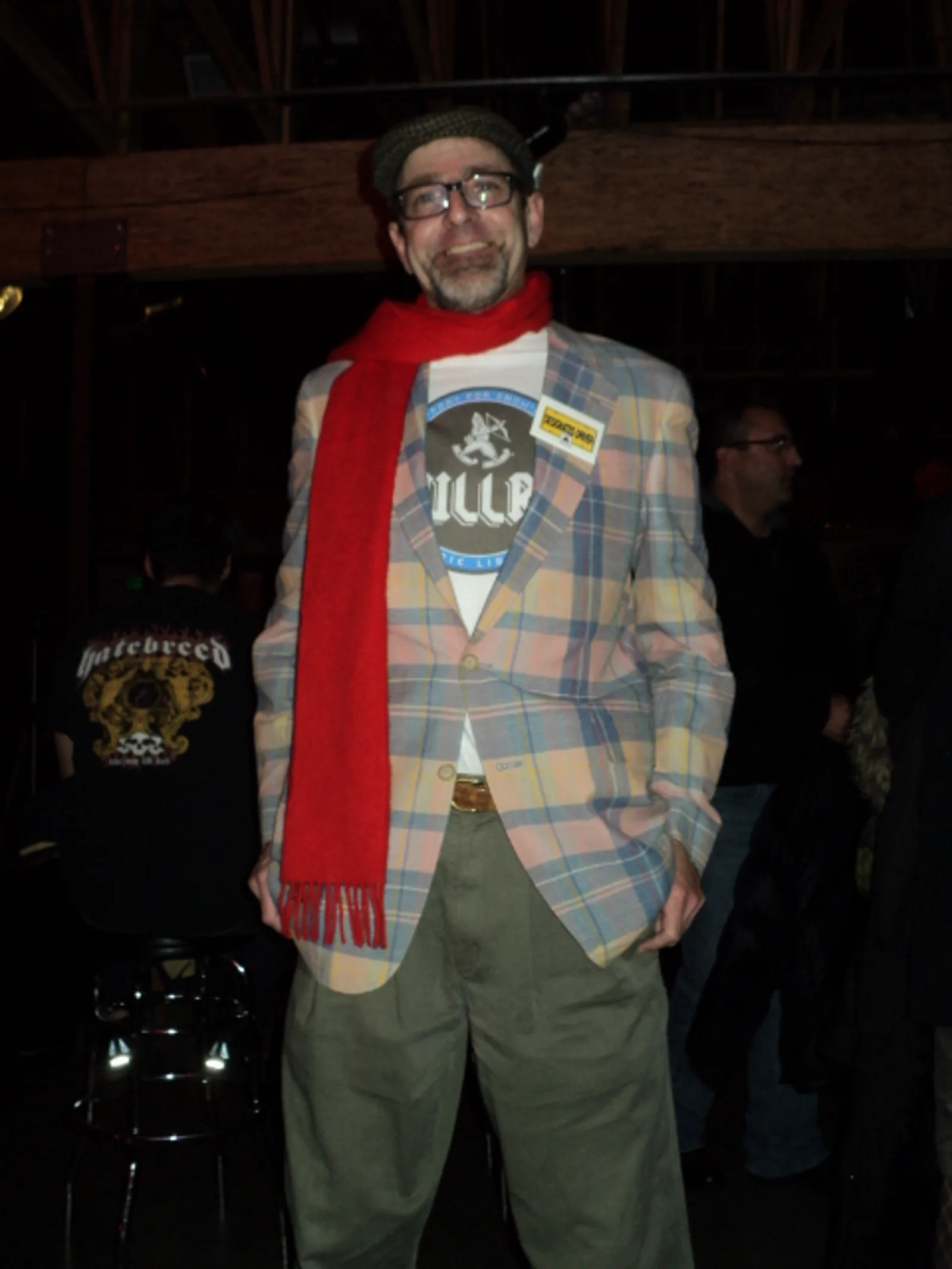
A designated driver is a person who stays sober so that companions who drink can be driven home safely. Some bars and restaurants offer such drivers free or cheap soft drinks. The concept grew in Scandinavia over several decades from the 1920s and became a formal programme in the 1980s.
The Canadian drinks company Hiram Walker and Sons introduced it in Canada in 1986 as The Canadian Club Designated Driver Program. Police, MADD, the hospitality industry and the public welcomed it, and few if any opposed it. The company's president, Doug Young, and its PR agency, Marshall Fenn Limited, under David Butler, pushed the promotion. The idea spread across Canada, the United States and other countries within the year.
In 1988 the Harvard Alcohol Project, run by Jay Winsten at the Harvard School of Public Health's Center for Health Communication, carried it into the United States on a large scale. Television networks and Hollywood studios joined in, with public service announcements and designated driver cameos in series such as Cheers, L.A. Law and The Cosby Show. The US Department of Transportation adopted the slogan "friends don't let friends drive drunk", and President Bill Clinton taped announcements each year he was in office. Polls showed designated driving rising after the campaign began, which is credited as a contributing factor in the fall in alcohol-related traffic deaths between 1988 and 1994.
When the designated driver idea fails
Designated drivers are popular, but groups often misuse them. Many fail to name the driver before arranging transport, so they turn up in separate vehicles. Even sharing a car does not guarantee the driver stays sober. A study at the Tijuana and San Diego border found that groups asked to name their designated driver before entering the bar district later returned drivers with substantially lower blood alcohol levels than control groups.
Paid services have grown out of the idea. In South Korea, replacement drivers called dae-ri un-jeon are in high demand, with an estimated 100,000 handling 700,000 customers a day in 2007, according to the Korea Service Driver Society. Chinese apps send a driver who arrives with an e-bike in the boot and rides away after the job. In Australia they operate in several capital cities and country towns. American Safe Ride businesses, started from 1998 onward, are not strictly designated driver schemes because the sober driver does not come from the drinking group.
How drink-driving is policed in the United States
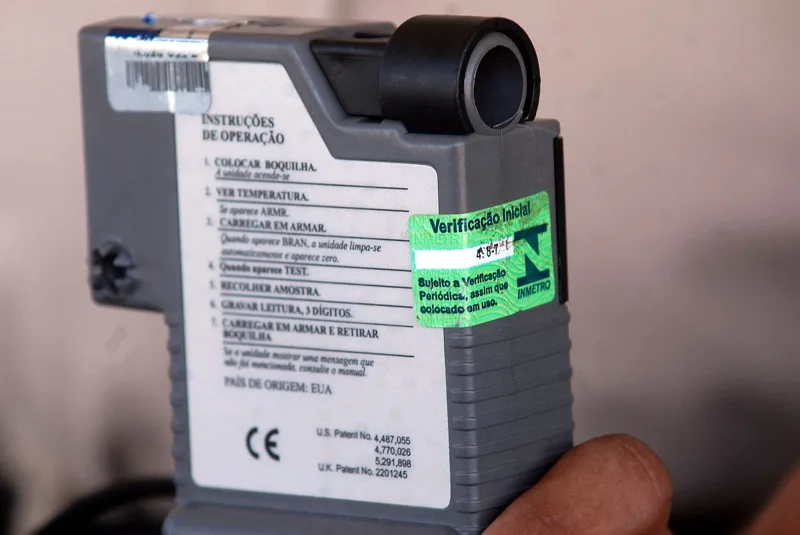
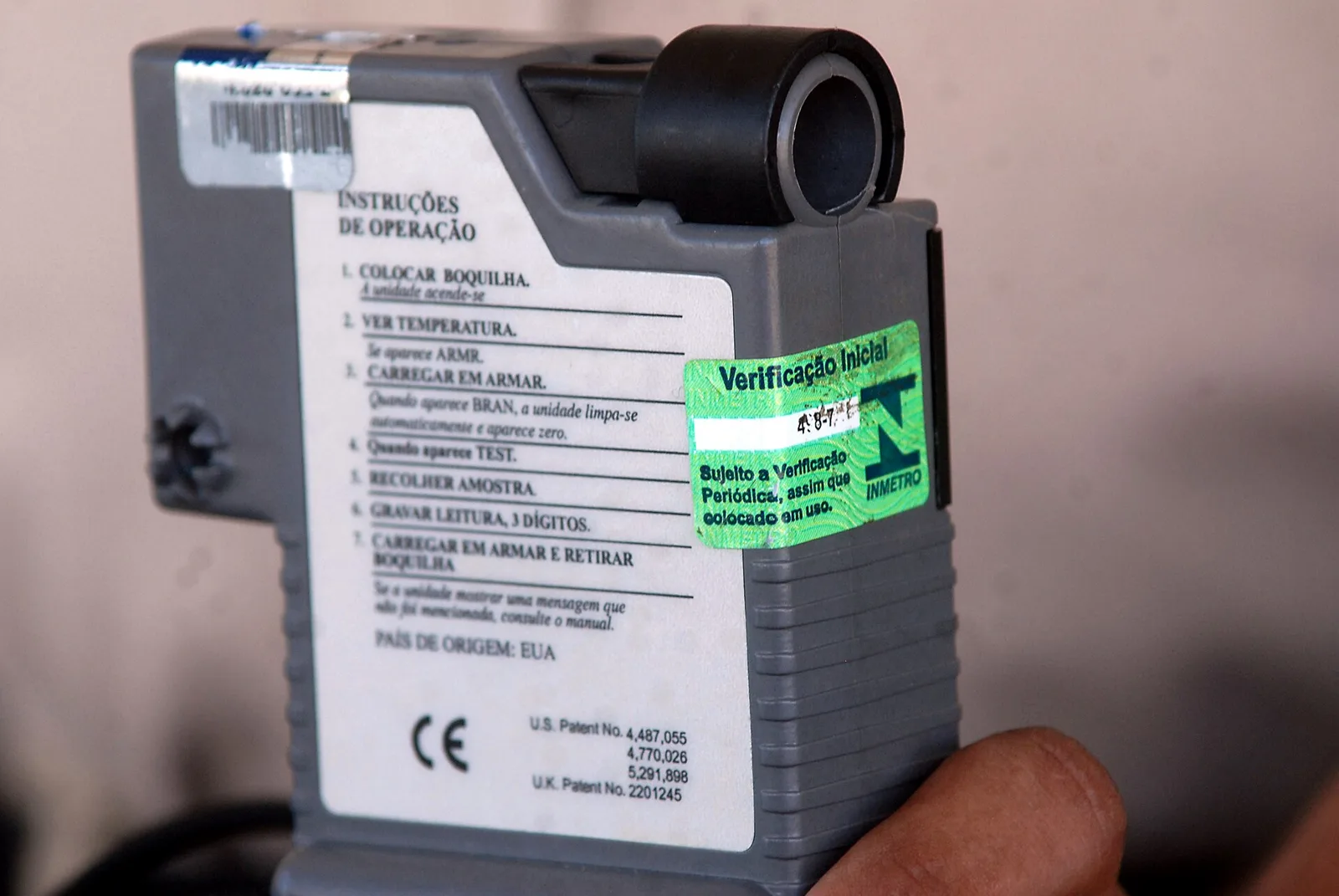
Drunk driving is operating a vehicle while impaired by alcohol, or with a blood alcohol level above the legal limit, and is variously called DUI, DWI, OVI or OWI. All states have implied consent laws, under which a licensed driver is taken to have agreed to an evidential breath test, although a conviction based on a chemical test still needs probable cause for arrest. Field sobriety tests and preliminary breath tests are often used to supply it. Every state adds penalties for refusal. In California, refusing a breath or blood test after a DUI arrest brings an extra one-year licence suspension.
The courts have drawn lines. In Birchfield v. North Dakota in 2016, the Supreme Court held that a breath test can be required without a warrant but a blood test, which pierces the skin, cannot. The same year, the Kansas Supreme Court ruled 6-1 that drivers cannot be criminally prosecuted for refusing a breath or blood test when no warrant exists.
States differ on other details. Some punish "operating" a vehicle while others require actual "driving". Twenty to thirty states criminalise impaired cycling. Six states require doctors to report impaired drivers and another 25 allow it, a practice the American Medical Association endorsed in 1999 while leaving it to the states. In 2026 Nevada put Assembly Bill 4 into effect, making a fatal DUI punishable by as much as 25 years for a first offender, with a five-year mandatory minimum where one or two earlier offences exist, plus fines of $2,000 to $5,000.
How big the problem was, and is
The Bureau of Justice Statistics counted 1,467,300 arrests for driving under the influence in 1996, one in every ten arrests for any crime, compared with a peak of 1.9 million in 1983. DUI arrests rose 220 percent from 1970 to 1986, while licensed drivers grew by just 42 percent. The National Highway Traffic Safety Administration (NHTSA) estimated that about 18,000 people died in alcohol-related collisions in 2006, 40 percent of all traffic deaths, and that over 2001 to 2010 that share barely moved, with a variation of only 3 percent. Drivers at 0.10 percent face between 6 and 12 times the likelihood of a fatal collision or injury that sober drivers do, it adds.
"Alcohol-related" has a specific meaning. NHTSA applies it to a fatal crash if anyone involved, even a passenger or pedestrian, registers a blood alcohol reading of 0.01 percent or higher, and the agency notes that it does not mean alcohol caused the crash. The National Transportation Safety Board says 100,000 people died in alcohol-impaired crashes between its 2013 Reaching Zero report and 2022. Some 29.1 million people owned up to driving under the influence in 2012.
Criticism of MADD
Credit and criticism have travelled together. Writer Radley Balko, who argued for decriminalising drunk driving, wrote in 2002 that MADD deserved credit for raising awareness and almost certainly for the drop in fatalities since 1980, but called it a large bureaucracy with a $45 million budget, $12 million of it spent on salaries, pensions and benefits. He also objected to its support of highly publicised random roadblocks, and noted that while it campaigns for higher beer excise tax, it does not seek a new tax on spirits, an industry it has partnered with on awareness projects. Raising beer tax to the spirits rate is the seventh item in its eight-point plan.
Financial ratings have been mixed. In 2005 the American Institute of Philanthropy cut MADD from a C to a D, saying up to 58 percent of revenue went on what it counted as fundraising and management. For the 2013 fiscal year Charity Navigator scored it 63.53 out of 100 on finances and 96.00 on accountability and transparency, and MADD reported spending 24.4 percent of expenses on fundraising. CharityWatch gives it a C-. Between 2001 and 2006 the group received $9,593,455 in federal funds.
What it means for a driver today
A driver in the United States over 21 is generally breaking the law at 0.08 percent blood alcohol, and under 21 at levels as low as 0.01 or 0.02. A commercial licence holder faces 0.04. A refusal to take a test can be punished separately, and in some places a driver does not even need to be moving to be charged. The designated driver, whether a friend, a student ride service or a paid replacement, remains the simplest answer, and the evidence suggests that naming the driver before the night starts matters.
What MADD wants next
MADD wants factory-fitted breath alcohol ignition interlocks in every new car. Its president Glynn Birch said the main reason people still drive drunk is that they can. A California Department of Motor Vehicles review found interlocks work for some offenders in some contexts, work best when installed, and do not appear effective for first offenders with high blood alcohol levels. The NTSB's 2013 call for a 0.05 limit remains a recommendation to the states, and Utah's 2022 change is the case others can look to.