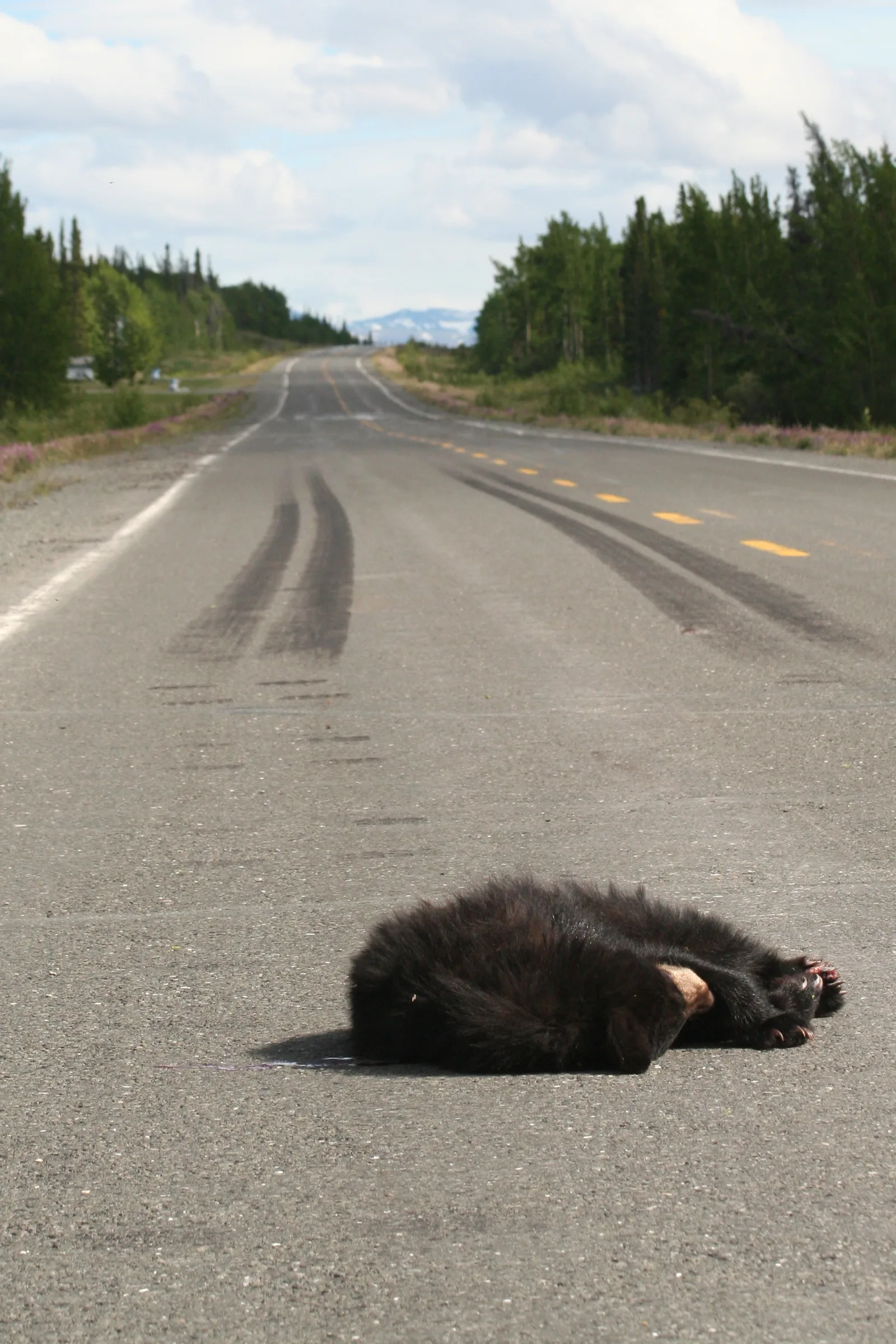
Kangaroos cause most animal collisions on Australian roads. Here is how bull bars are regulated, which risks are highest, and which measures cut the toll.
Kangaroos account for the majority of collisions between vehicles and animals in Australia, with wallabies and wombats next. Dusk and dawn carry the highest risk. Roo bars protect the vehicle but increase pedestrian injury risk, and Australian bullbars must meet AS4876.1-2002 and the Australian Design Rules.
Kangaroos cause most of the collisions between vehicles and animals in Australia, which is why the front-mounted guard fitted to rural vehicles is nicknamed a roo bar. Wallabies and wombats come next in the tally.
Why are kangaroos such a road hazard in Australia?
Kangaroos are a primary road safety hazard in Australia, and they account for the majority of animal strikes on the country's roads. Wallabies and wombats are the next most common casualties. Strike rates are high enough that roo bars are most often fitted to vehicles driven in outback or rural areas.
Time of day matters. Dusk and dawn are the periods of highest collision risk with large animals, so those are the hours when a driver in kangaroo country has least margin for error.
Kangaroos are a primary road safety hazard in Australia, and they account for the majority of animal strikes on the country's roads.
What happens when a car hits a large animal?
Collisions with large animals that carry antlers, such as deer, are especially dangerous. Any big, long-legged animal can pose a similar threat of intruding into the cabin, and that includes horses, larger cattle and camels.
The driver's reaction adds risk. Injuries are common when a driver fails to keep control of the vehicle while trying to avoid an animal, or in the moments right after impact. Beyond the human cost, collisions bring death and suffering for animals, harm to endangered species, the loss of livestock or pets, vehicle damage, and economic losses from cleaning up and repairs. Roadkill is also an unwelcome sight, which is costly for places that depend on tourism.
How big is the wildlife collision problem?
| Place and period | Estimate |
|---|---|
| United States, 2008 federal report | 1 to 2 million accidents a year between large animals and vehicles |
| United States, insurance | 1.25 million claims a year after collisions with deer, elk or moose, 1 out of 169 collision damage claims |
| United States, deer | 1.5 million accidents and $1.1 billion in vehicle damage each year |
| United States, all wildlife | 29,000 injuries and over 200 deaths each year |
| Europe, 1990s research | 507,000 collisions with ungulates a year; 300 people killed, 30,000 injured, damage over $1 billion |
| Worldwide, extrapolated from road length | Roughly 5.5 million vertebrates killed per day, over 2 billion a year |
Behind the numbers sits an old problem. Roadkill hardly existed before motorised transport, and it grew with rising vehicle speeds in the early 20th century. One writer blames driving without attention, speeds too high to allow a stop, and distraction. On roads in Europe and North America, deer are the likeliest victims.
What is a bull bar, and what is a roo bar?
A bullbar, also called a push bumper, is a device fitted to the front of a vehicle to protect it, either from a large animal on a country road or, in police use, from the impact of ramming another vehicle. The name points to cattle, which sometimes wander onto rural roads. In Australia the same fitting is called a roo bar.
Designs vary widely. Most are welded steel or aluminium tubing, although newer ones use moulded polycarbonate and polyethylene. Where cattle are common and big four-wheel drives are the norm, drivers choose large steel bars. Brushbars protect the fender panels and headlights from small trees and scrub. Nudge bars, usually fitted to sedans and small SUVs, are light aluminium alloy or polycarbonate tubing that shields only the radiator area.
Most bullbars replace the front bumper and the inner wheel wells, so they must provide housings for the indicator lights. Owners often use them as a base for spotlights, fishrod holders or recovery winches. Radio antennas get mounted on them too, though a roof mount performs better, and the roof position makes a vehicle too tall for many underground car parks.
Are bull bars safe for other road users?
Studies have found that fitting a bull bar makes death or serious injury more likely for a pedestrian who is struck. A rigid bar passes all the force of an impact to the person struck, whereas a bumper gives way and crumples. Official studies in the United Kingdom attributed 2,000 deaths and 18,000 serious accidents a year in Europe to the rigid fronts of cars, often fitted with metal bullbars.
Europe responded. Carmakers agreed with the European Union not to fit bullbars to new vehicles from 1 January 2002, and a full ban on selling rigid bars followed. Vehicles that already carried them remained legal.
Design has moved on. Traditional bars protect the vehicle, which is judged less safe than letting a structure deform in a controlled way to absorb energy. Newer impact bars tie in with the vehicle safety system, for example by triggering airbags after a strike. Plastic bars of polyethylene act like springs and deflect, so the vehicle can still be driven after hitting an animal, and they are more pedestrian friendly than the same car with no bar. Some modern bars include crumple zones or sit on sliders that move back to cut impact forces.
Construction matters too. The channel section that gives the bar its strength should be cut from a single piece of material, with no bolted or welded sections. Thicker material is generally stronger, and steel or high-tensile alloys are stronger than standard alloy or polymer products.
What rules apply to bull bars in Australia?
Australia has debated the safety of bullbars as four-wheel drives and their accessories have become popular in cities. Cycling and pedestrian organisations criticise their use in urban areas. Manufacturers must meet the Australian standard AS4876.1-2002. In some states, driving with a bar that fails the Australian Design Rules may be an offence.
The main rule is within ADR 42. It says that no vehicle may carry any non-essential object or fitting that protrudes in a way likely to raise the risk of bodily injury to a person. It is not aimed specifically at bullbars, yet it effectively sets out how they must be built. The first version, ADR 42/00, applied to vehicles built from July 1988.
Australian Standard AS4876.1-2002, covering road user protection, was released in 2002 and applies to every bullbar made since then, whatever the age of the vehicle. Older bars exist only under state legislation. Bullbars may not stop a vehicle meeting other design rules, which covers the visibility of headlights and indicators. They also relate to ADR 69/00, the rule for full frontal impact protection, so a bar made for a vehicle with airbags has to be tested to show it works with the airbag system.
Not everyone thinks enforcement is firm. In 2003 New South Wales MP Anthony Roberts suggested there was little or no enforcement of the design rule, and Harold Scruby, of the Pedestrian Council of Australia, has argued for applying current standards to existing bars.
How can drivers reduce the risk of a wildlife strike?
Mitigation falls into two groups: changing what drivers do and changing what animals do. For drivers, there are three levers. The first is attitude, through public awareness and the idea that fewer roadkill deaths benefit a community. The second is warning people about hazardous spots with signs, rumble strips or lighting. The third is slowing traffic, physically or psychologically, with chicanes or speed bumps.
Personal habits matter as well. Driving without paying attention, at speeds that do not leave room to stop, and being distracted all add to the toll. Dusk and dawn carry the most risk. Stopping on a highway to help an animal in trouble is not illegal, but it can be dangerous, and it may injure or kill the helper or an inattentive driver who runs into the stopped vehicle.
Do fences and wildlife crossings work?
Wildlife crossings are structures that let animals pass beneath or above a road. They include underpasses, viaducts, green bridges, amphibian and reptile tunnels, canopy bridges, culverts and green roofs. Combined with fencing along the road, they have been the most successful of the available options at cutting both habitat fragmentation and collisions.
The wider toolkit for changing animal behaviour includes making roadsides less attractive by reducing food and water, lightening road surfaces so animals feel exposed, and using ultrasonic whistles, reflectors and fencing to keep them off the road while cars are present. Rumble strips can backfire: where road salt is used, it may collect on them and attract animals searching for salt licks.
Banff National Park in Canada is the best-studied case. Its 24 crossings on the Trans-Canada Highway, 22 underpasses and two overpasses, were built as part of a 1978 road improvement. By January 2007, 10 species of large mammals had used them 84,000 times. Animals needed time to learn: grizzly crossings rose from seven in 1996 to more than 100 in 2006, though only two to four individual bears were involved. Crossings and fencing cut traffic deaths among large ungulates by more than 80 percent, yet bear mortality rose by an average of 116 percent as traffic doubled, so the results depend on the species.
The idea is older than it looks. The first overland wildlife crossings were built in France in the 1950s, and several European countries, among them the Netherlands, Switzerland and Germany, have used overpasses and underpasses for decades to protect amphibians, badgers, hoofed animals and invertebrates. In North America, the technique is spreading. Along a 40-mile stretch of Interstate 75 in Florida, 24 highway underpasses and 12 modified bridges serve the endangered Florida panther, and Ontario opened its first crossing in 2010, on Highway 69.
Cost is modest by road standards. One study put the extra for wildlife crossings at 7-8% of a project's total cost. In Virginia, a study estimated that underpasses pay for themselves in vehicle damage once they prevent between 2.6 and 9.2 deer collisions a year, depending on their price. In Brazil, seven aerial bridges at Alta Floresta cost about $3,000 each in materials, last 20 years, and are used by an average of 12 animals a day. The Netherlands reported in 2007 that more than 600 tunnels under roads had substantially increased numbers of the endangered European badger, and its longest ecoduct runs 800 meters (2,600 ft).
Which Australian animals suffer most?
Beyond kangaroos, roadkill is a heavy burden on smaller species. In Tasmania, brushtail possums and Tasmanian pademelons are the animals most often killed. Roadkill is considered a significant contributor to the decline of threatened species including koalas and eastern quolls. For small or shrinking populations, even modest losses can be devastating.
Volunteers help track the problem. The citizen science project WomSAT collects wombat roadkill data across Australia. Scavengers can complicate counts, because in places with plenty of them corpses may vanish within minutes of a strike, so figures can understate the true toll.
Where this goes next
Parks Canada is planning 17 additional crossing structures across the Trans-Canada Highway near Lake Louise to improve driver safety. Researchers add that extra measures, such as wire T-caps on the fence, may be needed to cut bear deaths. In Australia, the idea of applying modern bullbar standards to older bars remains a proposal.