A permit that is only a translation, three treaties from 1926 to 1968 and the cases where a driver can skip the booklet altogether.
An International Driving Permit is a translation of your domestic licence, recognised in countries that follow the 1926, 1949 or 1968 road traffic treaties. It is valid only with your home licence and never in the country that issued it. If your licence meets the Vienna Convention you may not need one.
An International Driving Permit is not a licence at all. It is a translation of one, so it is worthless without the licence it translates and worthless in the country that issued it. Even so, the grey booklet, slightly bigger than a passport, is what makes a home licence usable in any country that recognises the document.
What is an International Driving Permit?
An International Driving Permit, or IDP, translates a domestic driving licence, and the holder may then drive a private motor vehicle wherever the document is recognised. People sometimes call it an international driving licence. The name goes back to the French "permis de conduire international", used in the convention on motor traffic signed in Paris in 1926.
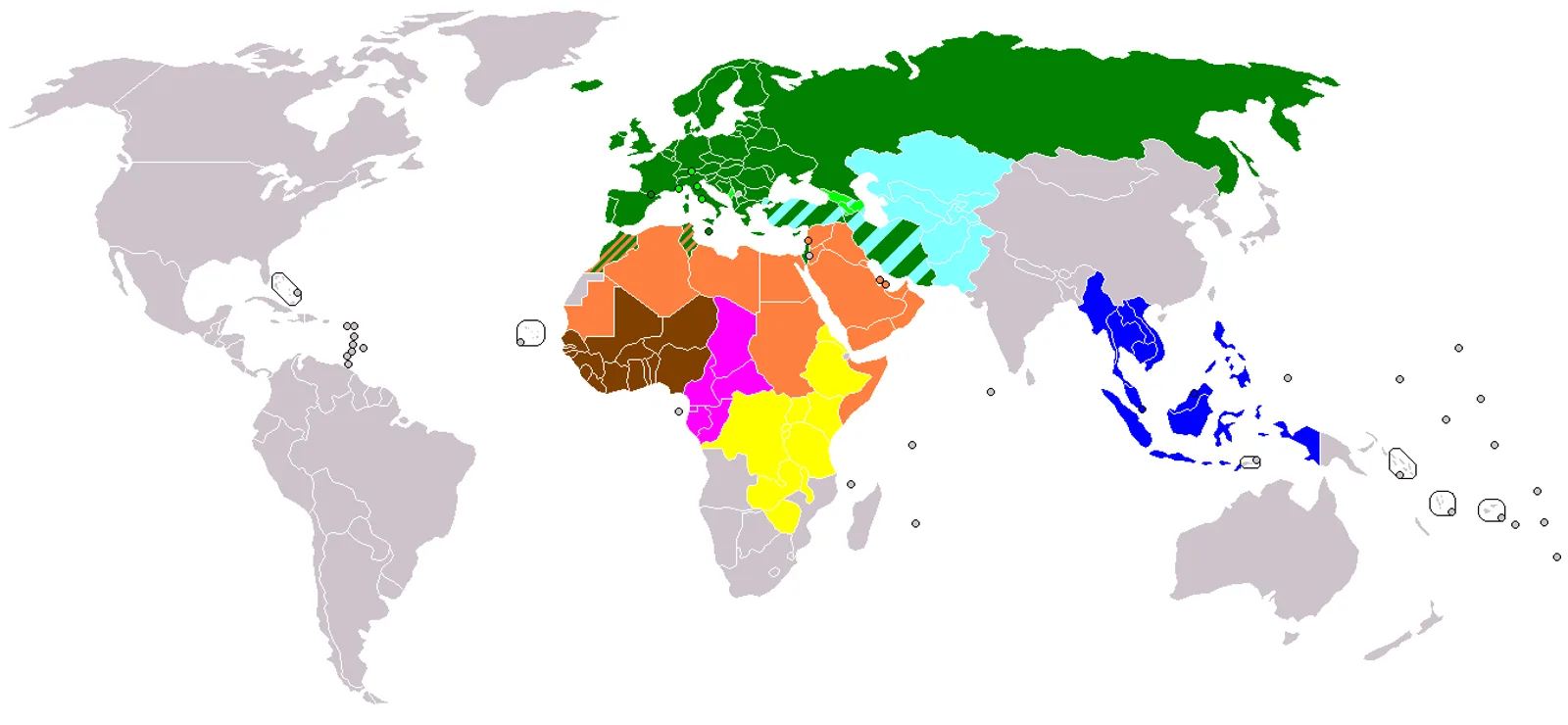
That Paris treaty, and every one since, uses the word permit for all kinds of driving licence. Three conventions govern the document: the 1926 Paris convention, the 1949 Geneva treaty on road traffic and the 1968 Vienna treaty. A state that belongs to more than one is bound by the newest, which ends and replaces the older ones between those states.
Two limits apply to every IDP. To be valid it must be accompanied by a current licence from the country where the applicant lives. And it cannot be used where it was issued: it works only in foreign countries, always shown alongside the carrier's original licence.
An International Driving Permit is a translation of a licence, and it means nothing without the licence it translates.
What does the booklet look like?
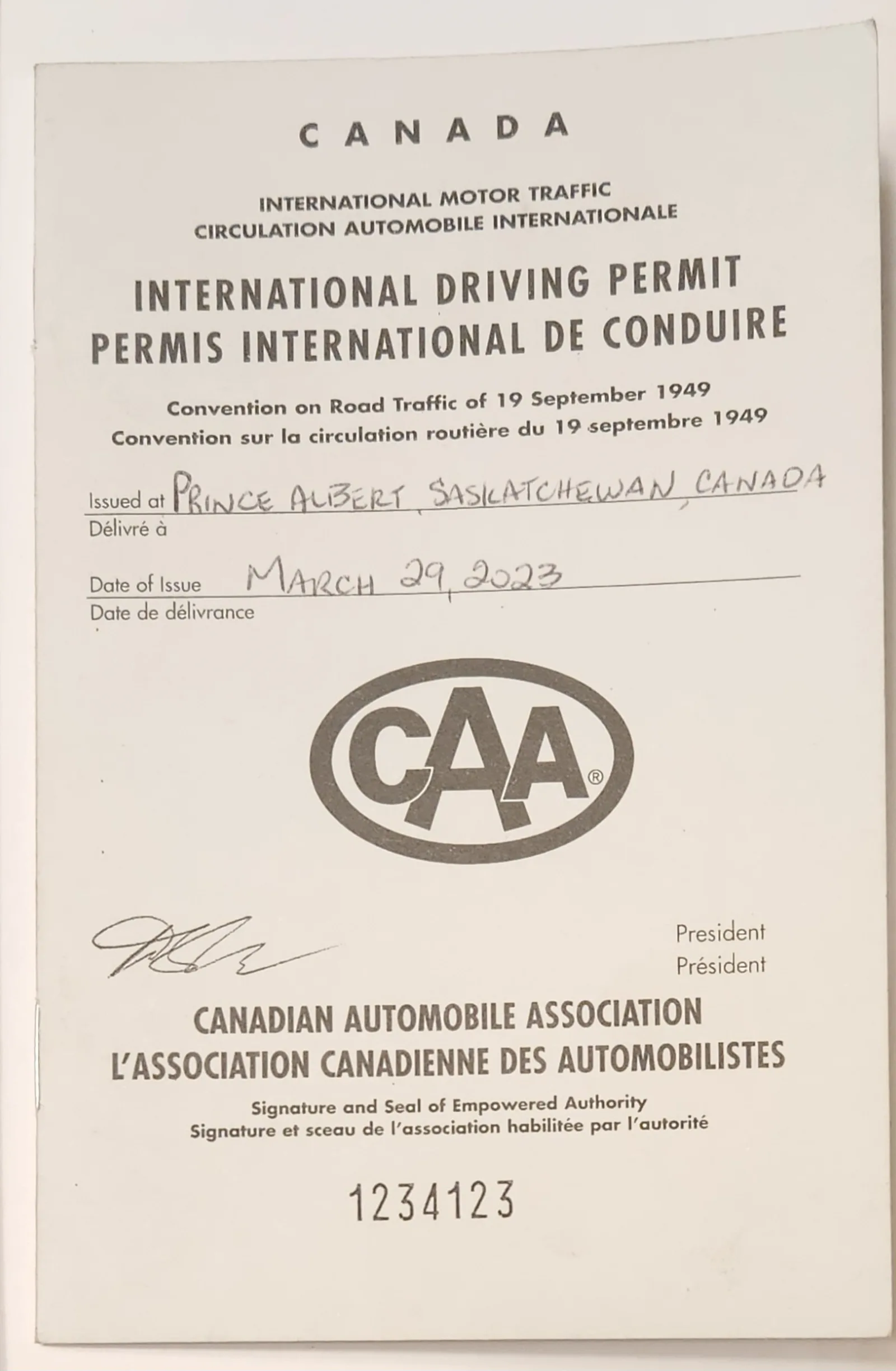
The IDP is A6 size, 148 mm x 105 mm (5.8 in x 4.1 in), a little larger than a passport, grey outside and white within. The cover, inside and out, has to be printed in at least one national language of the country that issued it.
Language rules shape the inside. The last two pages are in French. The pages before them repeat the first of those two in several languages, and the list has to include English, Russian and Spanish.
Who is allowed to issue an IDP?
A national government can issue the permit directly, or it can work through a network of organisations or an association empowered to do so. In practice the issuers are mostly automobile associations, among them the American Automobile Association in the United States, the Norwegian Automobile Federation in Norway and Riksforbundet M Sverige in Sweden.
The internet is full of unofficial sellers. To help buyers, the AIT/FIA has compiled an approved directory of IDP issuing organisations around the world. The United States Federal Trade Commission has also taken legal action against a company, PT Resource Center, over the sale of bogus permits and related identification documents, and Snopes has covered the wider problem of so-called international driver's licence scams.
There is a rule about where the permit may come from, too. Under the 1968 convention only the party where the holder normally lives may issue it, and that party must either have issued the domestic licence or recognised one from another party. It is not valid for use in that same territory.
When do you not need one?
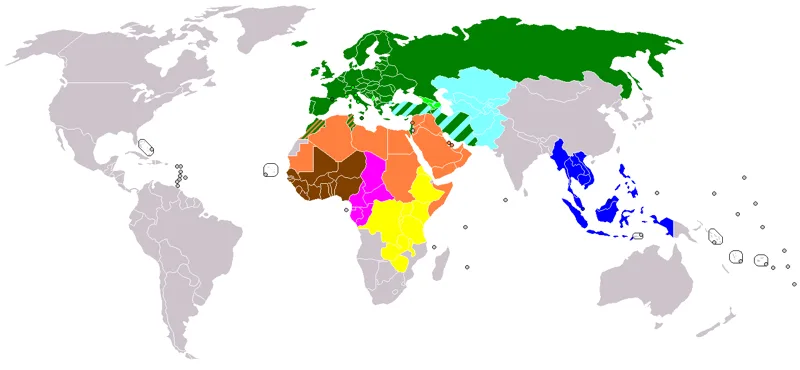
Often, you do not. No IDP is needed when the driver's own licence satisfies the 1968 convention. Such a licence can be used directly in any foreign jurisdiction that is a party to the convention.
Regional deals also remove the need. The European driving licence is valid throughout the European Economic Area, and the ASEAN states (the Association of Southeast Asian Nations) honour each other's. Some jurisdictions go further and require the IDP to be exchanged for a local driving licence.
How do the Geneva and Vienna treaties compare?
| Convention | Annexes for licence and IDP | How long the IDP lasts | Parties |
|---|---|---|---|
| 1949 Geneva | Annexes 9 and 10 | One year from issue, with a six-month grace period | 102 states as of March 2025 |
| 1968 Vienna | Annexes 6 and 7 | Up to three years or until the home licence expires, whichever is earlier; valid for one year after arrival abroad | 86 countries as of October 2022 |
What does the Vienna Convention say about licences?
The Vienna treaty was concluded on 8 November 1968 at a United Nations Economic and Social Council conference, which also gave the world the Convention on Road Signs and Signals. It entered into force on 21 May 1977. Between the countries that sign up, it replaces earlier conventions, notably the 1949 Geneva one. It was amended on 3 September 1993 and 28 March 2006, and a European Agreement supplementing it was concluded in Geneva on 1 May 1971.
Article 41 sets the main rules on licences:
- Anyone driving a motor vehicle must hold a licence
- Licences are issued only after theoretical and practical exams, which each country regulates for itself
- Parties must recognise a domestic permit that meets Annex 6, and an IDP that meets Annex 7 provided it is shown with the matching domestic permit
- A permit issued by one party is recognised in another party's territory until that territory becomes the holder's place of normal residence
- None of this applies to learner-driver licences
- Parties may refuse to recognise licences for people under eighteen, or under twenty-one for categories C, D, CE and DE
The IDP's validity follows the same article. It lasts for no more than three years from issue, or until the national licence expires if that comes first, and the holder may use it for one year after arriving in the foreign country.
The 2011 switch
The current forms of Annex 6 and Annex 7 have been in force in every contracting party since no later than 29 March 2011. Before that date the annexes defined different forms of driving licence. Licences issued before 29 March 2011 that match the older annexes stay valid until their own expiry dates.
Before the change, parties also had to recognise any domestic permit written in their own national language, or accompanied by a certified translation if it was not.
Who has and has not signed up to Vienna?
As of October 2022, 86 countries had ratified the convention. Countries that have not may still belong to the 1949 Geneva Convention instead. Non-signatories include Ireland, Canada, the United States, Cyprus, Iceland, Malta, China and Malaysia, while Spain and Mexico signed the convention without ratifying it.
The Geneva Convention
The 1949 Geneva Convention on Road Traffic has 102 states as parties as of March 2025, by ratification, accession or succession. Switzerland signed but did not ratify it. Under Article 24, a driver with a valid permit may drive the vehicles that permit covers, and a state may demand an IDP in the Annex 10 model, especially where the domestic permit does not match the Annex 9 model or the driver comes from a country that has no domestic permit requirement. The right to use a permit can be refused if the conditions it was issued under are no longer met.
The 1926 survivor
The 1926 convention is the oldest of the three, and its IDP is required only in Somalia. Permits issued under it might still be valid in Liechtenstein and Mexico, but both belong to the later conventions, and the most recent one prevails. Mexico also recognises the Inter-American Driving Permit created by a 1943 convention.
What does the treaty require of your own car abroad?
For motorists, one of the convention's main benefits is that each signatory must accept as legal the vehicles of the other signatories. To qualify, a car taken abroad has to meet a set of conditions.
- Its registration number must appear front and back, even where the home country asks for no front plate. Motorcycles need one at the rear only.
- Numbers must be in capital Latin characters and Arabic numerals, and may optionally appear in another alphabet as well.
- A distinguishing sign for the country of registration goes on the rear. Annex 3 describes it as black letters on a white ellipse with its long axis horizontal.
- If the sign is built into the plate, it must appear on the front plate too. It sits at the far left or far right, and at the far left if a flag or emblem is shown beside it.
The car must meet every technical requirement for road use in the country where it is registered, and conflicting rules in the country being visited, such as right-hand or left-hand drive, do not apply to it. The driver must carry the registration certificate and, if no occupant is the registered keeper, as with a hire car, proof of the right to have the vehicle. The convention also sets minimum mechanical and safety equipment and an identification mark, set out in Annex 4, showing where a vehicle comes from.
Could a plastic card replace the booklet?
That is the idea behind ISO/IEC 18013, which lays down the design format and data content for an ISO-compliant driving licence. The approach is to issue a secure domestic permit and an accompanying booklet for international use, in place of the paper IDP. The card is built to line up with the United Nations conventions on road traffic.
The standard lacks any official mandate from, or recognition by, the UNECE working party on road traffic, known as WP.1, as a replacement for the IDP rules in the 1949 and 1968 conventions. Annex A of ISO/IEC 18013-1:2018 covers card content and layout and leaves issuing authorities freedom to meet local needs. Annex G covers the booklet, which can be personalised or not, is marginally bigger than an ID-1 card and has a pocket for the card. The words "Translation of Driving Licence", with the French equivalent, appear on the front cover beside a logo of either the United Nations or the issuing country.
In North America the American Association of Motor Vehicle Administrators sets a design standard for licences and identity cards issued by its members, whose membership covers every US state, the District of Columbia, and the Canadian provinces and territories. The newest, the 2025 AAMVA DL/ID Card Design Standard, generally follows parts one and two of ISO/IEC 18013-1.
Where this goes next
The Vienna Convention rests on the idea that the person at the wheel is always fully in control and answerable for what the vehicle does in traffic, and collision avoidance systems and autonomous driving strain that idea. Since 2021 a definition of an automated driving system has been proposed for Article 1: a vehicle system using hardware and software to exercise dynamic control on a sustained basis, meaning every operational and tactical function needed in real time to move the vehicle. That covers steering and speed control, watching the road, responding to events and planning and signalling manoeuvres.
Under the proposal, the rule that every moving vehicle must have a driver is deemed met while an automated driving system is in use, as long as it complies with domestic technical regulations and the domestic legislation on operation. It would apply only inside the contracting party whose domestic rules are being met. A British explanatory memorandum on the amendment, which also adds a new Article 34 bis, says the change was due to enter into force on 14 July 2022 unless it was rejected before 13 January 2022.