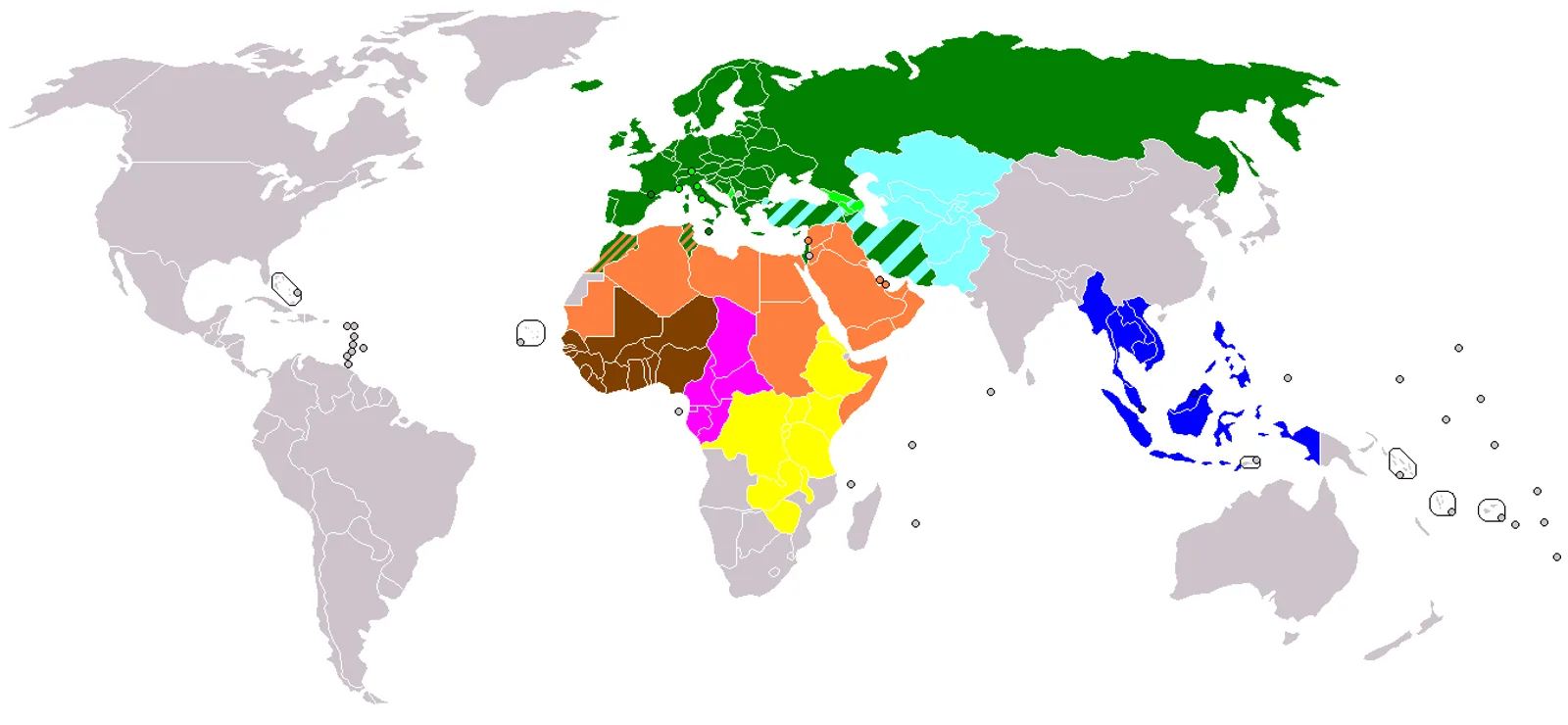
How the 1949 green card system and the Geneva and Vienna conventions let a car cross borders, and why Britain's GB plates stopped being valid abroad in 2021.
A green card is an insurance certificate under a system begun in 1949 so that victims of crashes caused by foreign drivers can claim. Country codes on oval stickers or plates, set by the Geneva and Vienna conventions, show where a vehicle is registered. The UK changed its code from GB to UK in 2021.
Since 28 September 2021, a car wearing a plate that says GB beside the European circle of stars is not valid for driving abroad. That day the United Kingdom changed its international vehicle code from GB to UK and told the United Nations, a small administrative step that made a familiar badge obsolete on the continent.
Behind that change sit two separate systems that follow a car over a border. One is financial, the insurance card that proves a visiting driver can pay for the damage they cause. The other is visual, the letters on an oval sticker or plate strip that tell a roadside observer where the vehicle belongs. They grew from different treaties, and both still shape what a driver needs when heading abroad.
What is a green card in car insurance?
A green card is the certificate issued under the International Motor Insurance Card System, an arrangement among authorities and insurers in many states. Its purpose is that victims of a road accident do not lose out because the person who hit them was a visitor rather than a local. It also spares drivers from buying fresh cover at every frontier.
The first scheme was set up in Europe in 1949 within the framework of the UN Economic Commission for Europe, and the card took its name from its colour. The Council of Bureaux now maintains it in and around Europe. The EU and the European Free Trade Association joined later, and in 2006 the secretariat moved from London to Brussels. A survey put the number of accidents covered at around 300,000 in 2004, and in 2016 the system counted about 377,666 international accidents inside the green card area.
One system proves a visiting driver can pay; the other tells everyone where the car belongs.
Do I need a green card to drive in Europe?
In the early years the card was checked at the border. Today, inside the European single market, nobody checks it at internal borders, though insurance for motor vehicles is still mandatory in the EU. France and Belgium have kept the green card as part of their domestic insurance arrangements, so there it remains compulsory.
Thirty-six of the 47 countries in the system have replaced the card with a multilateral agreement, so it is no longer a required document between them. Three groups of members exist under that agreement: EEA members (EU states, Iceland, Liechtenstein and Norway); a second group that includes Andorra, Bosnia and Herzegovina, Montenegro, Serbia, Switzerland and the United Kingdom; and the remaining members.
Britain is the case most drivers ask about. After leaving the EU the UK ceased to be an EEA member, and until a Commission decision of 30 June 2021, in force from 2 August 2021, a physical green card had to be carried to take a British-registered vehicle into the EU. Since the obligation was waived, the UK government's own guidance says a card is not needed in the EU, including Ireland, or in Andorra, Bosnia and Herzegovina, Iceland, Liechtenstein, Norway, Serbia and Switzerland, though valid insurance is still required. It adds that a card may be needed in other countries, among them Albania, Azerbaijan, Belarus, Moldova, Russia, Turkey and Ukraine.
How is a green card issued, and what does it cost?
A green card is usually issued when the policy starts, though sometimes only later on request. Insurers do not charge for it. In the UK, intermediaries such as brokers are allowed to levy an administration fee.
Behind each card sits a national green card bureau, created by the insurers of that country and approved by its government. It does two jobs. When a visiting motorist causes a crash, the local bureau, acting as the "bureau of the country of the accident", deals with the claims and settles them. As a "guaranteeing bureau", it also vouches for the certificates its own member insurers issue. Take a French driver who crashes in Spain: the Spanish bureau handles the claim, and the French bureau stands behind the card.
Which countries are in the green card system?
The system is mainly European, taking in most European countries and some neighbours, usually those on the Mediterranean. The Council of Bureaux position is that membership could cover countries west of the Urals and the Caspian Sea and those bordering the Mediterranean, though Iran and Iraq show the rule is not followed strictly. Some small states take part through a neighbour: Liechtenstein through Switzerland, Monaco through France, and San Marino and Vatican City through Italy.
Membership has shifted. Iraq belonged from 1982 to 1992. Israel was a member from 1968 to 2022 and is shown as withdrawn since 1 January 2022. Belarus and Russia have been suspended since 30 June 2023, and Iran since 1 January 2024. Georgia (2003) and Armenia (2009) are candidates. Kosovo applied in 2011, but the council concluded that two conditions, international recognition of its vehicle plates and UN membership, were not met.
What are the other coloured insurance cards?
| Card | Region | Based on |
|---|---|---|
| Green | Europe and neighbours, set up 1949 | Council of Bureaux, 47 countries |
| Orange | Middle East and North Africa | Most members of the Arab League |
| Blue | South East Asia | The 10 members of ASEAN |
| Pink | Central Africa | CEMAC members, including Cameroon, Chad and Gabon |
| Brown | West Africa | Most ECOWAS members, with Cabo Verde outside |
| Yellow | Eastern Africa | Most COMESA members, including Kenya and Zimbabwe |
| White | Proposed for Central and South West Asia | ECO members, if the green card cannot expand |
The White card exists only as a proposal. It would link members of the Economic Cooperation Organization, among them Afghanistan, Pakistan and Uzbekistan, if the green card area could not be widened to include them. In 2008 the organization asked the Council of Bureaux for cooperation, and the council has also discussed whether to extend the green card to every member of the UN Economic Commission for Europe or to drop geographic limits in favour of criteria based on road trade between countries.
What is the international vehicle registration code?
The other half of the story is the country code. Its formal name is the distinguishing sign of the State of registration, a term from the 1949 Geneva Convention and again from the Vienna Convention of 1968, both on road traffic. The United Nations Economic Commission for Europe maintains the list. Many codes match the ISO country codes, but not all do. A 2004 agreement on cross-border transport in South East Asia mixes both systems: Thailand uses T, Cambodia KH, Vietnam VN, China CHN and Myanmar MYA.
Paris produced the first rule. A convention signed there in 1909 required a white oval, 30 cm by 18 cm (12 in by 7 in), with black letters, on the rear of the vehicle and separate from the number plate. Only one or two Latin letters were allowed. The 1924 Paris convention introduced the term distinguishing mark, lengthened it to three letters, and allowed marks for non-sovereign territories with their own registration systems.
The Geneva Convention entered into force on 26 March 1952, obliging signatories to recognise vehicles from other signatory countries. Drivers abroad had to display the sign at the rear, separate from the plate. The Vienna Convention took over on 21 May 1977 between its signatories. It lets the sign be a separate oval plate or sticker, or built into the registration plate, in which case it must appear on the front plate too.
Why do some cars not need an oval sticker?
Cars with plates in the common EU format need no oval within the European Economic Area, and the plate also suffices in non-EU countries that signed the Vienna Convention. Cyprus, Ireland, Malta and Spain are not party to the convention, so for plates issued there the exemption does not apply. Canada, Mexico and the United States skip the separate sign too, because the province, state or district is usually embossed or printed on the plate, even though none of the three signed the Vienna treaty.
The EU plate has a blue strip on the left, twelve yellow stars and the country code. It was created by Council Regulation (EC) 2411/98 of 3 November 1998, in force from 11 November 1998, and it was modelled on plates already used in Ireland (1991), Portugal (1992) and Germany (1994). Luxembourg had shown the EU flag since 1988. Using the flag is optional, but every member state now issues the common format. Denmark was the last, in 2009.
How do European plates differ?
Most European plates are 520 by 110 mm (20.5 by 4.3 inches) or 520 by 120 mm (20.5 by 4.7 inches). Exceptions include 440 by 120 mm in Finland, 260 by 110 mm in Monaco and 300 by 80 mm for front plates in Switzerland and Liechtenstein. Colours vary too. EU plates are white or yellow. Yellow is used front and rear in Luxembourg and the Netherlands, for commercial vehicles in Denmark and Hungary, for taxis in Greece, Cyprus, Latvia, Lithuania and Sweden, and for historic vehicles in Poland. Belgium is the only EU country to use red characters, a shade called RAL 3003 chosen in November 2010 to improve legibility.
Outside the EU the idea is copied with local touches. Norway puts its flag in place of the stars and shows N, and goods vehicles with front seats only get green plates. Ukraine uses UA with its flag, Moldova has a wider blue band, and Albania shows its coat of arms above AL. Bosnia and Herzegovina, Turkey, Montenegro, North Macedonia and Serbia use a blue strip with a code and no flag. Belarus and Iceland show a flag above the code. Liechtenstein is the only European country to issue standard plates in white on black.
Britain's plates are white at the front and yellow at the rear. Valid ones for travel carry UK in black or blue, or the Union Flag with UK. A green stripe is allowed for a zero-emission vehicle. A plate with an English, Scottish or Welsh flag needs a UK sticker on the rear abroad. Gibraltar uses GBZ, and the Crown dependencies use GBG for Guernsey, GBA for Alderney, GBJ for Jersey and GBM for the Isle of Man.
Are there codes with no official status?
Unofficial codes do circulate. CAT stands for Catalonia, BZH for Brittany, ENG for England, SCO for Scotland, CYM for Wales and PR for Puerto Rico. VL, used for Flanders by Flemish separatists, is in use even though it is illegal under local law. Diplomatic plates follow separate host-country rules, so TR on a diplomatic car in the United States points to Italy, not Turkey, and in Norway the number 90 means Slovakia.
Where this goes next
The membership map is still being redrawn. The Council of Bureaux has recommended limiting expansion of the green card area to Algeria, Libya, Egypt, Lebanon, Syria, Georgia and possibly Armenia, and in 2012 it added Kazakhstan to the list of potential members because part of it lies west of the Urals. Beyond that, it suggests examining cooperation with other regional systems rather than stretching the green card further.
On the plate side, countries keep changing formats. Italy has used AA 000 AA since 1994, France since 2009, and Albania and Slovakia since 2023. The Netherlands ran out of combinations in 2008. Belgium moved to a seven-character format on 15 November 2010, but its six-character plates stay valid with no expiry date set.