The EU replaced 110 licence designs with one card, India grades its licences by age and category, and Japan splits learners between two exam routes.
A single plastic card, recognised across the 30 EEA states, replaced 110 older European designs, and pre-2013 licences lapse by 2033. India grades licences by age and category and adds a points system. Japan splits learners between a designated school route and full written and practical exams.
Europe once had 110 different driving licence designs in circulation among 300 million drivers. A single plastic card now replaces them all, and every licence issued before 19 January 2013 will become invalid by 2033. The stated aim was to cut the risk of fraud.
India and Japan reach a licence by very different roads. India hands out a graded provisional licence and an elaborate list of categories and endorsements, with penalty points on top. Japan leans on driving schools, whose graduates skip the practical exam but still sit the written one.
What is the European driving licence?
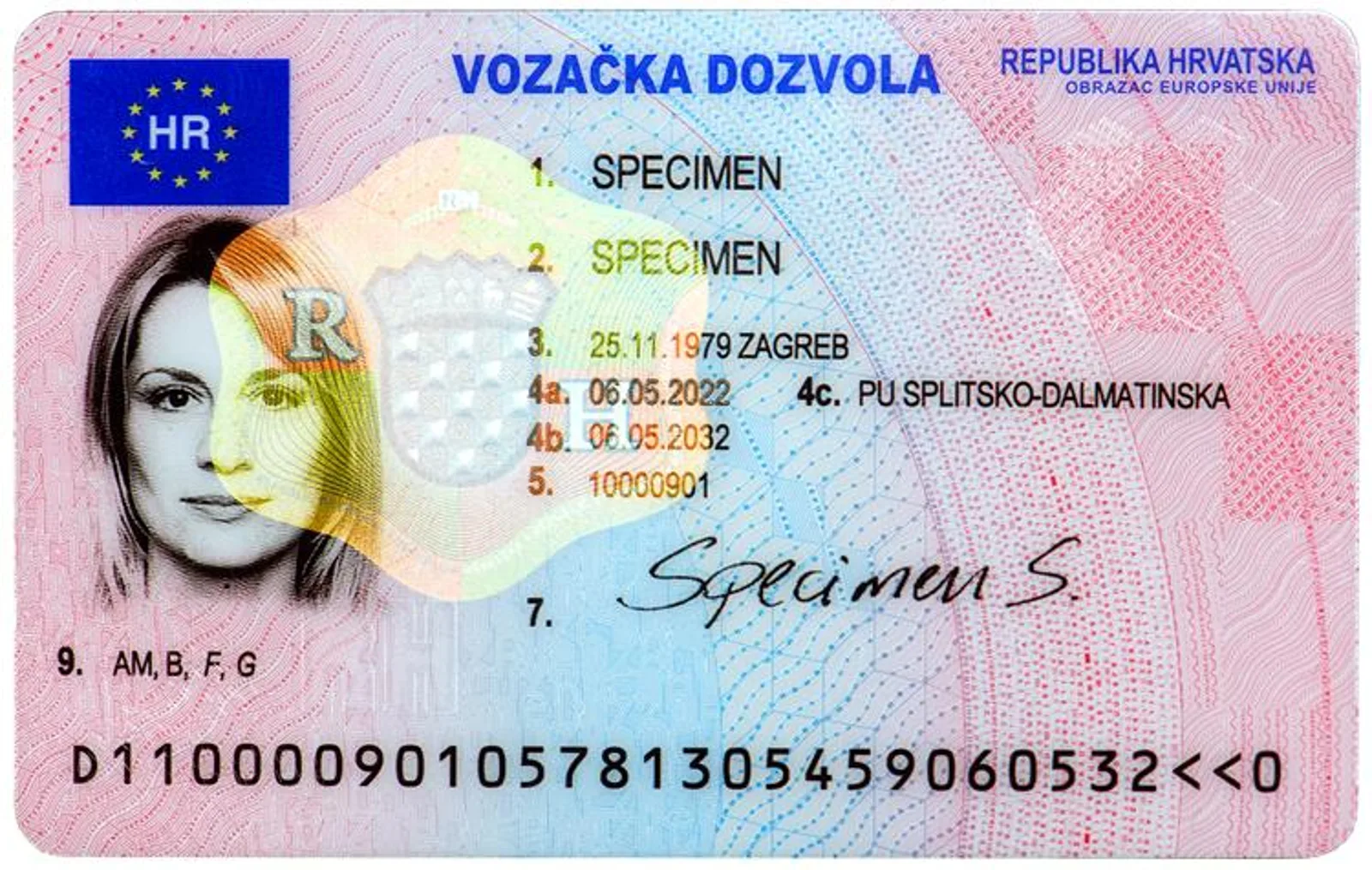
The European driving licence is a credit-card style card with a photograph, issued by the states of the European Economic Area: the 27 EU members plus Iceland, Liechtenstein and Norway. It was introduced to replace the 110 different paper and plastic licences held by about 300 million drivers in the area, and its main purpose is to reduce fraud.
A licence from any EEA state is recognised throughout the area while it remains valid, provided the holder is old enough for the category and the licence has not been suspended, restricted or revoked. Someone who moves to another EEA country can swap it for a local one, though there is usually no need to do so before it expires. The exception is a licence issued in exchange for one from outside the EEA. That converted card may need converting again after a move.
The main aim of the single European card is to reduce the risk of fraud.
How did Europe get to one licence?
The first step came on 4 December 1980, with Council Directive 80/1263/EEC. It set up a Community model licence, guaranteed mutual recognition and established the practice of exchanging a licence when moving from one member state to another.
A second directive, 91/439/EEC, adopted on 29 July 1991, did the heavy lifting. Member states had to bring in laws by 1 July 1994, and it took effect on 1 July 1996. It harmonised the licence categories and created two Community models, paper and plastic. It also made a theory test and a practical test compulsory, required applicants to meet minimum standards of physical and mental fitness, and set minimum ages for different vehicles, with progressive access through categories A, C and D from lighter to larger or more powerful vehicles. Applicants also had to be normally resident in the state that issued the licence. The plastic card version was added by a further directive on 23 July 1996.
The current rules come from Directive 2006/126/EC, which the Council adopted in March 2006 and the Parliament in December. It appeared in the Official Journal on 30 December 2006 and took effect on 19 January 2013, repealing the 1991 directive on the same date. States had to pass the necessary laws by 19 January 2011.
What does the card look like and how long does it last?
The card is a single plastic-coated document that is very hard to counterfeit. It is renewable every 10 or 15 years depending on the member state, and several states may include a microchip. Categories C and D are issued for five years only, with a medical check-up needed for each renewal.
Every data field carries a number, and a legend on the back explains each in the issuing country's language, so the same card can be understood in any language. Field 12 holds restriction codes. Numbers 01 to 99 are valid across the EU, while codes of 100 and above are national and apply only in the country that issued the licence. A common entry, 01.06, tells the holder to wear glasses or contact lenses.
Some categories remain national, valid only where issued: tractors, large motorcycles, motorised wheel boats, motor tricycles and military vehicles such as tanks.
What about Switzerland, Britain and overseas territories?
Switzerland belongs to EFTA but not to the EEA Agreement. Its links with the EU run through bilateral agreements, and it has used similar categories since the 2000s, with credit-card licences resembling the EEA style. French overseas collectivities are outside the EEA too, but most follow the EEA model. Saint Pierre and Miquelon uses standard French licences, and Wallis and Futuna is the last French territory still issuing licences that are not card-sized.
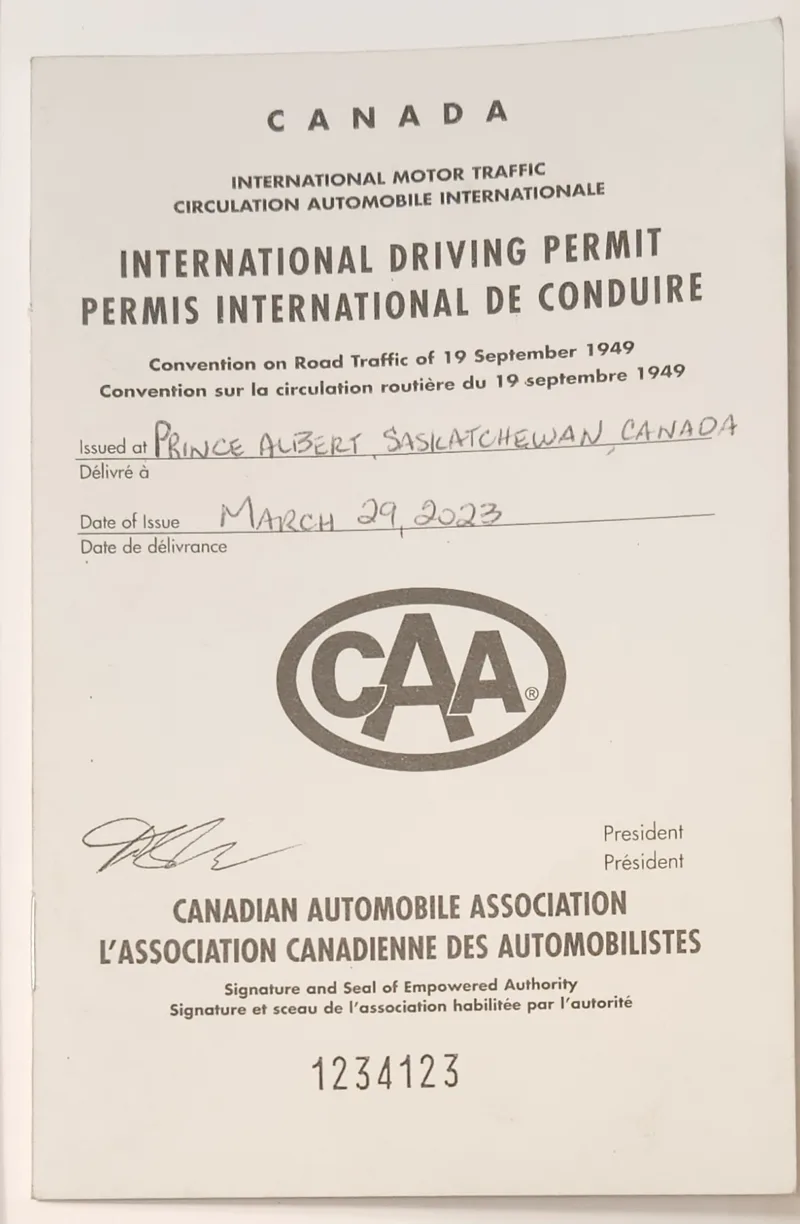
Britain stayed under the directive until the transition period ended on 31 December 2020. From 1 January 2021 the UK recognises European licences where the test was passed in an EU or EEA country, and they can be exchanged for a British one. British licences generally work for visits to the EEA, though an International Driving Permit may be needed: a 1949 permit in some countries, a 1968 one in others. None of the EEA countries currently require a permit from visitors staying under 12 months.
Is a digital driving licence coming?
The Commission put forward a modernisation package on 1 March 2023. It suggested a European digital driving licence valid across the EU, digital renewal, replacement and exchange, and lower minimum ages of 17 for cars and lorries. Directive (EU) 2025/2205, sometimes called the fourth European Driving Licence Directive, was published on 5 November 2025 and entered into force on 25 November 2025. It will apply fully from 26 November 2029.
On 21 October 2025 the European Parliament approved a standardised digital licence that follows the ISO/IEC 18013-5 standard and works with the planned EU Digital Identity Wallet. National mobile licences already exist. Norway was first to issue one nationwide, in July 2019, and a limited trial ran in Finland from 2018 to 2020. Austria, Denmark, France, Greece, Iceland, Poland, Portugal and Spain followed. They use proprietary apps and are not valid outside the country that issues them.
How does a driving licence in India work?
Indian licences are administered by state Regional Transport Offices, and the Motor Vehicles Act, 1988 requires one for anyone driving on a highway or any road open to the public. The Act sets minimum ages from 16 to 20 depending on the circumstances. A licence from one office is valid across the country, and the photo version doubles as identity proof, for example when opening a bank account or getting a mobile connection.
The ladder starts with a learner licence. Applications for a provisional licence can be made from 16. At 16, the holder may ride a moped or a gearless motorcycle. From 18, the permission extends to a manual motorcycle or scooter, a three-wheeler, a car or any motor vehicle with up to four wheels and a weight under 7500 kilograms. Commercial driving needs an endorsement and, in some states, a minimum age of 20.
Provisional drivers must put L-plates on the front and rear, take along a supervisor with a full licence for the same category and transmission, and keep pillion seats empty on motorcycles. A bus driver on a provisional licence may carry only the person giving or receiving instruction. A computer-based test then covers road signs, with multiple-choice questions where at least nine must be right and up to 20 extra questions where at least 14 must be right, along with a verbal or written section, depending on the state. The driving examination comes after.
How long does an Indian licence last?
Validity depends on the holder's age. A licence applied for before 30 runs until the holder reaches 40. Between 30 and 50 it lasts 10 years. From 50 to 55 it is valid until the 60th birthday, and above 55 it lasts 5 years, under the Motor Vehicles (Amendment) Act, 2019. It used to be valid for 20 years. Applications can be made online through the Parivahan Seva site or in person.
The category list is long. MC 50CC covers small motorcycles, MCWG motorcycles with gears, LMV-NT light vehicles for personal use, LMV-TR light transport vehicles, LMV cars, jeeps, taxis and delivery vans, and HMV, HPMV, HTV and TRANS the heavy classes. AGTLR covers agricultural tractors and power tillers. Extra endorsements exist for hazardous goods, for hill terrain and for taxis or public transport, and an International Driving Licence has to be applied for separately.
Penalties run on points. Offences such as jumping a signal, triple riding on a two-wheeler or using an unregistered or unsafe vehicle each carry 3 negative points. Reaching twelve points makes the licence liable to suspension for a year, and a second time brings five years. Driving without a valid licence can lead to imprisonment of up to 3 months. A driver must also carry the licence, and under S.130 of the Act an officer may ask for it, with 15 days allowed to produce it at a police station.
How do you get a driving licence in Japan?
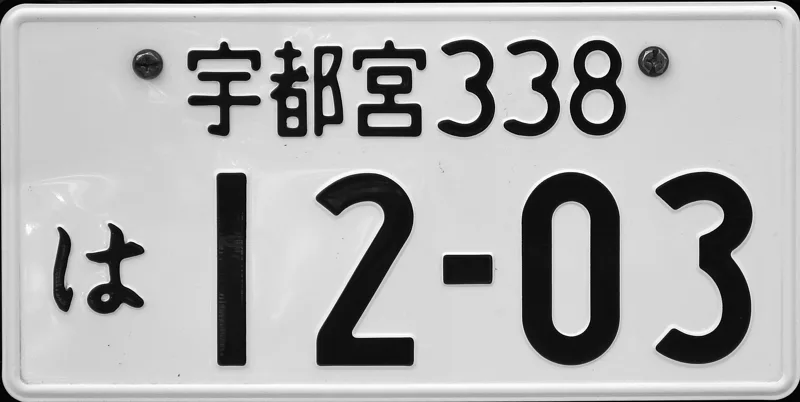
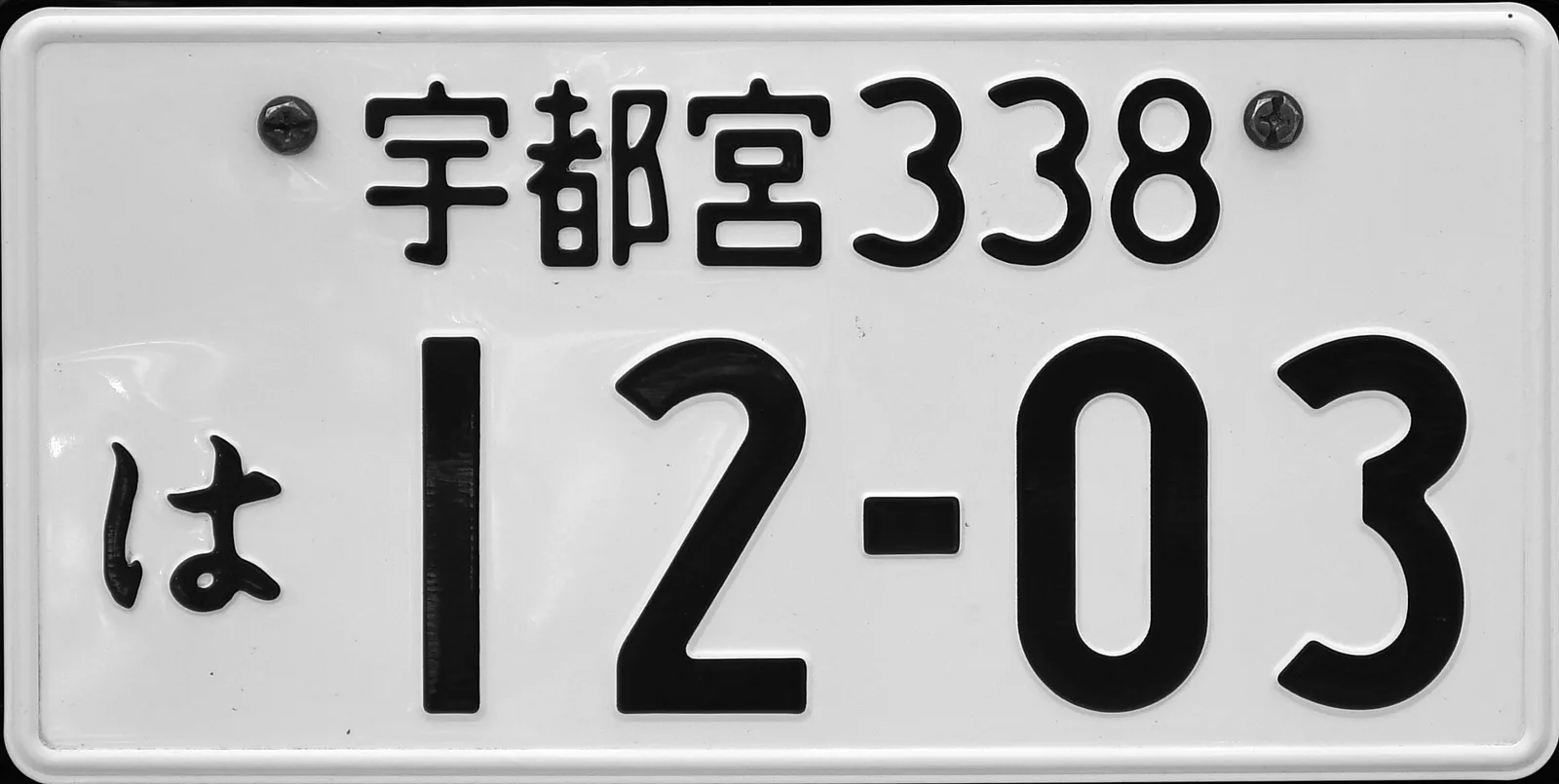
Japanese licences are issued by prefectural public safety commissions and overseen nationally by the National Police Agency. They divide by experience level and vehicle type, with an automatic-only restriction available across most classes. A small-motorcycle restriction can be added to the ordinary motorcycle class. The automatic-only option will extend to large vehicles from 1 April 2027 and to Class 2 large vehicles from 1 October 2027.
Learners have two routes. A designated driving school lets graduates skip the practical exam but not the written one. Any other route, whether a non-designated school or private practice, means sitting both. The practical test is driven on a purpose-built course. Most people attend a school even though it is not required.
Foreign residents can convert a foreign licence through a shorter process of an eyesight test, and sometimes a written and practical exam, depending on the issuing country. As of 2022 the exempt countries included Iceland, Ireland, the United Kingdom, Italy, Australia, Canada, South Korea, Germany, France, New Zealand, Taiwan and, for the states of Ohio, Virginia, Hawaii, Maryland and Washington, the United States. The 2003 figures put Japanese returnees converting a licence at a 35 percent first-time pass rate, with Americans only slightly ahead. Those who took the regular test after intensive driver education passed first time 90 to 100 percent of the time, though in 2022 an English-speaking foreigner paid about 500,000 yen (about US$3158) at a school.
How do the three systems compare?
| Feature | European Economic Area | India | Japan |
|---|---|---|---|
| Issued by | Each member state | State transport offices | Prefectural public safety commissions |
| First step | Theory test | Learner licence, L-plates, supervision | Designated school or private practice |
| Tests | Theory and practical, both compulsory | Road signs test, then supervised driving exam | Written exam; practical too unless a designated school graduate |
| Validity | Renewal every 10 or 15 years; C and D five years | Set by age: to 40, 10 years or 5 years | Card must be available for inspection |
| Beyond home | Recognised across the area | Valid in every state; international licence applied for separately | Foreign licences convertible for residents |
Where this goes next
The EU's fourth licence directive is fully applicable from 26 November 2029, and the digital licence follows the standard the Parliament approved in October 2025. Japan has set dates of 1 April 2027 and 1 October 2027 for automatic-only large vehicle licences. India's rules have already moved, with the 2019 amendment that cut validity to 5 years above 55 and ended the old 20-year term. Every pre-2013 European licence still in a wallet will stop being valid by 2033.