A Singapore licence can cost S$3,000 to S$4,000, Thai applicants face a reaction test measured to the fraction of a second, and South Africa is changing the card itself.
Singapore, Thailand, Malaysia and South Africa all use stages: a learner step, a test, then a probationary or restricted period. They differ on ages, pass marks and validity, from Singapore's lifetime licence and Malaysia's 20-point demerit system to South Africa's five-year card, due to become ten.
Getting a car licence in Singapore routinely costs between S$3,000 and S$4,000, and in 2024 only about 37 percent of first-time candidates passed the Class 3 test. Thailand, Malaysia and South Africa set their own hurdles, from a reaction pedal timed to 0.75 seconds to a learner's licence that cannot be extended.
How does a driving licence work in Singapore?
Anyone driving any motor vehicle on a road must hold a valid licence, and the minimum age for a Qualified Driving Licence is 18. The Traffic Police of the Singapore Police Force administer licences, which last a lifetime but need medical clearance after age 65.
Learners train at one of three driving schools or with a private instructor, though no new private instructor licences have been issued since 1987. The path starts with a Basic Theory Test and a provisional licence costing S$25, which requires a certified instructor to be present. Provisional drivers display L plates at the front and rear, cannot use expressways or certain central areas at peak hours and may not enter public car parks. The provisional licence is valid for 2 years and is renewable every 2 years, where before 1 December 2017 it lasted 6 months. A Final Theory Test and three mandatory simulator courses must come before the practical test.
Passing the practical earns the full Qualified Driving Licence for S$50, followed by a 1-year probation. Probationers must show a triangular high-visibility plate at the top right of the front and rear windscreens, and the licence is revoked at 13 demerit points. Missing the plate brings a fine first, then revocation. Drivers of buses, taxis and private hire cars need vocational licences, which require a qualified Class 3 licence with a year of experience and an unblemished driving and criminal record. A bus licence needs the applicant to be at least 21, and taxi and private hire licences are for citizens aged at least 30.
A Singapore licence can cost S$3,000 to S$4,000, a Thai test times reactions to 0.75 seconds, and South Africa has relied on a single card-printing machine.
What do the Singapore tests involve?
There are theory tests and a two-part practical. Each theory test is a three-choice paper in which candidates must answer 45 of 50 questions correctly, or 90 percent, from a pool of hundreds of questions.
Each theory sitting costs S$6.50 before school fees. The Basic Theory Test stays valid for a lifetime, the Final Theory Test for 2 years, and a Riding Theory Test for Class 2B motorcyclists for 1 year. The practical begins on a circuit with courses such as the crank course for steering through tight spaces, an S course for low-speed control, parallel parking within 3 minutes, vertical parking within 5, directional change, an emergency stop and, for automatic cars, a reaction test for accidental surging. Motorcycles face a pylon slalom to be completed in 6 seconds and a narrow plank. A candidate who fails the circuit cannot go on to the road section.
On the road, candidates handle U-turns, left and right turns and interaction with other drivers. An examiner appointed by the Traffic Police records every mistake, and one immediate failure, or 20 demerit points, fails the test. If the examiner must step in for safety, that counts as an immediate failure. Each test is recorded.
How did Singapore's driving test system develop?
Driving tests began in 1941 at 28 Maxwell Road, run by the Traffic Police. After the Second World War the network spread to Queenstown in 1968, Pasir Panjang in the early 1970s, Jurong in May 1977 and Toa Payoh in 1978.
Schools began taking over in 1985, when the Singapore Safety Driving Centre opened in Ang Mo Kio as the first with a dedicated off-road circuit. The Bukit Batok Driving Centre followed in 1990, and in 1996 the Kampong Ubi test centre was privatised to become the CDC. By the late 1990s the older sites had stopped testing, leaving the three-school model of today. The Bukit Batok centre is scheduled to move to Choa Chu Kang by 2030 to make room for the development of Tengah.
Prices have gone up year after year, a trend put down to a lack of competition between the three schools. A Class 3 or 3A licence commonly costs about S$3,000 to S$4,000 in courses, tests and simulations, and the practical test alone ranges from S$320 to S$550. First-time pass rates averaged around 37 percent for Class 3 and 46 percent for Class 3A in 2024.
How does a Thai driving licence work?
The Department of Land Transport issues it. The minimum age is 18 for a car and 15 for a motorcycle, and every driver begins on a probationary licence after passing the driving test, including those whose licence was revoked.
After at least a year on the probationary licence, and at age 18 or over, the driver can convert to a full licence. A full licence comes as private or public. Public needs a criminal record check, and someone discharged from a prison sentence becomes eligible after three years. Private licences run for 5 years and public for 3. A probationary motorcycle licence can be issued at 15 to 17, but must be obtained again at 17 to qualify for a full licence. Learners need no permit, only a companion with a full licence of three years' standing.
Larger vehicles come under a second law, the Land Transport Act of 1979, with A (all types) and P (personal only) licences in four levels, where the higher category covers the lower. An A4 licence, for example, can stand in for P4, A3, P3, A2, P2 and A1. Military personnel may also be licensed by the Department of Army Transportation under a 1933 act.
What tests does Thailand require?
Candidates first obtain a medical certificate showing they are free from conditions such as active tuberculosis, elephantiasis, leprosy, alcoholism and drug addiction. At the test centre they then pass a physical test, a theory test and an off-road driving test.
The physical test starts with a reaction test: the candidate presses a pedal until a red light shows, then moves to the brake, with an acceptable response time of 0.75 seconds or less. A wide-angle perception test asks the candidate to raise a hand on the side where a white light appears, and depth perception is checked with a Howard-Dolman apparatus of two rods. The colour test is the most disputed. Many colour blind people are disqualified at this stage and end up driving unlicensed, and Thailand's National Human Rights Commission said most colour blind people drive safely, yet the Department of Land Transport did not respond positively.
The theory part is a 5-hour lecture on driving etiquette, defensive driving and laws, or 10 hours over two days for larger vehicles, followed by a 50-item exam with a pass mark of 45, up from 35 before 2014. The off-road driving test draws 3 of 7 manoeuvres for cars: stopping at the kerb within 25 cm, a narrow course, reverse parking, a hill start (not for automatics), a U-turn, a turn and driving to signage. Failed candidates wait at least 3 days to retry, and the whole process must finish within 90 days. Approved driving schools offer a route of at least 10 hours of driving practice and 5 hours of theory, and the practical test there is usually less stringent than at a land transport office.
Licences are extended once validity is under 6 months, rather than the 90 days or less that applied before 2021, and the driver must pass the medical and physical tests again. A licence that lapsed for between one and three years means the lecture and theory test again, and one lapsed for 3 years or more means a complete test. Annual fees as of 2026 are 100 baht for cars and 50 baht for motorcycles plus a 5 baht paperwork charge. Plans exist to require an extra licence and tougher training for motorcycles above 45 kW or 400 cc, though as of 2026 that specialised licence is not available.
How does a Malaysian driving licence work?
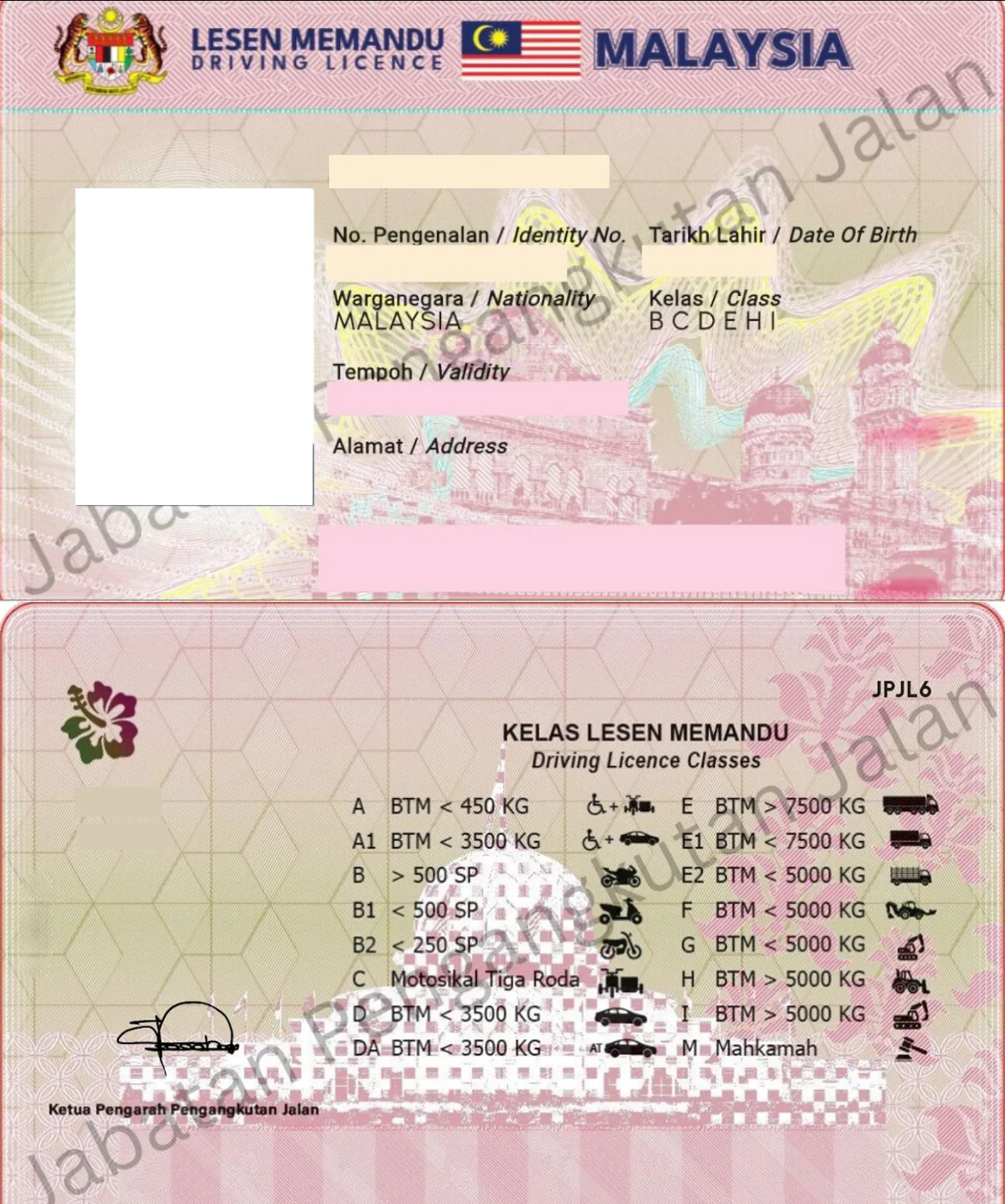
It is required under Section 26(1) of the Road Transport Act 1987, and driving without one can bring a fine, jail or both. The licence passes through three stages: learner, probationary and competent.
A learner's licence follows a 6-hour Safety Driving Theory class and a computer exam on road laws. Learners drive a school-owned car marked with L plates under an instructor, or ride a motorcycle without a pillion. It is renewed every 3 or 6 months but cannot be held for more than 2 years. After all lessons and tests, a driver receives a probationary licence, shows a white P on a red square at the front and back, and falls under the 20-point KEJARA demerit system. The licence is revoked when a probationer accumulates 20 points.
The competent licence follows after 2 years, with a 1-year grace period for the upgrade before a driver may have to restart. It can be renewed for up to 10 years, with a 3-year renewal grace period, and adding another class later involves no new probation. Drivers whose licence is suspended three times in five years have it revoked and cannot drive or be licensed for 12 months. Vocational licences cover goods vehicles and public service vehicles such as taxis, limousines and buses, and from 12 July 2019 e-hailing drivers have had to apply for the public service licence. Applicants must be at least 21 and Malaysian or permanent residents, and renewal is yearly with a medical report. The MyJPJ app, introduced in February 2023, lets drivers show a digital licence and road tax, and private vehicle owners no longer need to display road tax on the windscreen.
How does a South African driver's licence work?
Municipal testing centres issue licences under provincial and national Departments of Transport. Codes show which vehicles a holder may drive, among them Category C, for buses and goods vehicles above 16 tons, and Category B, for passenger vehicles under 3.5 tons.
Heavy and public transit drivers also need a separate Professional Driving Permit, with stricter requirements including medical assessments, criminal record checks and, for dangerous goods, approved training. The minimum age is 18, apart from 16 for the Code A1 licence, and a learner's licence can be had from 16. Light vehicle licences last 5 years, and in July 2026 the government approved doubling that to 10 years for Codes A, A1, B and EB, pending legislative amendments. No effective date has been announced. At the end of 2024 the Road Traffic Management Corporation counted about 16 million licences (15,991,376), a rise of 4 percent on the year, equal to around 26 percent of the population and 40 percent of adults. The credit-card format dates from 1998, replacing a licence included in the national identity document.
The learner's licence lasts 24 months and cannot be extended. Its multiple-choice test has 28 questions on rules of the road with a pass mark of 22, 8 on vehicle controls with 6 needed, and 28 on signs and signals with 23 needed. Code 1 covers motorcycles, Code 2 most vehicles with a tare weight of 3,500 kg or less, and Code 3 all vehicles except motorcycles, with minimum ages of 17, 17 and 18. The driving test has a yard stage and a road stage, where a collision, speeding or rolling backwards or forwards when moving off means instant failure. Successful applicants get a paper Temporary Driving Licence valid for 6 months, and the card arrives for collection within 4 to 6 weeks. Applicants book through the eNaTIS system in every province except the Western Cape.
Driving licence stages in the four countries
| Place | Entry step | Probation | Validity |
|---|---|---|---|
| Singapore | Provisional licence after the Basic Theory Test; minimum age 18 | 1 year; revoked at 13 demerit points | Lifetime, with medical clearance after 65 |
| Thailand | Probationary licence after medical, physical, theory and driving tests | At least 1 year before a full licence | 5 years private, 3 years public |
| Malaysia | Learner's licence after a 6-hour class and computer exam | 2 years; revoked at 20 demerit points | Competent licence renewable up to 10 years |
| South Africa | Learner's licence from age 16, valid 24 months | No probation; a paper Temporary Driving Licence valid for 6 months after the test | 5 years for light vehicles, with 10 approved in July 2026 |
What do visitors and foreign residents need?
Rules differ by country. In Singapore, a foreigner staying under 12 months and not seeking residency can drive on a foreign licence, with an International Driving Permit if the licence is not in English, while permanent residents must convert to a Singapore licence.
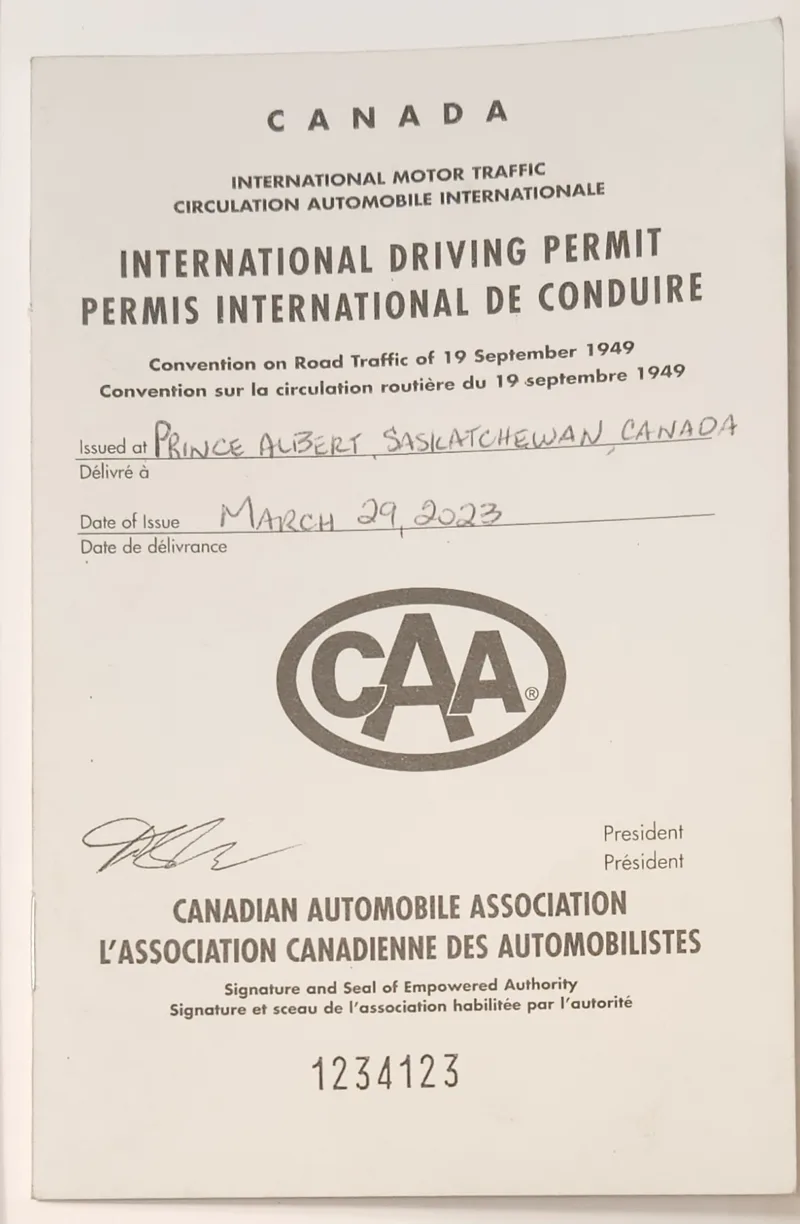
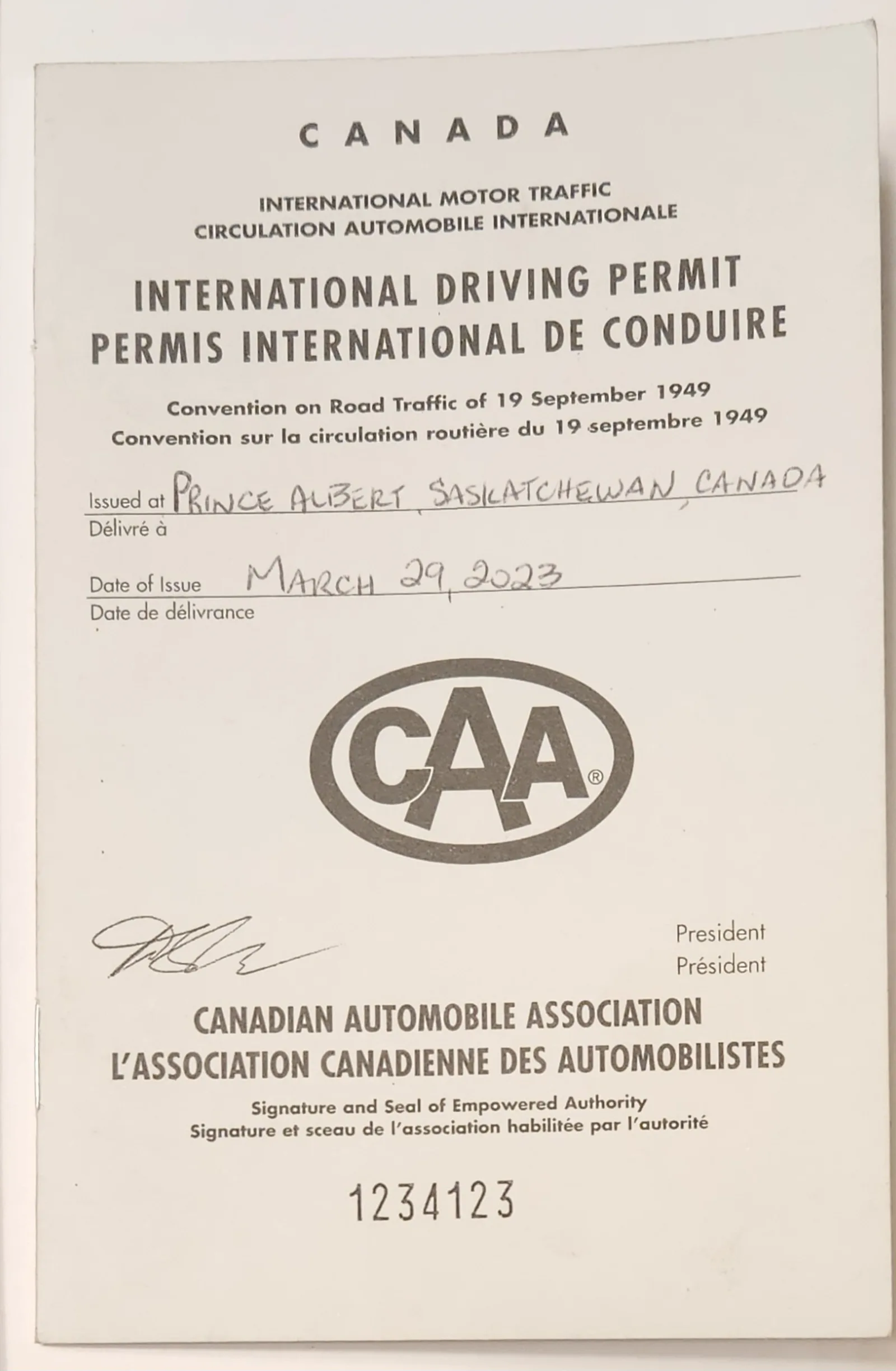
ASEAN licence holders need only their own valid licence in Singapore, Thailand and Malaysia. A Singapore licence is valid without a permit in the ASEAN states and in countries including Australia, Canada, Ireland, New Zealand, South Africa, the United Arab Emirates and the United Kingdom. South African licences are valid only within the country's borders unless foreign laws allow otherwise, and an International Driving Permit issued by an organisation like an Automobile Association may be needed.
What is changing in these licence systems?
South Africa has the most change in motion. The Western Cape launched the country's first digital learner's licence testing in Beaufort West in May 2025, using a database of around 1,200 questions, and by February 2026 it was reported to be nearing a full launch across all 18 of Cape Town's testing centres from the week of 16 February 2026.
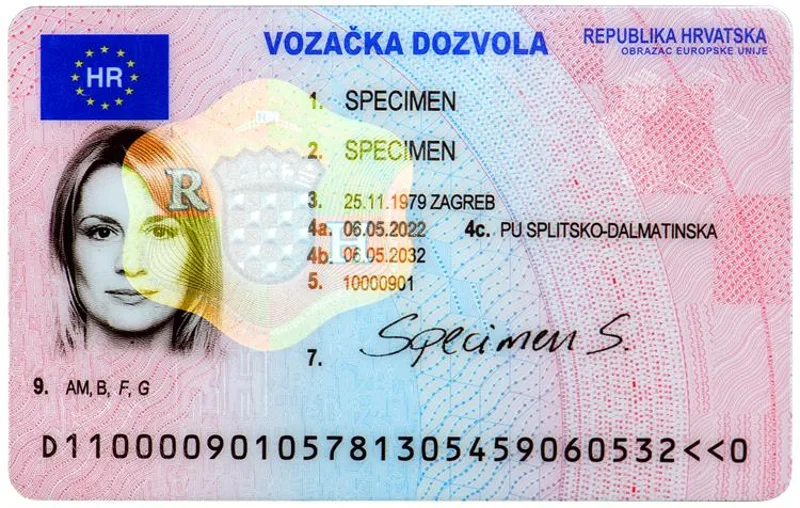
In September 2025 Cape Town opened a drive-through renewal facility at Brackenfell designed to finish a renewal in under 5 minutes. In January 2026 the Department of Transport began a cabinet approval process for a new licence prototype that the Government Printing Works could print, bypassing the sole printing machine that has caused backlogs. A pilot of a redesigned card began in November 2023, with a flag, a coat of arms, gender, two barcodes and room for several codes.
In Singapore the Bukit Batok Driving Centre is due to move by 2030, and Thailand has a motorcycle licence regulation that has yet to take effect.