Four ladders to a full licence: Australian states with different speed caps, Canadian provinces with their own classes, a New Zealand test due for removal and a British exam with a fault count.
Australian, Canadian and New Zealand licences are issued by states, provinces or a national agency through graduated stages of learner, restricted and full licences. The UK instead uses a theory test followed by a practical test in which a serious fault, or more than fifteen minor ones, means failure.
New Zealand's government plans to scrap the full driving licence test from 25 January 2027, replacing it with a trial period. The four systems look alike and differ in the detail, from Alberta's learner permit at 14 to the 50-question theory test that British candidates sit.
How do driver licences work in Australia?
State and territory governments issue them. No single Australian licensing scheme exists, but licences are generally valid across borders, and nationwide arrangements for full licences and renewals have been in place since 1997.
Because the country has no identity card, the driving licence has become the everyday photo ID. In 2017 the federal government proposed a national drivers licence database that would have states and territories hand over drivers' identities, with the stated aim of toughening national security laws. The National Transport Commission and Austroads decide the medical standards for commercial drivers, and anyone carrying paying passengers, from a school bus to a tourist coach, needs a Public Passenger Vehicle Driver Authority as well.
One quirk concerns automatic transmissions. A driver who passed their test in an automatic gets an A condition barring unsupervised manual driving. South Australia has no such condition. In the ACT, New South Wales and the Northern Territory it lifts after 12 months on Ps or a manual test, in Tasmania and Victoria after the unrestricted licence is issued or a manual test, and in Queensland and Western Australia only by a manual test.
Learn to drive at 14 in Alberta, wait until 17 for a British car test, and in New Zealand the full licence test may disappear in 2027.
What are the learner and provisional stages in Australian states?
Every state climbs a ladder from learner to provisional to full licence, with speed caps, passenger limits and zero blood alcohol on the way. The steps and hours differ from place to place.
In New South Wales the Graduated Licensing Scheme dates to 2000 and starts at age 16 with a touch-screen Driver Knowledge Test, identification and an eyesight check. Learners are capped at 90 km/h, must stay at zero blood alcohol, cannot tow a trailer and display black-on-yellow L-plates. They must log 120 hours of driving, including 20 at night, and hold the learner licence for 12 months. Since December 2009 an hour with an instructor counts as three, up to a total of ten instructor hours.
The P1 licence, known as Ps and Reds, requires the driver to be 17, to pass a hazard perception test, which became a requirement on 20 November 2017, and to pass a driving test. P1 drivers keep the 90 km/h cap, may tow up to 250 kg and are limited to four demerit points, against thirteen on an unrestricted licence. Rules from 1 July 2007 limit a P1 driver to one passenger under 21 between 11 pm and 5 am and impose an instant three-month suspension for any speeding offence. Since 1 August 2014, P1 and P2 drivers cannot drive vehicles with a power-to-weight ratio of 130 kilowatts per tonne or more, a rule that replaced the earlier ban on turbocharged or supercharged cars with eight or more cylinders.
P2 drivers, known as Ps and Greens, are capped at 100 km/h and seven demerit points, display green P-plates and may not touch a mobile phone behind the wheel, a ban in force since 1 December 2016. After two years without suspension, the driver gets a gold full licence.
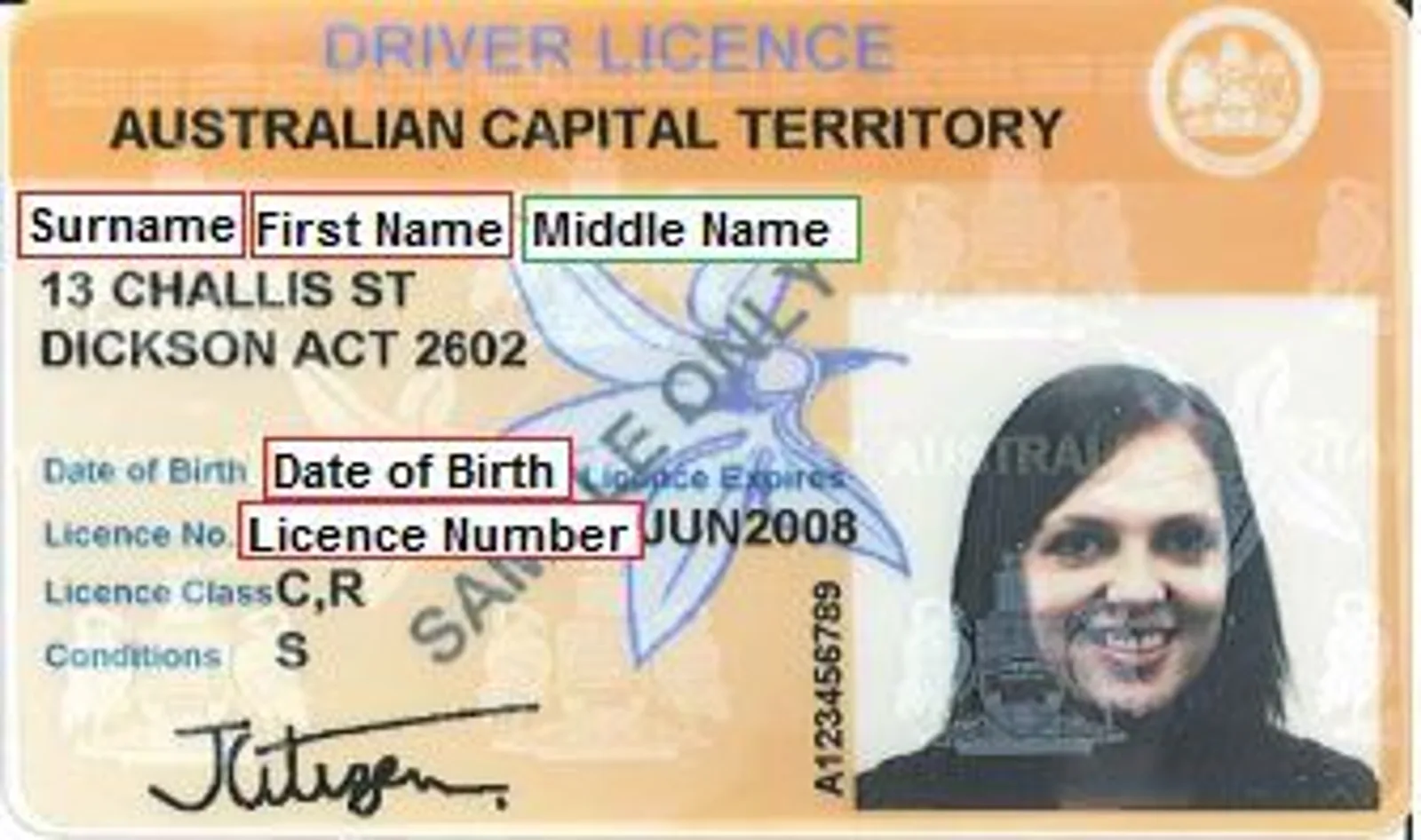
The Australian Capital Territory sets 17 as its driving age, though learners can apply from 15 years and 9 months after completing a road safety course called Road Ready. Provisional drivers must complete a logbook with 22 driving proficiencies under an accredited instructor, or record time with a supervisor holding an open licence of 12 months' standing, and the provisional licence runs for three years. The Northern Territory lets learners start at 16 with an 80 km/h cap and a six-month wait, followed by a provisional period of at least two years with a 100 km/h cap and no phone use of any kind, even hands-free. Queensland learners can start at 16, and those under 25 must log 100 hours, including 10 at night, over at least a year, or two years if they take a logbook exemption.
Where the ladder starts around the world
| Place | Earliest age to learn | Learner step | What follows |
|---|---|---|---|
| Australian Capital Territory | 15 years 9 months | Road Ready course; licence valid two years | Provisional from 17, after six months as a learner |
| New South Wales | 16 | 120 hours including 20 at night, over 12 months | P1, then P2, then full after two years without suspension |
| Northern Territory | 16 | Six months, 80 km/h cap | Provisional for at least two years |
| Queensland | 16 | 100 hours for under-25s, held for a year | P1 from 17, P2 after a year and a hazard test |
| Alberta | 14 | Class 7, knowledge mark of at least 83.3% | Class 5-GDL after a year, from age 16 |
| British Columbia | 16 | Class 7L, 80% on the knowledge test | Class 7N from 17 after a 35-minute test |
| New Zealand | 16 | Learner licence, 32 out of 35 on the Road Code | Restricted after six months |
| United Kingdom | 17 for a car | Provisional licence, then theory and practical tests | Full category B licence on passing |
How do driver licences work in Canada?
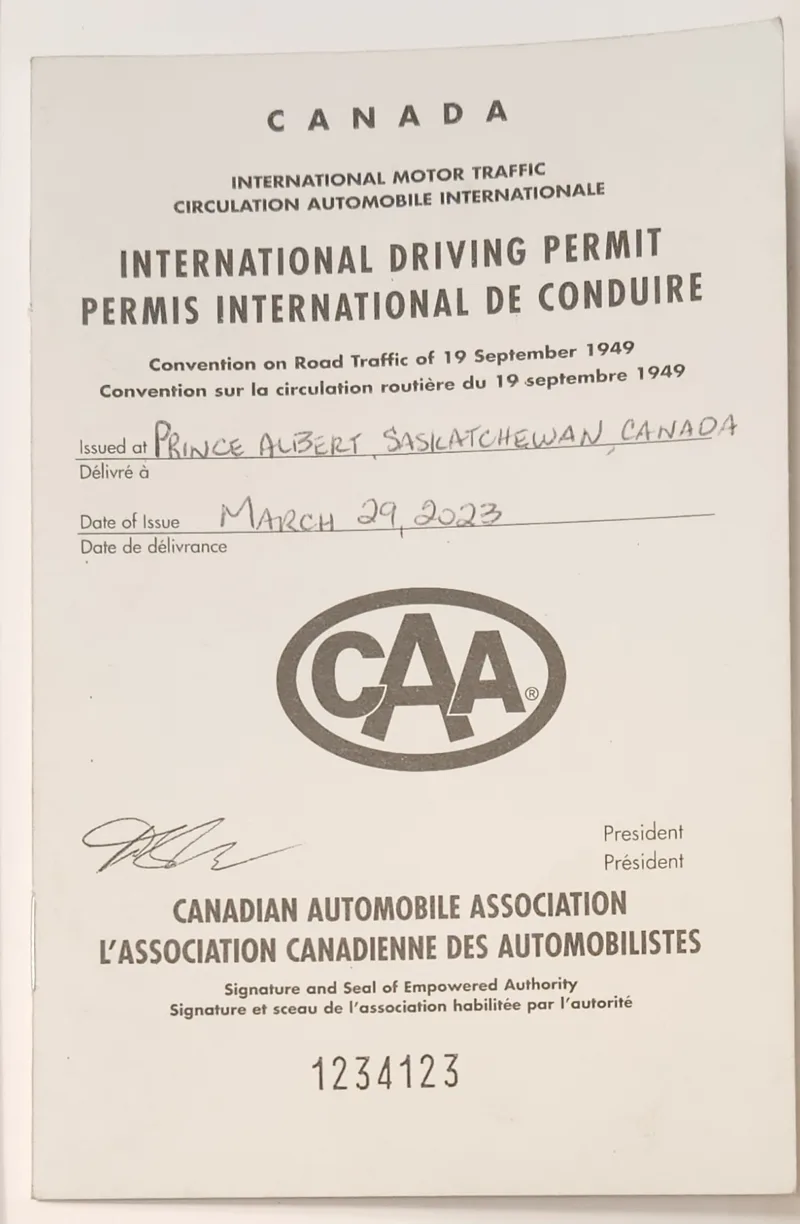
Each province or territory issues them to residents, and all of them recognise each other's licences. They are also accepted in the United States, and some countries require an International Driving Permit as well.
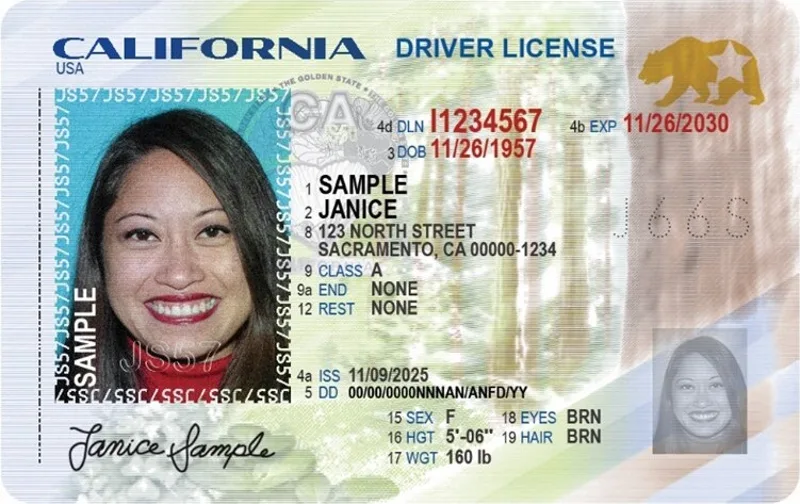
Design is standardised across the border. The American Association of Motor Vehicle Administrators sets a card standard for the United States and Canada, with its 2025 version the newest, and it generally follows an ISO standard aligned with the UN road traffic conventions signed in Geneva and Vienna. Data fields on most Canadian cards carry numbers under that standard, except those from Alberta, British Columbia and Saskatchewan and the Defence Department's DND 404 licence. Every province uses graduated licensing for ordinary cars and light trucks, and the driving age is set province by province, with Alberta the earliest at 14.
Alberta's Class 7 learner permit needs a computerised knowledge test with a mark of at least 83.3% and a vision test. The holder must be accompanied in the front passenger seat by a fully licensed driver over 18, must have zero blood alcohol and cannot drive between midnight and 5 am. After a year without suspension and at age 16, a driver can take a basic road test for the Class 5-GDL probationary licence, and two more years lead to the full Class 5, which since 1 April 2023 no longer needs an advanced road test. Higher classes cover taxis, ambulances and buses up to 24 passengers (Class 4), vehicles with three or more axles (Class 3), any bus (Class 2) and any vehicle but a motorcycle (Class 1).
British Columbia has used a graduated system since August 1998 and revised it in October 2003. Its Class 7L learner permit starts at 16, with an 80% pass mark on the knowledge test, a supervisor over 25 and a two-year validity. After 12 months, a 35-minute test leads to the Class 7N novice licence from age 17, which is good for five years and takes at least two years to complete, or 18 months after an accredited course. Drivers display an N decal and can carry only one passenger apart from family. A 45-minute road test then grants the Class 5 full licence. New residents face a knowledge test and a road test unless they hold a valid licence from other Canadian jurisdictions or from a list including Australia, New Zealand, the United Kingdom, the United States, Japan and several European countries.
Manitoba splits its car licence into Class 5L, 5I and 5F. The learner stage starts at 16, or 15 and a half for students on a school driver education programme, with a supervising driver who has held a full licence for three years. After at least nine months a driver can take the road test for the intermediate stage, and the full stage follows after 15 months.
How does the New Zealand driver licence system work?
It is a graduated system that has been running since 1988, with three phases for a car licence: learner, restricted and full. Waka Kotahi, the NZ Transport Agency, issues the licences.
On passing each stage, applicants receive a temporary paper licence so they can drive at once while the permanent card is printed and posted. Drivers must carry it at all times or risk an instant fine. Alongside passports and a special 18+ card, a photo licence is the sole accepted proof of age for buying alcohol, tobacco and fireworks. From 1925 local authorities issued licences that were renewed with a brand new document every year, and once the Ministry of Transport took over, renewal became five-yearly from 1953.
There are six classes. Class 1 covers most cars, light vehicles, mopeds, tractors and all-terrain vehicles, and Class 6 is for motorcycles, both available from the 16th birthday through the three-tier route. Classes 2 to 5, for heavy vehicles, need a full Class 1 licence and skip the restricted stage. Endorsements, such as D for dangerous goods, P for passengers and V for vehicle recovery, cover specialised work, and some require a police background check.
To get a car learner licence, applicants must score 32 or more out of 35 in a Road Code quiz. Learners display black-on-yellow plates and must have a supervisor with a full licence of the same class for at least two years. After six months, a learner can take the restricted test, which allows solo driving between 5 am and 10 pm and carrying specific passengers such as a partner, parent or child. The licence is a yellow card. A full licence follows after 18 months, or 12 months with an approved defensive driving course, after a 30-minute practical test. For drivers aged 25 or over the waiting period is six months, or three with a course. Full licences are green cards, pink if a court has imposed conditions, and they are renewed every ten years until age 75.
The minimum age has moved. Before 1 August 2011 a young person could hold a learner licence from 15, a restricted licence at 15 and a half and a full licence at 16 and a half. The starting age is now 16, so the earliest solo driving comes at 16 and a half. Rural families objected, because many teenagers there learn on the farm from age 12 and rely on driving themselves to school. The system also has a visitor path: those from countries with similar road rules may only need a theory test within a year, or can convert to a New Zealand licence for NZ$52.10 with no tests, as drivers from Germany can.
Change is planned. In April 2025 Transport Minister Chris Bishop announced a move to replace the full licence test with an 18-month trial period and to reduce the number of eyesight tests. In February 2026 he confirmed that the government would proceed with eliminating the full test, with a trial of 6 to 12 months for restricted drivers, lower fees and fewer eyesight tests. The changes are expected to take effect on 25 January 2027.
What does the United Kingdom driving test involve?
Candidates pass a theory test and then a practical test to earn a full category B car licence. The Driver and Vehicle Standards Agency runs it in Great Britain and the Driver & Vehicle Agency in Northern Ireland.
The minimum age is 17 for cars and 16 for mopeds, and people receiving the enhanced mobility rate of Disability Living Allowance or Personal Independence Payment can start a car test at 16. There is no upper age limit. Roughly 1.6 million candidates take the practical car test annually and about 43% pass, while the theory test passes about 50%. The theory test costs 23 pounds and the practical test 62 pounds, or 65 pounds in Northern Ireland.
The theory test has two parts. The multiple-choice section has 50 questions drawn at random from a bank of just under a thousand, and candidates need at least 43 correct, or 86%, within 57 minutes after a 15-minute practice. The hazard perception part shows fourteen one-minute clips, filmed from a driver's viewpoint, in which the candidate clicks when a developing hazard appears. Since January 2015 computer-generated clips have replaced real video. A pass in the theory test is valid for two years, and the practical test must be taken within that time.
The practical drive happens on public roads, with a DVSA examiner setting the route. The examiner records driving faults, serious faults and dangerous faults, and a candidate fails with any serious or dangerous fault or with more than fifteen driving faults. The drive usually lasts 38 to 40 minutes and, since October 2019, the examiner marks on an iPad and emails a summary instead of handing over paper. It begins with an eyesight check: read a number plate from 20.5 metres (67 ft) for the old style or 20 metres (66 ft) for the new style. A candidate who cannot read the third attempt fails on the spot, the DVLA is told and the provisional licence is revoked.
Several changes arrived on 4 December 2017. Candidates answer a tell me question before driving and a show me question while on the move; a wrong answer to either is a single driving fault. The three-point turn and reversing around a corner were dropped in favour of four manoeuvres, one of which is tested each time: reversing into a bay, driving into a bay and reversing out, parallel parking within two car lengths, or pulling up on the right and reversing back about two car lengths. The independent driving section grew from about 10 minutes to about 20. An emergency stop is carried out on one in three normal tests and every extended test. Motorways are not part of the test.
Testing has a history of interruption. Licences began with the Motor Car Act 1903 but needed no test, and compulsory testing for new drivers came with the Road Traffic Act 1934, becoming mandatory for those who started driving after 1 April 1934 from 1 June 1935. Tests were suspended in the Second World War and again during the Suez Crisis in 1956, when examiners helped to administer petrol rations, and they paused again during the Coronavirus pandemic. The theory test began in July 1996 as a written exam and moved to computers in 2000, with hazard perception added in November 2002.
What is changing in these licence systems?
The clearest change on the horizon is in New Zealand, where the government has said the full licence test will be eliminated and a 6 to 12 month trial introduced, with the changes expected on 25 January 2027.
Elsewhere the changes are smaller. Alberta dropped its advanced road test for the full Class 5 licence in April 2023, and Britain's last major change to the practical test came in December 2017.