The UK banned handheld calls in 2003 and Australia permits only hands-free use, yet the studies disagree about how much that really protects you.
Handheld phone use while driving is banned in the UK since 2003 and, in Australia, only hands-free headsets are allowed. Research is divided on whether hands-free is safer: several studies find it is not, because the conversation loads the brain. The US Department of Transportation says texting makes a crash 23 times likelier.
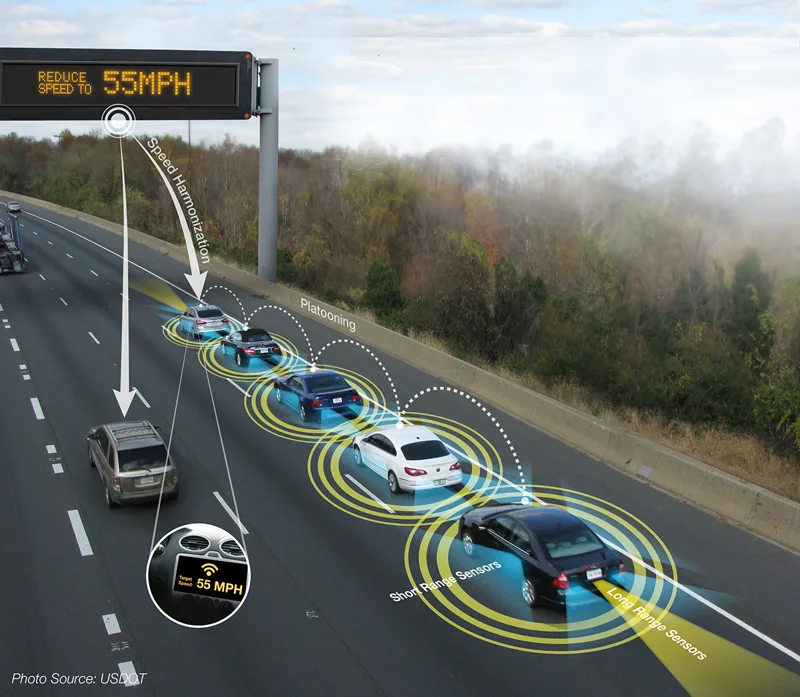
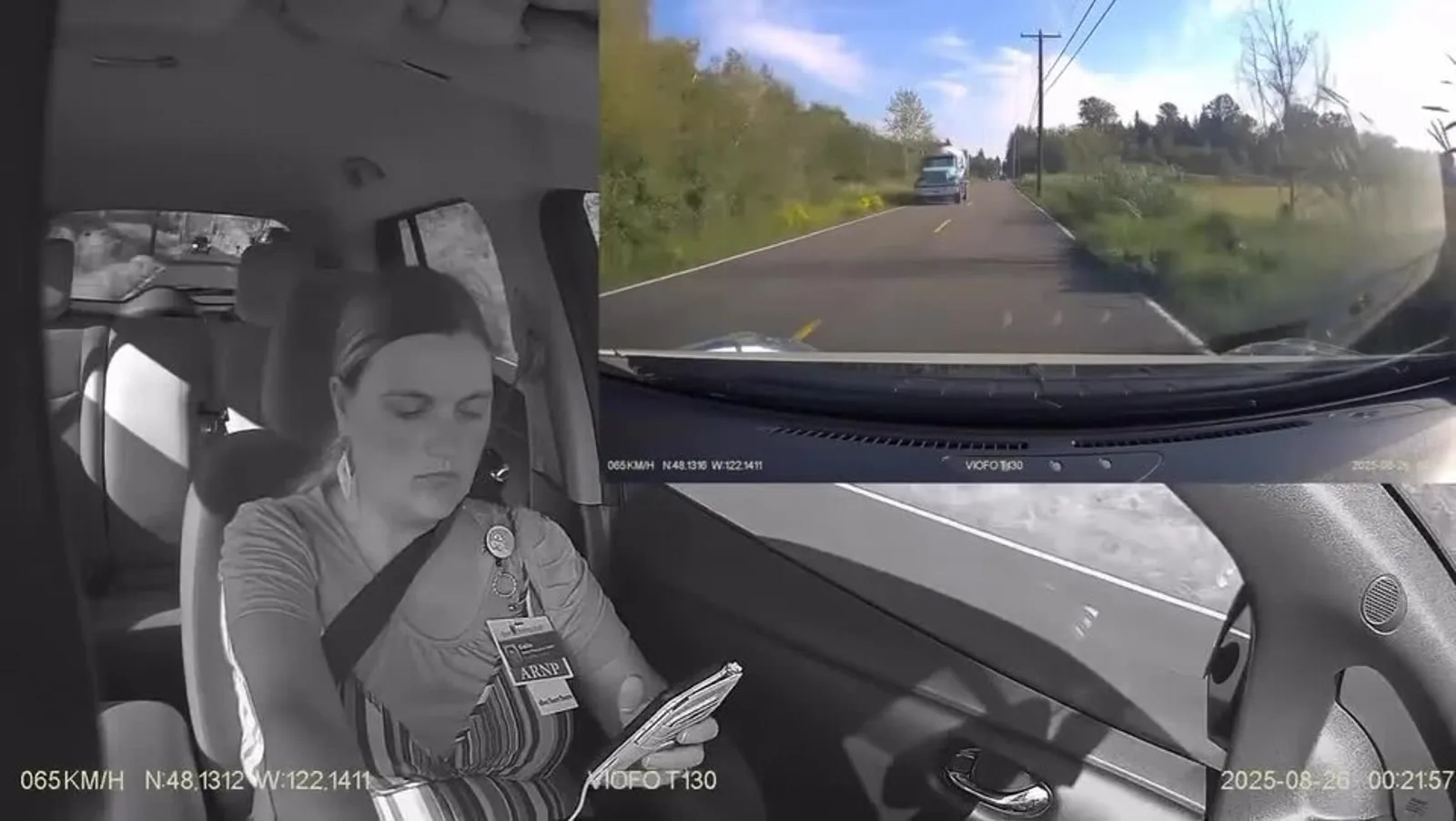
Reaching for a phone takes a driver's attention off the road for 4.6 seconds, which at 55 miles per hour covers about the length of a football field, according to the US Department of Transportation. The law has caught up in some places and lagged in others.
What counts as distracted driving?
Distracted driving means doing something that pulls attention away from the road. Researchers sort distractions into three groups: visual, when eyes leave the road; manual, when hands leave the wheel; and cognitive, when the mind is elsewhere. Texting is the classic example because it combines all three at once.
The list is wider than phones. A glance at a satellite navigation screen or a billboard is visual, and checking a child's seat belt in the mirror counts too. Rummaging in a bag, eating, grooming and changing the radio station are manual. Rubbernecking, passengers, children, pets and the hunt for a lost item all take their share.
The car itself can add to the problem. New in-vehicle technology gives drivers more screens to look at, and long use of automation can lead to over-reliance, to the point where a driver disengages from both the wheel and the road ahead.
The danger lies in the conversation, which loads the brain, not in what the hands are doing.
What do mobile phone driving laws say?
Most jurisdictions that regulate the issue ban handheld use, while many allow hands-free. Some limit the rules to minors, newly licensed drivers or school zones. In the United Kingdom it has been illegal to use a handheld phone at the wheel since 2003, unless it is in a hands-free kit. In Australia every state bans phone use while driving unless a hands-free headset is used.
Hands-free kit is obligatory in many countries before a driver may use a phone at all. The equipment includes Bluetooth headsets, car kits and personal navigation devices, all of which still rely on a phone to start a call, and many premium cars build the same function into the stereo. In the UK, installation is governed by a technical standard known as MPT 1362, now FCS 1362.
The UK penalty has been raised several times, and the sequence shows how seriously governments came to treat the offence.
| Year | UK penalty for handheld phone use |
|---|---|
| 2003 | Offence introduced; fine of 30 pounds (US$40) |
| 2006 | 60 pounds (US$80) plus 3 penalty points |
| 2013 | 100 pounds (US$134) plus 3 points |
| 2017 | 200 pounds (US$268) plus 6 points, as decided by the Department for Transport |
Did tougher penalties change behaviour?
Not at first. The 2013 increase proved ineffective, and the proportion of British drivers owning up to phone use on the road climbed to 31% in 2016, up from 8% two years before. In the same period, only 30,000 drivers received a fixed penalty notice for it, compared with 123,000 in 2011. Cheaper smartphones and weak enforcement made the habit feel acceptable, even though it was against the law.
The 2017 change was aimed at that attitude. Six points can disqualify a driver for six months if they already hold six. The biggest effect falls on newly qualified drivers, who must retake their test if they reach six points within two years of passing; after that, licence holders have a 12-point limit. A year after the stricter law, 23% of motorists admitted to using a phone, which was 8% fewer than two years earlier. The British government says it wants picking up a phone to be as socially unacceptable as drink driving.
Is hands-free calling any safer?
Several lines of research say no. Case-crossover, epidemiological, simulation and meta-analysis studies all found that driving with a hands-free device is not safer than holding the phone. The danger lies in the conversation itself, which loads the brain, not in what the hands are doing. One Carnegie Mellon study found that merely listening to someone on a phone cut activity in the parietal lobe, which handles spatial tasks, by 37%.
The National Safety Council likewise reports that speaking on a call reduces focus on the road by 37 percent whether or not the call is hands-free. Reviews of hands-free equipment put the added distraction and crash-rate increase as almost as large as with a normal handset.
Not everyone agrees. Two researchers, Shutko and Tijerina, reviewed a large naturalistic study in 2011 that tracked cars, heavy vehicles and buses on real roads. They concluded that mental distraction from talking or listening, on a handheld or hands-free phone alike, was tied to crashes and near misses less strongly than people assume, and might occasionally help. The biggest single factor was visual: eyes off the road ahead.
What do the crash studies actually measure?
The answer depends on the method. The US Department of Transportation puts the crash risk of texting at 23 times that of undistracted driving. Talking on a phone is said to raise the chance of a crash that ends in hospital fourfold. The National Safety Council puts calling at a factor of 2.5 for crashes or near crashes among experienced drivers.
A 2003 study by the Societe de l'assurance automobile du Quebec shows why the figures wobble. It sent questionnaires to 175,000 drivers and analysed the 36,078 replies. Compared with non-users, phone users had a crash risk that averaged 1.38 times higher. Once distance driven was factored in, the multiple dropped to 1.11 for men and 1.21 for women. A Bayesian reanalysis gave 0.78 for those making less than one call a day and 2.27 for those making more than seven. A case-crossover reanalysis jumped to 5.13, and the authors worried that errors in the recorded time of calls had biased that method.
A University of Utah simulator experiment in 2003 compared drivers on the phone with those at the legal blood alcohol limit of 0.08%. Across three studies, 120 participants drove both without and with a phone call. Two crashed in the baseline condition, while ten crashed while talking. No drunk driver crashed in any test. After controlling for difficulty and time on task, the researchers concluded that phone users were more impaired than drunk ones.
Do phone bans really cut crashes?
The evidence is contested. One argument runs that US cell phone subscriptions grew by 1,262.4% between 1985 and 2008, while crashes fell by 0.9% between 1995 and 2009 and fatal crashes by 6.2%, so phones cannot be doing as much harm as claimed. In February 2010 the Highway Loss Data Institute published a review of insurance claims in three states and Washington, D.C., before and after phone bans. It found no reduction in crashes, though phone use while driving fell by 41% to 76% after the bans.
A 2005 review for the Hawaii House of Representatives found that no study directly resolved whether phone use causes collisions. And in the United States, crashes due to distracted driving have been reported to be increasing even after laws were passed.
How many drivers use a phone anyway?
A lot. Polls in the United States keep finding that more than 30% of drivers have recently texted behind the wheel. A 2016 paper in Preventive Medicine Reports reported that close to half of drivers had read or sent a text, looked up directions or browsed social media while driving, and close to 60 percent had used a phone at least once.
A 2018 AAA Foundation survey of over 3,300 drivers exposes a gap between belief and behaviour. Of them, 95.6% called texting or emailing at the wheel unacceptable, yet 49% reported talking on a handheld phone and nearly 35% had sent a text or an email. Meanwhile NHTSA reports that between 35 and 50 percent of drivers confess to smartphone use, while 90 percent say they fear other drivers who do it.
A 2011 study by the Centers for Disease Control and Prevention found that 69% of drivers aged 18 to 64 had made a call while driving in the previous month and 31% had read or sent an email or text. In February 2015 a Harris Poll put texting at the wheel at 24 percent of drivers in the Northeast and 28 percent in the Midwest, with 30 percent in the West and 35 percent in the South. Age mattered more: 51 percent of those aged 18 to 34 did it, 14 percent of those aged 55 to 64, and only 7 percent of people 65 or older.
How many crashes are caused by distraction?
Nobody knows precisely. One analysis of American fatal-crash records for 2010 to 2013 left out drivers impaired by alcohol or drugs, and still counted 13,707 distraction-related drivers among 178,677 involved in fatal crashes, about 7.7%. The largest share fell under inner cognitive distractions, and the most frequently coded factors were inattention, looking but not seeing, and being lost in thought.
The NHTSA reported that in 2009, 5,474 people died in the United States because of distracted drivers, of whom 995 were killed by drivers distracted by phones. It called its own crash reporting clearly inadequate. A 2001 study sponsored by the AAA recorded an unknown attention status for 41.5% of crashes.
The National Safety Council goes much further. It estimates that smartphone calls lie behind 1.6 million crashes a year (25%) and texting behind 1 million more (18%), which works out at a crash every 24 seconds. Older figures are smaller: a 2003 study of US crash data found distraction a factor in 8% to 13% of police-reported crashes, with phones responsible for 1.5% to 5% of those. In that data the most reported cause was an outside person, object or event, followed by adjusting the radio, with phone use eighth.
Is talking to a passenger just as bad?
The research is mixed. A AAA study judged a chat with a passenger as distracting as a hands-free call, and a University of Illinois meta-analysis reached a similar view. Yet a 2004 simulation found that drivers on the phone were four times likelier to miss a highway exit than those with passengers, because a passenger makes the road part of the conversation. Andrew Parkes, at the Transport Research Laboratory, found hands-free calls hurt driving more than passenger talk.
Children are a special case. Research at Monash University found one or more children on board to be 12 times more distracting than a phone call. AAA data list passengers as the third most reported cause of distraction-related crashes, at 11 percent, against 1.5 percent for phones. Among teenage drivers, 15 percent of reported crashes involved talking with a passenger and another 12 percent involved a phone, and the NHTSA says distraction lies behind 25 percent of all crashes involving teenagers.
Pets feature as well. An AAA survey of dog owners found that 80 percent drove with their dogs. Of those, 31 percent admitted being distracted by the animal, and just 17 percent used a restraint of any kind.
What does texting do to driving skills?
A simulation at the Monash University Accident Research Centre found strong evidence that both reading and, above all, sending texts harm critical tasks. Drivers were worse at spotting and responding to road signs, worse at spotting hazards and spent longer with their eyes off the road. Sending messages also affected lateral position. Mean speed and following distance showed no difference, which surprised the researchers.
In the United States more than half of teenagers talk on the phone behind the wheel and over 30% text. Research by Qin and colleagues in 2016 found that drivers aged 14 to 24 are the likeliest to be caught out by in-vehicle technology, and young women more so than young men. Drivers over 80 are most susceptible to inner cognitive interference, while men are more likely to be distracted by events on the road.
What else pulls attention from the road?
Almost everything. A 2011 HealthDay poll found that 86% of drivers admitted to eating or drinking behind the wheel, at least a fifth to styling their hair and 14 percent to putting on makeup. Fatal crashes involving distraction peak in summer and are fewest in winter.
One 2026 finding from the journal Jama Network Open came from Dr Vishal Patel of Harvard Medical School and colleagues. They reported a 15% rise in US traffic fatalities on days when top albums came out, set against comparable days. The study covered 10 major albums released between 2017 and 2022.
Drivers who report being distracted are also likelier to admit other risky habits: drowsy driving, aggressive driving, speeding by 20 miles per hour, or driving after drinking.
Where this goes next
The direction of travel is towards firmer rules and firmer norms. Britain's stated aim is for picking up a handset to be treated as harshly by society as drink driving, and researchers are still tracking whether motorists drop the habit. Newer in-car screens and automation, meanwhile, add a different kind of distraction.