THC can still show in a test weeks after use, while the high lasts a few hours. How oral-fluid swabs and blood tests are used, and why laws differ from country to country.
Police screen for drugs with roadside oral-fluid swabs, confirm with laboratory tests, and may add field sobriety tests or a drug recognition evaluation. Some places ban any detectable drug, some set numeric limits and some require proof of impairment, because blood THC is a poor guide to cannabis impairment.
A driver smokes cannabis on a Saturday night. The high is gone within hours, but one NHTSA report found THC still detectable in the body as late as 30 days later. Nobody is impaired a month on, yet a test might still say otherwise. That gap between what a swab can find and what a driver can safely do is why drug driving laws look so different from one jurisdiction to the next.
How does a roadside drug test work?
It starts with watching. An officer observes the vehicle and driver, interviews the driver and, where justified, runs standardised field sobriety tests: horizontal gaze nystagmus, the walk-and-turn and the one-leg stand. Those three tests were developed primarily for alcohol. Officers with extra training in recognising drug impairment can then call in a Drug Recognition Expert for a fuller evaluation.
The chemistry follows. A roadside oral-fluid screen, the saliva swab, gives a first indication. A biological sample then goes for confirmatory mass spectrometry. Toxicology tells you which substances are in the sample. It cannot, on its own, link one of them to the impairment the officer saw.
Both blood and oral fluid are used. Oral fluid can be collected at the roadside, whereas blood may need a trained collector and so adds a delay. That delay matters, because blood THC can fall substantially after inhalation and the gap between driving and sampling affects how a result is read. A 2025 consensus update on the toxicological investigation of drug-impaired driving recommended blood and oral-fluid testing and dropped urine, since urine findings say less about recent use and impairment.
The Drug Recognition Expert
The Drug Evaluation and Classification programme began with the Los Angeles Police Department in the 1970s. It gives a certified Drug Recognition Expert a twelve-step process, from a breath alcohol test and an interview with the arresting officer to eye examinations, psychomotor tests, vital signs, a dark room examination, muscle tone, checks for injection sites and finally a toxicological examination. It sorts impairing drugs into seven families: depressants of the central nervous system, stimulants, hallucinogens, dissociative anesthetics such as ketamine, narcotic painkillers, inhalants and cannabis. It is used after arrest to gather evidence for trial, not to establish probable cause, and the evaluators can give expert testimony. The programme is recognised in all fifty US states, in Canada and in the United Kingdom.
A positive drug test shows a substance was present, not that the driver was impaired.
How long does cannabis show up compared with impairment?
Much longer. THC plasma levels fall significantly one or two hours after use, yet an NHTSA report to Congress found THC detectable as late as 30 days after ingestion. The National Institute on Drug Abuse adds that traces can linger in body fluids for days, or even weeks, once the intoxication has ended.
One review pooling studies of acute THC effects put recovery of most driving-related thinking skills at roughly five hours after an occasional user inhaled 20 mg. Oral doses take longer to wear off, and regular consumers showed smaller average deficits. Separately, a 2022 analysis pooling 57 experimental driving studies found that cannabis hurt lateral control, so cars weaved and strayed from their lane, and drivers slowed down. The size of the effect was likened to a low blood alcohol level, and taking cannabis together with alcohol did worse than either on its own.
The trouble for law enforcement is that alcohol and THC behave differently. Alcohol is absorbed, distributed and eliminated at similar rates across people, and impairment tracks the level. THC levels vary widely depending on how it is taken, THC is metabolised at an exponentially declining rate, and the correlation between blood levels and impairment is very poor. An NHTSA report put it this way: one person may show hardly any impairment at a THC level where someone else is more affected. Testing for metabolites rather than the active drug can lead to convictions of users who are not impaired at all.
False positives and false negatives
The screening tests police use are imperfect. Many THC immunoassay screens can give false positives for metabolites, because they are not very specific and can react to similar compounds, so a more specific test normally follows. With on-site oral-fluid kits it has not yet been shown that they are accurate and reliable, and a false positive could result from environmental exposure. Chronic users can test positive for months or even years after they stop, since metabolites can be stored in fat tissue and released under stress or with weight loss. The fat solubility of THC also makes it hard to detect in water-based body fluids, which can falsely suggest that a user is not impaired.
Why do zero-tolerance and impairment laws differ?
Because jurisdictions answer one question in three ways: must prosecutors show the driver was impaired, or only that a drug was present? Impairment statutes require evidence that the driver was affected to the extent the law specifies. Zero-tolerance and numeric per se laws ban driving with named drugs, or set amounts of them, in the body, and nobody has to prove impairment separately. A third group treats a laboratory result as grounds to infer impairment, though not as the final word.
The science is shaky for the numeric approach. In May 2016 the AAA Foundation for Traffic Safety concluded that science cannot back a numeric cut-off for per se THC laws after cannabis use. Policymakers in the United States have generally criminalised cannabis driving by importing the alcohol regime, which has caused complications when the cases reach court. Even so, some jurisdictions use urine or blood metabolite per se or zero-tolerance standards.
| Place | Approach |
|---|---|
| Sweden | Zero tolerance for scheduled drugs since 1999 |
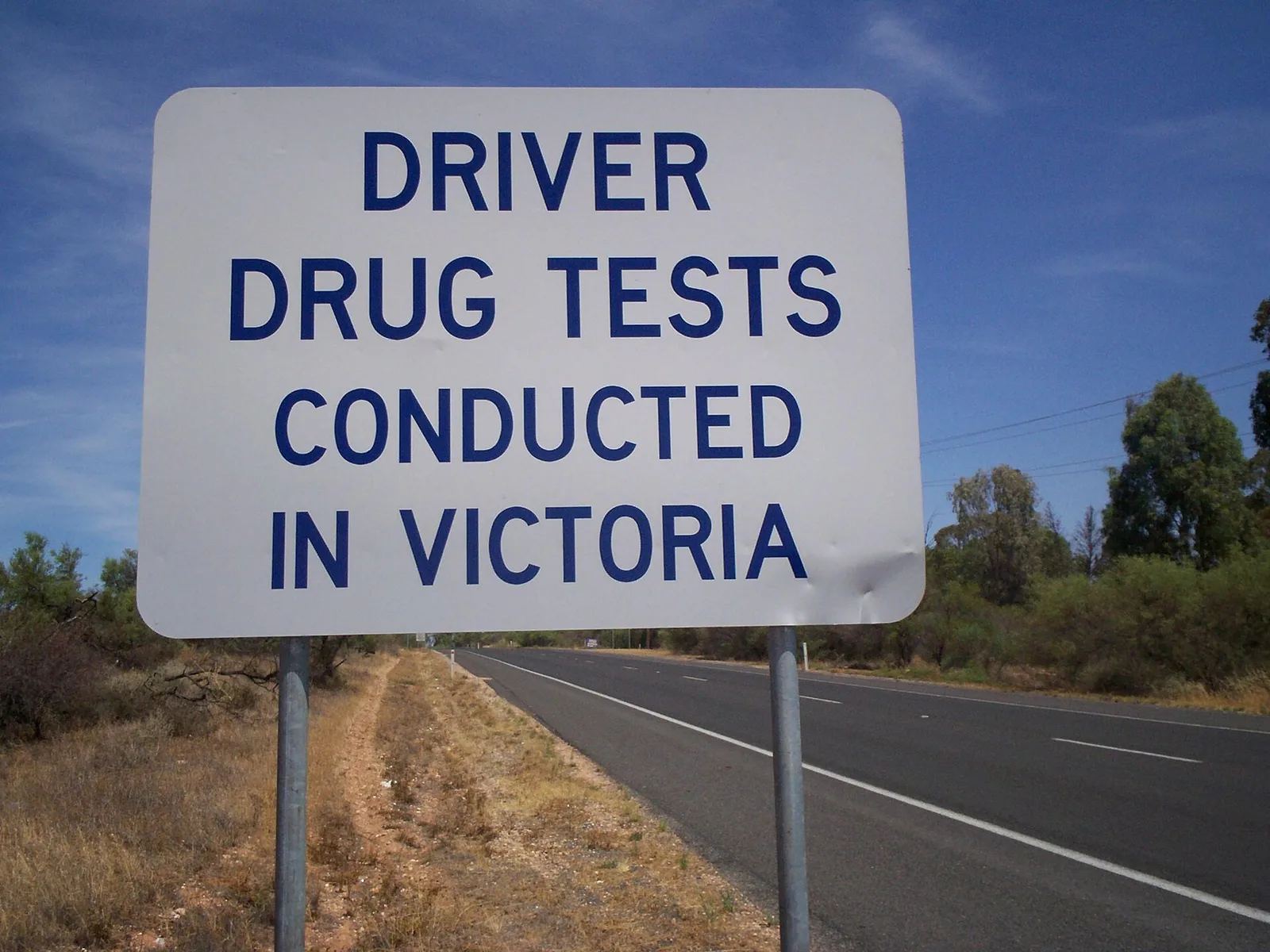
| Victoria, Australia | Random roadside oral-fluid testing from December 2004, first targeting methamphetamine, MDMA and THC |
| Norway | Graded blood limits for twenty drugs since 2012 |
| England and Wales | Specified-drug concentration offences since 2015 |
| Canada | Regulated blood-drug concentrations since 2018; 2017 draft rules started at 2 ng/ml |
| Germany | 3.5 ng/mL serum limit from 2024, replacing a near-zero judicial practice |
| Colorado | Prosecution possible at 5 ng of THC in whole blood, but arrests rest on observed impairment |
| Illinois | 5 ng/mL whole blood or 10 ng/mL in other substances; arrest possible below that if impaired |
| Uruguay | Any detectable THC deems a motorist impaired |
In the United States, all fifty states criminalise driving under the influence of drugs, and their laws fall into the categories above: zero tolerance, per se, impairment-focused, and permissible inference where a THC blood level of at least 5 ng/ml allows a court to infer impairment. For regulated transport occupations the federal rules set urine thresholds for THC-A: as of 1 January 2018, 50 ng/mL for the first immunoassay screen and 15 ng/mL for confirmation.
Accounts of Germany differ. A 2024 change after recreational cannabis reform set a 3.5 ng/mL serum limit, while an older description gives a blood serum THC-A limit of 1 ng/mL.
How risky is driving on drugs?
It depends on the drug, and on whether it is mixed with alcohol. The World Health Organization reports that crash risk varies by substance, and amphetamines, for instance, are linked with fatal-crash risk about five times higher than for non-users. The European DRUID project found that mixing alcohol with another drug, or two drugs together, gave some of the highest odds of serious injury or death, above most single-drug results apart from high alcohol.
A 2013 review of 66 studies put numbers on it. For fatal crashes it estimated odds of 1.26 for cannabis, 1.68 for opiates, 2.30 for antianxiety medications, 2.60 for zopiclone, 2.96 for cocaine and 5.17 for amphetamines. For injury, cannabis scored 1.10, against 1.12 for antihistamines, 1.42 for zopiclone, 1.66 for cocaine and 1.91 for opiates. Its authors concluded that the rise in risk from drugs must be regarded as modest compared with the huge increase tied to alcohol, and with the high accident rate among young drivers.
Cannabis findings conflict. The largest and most tightly controlled NHTSA study reported that, once age, gender, race and alcohol use were allowed for, marijuana-positive drivers were no likelier to crash than drivers who had used nothing, although it warned that this does not make drug use risk-free. A 2012 British Medical Journal meta-analysis found drivers who consumed cannabis within three hours of driving were nearly twice as likely to cause a collision. The UK Department for Transport reviewed the literature and concluded there was no evidence that cannabis impairment causes accidents, noting that cannabis is often confounded by alcohol and that young males are a risk group. A 2025 pooled analysis of 31 observational studies found only low-certainty evidence that cannabis use is associated with death or injury in a collision.
Other drugs have their own profiles. Sleep and anxiety medicines, including benzodiazepines and the Z-drugs zolpidem and zopiclone, impair divided attention and make lane position more variable in experiments. Opioids, prescribed or illicit, can slow reactions and bring drowsiness. Cocaine and amphetamines can sharpen some measures of alertness at low doses while eroding judgment and impulse control.
How common is drug driving?
Roadside surveys count how often drugs are present, not how many drivers are impaired. The 2013-2014 US National Roadside Survey, run at 300 locations, found that about 22% of drivers, by day and by night, were positive for at least one of 98 drugs, whether illegal, prescription or sold over the counter. THC was the most frequent: 8.7% of daytime and 12.7% of nighttime drivers. Late on weekend nights the split was 15.2% with an illegal drug and 7.3% with a medicine that can affect driving. In the same period, weekend-night drivers at or above 0.08% breath alcohol fell from 7.5% in 1973 to 1.5%.
In Europe the DRUID project sampled roughly 50,000 drivers across 13 countries and found 3.48% positive for alcohol, 1.90% for illicit drugs, 1.36% for selected medicines, 0.39% for drug combinations and 0.37% for alcohol plus a drug. Among seriously injured or killed drivers, alcohol alone topped the list of substances detected, with alcohol plus another substance next.
What penalties and powers apply?
Penalties vary by jurisdiction. The central US tool is implied consent: holding a licence is made conditional on agreeing to a chemical test after a lawful arrest, and civil suspension for refusal is widespread. NHTSA, using 2011 data from 34 states, calculated that on average 24% of drivers refused an alcohol test, with individual states anywhere from 1% to 82%. In Birchfield v. North Dakota in 2016, the Supreme Court held that a warrantless breath test is allowed as a search after a lawful arrest, but a warrantless blood draw is not.
Other consequences follow. Following a crash, an intoxicated driver's car insurance may be treated as void, and a US citation sharply raises premiums. In Colorado a driver arrested for DUI with children in the car may also be charged with child endangerment. In Ontario, a 2014 bill brought licence suspensions for driving under the influence of drugs or of drugs and alcohol. Germany's model revokes licences until fitness to drive has been established again, using a medical-psychological assessment that offers a chance of rehabilitation.
Prescribed medicine is not a defence. Opioids and benzodiazepines often cause drowsiness, and in Colorado it is illegal to drive if a substance is impairing you, even if it was prescribed or legally acquired.
Where does this go next?
Detection technology is still moving. Several companies are developing roadside THC breathalyzers that police might use to identify drivers impaired by cannabis, and some nations already use saliva swabs, though questions remain about their reliability. NHTSA has also warned about the limits of national data: the US fatality file stored at most three non-alcohol drugs until a 2018 redesign, so changes in drug-positive fatal-crash numbers can reflect changes in testing as much as in use.