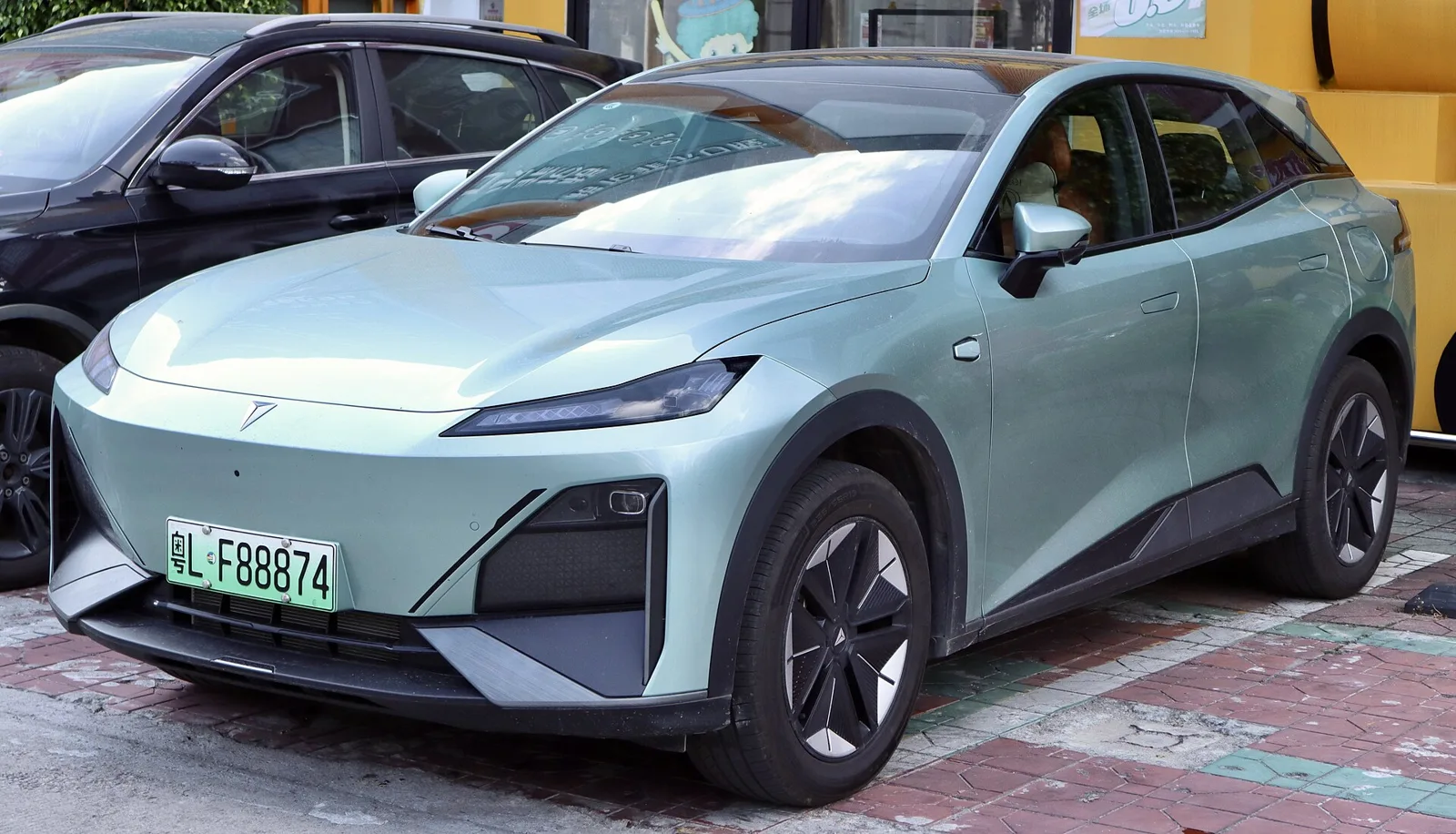
A Turin-styled compact, a Guinness-record SUV and two Deepal electrics, with their engines, ranges and markets.
Changan's Eado compact car dates from 2012 and its CS55 compact SUV from 2017. Deepal, the electric brand, builds the S07 mid-size crossover and the SL03 liftback sedan, both offered as EVs or range-extender EREVs with Huawei and CATL technology.
Fifty-five Changan CS55 crossovers once drove in formation to set a Guinness World Record for the largest parade of autonomous cars. Changan's range now stretches from the Eado compact, which has a battery-swap taxi version, and the CS55 SUV to the Deepal electric brand, whose S07 and SL03 use Huawei and CATL technology.
What are the Changan Eado, CS55 and Deepal S07 and SL03?
Changan has built the Eado, a compact car, since 2012, and the CS55, a compact SUV, since 2017. Deepal, Changan Automobile's electric-vehicle subsidiary, makes the S07, a mid-size crossover SUV built since 2023, and the SL03, a mid-size liftback sedan produced since 2022.
Fifty-five Changan CS55 crossovers once set a Guinness record for the largest parade of autonomous cars.
How did the Changan Eado begin?
The Eado debuted as the C201 concept at the Beijing Auto Show in 2010 and the production car appeared at the Frankfurt show in 2011. Changan's Italian design centre in Turin styled it. Sedan deliveries began on 27 March 2012, and the later CS35 crossover is based on it.
The first car used a 1.6-litre petrol engine producing 122 hp (91 kW; 124 PS) with a five-speed manual or four-speed automatic gearbox. A hatchback, the Eado XT, was shown at the Shanghai show in 2013 and went on sale on 28 August 2013. A turbocharged XT RS followed.
Hybrid and electric early Eados
The Eado Blue is a mild hybrid, with a 1.6-litre four-cylinder and a 48V electric unit. The Eado PHEV arrived in October 2017, a plug-in sedan built around a 1.0-litre three-cylinder turbo producing 177 hp (132 kW; 179 PS), a seven-speed dual-clutch gearbox and a 12.3 kWh battery.
The first electric Eado, the EV300, debuted at the Beijing show in April 2014 with a blue-painted grille to set it apart. It had a 26 kWh lithium-ion battery and a 120 hp (89 kW; 122 PS) motor, weighed 1,610 kg (3,550 lb) and managed a top speed of 140 km/h (87 mph) and a range of 160 km (99 mi).
What changed in the second and third Eado?
Details of the second-generation sedan and Eado XT emerged in January 2018. The Eado XT II was priced from 72,000 yuan to around 97,000 yuan. Buyers could choose a 125 hp (93 kW; 127 PS) 1.6-litre with a five-speed manual or six-speed automatic, or a 170 hp (127 kW; 172 PS) 1.5-litre turbo with a seven-speed dual-clutch gearbox.
The 2020 model-year facelift, the Eado Plus, was unveiled in December 2019 and went on sale in March 2020. It offered Standard and Sports looks, and it grew by 20 mm to 4,730 mm (186.2 in). Engines were a 1.6-litre making 127 hp (95 kW) and a 1.4-litre turbo making 157 hp (117 kW), with five-speed manual, six-speed manual or seven-speed dual-clutch transmissions. Only the sedan was facelifted, and the hatchback was discontinued because of low sales.
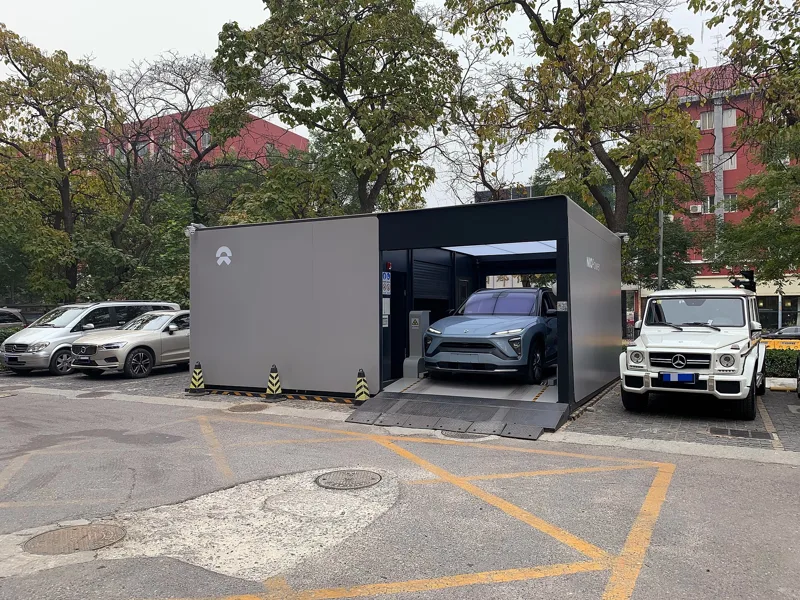
The Eado EV, also called the EV300, uses a 100 kW (134 hp; 136 PS) motor and is rated at 405 km (252 mi) of range, priced in China from 129,900 to 139,900 yuan. The EV460 went on sale in 2018 at 203,400 yuan before subsidies, with a range of 550 km (342 mi) and fast charging. In 2021, a batch of 100 EV460 taxis with battery swapping entered service in Chongqing, where a battery change takes about 20 seconds.
In March 2024 Changan announced the third-generation Eado, which is a renamed Changan Lamore with different pricing and equipment. A battery-swap electric version sold under the Oshan marque, the Oshan 520, followed in November 2024. It stands 30 mm (1.2 in) taller, is the first vehicle to use CATL's second-generation Choco-SEB swappable packs, and has a 105 kW (141 hp; 143 PS) motor, a CLTC range of 515 km (320 mi), a kerb weight of 1,535 kg (3,384 lb) and a top speed of 135 km/h (84 mph). According to Changan, the battery can be swapped in two minutes. A further facelift in August 2025 was marketed as the fourth generation.
What is the Changan CS55?
The CS55 is a compact SUV that debuted at the 2017 Shanghai Auto Show and reached Chinese showrooms later that year. In its first form it was a five-seater priced from 74,900 to 86,900 yuan, sitting below the similarly sized CS75.
Power came from a 1.5-litre turbocharged four-cylinder petrol engine with variable valve timing on the inlet and exhaust camshafts, producing 156 bhp and 225 Nm (165 lb ft). It was matched to a six-speed manual or an Aisin six-speed automatic. The suspension used struts at the front and a multi-link axle at the rear, with anti-roll bars at both ends, electric power steering and vented front discs. A subframe carries the powertrain and front suspension.
Changan's Turin studio shaped the body, and critics pointed out that it looked a lot like the Land Rover Discovery Sport. A 2018 facelift changed the front bumper and grilles, and it was a fleet of 55 of these cars that set the autonomous-car parade record.
CS55 Plus and the electric CS55
The 2019 facelift, the CS55 Plus, restyled the front and rear completely, with a grille similar to the CS75 Plus and connected tail lamps. Its 1.5-litre turbo produces 132 kW and 300 Nm, driving through a seven-speed dual-clutch gearbox.
Changan announced a full-electric version on 9 July 2020, which reached the market on 15 July as the CS55 EV, after being called the CS55 E-Rock earlier. A 160 kW motor and 300 Nm drive it, with a choice of a 52.7 kWh or 84.2 kWh battery giving 403 km or 605 km on the NEDC cycle. A fast charge from 30 to 80 percent should take 35 minutes.
How did the CS55 Plus evolve from 2021?
The second-generation CS55 Plus appeared in March 2021, and was called the UNI-S in the Middle East. It adopted the design language of the UNI-T and UNI-K. A Blue Whale 1.5-litre turbo produces 138 kW (188 PS; 185 hp) at 5,500 rpm and 300 Nm between 1,600 and 4,100 rpm, mated to a wet seven-speed dual-clutch gearbox.
A facelift shown at Auto Shanghai in April 2023 was marketed as the third generation and went on sale in September 2023. It has a body-colour grille and new headlights, measures 4,539 mm long, 1,865 mm wide and 1,680 mm high on a 2,656 mm wheelbase, and uses a new 500 bar high-pressure injection 1.5-litre turbo producing 141 kW and 310 Nm, with the seven-speed wet dual-clutch or a six-speed Aisin automatic.
In March 2025 came a plug-in hybrid, using the Smart New Blue Whale 3.0 system with two electric motors, a 1.5-litre turbo, an E-CVT transmission and an 18.4 kWh battery. Combined output is 230 kW and 330 Nm, good for 0-100 km/h in 7.3 seconds. Changan claims 125 km of electric range on the CLTC cycle and 1,320 km in total with the 51-litre tank.
The August 2025 facelift, marketed as the fourth generation, has a sharper grille and redesigned lights and is 4,550 mm long, 1,868 mm wide and 1,675 mm high. Its 141 kW, 310 Nm engine feeds a seven-speed dual-clutch gearbox, with declared fuel consumption of 6.9 litres per 100 km on the WLTC cycle. The earlier CS55 Plus versions remain in production.
The Nevo Q05 is a range-extended hybrid that is essentially a rebadged second-generation CS55 Plus with restyled bumpers. It pairs a 1.5-litre naturally aspirated JL473Q5 engine producing 81 kW with electric motors producing 158 kW.
What is the Deepal S07?
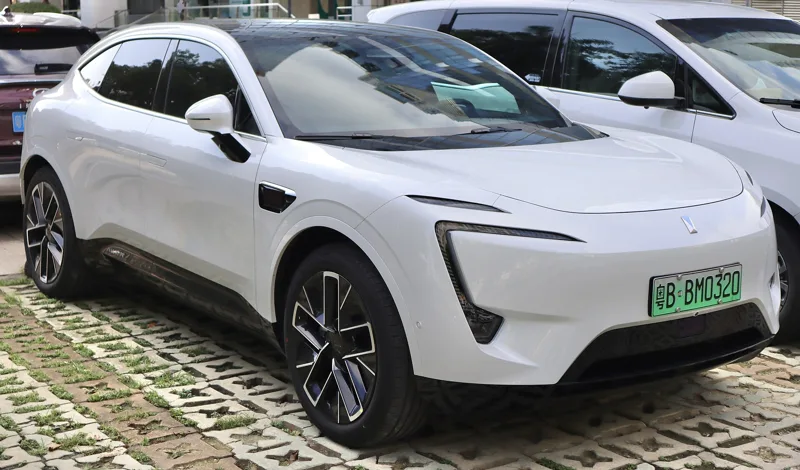
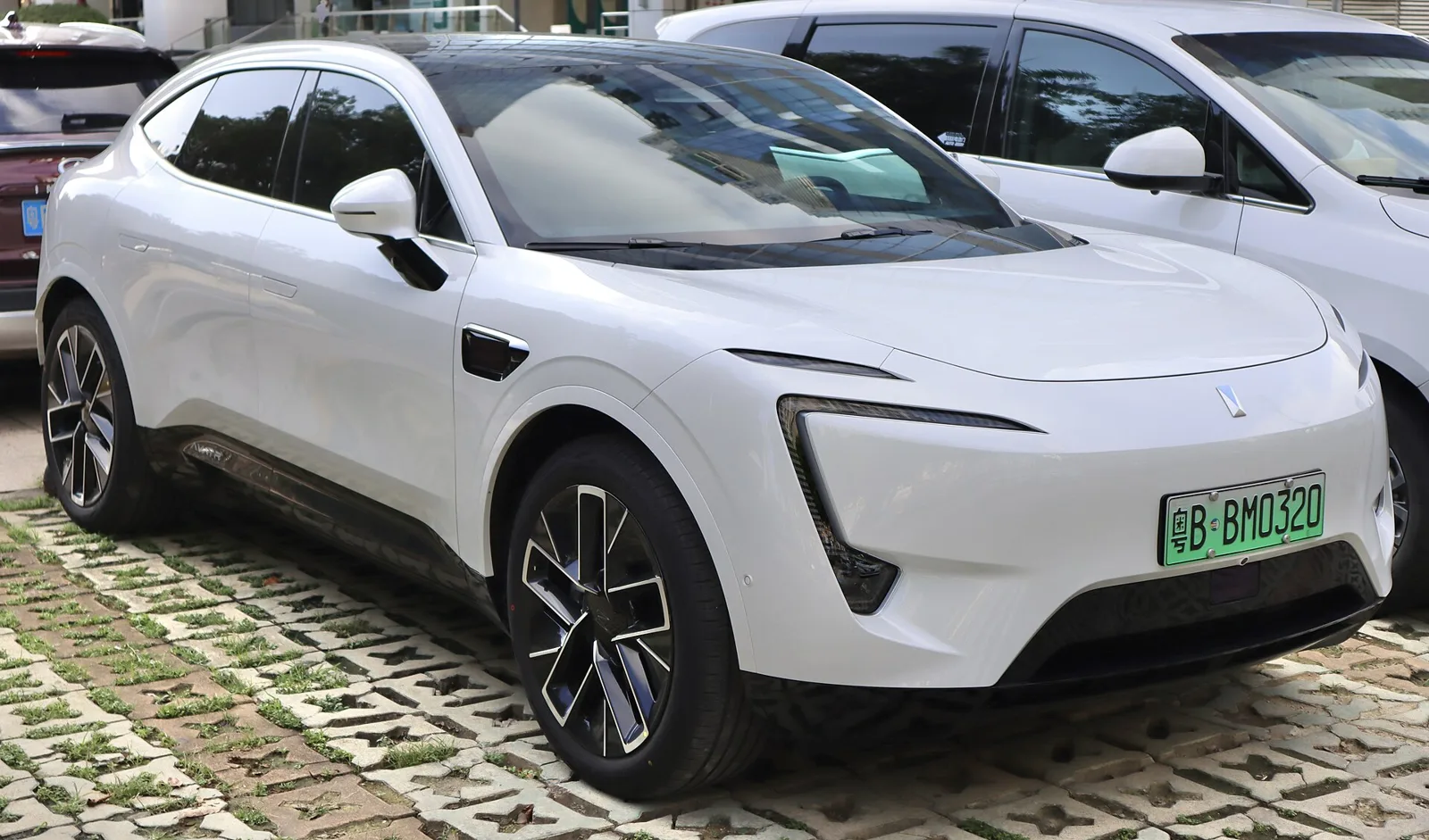
The Deepal S07, called the S7 until 2024, is a mid-size crossover SUV produced since 2023 by Deepal. Changan developed it with Huawei and CATL, and it shares its platform with the earlier Deepal L07. Production started on 31 May 2023.
A team in Turin designed it, with Bertrand Bach as design director, Georgios Koukos running exterior design and Jaromir Chech leading the interior. The design leaked in 2022 under the code C673, which is still the model code. Inside are a 12.3-inch head-up display and a landscape central screen running the HarmonyOS infotainment system on Snapdragon 8155 chips, with Huawei's DriveONE program and CATL batteries.
S07 powertrains and facelift
The S07 comes as an EV and as an extended-range EREV. The EV has 218 hp (163 kW; 221 PS) or 258 hp (192 kW; 262 PS), with a CLTC range of 520 km (323 mi), or 620 km (385 mi) for the long-range version. The EREV combines a 238 hp (177 kW; 241 PS) electric motor with a 95 hp (71 kW; 96 PS) 1.5-litre petrol engine, and offers 121 km or 200 km of CLTC electric range at a fuel consumption of 4.95 L/100 km. The drag coefficient is 0.258, and 0-100 km/h takes under 6.7 seconds.
In July 2024, Deepal announced a facelifted model and renamed it S07. It carries Huawei's Qiankun ADS SE driving system, which relies on cameras to provide assisted driving on highways and urban expressways, including lane-change assist, obstacle avoidance and parking in vertical, parallel and diagonal spaces.
The EREV still has a 1.5-litre JL473QJ range extender, now rated at 70 kW (94 hp), paired with a 175 kW (235 hp) motor and a 39.05 kWh CATL ShenXing battery that gives 215 km (134 mi) or 285 km (177 mi) of pure electric range. The EV has a 160 kW (215 hp) motor. In fast charging, the battery goes from 30 to 80 percent in 15 minutes.
Where the S07 is sold
- Thailand: launched on 29 November 2023 with a 66.8 kWh battery, a 79.97 kWh Long Range version arriving in March 2024, and a new S07 with a 68.8 kWh CATL LFP pack on 20 October 2025.
- Mexico: on sale from 29 August 2024 as a REEV or as a BEV with the 79.97 kWh battery.
- Australia: launched on 8 November 2024 in a single version with the 79.97 kWh pack.
- South Africa: launched on 30 October 2025, also in a single 79.97 kWh version.
- Indonesia: launched on 21 November 2025 at the Gaikindo Jakarta Auto Week, one of Changan's first models sold there.
- Brunei: launched on 21 December 2025 in a Long Range variant rated at 570 km.
What is the Deepal SL03?
The SL03 is a mid-size liftback sedan produced by Deepal since 2022. It is offered as a battery-electric car, a series hybrid, and an electric car with a hydrogen electrochemical generator.
The battery-electric SL03 has a single 218 hp (163 kW; 221 PS) motor and a 56.12 kWh LFP battery from CATL, giving a range of up to 700 km (435 mi). The extended-range version pairs a naturally aspirated 1.5-litre JL473QJ petrol generator with a motor, together making 258 hp (192 kW; 262 PS), and claims up to 1,200 km (746 mi) with a ternary battery from Changan New Energy. Changan says the drag coefficient is 0.230, and the pure electric car uses 12.3 kWh per 100 km.
It has 27 sensors and driving support that Changan describes as level 4, co-developed with Huawei, running on a Qualcomm SA8155P chip.
The Deepal L07
In September 2024, Deepal introduced a lightly modified SL03 called the L07, bringing Huawei's technology suite. Deepal presents it as a tech-focused sister to the sportier SL03, not a facelift or replacement. It was the second Deepal after the S07 to use Huawei's Qiankun ADS SE system, which has no LiDAR and relies on three millimetre-wave radars, 10 cameras and 12 ultrasonic sensors.
Inside, the digital instrument display is replaced by a 55-inch augmented-reality head-up display, and a 15.6-inch 2.5K central screen tilts by 15 degrees and runs Deepal OS on a Snapdragon 8155 chip. Both powertrains are rear-wheel drive. The pure electric version has a 185 kW (248 hp; 252 PS) motor and a 56.1 kWh CATL LFP battery for 530 km (329 mi) of CLTC range. The range-extender version has a 190 kW (255 hp; 258 PS) motor, a choice of 28.4 or 35.1 kWh batteries for 230 km (143 mi) or 300 km (186 mi) of electric range, and a 72 kW (97 hp) 1.5-litre petrol engine, extending total range up to 1,400 km (870 mi). All batteries support 3C charging, taking 30 to 80 percent in 15 minutes.
On 13 August 2025 Deepal launched the 2026 model-year L07. The infotainment moves to a Snapdragon 8295 chip with DeepalOS 4.0, and Qiankun ADS 4.0 SE is standard on all models. Both versions get a new 200 kW (268 hp; 272 PS) motor. The 28.4 and 56.1 kWh packs now deliver 240 km (149 mi) and 550 km (342 mi), the 35.1 kWh pack is gone, and a new 68.82 kWh LFP pack offers 660 km (410 mi) of CLTC range.
Thailand is a special case. There, the SL03 launched on 29 November 2023 as the L07, alongside the S07, even though it is not the Huawei-equipped Chinese L07. It had a single 66.8 kWh NMC version, and an entry-level S with a 58.89 kWh LFP pack arrived in March 2024.
How do the Eado, CS55, S07 and SL03 compare?
| Feature | Eado | CS55 | Deepal S07 | Deepal SL03 |
|---|---|---|---|---|
| Body | Compact car | Compact SUV | Mid-size crossover SUV | Mid-size liftback sedan |
| Since | 2012 | 2017 | 2023 | 2022 |
| Powertrains | Petrol, mild hybrid, PHEV, EV | Petrol, PHEV, EV | EV, EREV | EV, EREV, hydrogen generator |
| Top quoted range | 550 km (EV460) | 605 km NEDC (CS55 EV) | 620 km CLTC | 700 km (EV) |
| Electric version | Eado EV300 (2014) | CS55 EV (2020) | Standard | Standard |
What changed between late 2024 and the end of 2025?
The Eado entered its fourth-generation facelift in August 2025, and the Oshan 520 battery-swap version came in November 2024. The CS55 Plus fourth generation of August 2025 sits alongside the earlier versions still in production. At Deepal, the 2026 L07 launched in August 2025, and the new S07 reached Thailand in October 2025, with Indonesia, South Africa and Brunei all receiving the S07 in late 2025.