An 800-volt platform, 400 kW charging and a brain that reacts in one millisecond: how BMW built its electric future on the Neue Klasse.
The Neue Klasse is BMW's electric-only platform, built around an 800-volt system and cylindrical NMC cells. The first car, the iX3 50 xDrive, has 463 hp, a 108 kWh battery and charges at up to 400 kW, while the second, the i3 sedan, was unveiled on 18 March 2026.
BMW says the new iX3 can add 372 km (231 miles) of range in ten minutes on a 400 kW charger. That figure comes from the Neue Klasse, the all-electric platform the company calls its biggest future project.
What is the BMW Neue Klasse platform?
Neue Klasse is BMW's platform designed purely for electric powertrains. It uses an 800-volt electrical system and cylindrical battery cells 46mm in diameter, in two heights, 95mm and 125mm, with NMC chemistry. The cells are made by CATL and EVE. The first model, the iX3, also debuts the sixth generation of BMW's eDrive technology.
BMW has set targets for the new line of NMC batteries against the cells it replaces: 30 per cent more range, 30 per cent faster charging and costs cut by 50 per cent. Chairman Oliver Zipse says the innovations will benefit the entire BMW range, whatever the drive type. The company plans to carry Neue Klasse technologies into a total of 40 new models and model updates by 2027.
The platform comes in four families, which show where BMW intends to use it. NAx is the smaller-car family, offered with rear drive or all-wheel drive. NBx suits cars with front drive or all-wheel drive. NDx is reserved for premium class models, and ZAx for the performance cars of the M division. NBx models are due in 2027 and 2028 and include new types such as the BMW i1 and i2.
BMW's chairman says the entire product range will benefit from the platform, whatever drives the wheels.
How is it different from BMW's earlier electric cars?
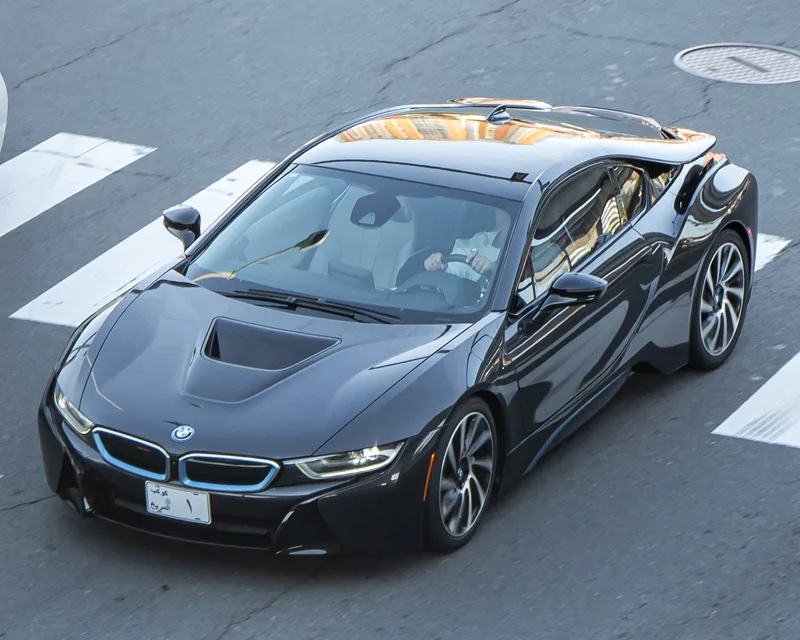
BMW's first run at electric cars was a separate sub-brand. BMW i was founded in 2011 to make plug-in vehicles, and its first models were the i3 electric car and the i8 plug-in hybrid. Series production of the i3 began in September 2013, with retail deliveries starting in Munich on 15 November that year. The i3 was the first volume car to use carbon-fibre reinforced plastic, and it had an all-electric range of 130 to 160 km (81 to 99 miles). A 647 cc two-cylinder range extender was optional. The range extender saw far more use than BMW expected at first, above 60 per cent, but by early 2016 it was in regular use on fewer than 5 per cent of cars. The i3 reached over 165,000 deliveries by early 2020, and the i8 stopped production in June 2020 with worldwide sales of more than 20,000.
After that, BMW changed approach. In 2017 it cancelled a third distinct i model and focused on electrifying its mainstream models. The "Power of Choice" plan put up to four powertrain variants on the same production line, using the FAAR and CLAR architectures. The earlier iX3 was unveiled in July 2020, followed by the i4 in March 2021, the i7 and iX1 in 2022 and the iX2 in October 2023. In each case BMW was electrifying models in its mainstream range.
Neue Klasse breaks that pattern. In BMW's own sequence it is Project i 3.0, an electric-only platform. The new iX3 no longer shares its platform with the combustion-engined X3.
BMW also pushed plug-in hybrids in that period. In February 2016 it announced the iPerformance label for all its plug-in hybrids from July that year, a visible sign of technology passing from BMW i to the main brand. Combined sales of electrified BMW Group vehicles, MINI included, reached 500,000 in December 2019.
In December 2016 BMW had expected low profits from plug-in cars for five to seven years, until battery capacity doubled, and it aimed for electrified models to make up between 15 and 25 per cent of sales by 2025.
How did the concepts lead to the production cars?
The design came in stages. The i Vision Dee debuted at CES in 2023, and the Vision Neue Klasse followed at IAA Mobility the same year. The Vision Neue Klasse X was announced in March 2024 to preview the iX3, and the Vision Driving Experience arrived in 2025.
The Vision Neue Klasse showed the look. It had a forward-tilted "shark nose", 21-inch aerodynamic wheels and doors that open and close on sensors. Its headlights sit inside the traditional kidney grille, and the rear lights use 3D printed elements. Inside, there was no chrome and no leather, and the BMW Panoramic Vision was projected across the entire windshield. BMW claimed up to 30 per cent better charging efficiency, up to 30 per cent more range and up to 25 per cent better overall efficiency from the concept's battery and drive.
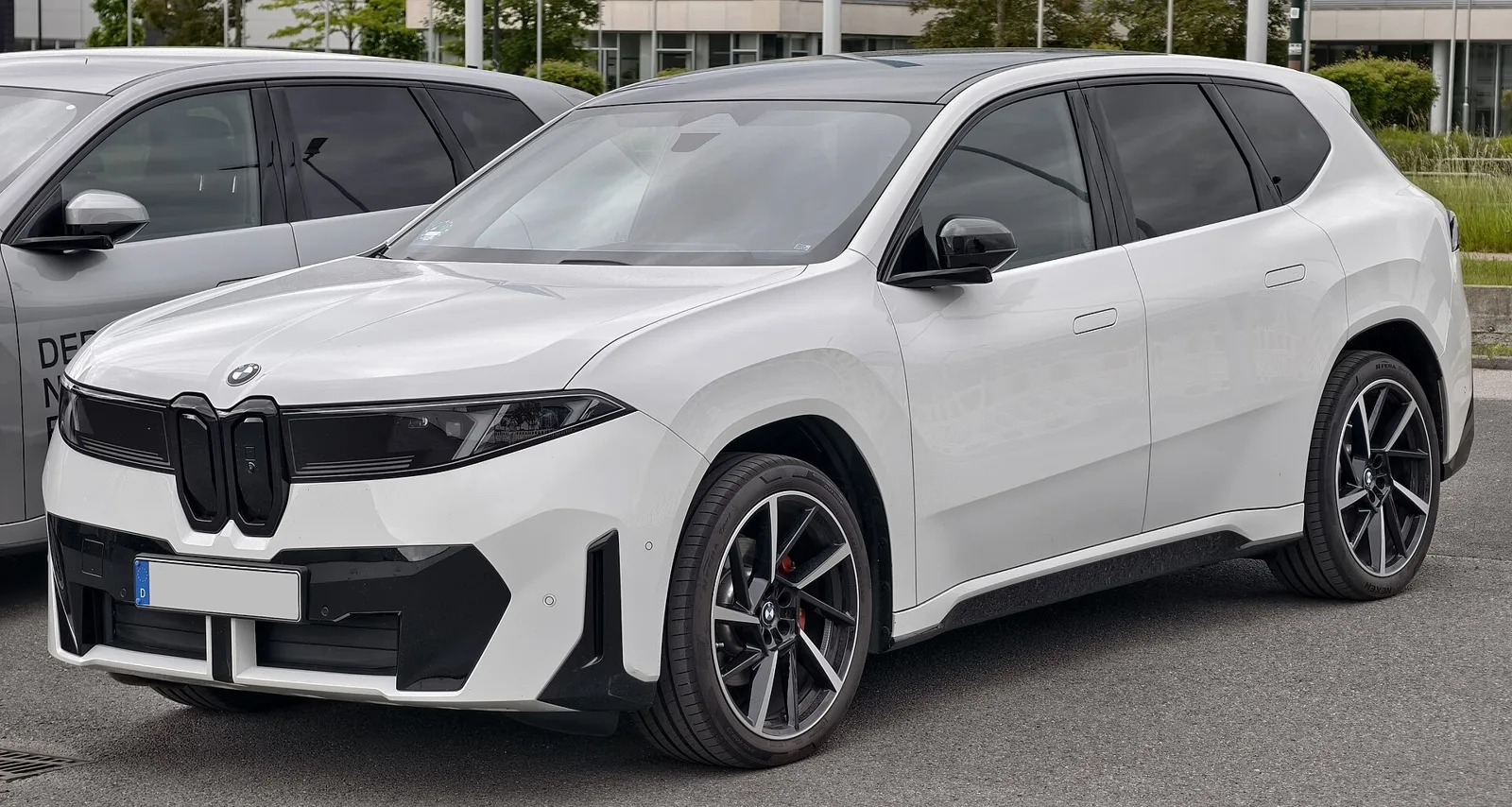
The production iX3 and i3 keep much of that. Both carry the new design language, with the twin kidney grilles merged with the dual headlights, a reduced form and cleaner lines, and a minimalist, more geometric interior.
What does the new BMW iX3 offer?
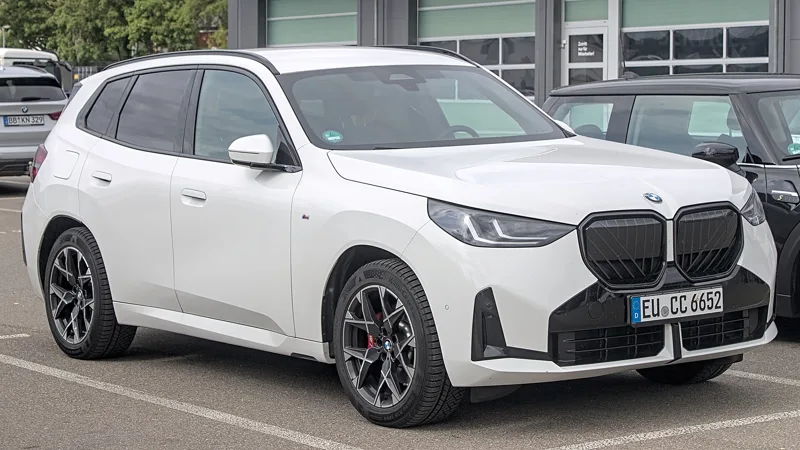
The iX3 (NA5) is a compact luxury electric crossover SUV that succeeds the X3-based G08. It made its production debut at IAA Mobility in Munich on 5 September 2025, and production started that autumn at the newly built BMW Group Plant Debrecen in Hungary. European customer deliveries began in late January 2026, and US deliveries were scheduled to begin in the summer of 2026.
One version launched, the iX3 50 xDrive. Its two motors drive all four wheels and give 463 hp (345 kW) and 641 N m (473 lb ft) of torque, enough for 0 to 100 km/h in 4.9 seconds. A rear-wheel-drive iX3 40 is expected to follow.
The battery is a 108 kWh usable NMC pack in a module-free, cell-to-pack format, built from 4695-format cells. It also supports bidirectional charging for the home, the grid and external loads.
How far can the iX3 and i3 go?
BMW quotes up to 698 km (434 miles) of EPA range and 800 km (500 miles) of WLTP range for the iX3 50 xDrive, with an energy efficiency of up to 4.1 miles per kWh. The i3 50 xDrive is rated at up to 710 km (440 miles) EPA and 912 km (567 miles) WLTP. Both charge at up to 400 kW, going from 10 to 80 per cent in 21 minutes.
Neue Klasse models compared
| iX3 50 xDrive | i3 50 xDrive | |
|---|---|---|
| Body | Compact luxury crossover SUV | Compact executive car |
| Battery | 108 kWh usable NMC | 108 kWh usable NMC |
| Output | 463 hp (345 kW) | 463 hp (345 kW) |
| Torque | 641 N m (473 lb ft) | 645 N m (476 lb ft) |
| EPA range | 698 km (434 miles) | 710 km (440 miles) |
| WLTP range | 800 km (500 miles) | 912 km (567 miles) |
| Range added in 10 minutes | 372 km (231 miles) | 423 km (263 miles) |
| Built at | Debrecen, Hungary | Munich, Germany |
What is the Heart of Joy?
It is one of four digital "superbrains" in the Neue Klasse platform, and it controls driving dynamics. BMW says it runs every component related to dynamics with no delegation to supplier-written software on supplier-sourced chips. The company claims a latency of 1 millisecond, against the typical 10 to 50 milliseconds.
The brain also manages braking. BMW claims it was programmed so that 99 per cent of braking can be handled by regeneration, and that it can control the braking at each wheel to deliver what BMW calls a limousine stop.
What is inside the cabin?
The iX3 is the first BMW to have the Panoramic iDrive system, running on iDrive X. A darkened 43.3-inch strip running side to side shows information such as speed and state of charge, and drivers can choose which widgets it displays. An optional 3D head-up display can add to it. A new 17.9-inch central display, slanted towards the driver, stays in the middle of the dashboard.
In September 2025 BMW said it had jointly developed an automated driving system with Qualcomm, and that it would debut on the iX3.
What is the new BMW i3?
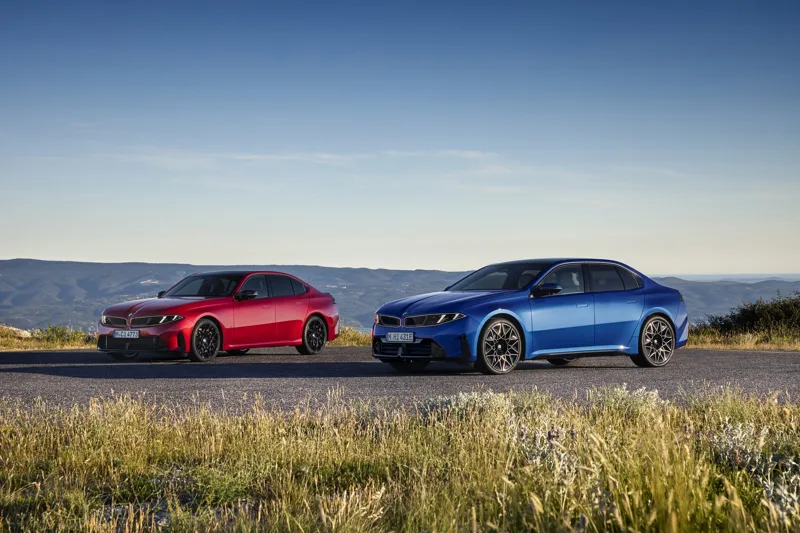
The i3 (NA0) is a compact executive car and the second Neue Klasse model. BMW unveiled it on 18 March 2026 in a keynote presentation, with a single specification, the i3 50 xDrive. It is the electric member of the eighth-generation 3 Series, alongside the combustion-engined G50 sedan and G51 Touring, which are mechanically unrelated.
The i3 shares the iX3's 108 kWh battery, 800-volt system, 400 kW charging and 463 hp output. It is built at BMW's home plant in Munich. At the end of the presentation BMW teased a Touring estate version.
The name has history. BMW's earlier i3 of 2013 was a carbon-fibre city car with an optional range extender, and a China-only long-wheelbase i3 based on the G28 3 Series was revealed in March 2022. The Neue Klasse i3 is a different car again.
How do the China versions differ?
China gets only long-wheelbase cars. The iX3 L (NA6) was revealed before the Beijing Auto Show on 22 April 2026. Its wheelbase is 107 mm longer and its overall length 103 mm greater. BMW says its pocket-style door handles have triple redundancy, including a mechanical backup from inside and outside the car. The rear seats were developed by BMW's team in Shanghai, with 40 mm longer cushions and backrests that recline to 121 degrees. The iX3 L offers three powertrains, the 30L, the 40L xDrive and the 50L xDrive, and the first two differ from the international models.
Inside, the displays and BMW OS X software are the same as elsewhere, but the Chinese car integrates locally developed AI models and works with a Chinese phone mirroring system. The luggage area measures 540 L (19 cu ft), growing to 1,900 L (67 cu ft) with the rear seats folded, with a further 58-litre (2.0 cu ft) frunk. Driver assistance comes from a local supplier and includes Highway NOA, using one LiDAR, five mmWave radars, eight cameras and twelve ultrasonic sensors.
Details of the long-wheelbase i3 came out before the same show. Its wheelbase has been stretched by 108 mm to 3,006 mm, and BMW says it will manage over 1,000 km (620 miles) of range on the CLTC cycle. The pop-out door handles of the global car are replaced by pocket-style handles to comply with local safety regulations, and the M badge on the C-pillar is illuminated. It is expected to go on sale in late 2026.
What does it mean for someone buying an electric BMW?
For now the choice is narrow. The iX3 launched in Europe with a single all-wheel-drive version, and the i3 sedan is the second model. Both are quoted at 10 to 80 per cent in 21 minutes on a fast charger. The cabin technology is the other difference: Panoramic iDrive and the large central screen are new to the brand.
Where this goes next
According to BMW, i3 production at its Munich plant is scheduled to begin in August 2026, with customer deliveries from autumn 2026, and sales of the i3 are due to start in the third quarter. Hydrogen has not gone away: BMW built fewer than 100 iX5 Hydrogen pilot-fleet cars from September 2022, and in September 2024 BMW and Toyota announced they are cooperating on a BMW fuel-cell vehicle coming in 2028.