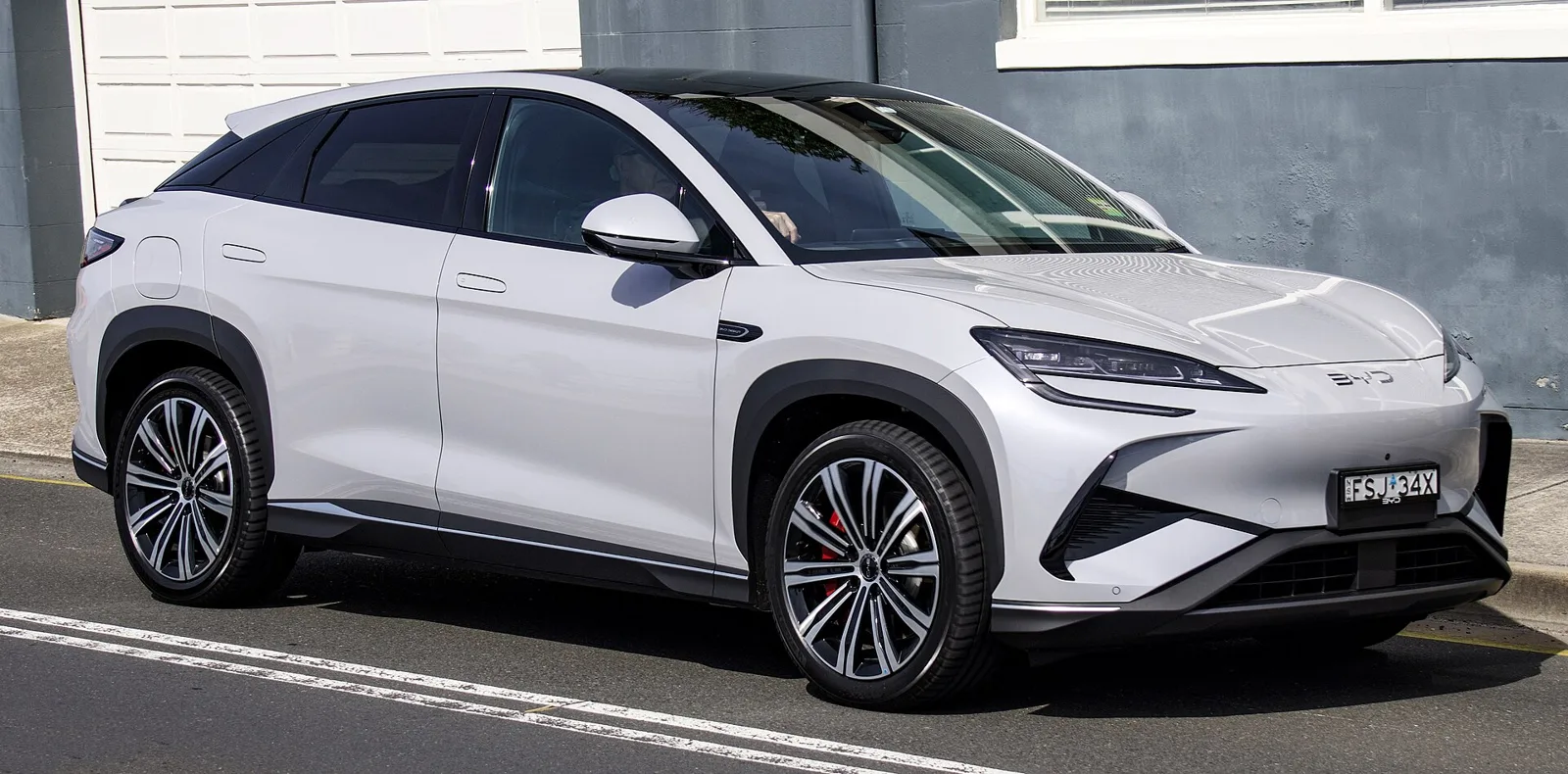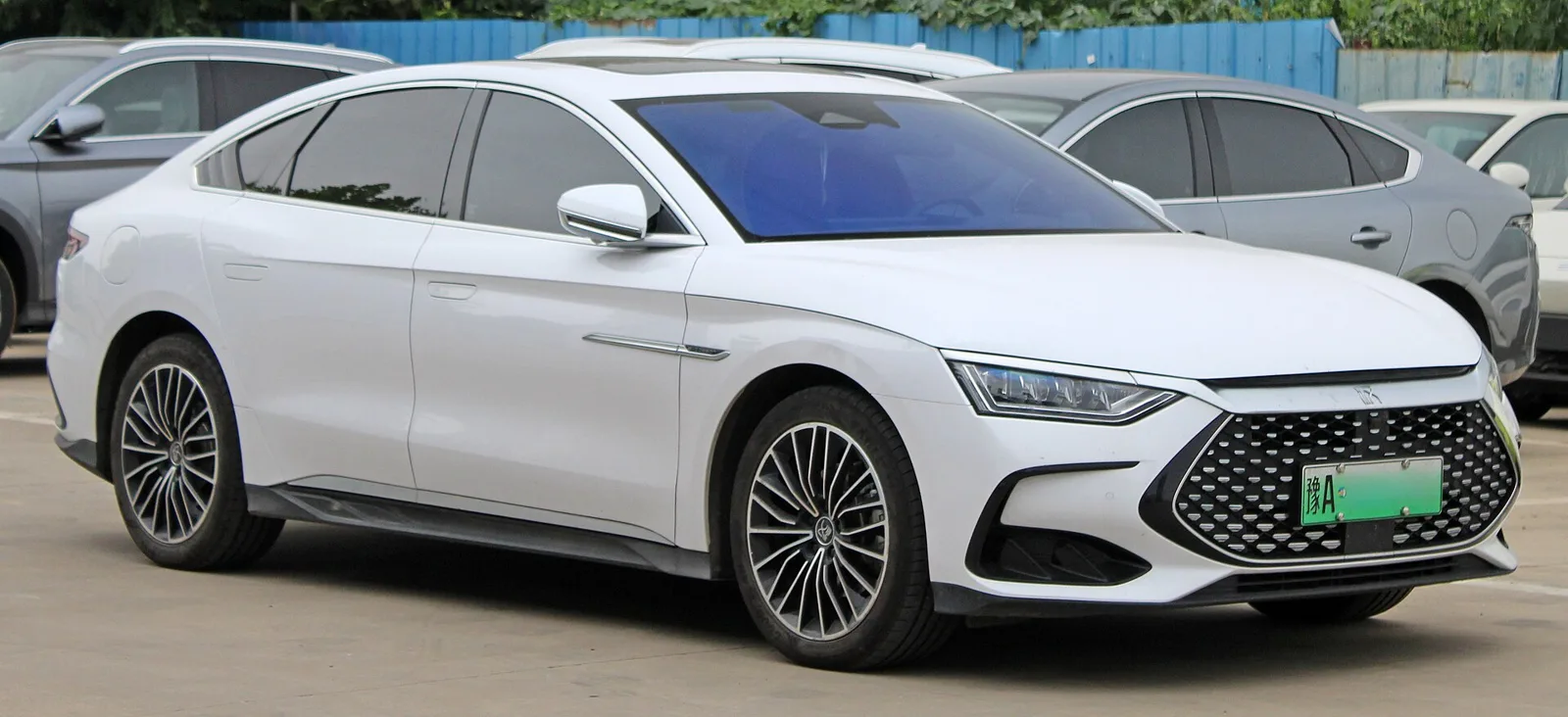
A 2008 plug-in hybrid became the Qin, and three more dynasty names followed, ending with the Song that outsold the Tesla Model Y in China in 2022.
The BYD Qin, Han, Tang and Song are the core of BYD's Dynasty Series, named after Chinese dynasties. The Qin and Han are sedans, the Tang and Song are SUVs, and each has been sold as a plug-in hybrid or battery-electric car, with the Song the best-selling.
The BYD Song sold 478,811 cars in 2022, enough to top China's SUV segment and to finish ahead of both the Tesla Model Y and the Haval H6. Before its 2015 launch it was due to carry a plain model name, S3, until BYD changed course and gave it a Chinese dynasty instead. That change shows how BYD built its plug-in range: with history on the badge.
What is the BYD Dynasty Series?
The Dynasty Series is BYD's family of passenger cars named after Chinese dynasties, led by the Qin, Han, Tang and Song. Hybrid versions of the F3 sedan and the S6 crossover were renamed Qin and Tang under this system, and the planned S3 became the Song. All four have been sold as plug-in hybrids or battery-electric cars.
BYD's S3 was meant to carry a code name. Shortly before launch it became the Song, and went on to top China's SUV sales.
Which dynasty is each BYD model named after?
| Model | Dynasty | What it is | Where it began |
|---|---|---|---|
| Qin | Qin, China's first imperial dynasty | Compact and mid-size sedans | Concept at the 2012 Beijing show; on sale from 2012 |
| Han | Han, the first golden age of Imperial China | Full-size flagship sedan | On sale in China from July 2020 |
| Tang | Tang, the most prosperous of the great dynasties | Mid-size SUV | 2014 Beijing show; deliveries from June 2015 |
| Song | Song | Compact SUV family | Debut at the Shanghai show in April 2015 |
How did the BYD Qin start the plug-in range?
The BYD Qin goes back to the F3DM, which launched in China in 2008 and is described as the world's first mass-produced plug-in hybrid. BYD replaced it with the Qin in April 2012, and the Qin concept appeared at the Beijing motor show that year. The first-generation car is the plug-in twin of the BYD Surui, which is the second F3, with deliveries starting in December 2013.
Under the floor sat a smaller lithium iron phosphate battery: 13 kWh, down from 16 kWh in the F3DM. BYD said the pack was about 50 percent smaller and lighter, could withstand up to 4,000 charges while retaining 80 percent performance, and used no toxic heavy metals. The trade-off was range. BYD estimated 50 km (31 mi) on electric power, against 97 km (60 mi) for the F3DM, although the current rating for the plug-in is 82 km (51 mi) on the NEDC cycle.
In hybrid mode two 110 kW electric motors work with a 1.5-litre turbocharged direct-injection engine, replacing the F3DM's 1.0-litre three-cylinder, for 223 kW (299 hp; 303 PS) and 440 Nm. BYD quoted 185 km/h and 0-100 km/h in under 5.9 seconds. Retail sales started in Costa Rica in November 2013, with other Central and South American markets planned for 2014.
How did the Qin line grow after 2016?
A battery-only Qin EV300 arrived in March 2016 with a 218 hp motor, a battery expected to deliver 300 km (190 mi) and a top speed of 150 km/h. The second generation, the Qin Pro, was unveiled in Beijing in 2018 as the first BYD sedan by chief designer Wolfgang Egger. It had the "Dragon Face" grille, a rotating 12.8-inch DiLink touchscreen, adaptive cruise control with stop-and-go and automatic emergency braking. High-strength steel makes up 73.5% of the petrol car's body in white.
The Qin Pro DM paired a 1.5-litre turbo four with an electric motor for 304 hp (227 kW; 308 PS), a 200 km/h top speed and 0-100 km/h in 5.9 seconds. The Qin Pro EV topped out with a 69.5 kWh battery. A refreshed version, the Qin Plus, followed in 2021, and a second generation was announced in 2026.
Since then the family has stretched. The Qin L DM-i, launched in March 2024, is the largest Qin and with the Seal 06 DM-i was first to carry BYD's DM-i 5.0 powertrain. The Qin L EV of 2025 shares only a name with it, sitting on the e-Platform 3.0 Evo with rear-wheel drive. In mid-2026 the Qin Max arrived as the upmarket model, with an elongated body and both DM-i and EV versions.
What is the BYD Han and how fast is it?
The BYD Han is a full-size E-segment sedan built since 2020 and the flagship of the Dynasty Series. It was previewed by the E-SEED GT concept at the 2019 Shanghai Auto Show, a coupe with gullwing doors and all-wheel drive. First pictures of the production car came in January 2020 and it went on sale in China in July 2020.
Plug-in buyers get the Han DM, which sits on the four-wheel-drive DM3 platform. A 180 kW rear motor and a 141 kW 2.0-litre turbo petrol engine combine for 321 kW (430 hp; 436 PS) through a six-speed dual-clutch gearbox, and BYD quotes 4.7 seconds to 100 km/h and combined NEDC fuel use of 1.4 L/100 km.
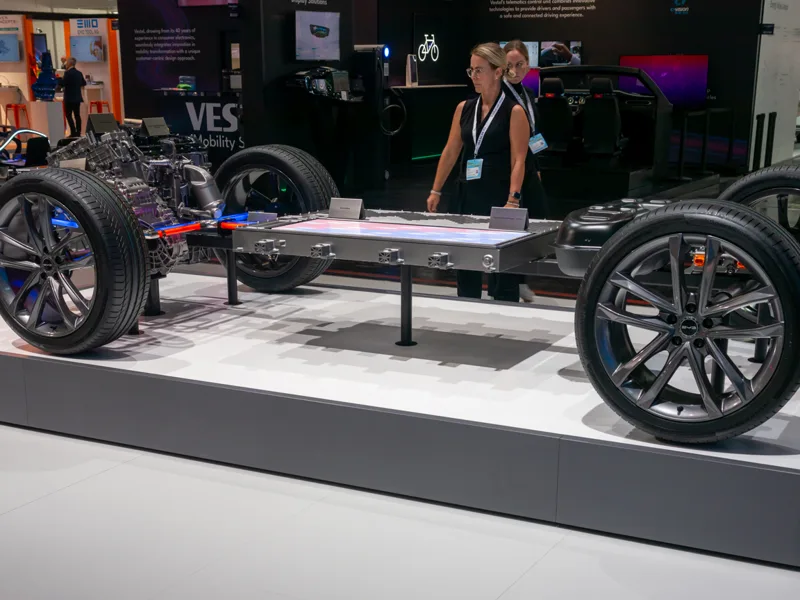
Inside the Han EV is a 76.9 kWh battery using what BYD calls its blade design, a lithium iron phosphate battery that BYD says takes less space than a conventional one of the same capacity. It is claimed to charge from 30 to 80% in 25 minutes. The base car is front-wheel drive with a 163 kW motor, a reported NEDC range of 605 km (376 mi) and 7.9 seconds to 100 km/h. The flagship adds a 200 kW rear motor for 363 kW (487 hp; 494 PS), 3.9 seconds and 550 km (340 mi).
What changed in the BYD Han facelifts?
In April 2022 BYD replaced the Han DM with two plug-in hybrids. The Han DM-i focuses on fuel economy, in four versions: three give 121 km (75 mi) of battery range and the fourth 242 km (150 mi), while total range stretches to 1,300 km (808 mi). The Han DM-p, with p for performance, reaches 100 km/h in 3.7 seconds. The updated Han EV launched as the Founding Edition, with a variant rated at 610 km (379 mi) and two at 715 km (444 mi).
The 2025 model year Han appeared in September 2024, with lower prices. All versions now share the Han EV's front end. The DM-i hybrid system moved to the DM-i 5.0 platform, and the car added BYD's DiPilot 300 driver assistance with LiDAR and an Nvidia Orin-X chip, plus DiSus-C damping that adjusts the suspension for comfort or stability. In 2021 the Han EV took an iF Design Award, a first for a Chinese-brand sedan.
March 2021 brought the BYD e9, a ride-hailing car largely based on the Han EV. Its single 163 kW motor gives 506 km (314 mi) on the NEDC cycle. In January 2026 BYD released a ride-hailing sub-brand called Linghui, and the Linghui e9 is essentially a rebadged e9.
What is the BYD Tang and what did it sell?
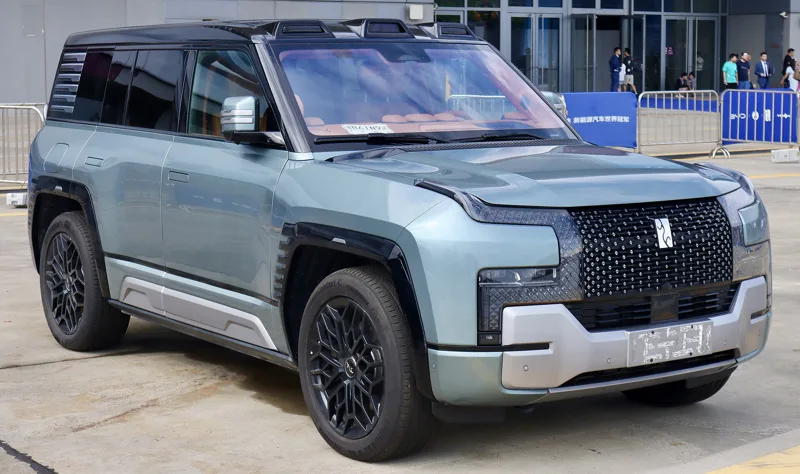
The BYD Tang is a mid-size SUV and the second Dynasty model after the Qin. The first generation was introduced at the 2014 Beijing Auto Show as a plug-in hybrid only, built on the BYD S6, with deliveries from June 2015. An 18.4 kWh lithium iron phosphate battery gave 80 km (50 mi) of electric range.
It paired a 2.0-litre petrol engine of 151 kW (202 hp) with two 110 kW electric motors, one at each end. Total output was 371 kW (498 hp) for the entry car and 411 kW (551 hp) for the performance model, with 0-100 km/h in 4.9 and 4.5 seconds. The first Tang led plug-in electric passenger car sales in China in 2016, topped the world's plug-in hybrid sales and placed third among all plug-in cars worldwide.
The second generation debuted at Auto China in April 2018, previewed by the BYD Dynasty concept, and in 2021 became BYD's first vehicle exported to Europe, starting with Norway. The Tang 100, launched in Shenzhen in February 2017, offered 100 km of pure electric range.
What is DM-i, and how does the Tang DM-i work?
DM stands for dual mode, letting the driver switch between electric and hybrid running. DM-i leans towards efficiency, and DM-p towards performance. The Tang's DM-i system, introduced with the 2021 facelift, pairs a 1.5-litre turbocharged engine with a plug-in hybrid set-up and a lithium iron phosphate blade battery. Electric range is 52 km (32 mi) or 112 km (70 mi), combined range is 1,050 km (652 mi) and fuel use is 5.3 or 5.5 L/100 km.
The engine was built specially for this job. BYD gave it a compression ratio of 15.5 and a bigger bore relative to stroke, then added Atkinson-cycle combustion, exhaust gas recirculation and friction-cutting measures, all aimed at getting more work from each drop of fuel. In 2022 the DM-p version added more performance, reaching 100 km/h in under 4.3 seconds with 215 km (134 mi) of electric range.
What is new on the third-generation BYD Tang?
China's MIIT documents revealed the third-generation Tang on 10 July 2026. It is a five-seater only, sits above the Tang L and is positioned with the three-row Datang as "dual flagships". Styling follows the Datang, with a split-headlight light bar, a rear bar inspired by Chinese knots, a roof that appears to float and door handles that sit almost flush.
Inside is a slim 35.4-inch driver display and a continuous 30-inch screen across the centre and passenger side, a first for BYD. With the second-generation Blade Battery and flash charging, the car is claimed to go from 10% to 70% in about 5 minutes and to 97% in 9 minutes. Two batteries are shown, 88.7 kWh and 105.8 kWh, with a CLTC range of 730 to 850 km (450 to 530 mi).
Overseas, the Tang L EV is sold as the BYD Sealion 8 in Vietnam, where it launched on 18 April 2025. The Tang DM-i reached the Philippines on 17 September 2025.
What is the BYD Song Plus, and what other Song models exist?
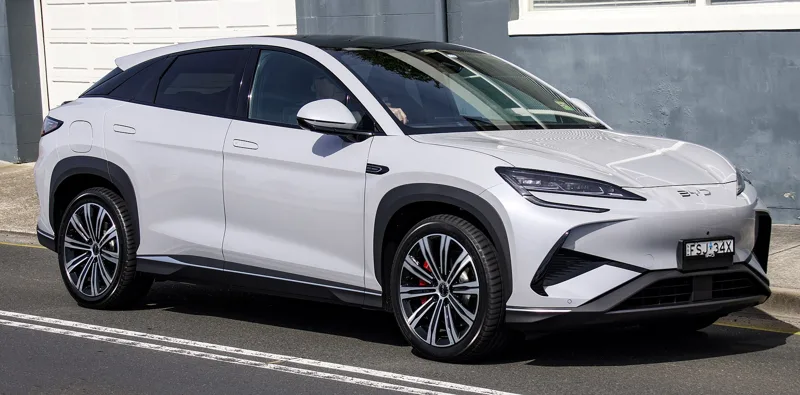
The Song is a family of compact SUVs on sale since 2015 and BYD's best-selling nameplate. The original debuted at the Shanghai show in April 2015, went on sale that October and sat below the mid-size S6 as BYD's first compact crossover. The petrol car launched with a 1.5-litre turbo of 154 hp (115 kW; 156 PS) or a 2.0-litre turbo of 205 hp (153 kW; 208 PS).
A Song DM plug-in followed in April 2017, with the 1.5-litre turbo and dual motors, an electric range up to 80 km (50 mi), 333 kW and 4.9 seconds to 100 km/h. The Song EV300 and EV400 used 218 hp motors and 48 kWh and 62 kWh batteries. A 2018 facelift added the dragon face, and the original became the Song Classic until 2019.
Larger still is the Song Plus, produced since 2020. It first came only with a 1.5-litre petrol engine. BYD added the DM-i plug-in hybrid and the Song Plus EV in 2021, and the petrol car was phased out in 2022 when BYD ended internal combustion production. Since 2022 the Song Plus has been sold through the Ocean Network dealerships rather than the Dynasty network.
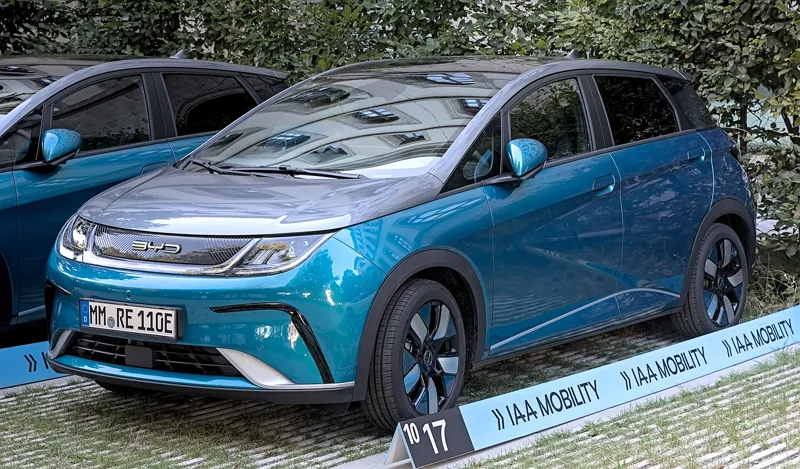
It travels under other names. The Song Plus EV became the BYD Seal U in Europe in 2023, the Seal U DM-i followed in 2024, and by mid-2024 it was also on sale in Thailand, the Philippines, New Zealand and Australia, badged Sealion 6 DM-i. The Song Pro, a compact crossover from 2019, is called the Sealion 5 DM-i in the Philippines and Australia.
Newer Song models split in two. The Song L EV (2023) is a larger, lower mid-size SUV on the e-Platform 3.0. The Song L DM-i (July 2024) is an entirely different car, sized like the Song Plus and the first, with the Qin L and Seal 06, to use the DM-i 5.0 system. The Song Max is a compact MPV, and its simplified electric form is the second-generation e6 used for ride-hailing and taxis. Since 2024 an upgraded e6 has gone to some export markets under the BYD M6 name.
The 2026 Han, Tang and Song models
The names are climbing in size. In January 2026 BYD teased the Han 9 as successor to the first-generation Han, then renamed it Dahan, or Great Han, a full-size F-segment flagship larger than the Han and Han L. A second-generation Han, revealed through MIIT filings on 16 October 2026, is considerably larger than the old car and slots between the Han L and the Dahan, with battery-electric and DM-i powertrains on the second-generation blade battery. The Tang range repeats the pattern in the order Tang L, third-generation Tang, Datang.
Newest is the Song Ultra of 2026, a longer-wheelbase variant of the Song L DM-i, offered as an electric and a plug-in hybrid.