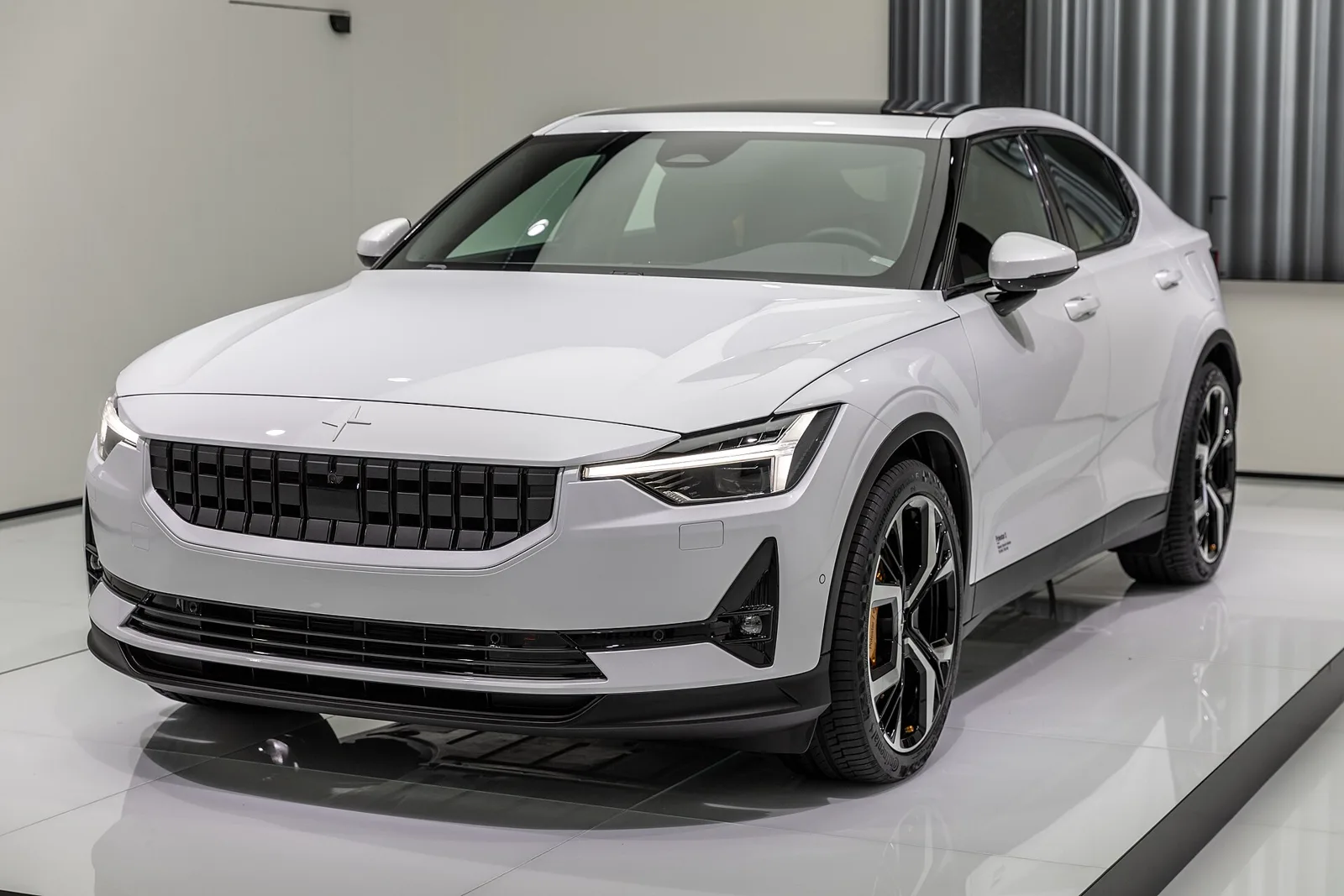
Carmakers face a fine of A$50 for every gram per kilometre over the limit, though the first bills do not land until 2028.
Australia's New Vehicle Efficiency Standard sets carbon dioxide limits for new cars, SUVs, utes and vans. Companies pay A$50 for each g/km they average above the limit and earn tradeable credits for each below it. It took effect on 1 July 2025, with first fines due in 2028.
The first fines under Australia's new emissions law for cars will not be issued until 2028, and they will relate to a reporting period that ran for just six months of 2025. Yet the law has already pushed models out of showrooms: two SUVs have lost their two-wheel-drive versions, and a V6 petrol engine has been dropped from two Kia models.
What is the New Vehicle Efficiency Standard?
The New Vehicle Efficiency Standard Act 2024, known as NVES, is an Australian act of parliament that sets emissions limits on new vehicles. It was implemented on 1 January 2025 and came into effect on 1 July 2025. Heavy vehicles with a gross vehicle mass over 3.5 tonnes are exempt.
The explanation given for one Kia model change describes the 2024 rules as binding every new passenger vehicle sold in the country from 2026, which suggests that for some models the practical deadline is later than the July 2025 start.
The measure is carbon dioxide per kilometre, in grams. A lower number means a cleaner car, in the same way that a lower litres-per-100-kilometres figure means a car uses less fuel. The title stresses efficiency, even though the legal limit is set on CO2.
The fine is measured in grams of CO2 per kilometre, but its first effects have been measured in models quietly withdrawn from showrooms.
How do the fines and credits work?
A company is fined A$50 for every gram per kilometre by which its average exceeds the limit. The fine rises to $100 if it goes unpaid. A company that beats the limit earns credits for every gram per kilometre under it, and those credits can be sold to other companies or banked for future years.
The word that matters is average. Think of a school class where the pass mark applies to the whole class rather than to each pupil: a few strong results can carry a few weak ones. A carmaker that sells many low-emission cars can offset a range of thirstier ones, and a brand with no clean cars to sell can, in principle, buy the credits it lacks from a rival that has a surplus.
The timing is unusual. The first period, called the interim emissions value (IEV), ran from 1 July to 31 December 2025, and fines for it are first issued in 2028. The results of the 2025 IEV were due to be publicised in February 2026. So the money does not move for years, but the figures on which it will be based are already being counted.
Which vehicles are covered?
The law sorts new vehicles into two classes with separate emission targets. Type 1 covers passenger cars and SUVs. Type 2 covers light commercial vehicles, which means utes and vans. Each class has its own emission targets, so the class a model lands in matters.
An SUV can be reclassified as a Type 2 vehicle if it is built with four-wheel drive and body-on-frame construction and has three tonnes of braked towing capacity. SUVs that meet those tests are counted with utes and vans rather than with family crossovers.
There is also a grey zone just above the weight line. Under Australian Design Rule ADR 114/00, some light-duty vehicles heavier than 3.5 tonnes will have to have their emissions tested. Whether those vehicles should be subject to NVES was the subject of a discussion that closed on 20 July 2026, and as of September 2026 the results had yet to be announced.
The cars already changed by the standard
| Model | What changed | Reason given |
|---|---|---|
| Ford Everest 4x2 | Dropped in Australia in 2025 | Did not meet passenger vehicle emissions requirements |
| Isuzu MU-X 4x2 | Dropped in Australia in 2025 | Did not meet passenger vehicle emissions requirements |
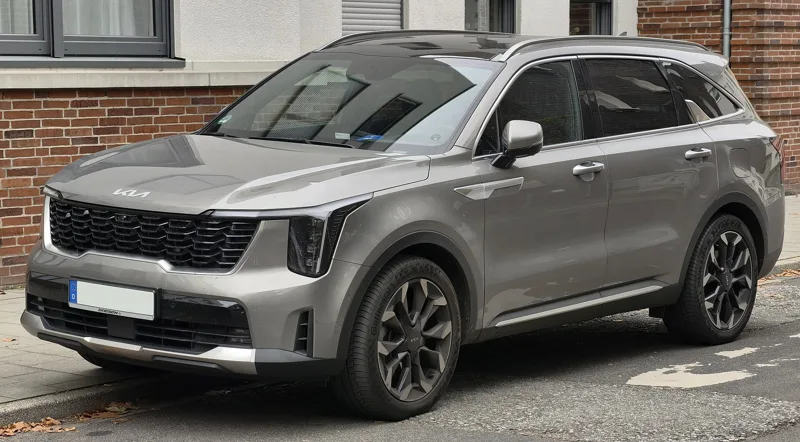
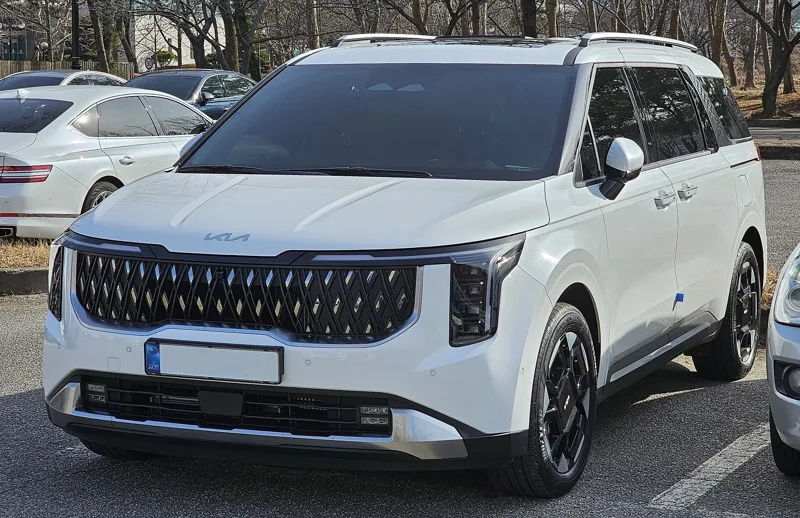
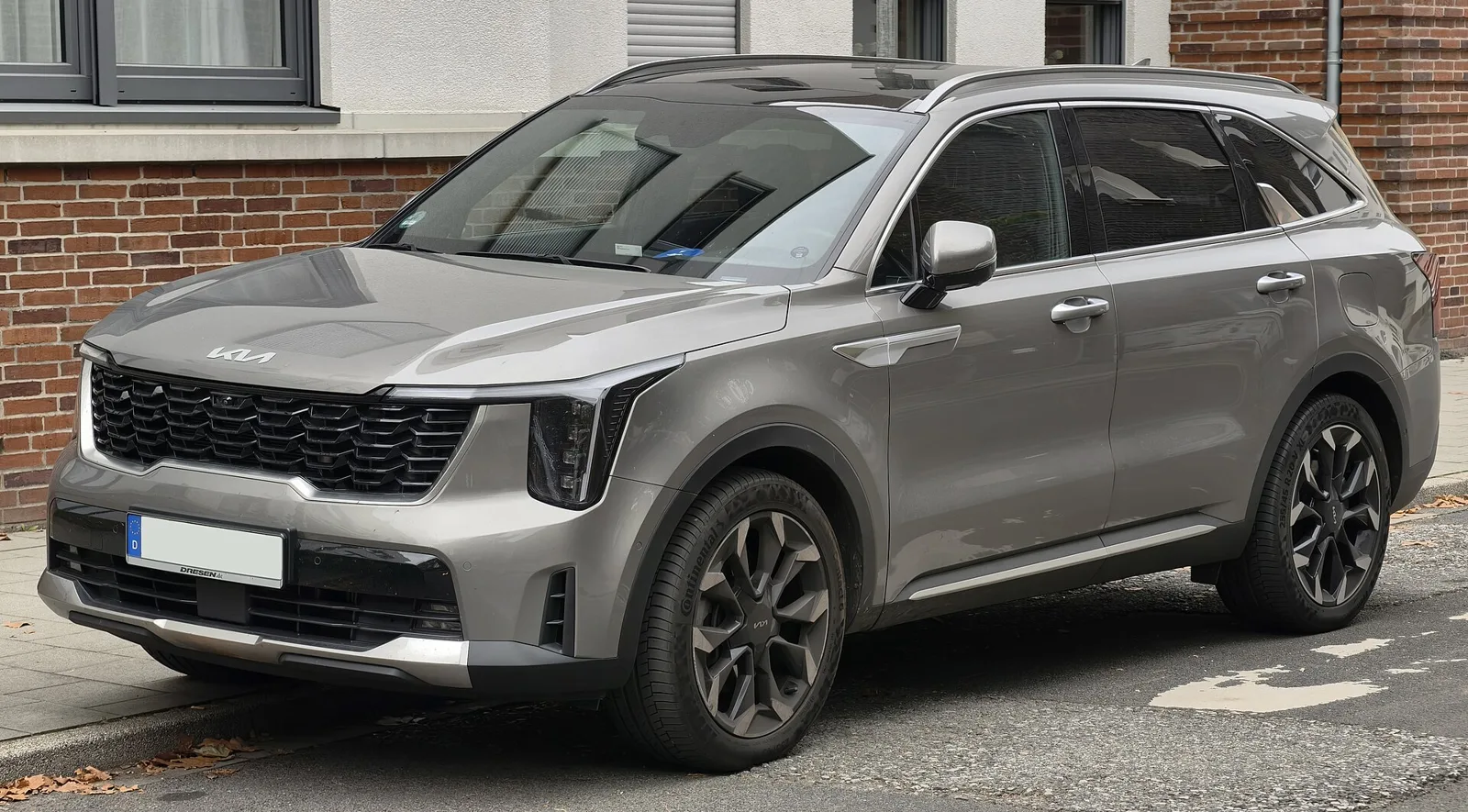
| Kia Carnival 3.5 litre V6 petrol | Discontinued in 2026 | Engine cannot be modified to meet the rules |
| Kia Sorento 3.5 litre V6 petrol | Discontinued in 2026 | Engine cannot be modified to meet the rules |
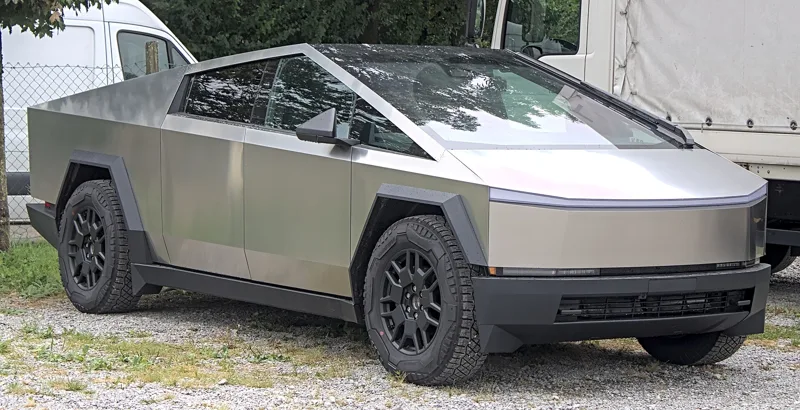
| Chevrolet Silverado | Gross vehicle mass raised in July 2026 | Reclassified as an NB1 vehicle, which also exempts it from the NVES |
| Ford Ranger Super Duty | Exempt at a weight of 4.5 tonnes | Ford says the weight is a coincidence |
The Silverado's gross vehicle mass was raised, which moved it into a class that could also invoke an off-road clause to sidestep Australian Design Rules on automated emergency braking, and the Ranger Super Duty sits above the 3.5 tonne threshold at 4.5 tonnes.
Which cars could cost more or less?
The Federal Chamber of Automotive Industries (FCAI), the peak body for car manufacturers, criticised NVES, including the claim that it would push up the price of cars.
The disagreement was sharp enough to split the industry. Tesla and Polestar both left the FCAI in March 2024 because of its comments. The body, described by ABC News as Australia's biggest car manufacturer lobby group, represents the companies the law now regulates.
The visible effects fall in two groups. Buyers who wanted the dropped versions, such as the rear-drive Everest and MU-X or the V6 Carnival and Sorento, can no longer buy them. Buyers of very heavy pickups face the opposite situation, because those models sit outside the scheme.
The nearest data on cheaper cars concern electric cars. The MG ZS EV had its price cut to $40,990 after receiving 100 pre-orders in November 2019, and a December 2020 snapshot of used listings on carsales.com.au found 42% of used electric cars priced under $50,000 and 23% under $20,000, with the lowest at $11,990. Carsales also reported that price was the most important factor for people considering an electric car, with range second.
Why do countries regulate fuel efficiency at all?
Fuel economy rules exist for three reasons: fuel use feeds air pollution, imported fuel can weigh heavily in a country's trade balance, and drivers tend to give too little weight to efficiency when they buy. Many governments therefore set requirements, and the Australian law is one more.
Measurement is not as simple as it sounds. Australia expresses consumption in litres per 100 kilometres, as does most of Europe, where lower is better. But published figures vary between jurisdictions because test protocols differ. The same Lexus IS 250 petrol sedan is rated at 9.1 L/100 km combined in Australia, 9.6 in Canada, 8.9 in the European Union and 9.8 in the United States. Europe now uses the WLTP standard for all new vehicles.
A grams-per-kilometre target is the other way of saying the same thing. When the European Union moved to cut average emissions of new cars from 2012, its 130 g/km of CO2 limit was equivalent to 4.5 L/100 km for a diesel and 5 L/100 km for a petrol car.
The fuel itself matters too. Diesels are usually the more efficient engine type: passenger-car diesels reach up to 41% energy efficiency but typically 30%, while petrol engines reach up to 37.3% but typically 20%. Diesel also contains roughly 10% more energy per unit of volume.
A further point is why it takes years for a standard to be felt. The average across a whole fleet lags well behind what showrooms sell. In 2004 Australia's car fleet averaged 11.5 L/100 km while new cars averaged 9.3 L/100 km, so a limit on new vehicles changes the national picture slowly.
Why does an importing country need its own standard?
Australia no longer builds its own passenger cars. Production peaked near half a million in the 1970s and was still above 400,000 in 2004, but had fallen to around 175,000 by 2009, by which time the market was dominated by imports from Asia and Europe. Ford's plants shut in October 2016, followed by Holden and Toyota in late 2017.
With local manufacturing gone, the mainstream manufacturers still building in Australia make heavy vehicles, which is exactly the class the NVES leaves out. The rules therefore fall on importers and the model line-ups they bring in.
How far has electric uptake come?
From a very small base. In 2013 plug-in vehicles held a 0.036% share of new car sales. Combined sales of battery-electric and plug-in hybrid light passenger vehicles were 2,216 in 2018 and 6,694 in 2019, when Tesla accounted for 70% of them and the Model 3 alone for about two-thirds.
Targets have been set mostly by the states. Victoria and New South Wales aim for electric vehicles to make up 50% to 53% of new car sales by 2030, South Australia aims for 100% by 2035, and the ACT for 100% by 2030. States with sales targets represent approximately 65% of the population. At federal level, a 2021 projection was for 30% of new car sales to be electric by 2030, while Labor projected 90%. The government has anticipated 1.7 million electric cars on the road by 2030.
Support has been financial: subsidies, interest-free loans, registration and stamp duty exemptions, an exemption from the luxury car tax and cheaper parking. Charging has lagged. In 2021 the country had over 3,000 public charging stations, a ratio of 7.2 electric vehicles for every public charger, and the federal budget pledged 74.5 million dollars to charging infrastructure.
What did earlier electric cars in Australia teach?
Australia's early electric history was a story of small numbers and failed infrastructure. A converted Hyundai Getz called the Electron, a charging network that went bust and a slow-selling Mitsubishi all show how long adoption took before the sales jump of 2019.
In 2008 Australia began producing its first commercial all-electric vehicle. It started life as the Blade Runner, was renamed the Electron, was based on the Hyundai Getz and proved popular in government car pools. In October 2008 Better Place announced plans for a charging network in Melbourne, Sydney and Brisbane with AGL and Macquarie Capital. By December 2011 only 12 public charge spots had been installed, and the company ultimately went bankrupt.
The Mitsubishi i-MiEV followed. Fleet leasing began in August 2010, retail sales in August 2011, and 125 had been sold by December 2012. Mitsubishi stopped importing the car in 2014 after slow sales, blamed on the high price and competition from the Outlander plug-in hybrid. That Outlander sold 895 units in 2014 and had become the country's all-time best-selling plug-in with 2,906 sales through March 2018. Total plug-in sales rose to 1,228 in 2014, up 288% from 2013, as the Tesla Model S and BMW i3 arrived.
Hydrogen arrived later and smaller. The Hyundai Nexo became the first fuel cell electric vehicle released in Australia on 26 March 2021, with the ACT government running a fleet of 20, and the second-generation Toyota Mirai followed on 13 April 2021 with an initial allocation of 20 cars for organisations. Toyota estimated that public sales might be two to three years away.
What should buyers and drivers watch?
The legal limit is a fleet average, but the car in your driveway is judged by its own figures. Fuel economy depends on how the car is designed and driven: sudden acceleration and heavy braking waste energy, and published figures vary with the test used.
Engines show the spread. The Skoda Octavia with a 78 kW petrol engine has a combined European rating of 5.7 L/100 km, against 4.5 L/100 km for the heavier 78 kW diesel. The microcar Smart Fortwo cdi can reach 3.4 L/100 km, and the Volkswagen Lupo and Audi A2 "3L" models hold the production-car record at as little as 3 L/100 km. Carmakers also reduce consumption by lightweighting, substituting lighter materials for heavier ones.
Speed matters as well. Steady-speed studies found that some vehicles do better at 100 km/h than at 70 km/h, although the best economy for most tested cars came between 40 and 90 km/h.
Where this goes next
Several things remain open. The discussion on testing light-duty vehicles above 3.5 tonnes under ADR 114/00 closed on 20 July 2026, and its results had not been announced as of September 2026. The first fines are scheduled for 2028, covering the 2025 reporting period.
Politics could still change the picture. In September 2026 the Liberal-National Coalition unveiled a policy of abandoning net-zero targets, and NVES is among the measures it would drop. A policy announcement is not a change in the law. The state targets for 2030 and 2035 sit alongside it, along with a separate federal goal of net-zero emissions by 2050 that was first stated in 2021.
.jpg)