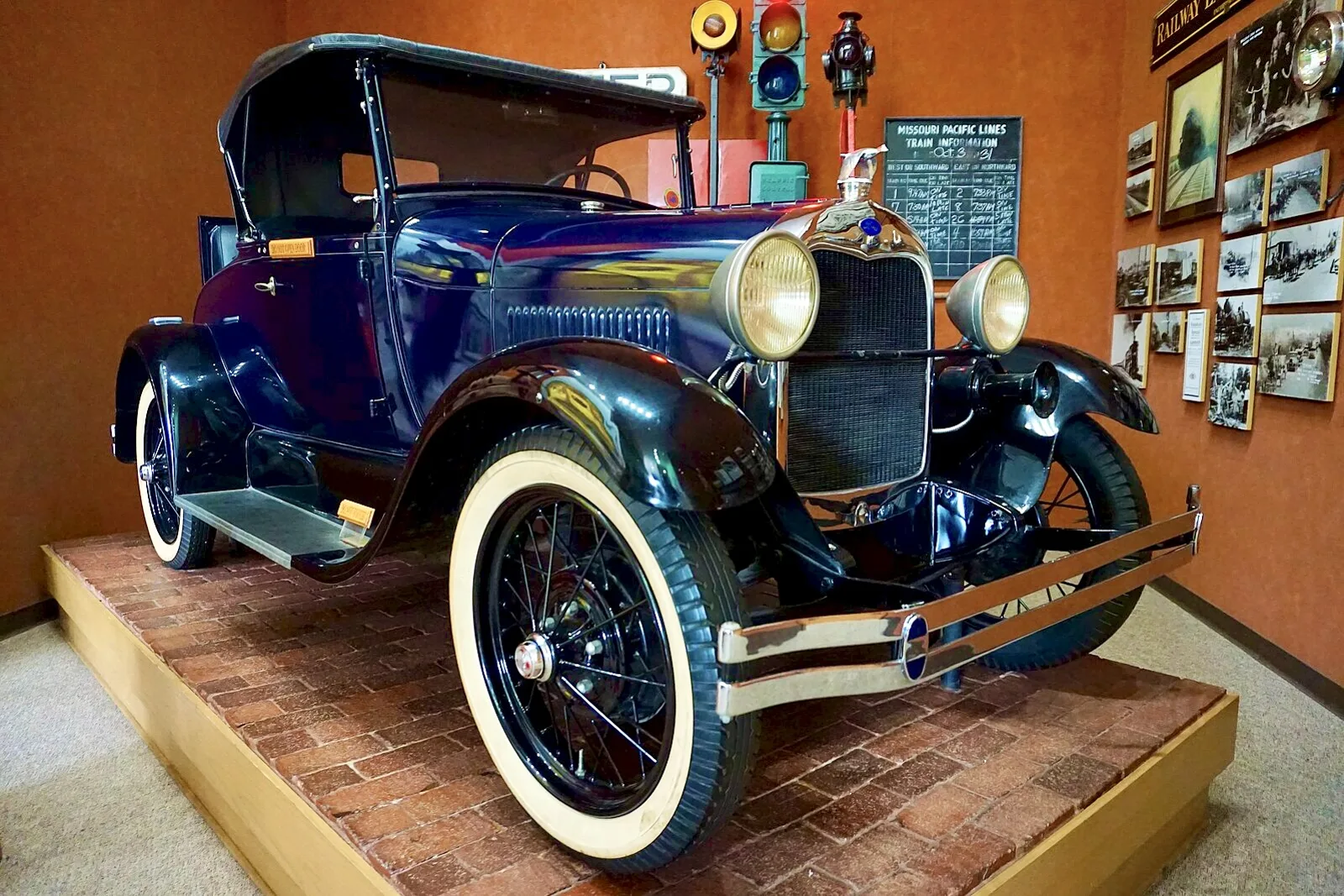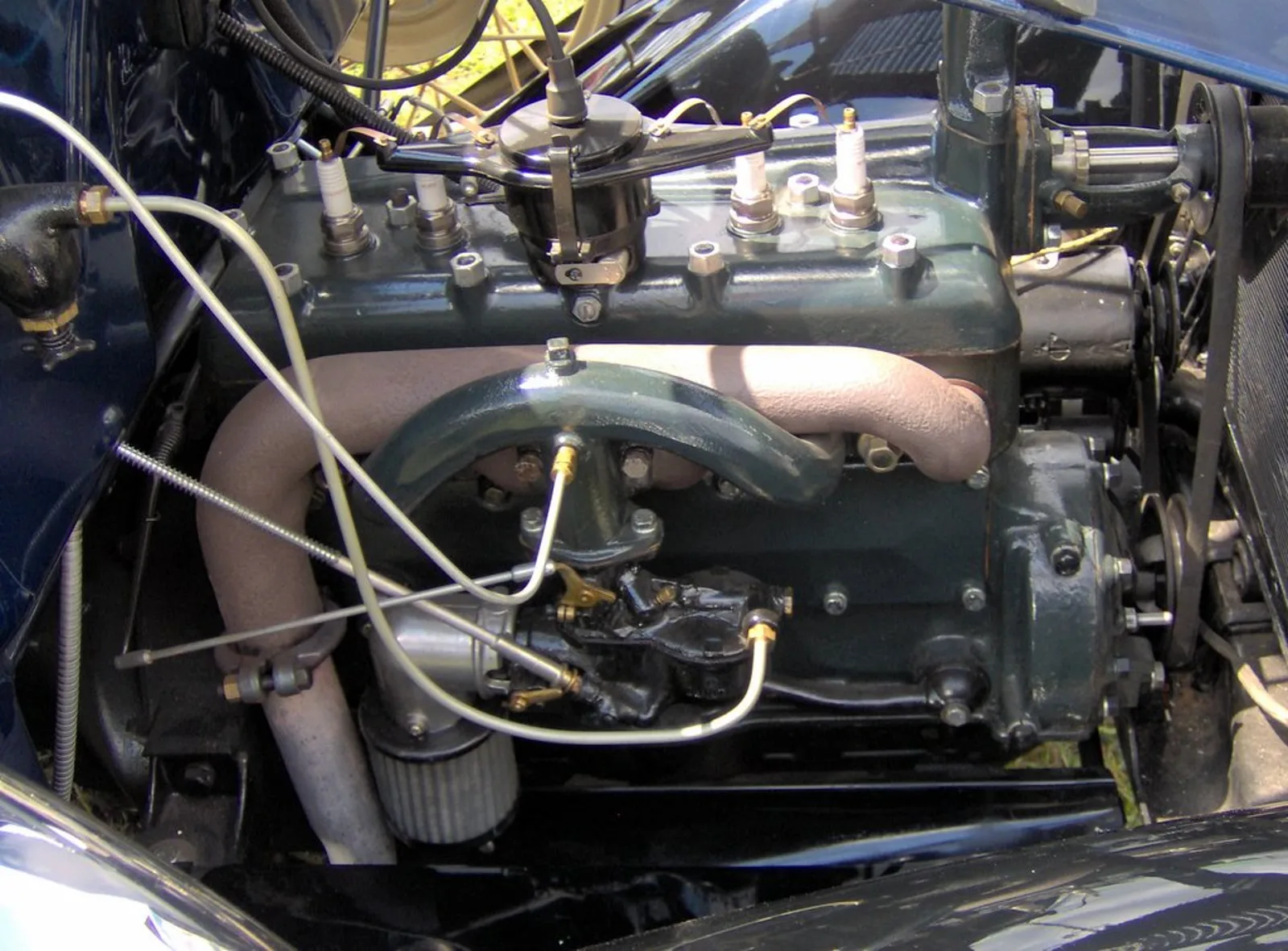
A water-cooled four from the late 1920s that powered almost five million Model A cars and found its way into trucks, tractors, combines, boats and even aircraft.
The Ford Model A engine was a 3.3-litre four-cylinder petrol unit that powered the Model A car from 1927 to 1931. It made 40 hp and was built in millions, then used in trucks, tractors, boats, military vehicles and homebuilt aircraft.
The Ford Model A engine was a four-cylinder petrol unit built for the Ford Model A car from 1927 onwards, and it became one of the most widely built car engines of the 1920s and 1930s. It was derived from the Model T engine but was larger and about twice as powerful, and it went into cars, trucks, tractors, combines, boats and even aircraft. Tens of thousands of the design are still running today.
What is the Ford Model A engine?
The Model A engine was a water-cooled, carburettor-fed, L-head inline four with a displacement of 200.5 cu in, or 3.3 litres. It produced 40 hp (30 kW; 41 PS) at 2,200 rpm, with 128 lb-ft (174 N-m) of torque at 1,000 rpm. It was built in very large numbers, and it was installed in almost every example of the Model A car.
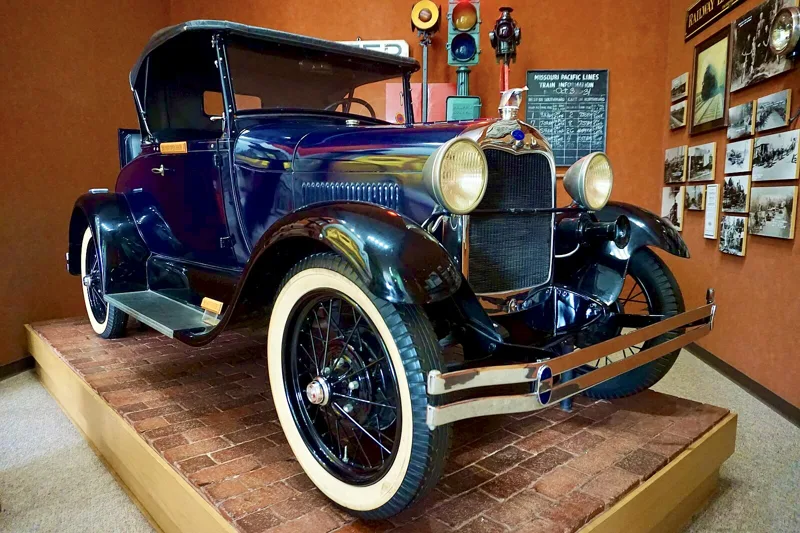
The engine was designed for the Model A, which was built from 1927 to 1931. The car came in a wide range of styles, including coupes, roadsters, sedans, station wagons and taxicabs, and each used the same basic four-cylinder engine with different controls and fittings.
A four-cylinder built for the cheapest car of its day, and then used for almost everything with an engine bay.
How did the Model A engine grow out of the Model T?
The Model A engine was an evolution of the Model T unit, but with double the power. Ford developed it in secret at its Rouge Plant in Michigan, and it was unveiled with the Model A on 2 December 1927. The first engine was completed on 20 October 1927 and was fitted to a 1928 Model A Fordor sedan, which Henry Ford presented to his friend, the inventor Thomas A. Edison.
Demand was immediate. By 1 January 1928 only 5,275 engines had been built, and some were not yet fitted to a chassis. Production reached one million engines by February 1929. A total of 4,849,340 Model A cars were built by the end of production in March 1932, and the historian Steve Plucker's count of production engines from October 1927 to November 1931 came to 4,830,806.
The Model A was replaced in 1932 by the Model B, which used an updated four-cylinder engine, while the Model 18 received the new Ford V8. Demand for used Model A engines, and for licence-built copies, continued well after the original was discontinued, and some derivatives were produced until 1958.
How was the Model A engine built?
The engine was a cast-en-bloc, L-head design, which meant the valves sat in the side of the block. Its bore measured 3.876 in (98.5 mm) and its stroke 4.125 in (104.8 mm), both larger than the Model T figures, and the compression ratio was 4.22:1. The firing order was 1-2-4-3.
The engine held five quarts of oil, and the crankcase was filled through a breather tube on the left side. Owners were advised to use modern 10W30 oil in rebuilt engines, with an oil change every 500 miles. The electrical system was a six-volt positive-ground arrangement, which was the opposite of the negative-ground norm in later cars and often confused owners.
Why was the Model A's lubrication so basic?
The Model A had only three main bearings, compared with the five found in a typical modern four-cylinder. The bearings were poured babbitt rather than replaceable inserts, and they were longer and narrower than their modern equivalents. There were no cam bearings and no crankshaft counterweights.
Lubrication was gravity-fed to the main bearings, and the connecting rods dipped into the oil as they moved. That was simple, but it was far from the full pressure system that a modern engine uses. The valves also had no seats in the way that steel-ring seats are used today, and the intake ports were restricted.
How did the carburettor and controls work?
The usual carburettor was a Zenith one-barrel updraft unit, gravity-fed from a tank in the engine cowl. It was designed to run lean for high-altitude driving, and a manual choke and a Gas Adjusting Valve, known as the GAV, controlled the mixture at lower altitudes and in cold weather. A secondary well provided extra fuel for starting and acceleration.
The Zenith was fitted to about 3.5 million of the roughly 4.8 million cars, and at least 19 other carburettor brands were used on Model A engines in the factory or as aftermarket fittings. Starting the engine required a detailed sequence of controls, including the accelerator, choke, gas shutoff, ignition key, starter pedal and manual spark lever. Pennsylvania law required the gas shutoff valve to sit inside the engine compartment.
What was the Model A drivetrain like?
The engine was coupled to a 63-pound flywheel and a clutch, which fed a three-speed sliding-gear manual transmission with one reverse. There were no synchronisers, so drivers had to double-clutch, and early cars used a multiple-disc clutch before switching to a single plate. The final drive ratio was 3.77:1, which gave about 25 to 30 miles per gallon and a top speed near 65 miles per hour.
The Model AA truck, a 1.5-ton vehicle, used the same engine with a stronger clutch spring. Its serial numbers carried the prefix AA, and the truck was usually fitted with a four-speed transmission, although a three-speed with a dual-high underdrive option was also available. The AA was built for only five years, but it stayed in service for decades.
Where else was the Model A engine used?
The engine was used in trucks, tractors, farm machinery, industrial equipment, boats, military vehicles and aircraft. The US Postal Service bought Model A and AA chassis to build its own postal trucks, and some of those trucks remained in service into the 1950s. The Soviet GAZ-AA, built from 1931 to 1938, was another truck that used a closely related engine.
Ford also sold the Model A engine as an industrial unit for stationary and marine work. In 1930 it was offered in three versions, at prices of $180, $190 and $135, and advertised at 39 brake horsepower at 2,200 rpm. The Gleaner-Baldwin combines used the industrial engine from 1930 to 1935, with the engine sitting on a frame built to take the radiator and linked to a power take-off unit.
How did the Model A become a tractor engine?
In the Depression years the engine became a cheap source of tractor power. The 1929 Worthington golf tractor used a Model A engine, and the Thieman Harvester Company offered tractors from 1936 for about $500 with the engine, or as a kit for $185. Sears, Roebuck & Company sold its Economy tractor from 1938 at $495, with a rebuilt Model A engine, self-starter and governor included.
During the Second World War a tractor shortage led some farmers to build their own machines from Model A components. Speedex added a Farm and Garden model around 1946, but production ended in 1948 when Ford started making its own tractors and stopped supplying components to Speedex.
Did the Model A serve in the military?
Yes. In 1932 the 17th Field Artillery Ford Motorized Battery at Fort Bragg, North Carolina, used modified Model A and AA vehicles to carry 75mm guns, supplies and personnel. It was the first serious American effort to motorise a light field artillery battery, and it replaced horses and mules for that role.
Other countries built armoured cars and small tanks on Model A chassis as well. The Soviet FAI and FAI-M armoured cars and the Polish TKD and TK-3 tankettes used the engine or a derivative. The Polish scout tanks numbered 690 in all and formed the bulk of the country's armour at the start of the Second World War.
Why was the Model A engine popular in racing?
In the 1930s the Model A and Model B engines were popular in racing because their light internal parts had little inertia to overcome. That same lightness made them fragile, and many engines broke during a race. Aftermarket parts and modifications were widely available, and some modified engines reached compression ratios of 12:1 and 250 horsepower.
The engines dominated American auto racing until the Second World War. Racing with Model A engines continues today, and high-performance aftermarket modifications can reach about 110 horsepower with compression up to 6.5 to 1.
Could the Model A engine fly?
The engine was widely used in homebuilt aircraft during the Depression, because the aircraft engines of the day were expensive. In November 1933 the US Bureau of Air Commerce began a programme to make personal aircraft as common as medium-priced cars, and it invested in conversions of Ford engines. The Wiley Post Model A biplane, priced at $990, was the first US aircraft certified with an automobile engine, although only about 13 were built.
The best-known Model A aircraft was the Pietenpol Air Camper, which Bernard Pietenpol eventually standardised on the Model A engine. Builders often added a second spark plug or aftermarket magnetos, and most kept the water cooling with the original Ford radiator. The engine is still occasionally used in these aircraft, although the strain of flying led to more failures than with purpose-built aircraft engines.
What is the Model A engine's legacy today?
The engine remains in demand, mainly for the estimated 200,000 Model A cars kept by enthusiasts. Several specialists supply parts and modifications, and one engineer, Terry Burtz of Campbell, California, began making new Model A blocks and complete kits with modern refinements. Clubs such as the Model A Ford Club of America, the Model A Restorers' Club and the Ford Model AA Truck Club continue to support owners.
Specifications at a glance
| Specification | Detail |
|---|---|
| Power | 40 hp (30 kW; 41 PS) at 2,200 rpm |
| Torque | 128 lb-ft (174 N-m) at 1,000 rpm |
| Displacement | 200.5 cu in (3.3 L) |
| Bore and stroke | 3.876 in (98.5 mm) by 4.125 in (104.8 mm) |
| Compression ratio | 4.22:1 |
| Type | Four-cylinder L-head, water-cooled |
| Carburettor | Zenith one-barrel updraft, gravity fed |
| Engine weight | 350 lb (160 kg), complete |
| Oil capacity | Five quarts |
| Electrical | Six-volt, positive ground |