One knob and one screen for climate, audio, navigation and phone features, and the controversies that came with each generation.
BMW iDrive is an in-car system launched in 2001 that uses one controller and one screen to run climate, audio, navigation and communication. Launched first in the 7 Series, it has since moved from a rotary knob to touchscreen-only designs in iDrive 9.
BMW iDrive gathers most of a late-model BMW's secondary functions under one controller. Launched in 2001 in the E65 7 Series, it brings climate, audio, navigation and communication into one control unit. Its path from a single knob to touchscreen-only designs has drawn wide debate.
What is BMW iDrive?
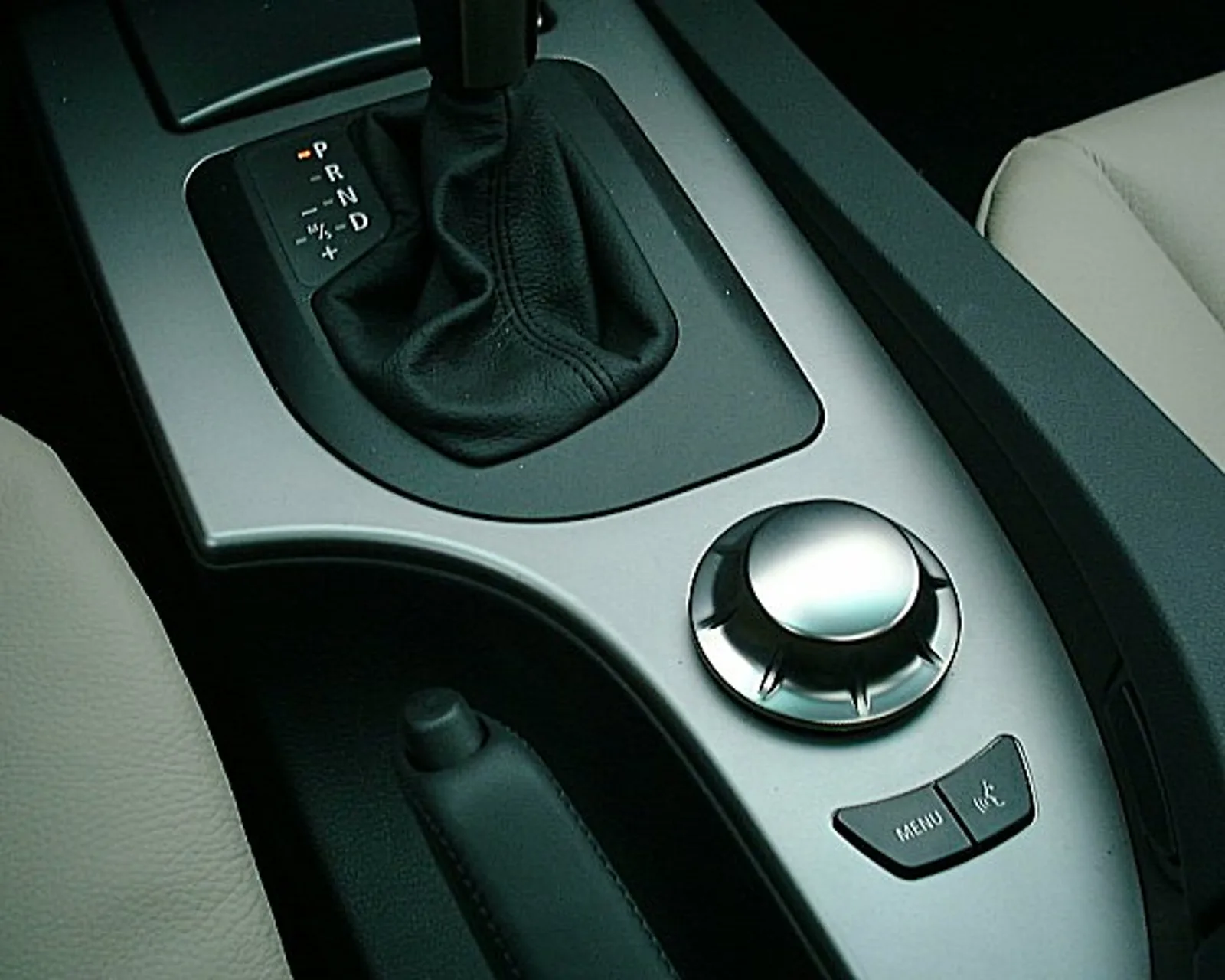
iDrive is an in-car communications and entertainment system that controls most secondary vehicle systems in late-model BMW cars. It combines those functions under one control architecture, made up of an LCD panel on the dashboard and a control knob on the centre console. The driver can use it for climate, audio, navigation and communication.
In some models front-seat passengers can use the system as well. The system is also used in modern Rolls-Royce models, because BMW owns that brand, and the Toyota Supra from 2019 onward was developed as a collaboration between BMW and Toyota. BMW's Mini brand uses a pared-down version, branded as Connected.
One knob and one screen once tamed a car's secondary systems, and each later generation has had to win back the trust it lost.
How does iDrive work?
iDrive uses a single controller to reach functions that once needed separate buttons and switches. Vehicle controls for safety, such as headlights and turn signals, stay close to the steering column. The less frequently used comfort and information controls were moved to a central location, which is the core design rationale.
Early systems were organised around compass points, with each direction matched to a colour and a function. North, in blue, handled communication, east, in green, handled navigation, south, in brown, handled entertainment and west, in red, handled climate control. The colours also showed which part of the system the driver was viewing.
Older versions split the wide screen into a two-thirds main window and a one-third assistance window. A driver could use one function while keeping secondary information visible, such as a map or trip computer. Since 2007 BMW has added programmable buttons to the dashboard, which can jump straight to a chosen function or radio station.
The system also relies on fast data links. iDrive introduced the first multiplexed MOST Bus and Byteflight optical fibre buses with a very high bit rate in a production vehicle. These carry television, DVD and driver assistance signals, including adaptive cruise control, night vision and head-up display.
When and where did iDrive begin?
iDrive was launched in 2001 in the BMW 7 Series (E65), and its early prototype, called the Intuitive Interaction Concept, had appeared on the BMW Z9 concept in 1999. The production version used the VxWorks kernel, while its navigation computer ran Microsoft Windows CE for Automotive. A Windows CE logo appears when the system reboots.
The first generation of controllers in the 7 Series had only a rotary knob. Its navigation computer, called NAV01 and located in the trunk, could read only map CDs. That limitation made the early system a fairly basic navigation unit by later standards.
How did the first generation change?
The first generation developed in steps. In October 2003 a menu and a customisable button were added to the controller, and the new navigation computer, NAV02, could read DVDs and displayed the map in a bird's-eye perspective. The changes came in quick succession over several years.
In April 2005 the controller was changed again, with a new leather top on the turn knob. The final navigation unit, NAV03, had a faster processor and antialiased map display. The 8.8-inch wide-screen display became brighter and could control an MP3-capable six-disc CD changer or a BMW iPod interface.
Options included a TV tuner, a DVD changer, BMW Night Vision, a side view camera and a rear view camera.
What were M-ASK and CCC?
M-ASK, short for MMI Audio System controller, was a limited version of the iDrive computer made by Becker. It had a small 6.6-inch display and appeared on the 5 and 6 Series and the X5 and X6 without navigation. In Europe it could be ordered as Business navigation on the 1, 3 and 5 Series.
Early Business navigation could only show directional arrows, while the latest version could display 2D maps. Because only one optical drive was fitted, a driver could not use navigation and listen to a CD at the same time. Ordering iDrive Professional replaced M-ASK with a larger display and a dual-slot dash-mounted computer.
iDrive Professional Navigation, called CCC, debuted in 2003 with the E60/E61 5 Series. It stands for Car Communication Computer and runs on Wind River VxWorks, a real-time operating system. It used an 8.8-inch wide-screen display and a Navteq map DVD in a dedicated drive.
What did the CCC updates change?
CCC Update 1 arrived in March 2007 as a minor revision. It added programmable buttons in the dashboard for frequent functions, and it removed the haptic feedback from the iDrive controller. The update was offered as an option on several models.
CCC Update 2 followed in September 2008 for model year 2009 cars that did not receive the new CIC-based system. Those cars received the new iDrive controller used on CIC cars, while the iDrive computer itself stayed the same.
What changed with the CIC system?
The CIC system, short for Car Information Computer, debuted in September 2008 with the F01/F02 7 Series. Made by Becker and running on the QNX operating system, it replaced the display, computer and controller in one update. The result was a higher-resolution display that responded more quickly than CCC.
CIC used TeleAtlas maps on an internal 2.5-inch 80 GB hard drive, which could also store up to 8 GB of music. A USB port in the glove box made it easier to load music, and internet access was supported. After 2009 LCI production, CIC systems also supported DVD video, but only when the car was in Park or the parking brake was set.
What did NBT and NBT EVO add?
BMW introduced its next major update, called Next Big Thing or NBT, in early 2012. It brought faster processing, more memory and detailed 3D maps. The internal hard drive doubled in capacity, and the redesigned controller added handwriting recognition and gesture controls through a capacitive touch pad.
NBT removed the need for a separate COMBOX module for media, and BMW Online gave way to ConnectedDrive, which used a SIM-equipped telematics module for mobile connectivity. NBT EVO, released from 2016, changed the operating logic for the first time since 2001. Vertical text menus gave way to horizontal dynamic tiles, and the system gained touch screen interaction.
| Generation | Introduced | Main change |
|---|---|---|
| First generation | September 2001, E65 7 Series | Single knob, VxWorks, map CD reader |
| CCC (iDrive 2.0) | 2003, E60/E61 5 Series | 8.8-inch display and DVD map drive |
| CIC (iDrive 3.0) | September 2008, F01/F02 7 Series | Higher-resolution display, QNX and internet access |
| NBT (iDrive 4.0) | Early 2012 | Handwriting and gesture control, larger internal drive |
| NBT EVO (iDrive 5.0/6.0) | 2016 | Tile interface and touch screen |
| iDrive 7.0 | Summer 2018 | Live Cockpit displays up to a 12.3-inch cluster |
| iDrive 8.0 | 2021 | BMW Curved Display with a 14.9-inch control screen |
| iDrive 9.0 | November 2023 | Android-based, with the rotary knob removed on most models |
How did iDrive 7, 8 and 9 change the system?
BMW debuted iDrive 7.0 in summer 2018 in the X5 (G05), 8 Series (G15), Z4 (G29) and 3 Series (G20). It runs on the Media Graphics Unit, and two Live Cockpit configurations were offered. Live Cockpit Plus paired a hybrid analogue and digital cluster with a 5.7-inch driver display and an 8.8-inch main display.
Live Cockpit Professional upgraded those to a fully digital 12.3-inch instrument cluster and a 10.25-inch main display. The cluster abandoned circular gauges in favour of arced designs, which marked a clear break from the earlier look of the instrument panel.
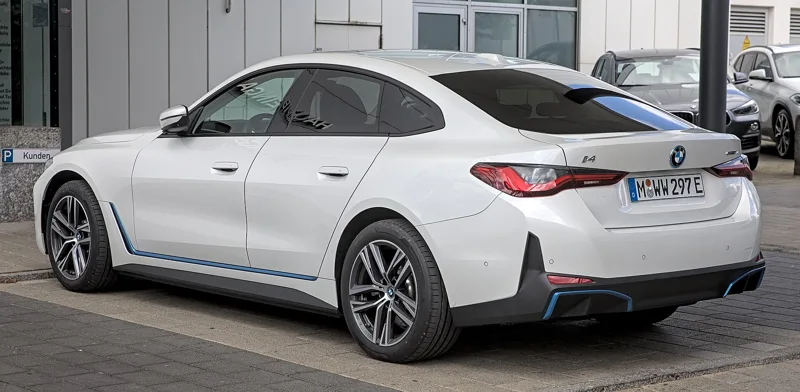
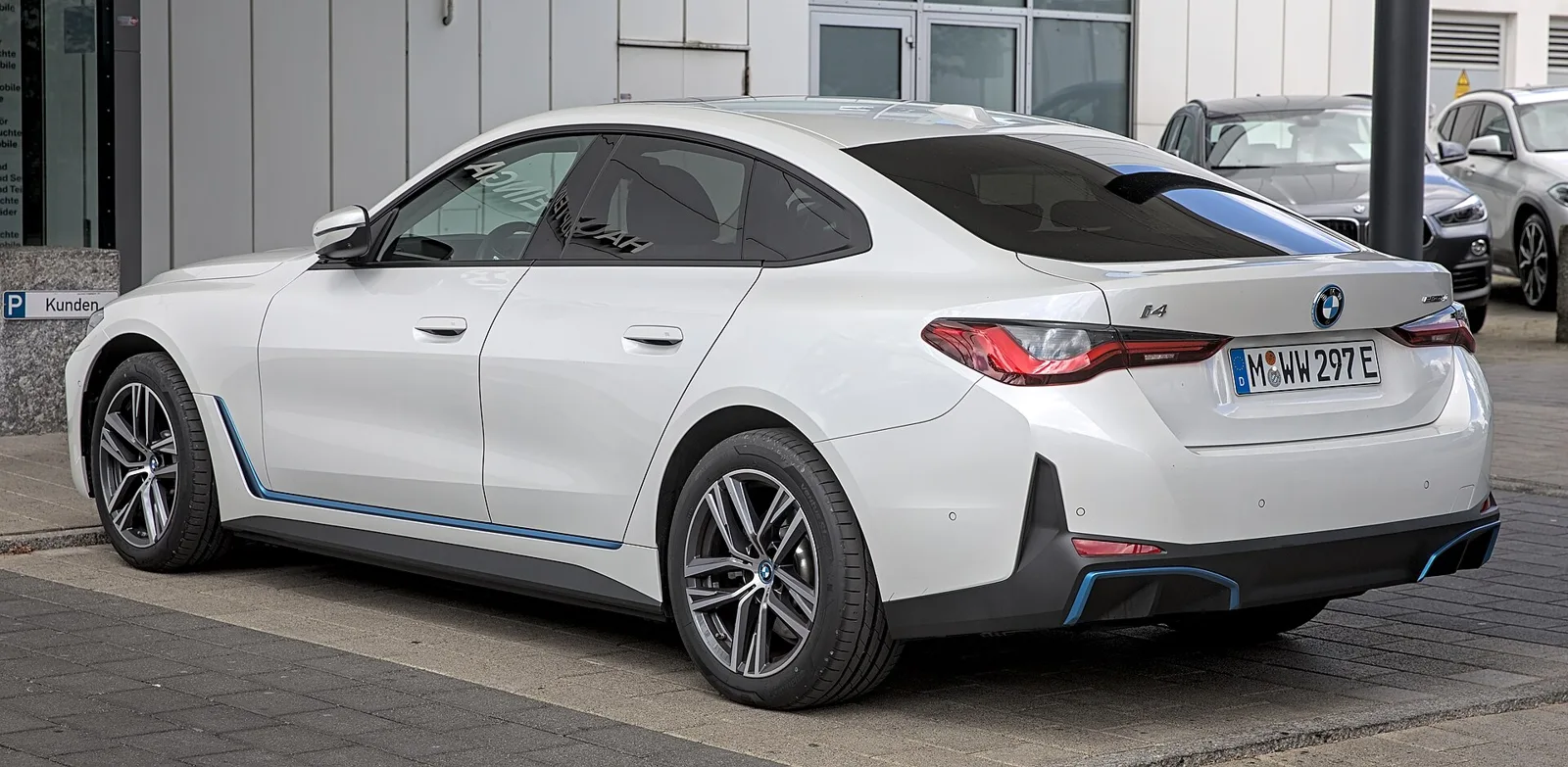
iDrive 8, unveiled in 2021, introduced the BMW Curved Display, which merged a 12.3-inch digital cluster with a 14.9-inch control display behind anti-reflective glass. The first model to ship with it was the BMW iX, followed closely by the i4. The system added 5G support, widgets, video streaming and improved gesture control.
iDrive 9 arrived in November 2023, starting with compact models such as the X1 and 2 Series. It is based on Android and the Android Open Source Platform, and it has a redesigned menu structure. On most models it removed the rotary knob, making the system touchscreen only, and BMW describes it as intended for lower-end vehicles.
Why did iDrive attract criticism?
iDrive drew significant criticism from users and the automotive media when it was first introduced. Reviewers pointed to a steep learning curve and a tendency to pull the driver's eyes away from the road. Many owners reported adapting after about one year of practice, and voice control later reduced the learning curve.
The CIC system, introduced in 2008, addressed most of the early complaints. NBT brought further improvements, but it still faced criticism for complexity and software problems, including freezing, frequent crashes and, in some cases, failure to boot. The later iDrive 8 faced a different criticism, aimed at the lack of physical buttons for climate control and heated seats.
In July 2026 BMW placed an in-car advertisement for an upcoming film, and tapping the ad triggered a full-screen animation with music and lighting effects on equipped models. Owners objected, because BMW had promised in 2023 that it would not use the infotainment system for advertising.
What are the advantages and drawbacks of iDrive?
iDrive gathers many functions into one control, which can reduce clutter on the dashboard and centre console. Its evolution has also brought better displays, richer maps and more connected services. Those benefits have come with costs, and the drawbacks have shaped the company's changes over the years.
Advantages:
- One controller reaches climate, audio, navigation and communication.
- Fast fibre data buses support television, DVD and driver assistance.
- Programmable buttons give instant access to favourite functions.
- Later displays are larger, sharper and more responsive.
Drawbacks:
- A steep learning curve, with frequent glances away from the road.
- Software freezes and crashes in some NBT-era cars.
- Touch-only designs such as iDrive 9 removed the rotary knob on most models.
- Climate and seat controls moved into menus on iDrive 8, which drew complaints.