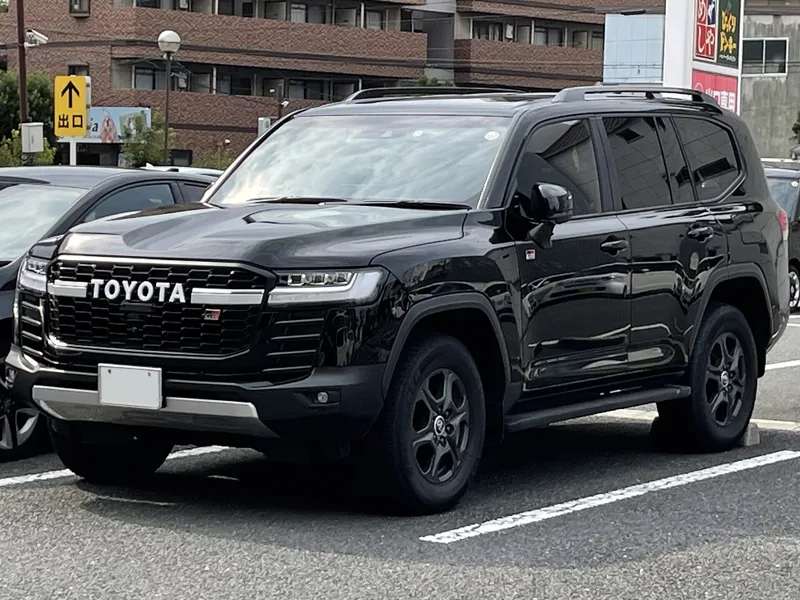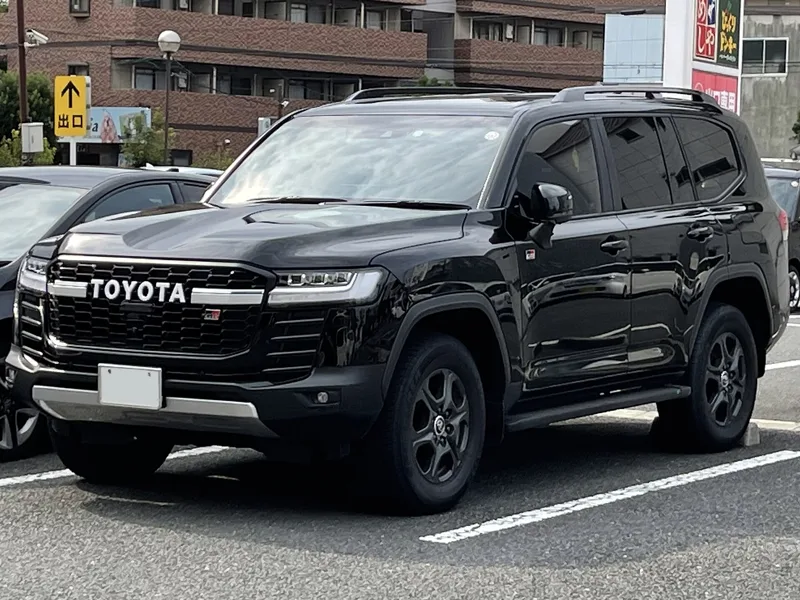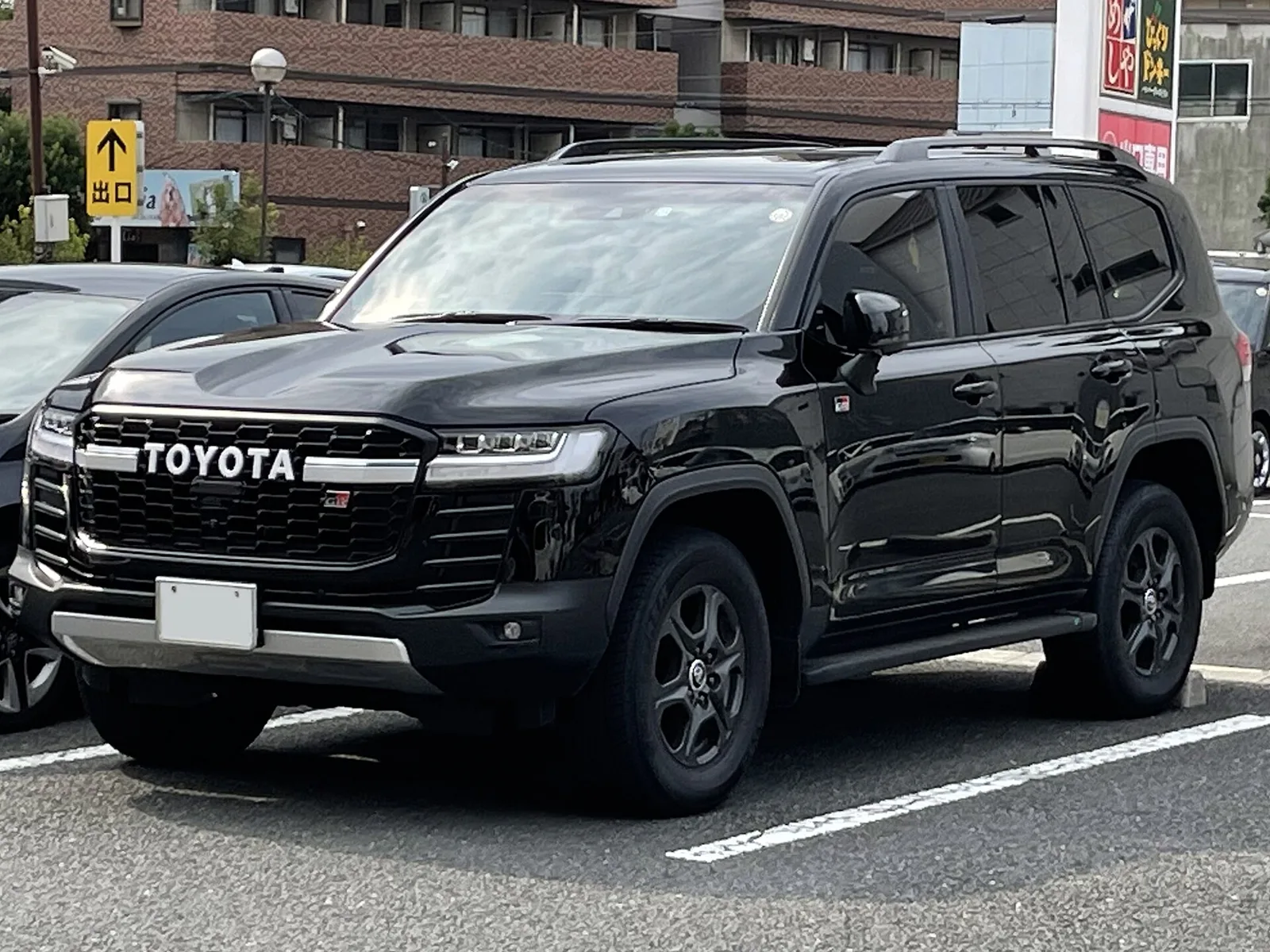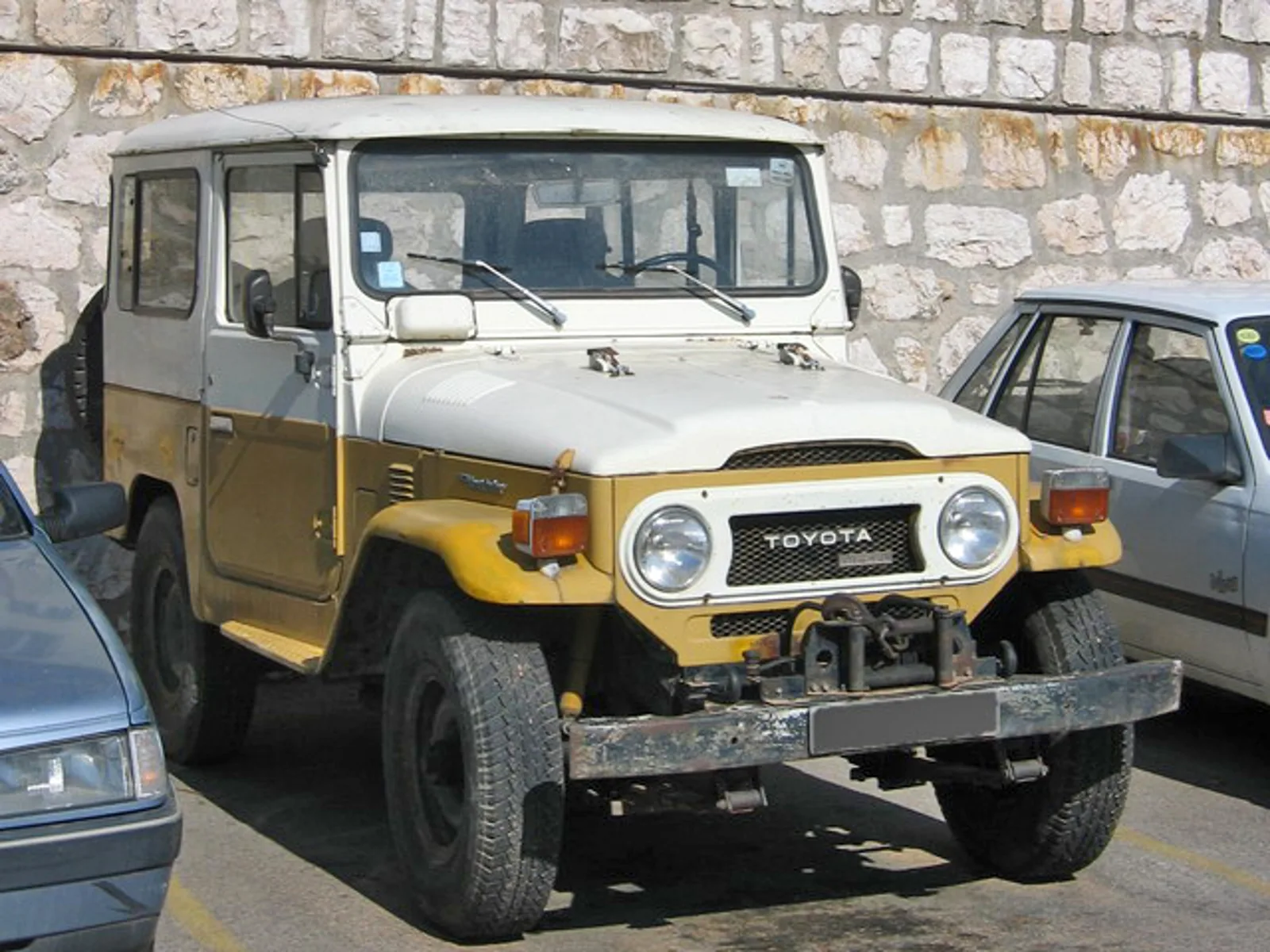
A Brazilian-built Land Cruiser with Mercedes-Benz diesels, rectangular headlights and a four-door double cab added in 1999.
The Toyota Bandeirante was the Brazilian-built version of the Land Cruiser J4. Toyota do Brasil made it at Sao Bernardo do Campo from November 1962, after starting with imported kits in 1959, and production ended in November 2001. It used petrol and Mercedes-Benz diesel engines before Toyota's own 14B.
The Toyota Bandeirante was a Land Cruiser built in Brazil, at a factory that Toyota do Brasil set up in Sao Bernardo do Campo for the purpose. It was sold under its own name and the series designation J5, and it kept close to the J4 Land Cruiser while gaining its own engines, bodies and equipment. The last one left the line on 28 November 2001.
Where did the Bandeirante name come from?
Bandeirantes were the pioneers of Brazilian history who went inland from the coast, explored and settled the interior, and opened the way to the exploitation of its natural wealth. The best known of them came from the south-east of what is now Sao Paulo state. The word can be rendered in English at the same time as Land Rover and as Land Cruiser,.
Brazil's own Land Cruiser, built in a factory made for it, ran from 1959 until the last one left the line in 2001.
How did the first Bandeirantes reach the road?
The first vehicles left the assembly hall of Toyota's Brazilian subsidiary in Ipiranga, a district of Sao Paulo, from May 1959. They were CKD kits of the Land Cruiser FJ-251, imported from Japan and assembled in Brazil. Local content grew quickly, and by December 1959 some 60% of the parts already came from Brazilian production.
Why was the FJ-251 a good fit for Brazil?
The FJ-251 was a short open off-roader with the simplest equipment and exceptionally robust mechanics, which was exactly what Brazil needed at that time. It measured 3,830 mm (150.8 in) in length and rode on a 2,280 mm (89.8 in) wheelbase. Weighing 1,450 kg (3,197 lb), it could carry up to ten people, though not with luggage. Its top speed was 100 km/h (62 mph).
What were the FJ-251 specifications?
| Specification | FJ-251 (1959) |
|---|---|
| Length | 3,830 mm (150.8 in) |
| Wheelbase | 2,280 mm (89.8 in) |
| Weight | 1,450 kg (3,197 lb) |
| Engine | Toyota F, six cylinders, 3,878 cc (236.7 cu in), low-revving petrol |
| Top speed | 100 km/h (62 mph) |
| Capacity | Up to ten people, without luggage |
What was the 2F engine, and did it exist?
A low-revving petrol engine called Toyota 2F is often cited: a 4.0 with six cylinders, producing 81 kW (110 PS; 108 hp) at 2,000 rpm. No detailed information about it can be found at present, so one can only speculate. A Brazilian-specific modification is a plausible explanation, given the high petrol prices and fuel use of the Toyota F, and the fact that there was not yet a filling station every 300 km, as there is today.
Much of the evidence is now hard to recover. After 1964 most of the combustion engine makers in Brazil were pushed out, as the military regime steered the industry into the hands of multinational corporations. The Brazilian 2F must also not be confused with the Toyota 2F that Japan began building in 1975.
Why did the petrol engines give way to diesel?
In 1961 the petrol F and/or 2F units were replaced by more economical diesels. These were OM324 low-revving engines from Mercedes-Benz do Brasil, also built in Sao Bernardo do Campo, with 3,401 cc (207.5 cu in) and four cylinders. They produced 57 kW (78 PS; 77 hp) at 3,000 rpm, and the vehicle earned the nickname Britadeira, which means jackhammer, a name it kept for many years.
What was the FJ-151, and why did it matter?
Between 1960 and 1961 the FJ-251 was renamed FJ-151, a change that points clearly to a different petrol engine. From 1961 the FJ-151 was also offered with a soft top, and the Land Cruisers so equipped received the code FJ-151L, where L stands for Lona, meaning soft top. Very few of them were built, so the model rarely appears in the literature.
How did the Bandeirante become fully Brazilian?
From 1960/61 Toyota prepared to replace the Land Cruiser J2 in Brazil with the J4, with changes that included the Mercedes-Benz diesels. The Brazilian version of the J4 was to be called the Bandeirante J5. Bodies came from Brasinca in Sao Caetano do Sul from 1961. Production moved into Toyota's new Sao Bernardo do Campo factory in November 1962, and from 1968 the car was made entirely from Brazilian parts.
What changed during the heyday of the Bandeirante?
The exterior changed very little, but a pickup joined the range from 1983 and rectangular headlights replaced the round ones. Those headlights still set the Bandeirante apart from every other model in the J4 series. A better instrument panel arrived in 1985, and in 1987 the brakes were improved, a long-standing weak point of the earlier cars.
A five-speed manual gearbox was offered from 1993, and in 1999 Toyota introduced a four-door double cab, a body form the J4 series had never had. The 100,000th Bandeirante also came off the line in 1999, and Toyota marked it with a special edition.
What happened to the engines after the early years?
From 1962 the OJ series ran on Mercedes-Benz OM324 diesels. The OM314 followed in 1973 and the OM364 in 1990. From 1994 a Toyota engine returned in the form of the 14B, and the model code changed from OJ to BJ, a change that should not be confused with the original BJ models.
Why did production of the Bandeirante end?
Brazil lifted its ban on imported vehicles in 1991, and newer, cheaper imports cut demand for the Bandeirante sharply. The 14B did not meet the emissions rules valid from 2002, so Toyota studied in 2000 whether one of the more modern diesels could replace it. The company decided it was not worth the effort, and on 28 November 2001 the last Bandeirante rolled off the line.
Which body styles made up the Bandeirante range?
The range began with the FJ25 short open off-roader of 1959 and grew into a long list of soft-top, steel-top, pickup and flatbed bodies. A long off-roader with a steel top arrived in 1962 as the TB41L, and a short pickup, the TB51L, came in the same year. The OJ40 variants followed in 1968, and the OJ50 family in 1973, each with its own engine and body combinations.
In 1989 the OJ models took Mercedes-Benz OM364 engines, and the four-door double cab, the BJ55LP-2BL4, was added in 1999.
What did the range look like in 1962?
In 1962 the range expanded to include the short TB25L, offered with a soft top and with a steel top, and the long TB41L with a steel top, all fitted with Mercedes-Benz OM324 diesels. The short pickup, the TB51L, arrived in September 1962 and stayed in the line-up until January 1966. The records mark the TB25L as replacing the FJ151L, with a question mark over the earlier model name.
The TB51L3 is listed for 1965 as a short pickup with a three-door double cab and a load bed cover. Doubts remain about its production run, which may have amounted to only one example, and its dates are uncertain.
Which OJ models ran on the OM314 and OM364 engines?
From February 1973 the OJ50L, OJ50LV and OJ50LV-B, along with the OJ55LP-B flatbed truck, used the Mercedes-Benz OM314 until November 1989. Several more OJ55 variants followed in the same period, including the OJ55LP-B3, the longer OJ55LP-BL and OJ55LP-BL3, and the two-door double cab known as the OJ55LP-2BL. Their build dates are only partly given, which is why several entries carry question marks.
In November 1989 the same body codes were fitted with the Mercedes-Benz OM364 engine, each one replacing its OM314 predecessor. This arrangement continued until April 1994.
What did the BJ models of 1994 bring?
From April 1994 Toyota's 14B engine returned, and the OJ line was renamed with BJ codes. The short and long off-roaders were the BJ50L, BJ50LV and BJ50LV-B, while the BJ55LP-B, BJ55LP-B3, BJ55LP-BL, BJ55LP-BL3 and BJ55LP-2BL covered the pickups and flatbeds. Each replaced the matching OJ model, and all were built until November 2001.
In 1999 the BJ55LP-2BL4, a flatbed with a four-door double cab, joined the range. It was built alongside the rest of the BJ line until the end of production.
What is the Britadeira nickname, and where did it come from?
Britadeira means jackhammer. The name followed the vehicle for many years from the period of the OM324 diesel, which replaced the petrol engines in 1961.