A 2016 crowdfunded electric car with a solar roof, a moss air filter and a 2023 cancellation, plus the specs and pricing it was planned around.
The Sion was a planned electric car from the German start-up Sono Motors, with solar cells in its roof and bodywork. It was designed to charge from the grid and the sun, but it was cancelled in February 2023 after funding targets were missed.
The Sion was a partially solar-powered electric car developed by the German start-up Sono Motors. Its battery could be charged from the grid and from solar cells built into the bodywork. The project was cancelled in February 2023 after the company failed to raise enough money, and its remaining prototypes and tooling were auctioned in 2025.
What was the Sono Motors Sion?
The founders had been working on the Sion since 2012. Crowdfunding campaigns in 2016 and 2017 raised more than 2 million euros, and computer graphics of the vehicle were presented in July 2016. Reservations were taken through the company's website against a deposit.
Two functional prototypes were built by Roding Automobile from August 2017. Those cars were taken on test drives in 12 European cities between August and October 2017, and the experience fed into further development while the company sought investors.
A solar-roofed electric car that raised millions from crowdfunding and still never reached a production line.
How was the solar roof meant to work?
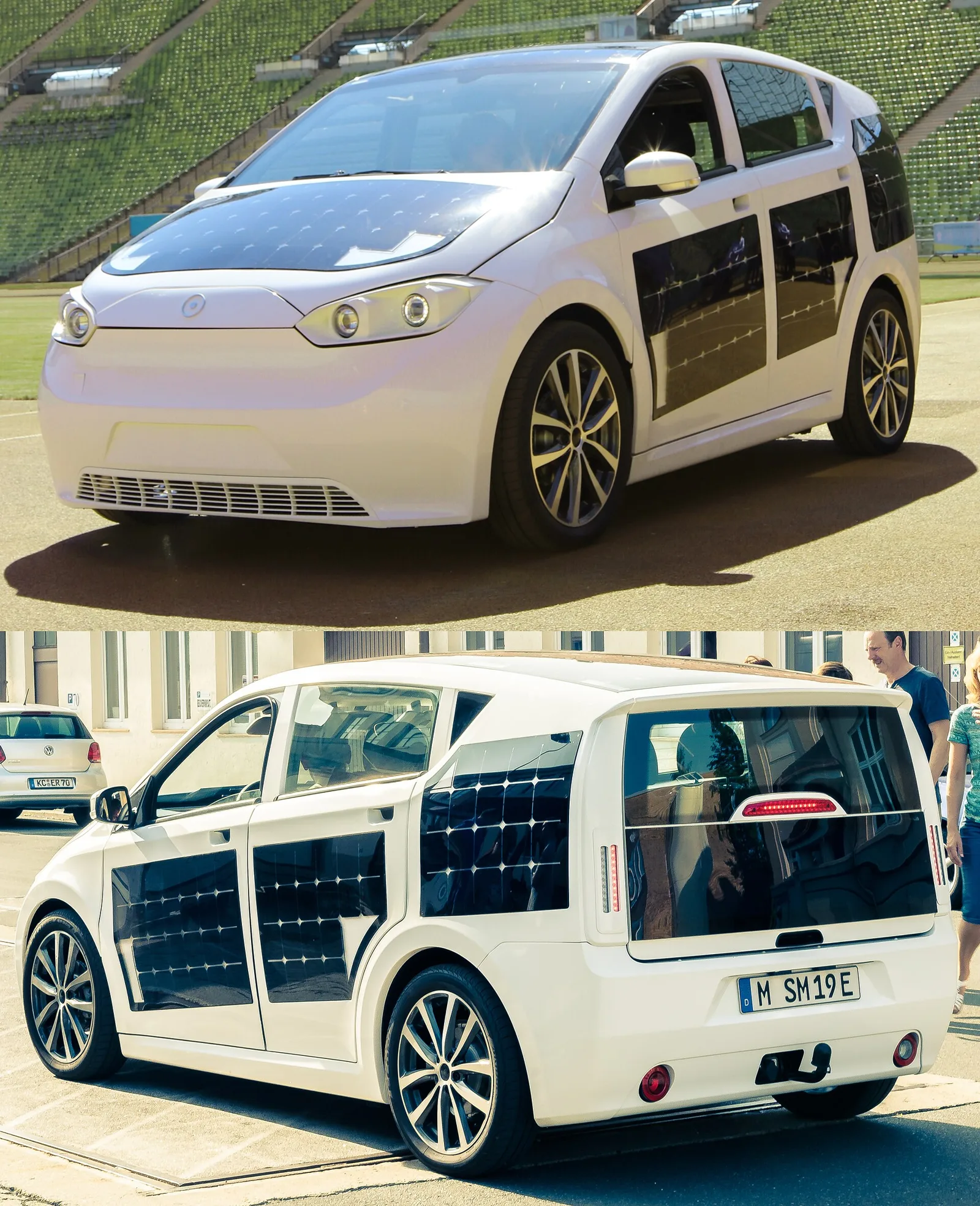
Monocrystalline silicon cells, under a polycarbonate skin, were to cover the roof, the bonnet and much of the outer panels. The company used the product name viSono for the system. The cells were chosen to work well in diffuse light, aiming to deliver close to full output at angles of incidence down to 70 degrees.
Together, the 330 modules covered 7.5 square metres, with an announced efficiency of 21 percent. The maximum output was 1208 Wp. Under favourable sunshine in Central Europe, the car could gain up to 34 km a day from the sun, but averaged about 10 km a day across a full year.
What powertrain and range did the Sion have?
The drive was a three-phase asynchronous motor rated at 120 kW (161 hp) on a 400 V system. With rear-wheel drive, the car was expected to reach a top speed of 140 km/h (87 mph). It was to be sold in a single equipment variant, which kept the line simple.
The battery was first planned as a water-cooled lithium-ion pack of 35 to 45 kWh weighing about 250 kg (550 lb). The battery choice was deferred because technology was moving fast. In June 2021 the company announced a lithium-iron-phosphate chemistry instead, which contains no cobalt, nickel or manganese and is effectively non-flammable, with a longer service life.
The Sion was planned to offer a range of 320 km (200 mi) on the NEFZ cycle, which equates to about 250 km (160 mi) in real use. The built-in charger could take 3.7 kW to 22 kW of AC power, and DC charging to CCS was indicated at 50 kW.
How was the Sion meant to charge?
The company said the car could be charged at almost any station in Europe, using a standard household socket, a Type 2 connector or a CCS fast charger. A Schuko socket would take up to 13 hours to fill an empty battery, while a Type 2 station would reach 80 percent in 2.5 hours and 100 percent in 3.2 hours.
A CCS fast charger was expected to bring the battery to 80 percent in half an hour, with another 30 minutes needed for a full charge. At 80 percent the car would have about 200 km of range, which the company argued was enough to cover the distance between stations.
A bidirectional system, called biSono, would let the Sion charge other electric vehicles at 11 kW through a second Type 2 socket, and run standard household appliances at 2.7 kW from a Schuko socket.
What features did the Sion offer?
The car was designed for five passengers, with 45 cm of shoulder room and seats that could all fold. The driver's seat adjusted for height and position, and the luggage compartment held 650 litres, rising to 1,250 litres with the rear seats folded. A trailer coupling for up to 750 kg (1,650 lb) was offered as an option.
The interior used a natural filter made from moss. Called BreSono, it was placed in the dashboard and the centre console, and the company said it could filter up to 20 percent of airborne particles while controlling humidity. The moss needed no watering or sunlight, and the filter could be replaced at a service.
The company also planned a goSono app. It would allow owners to offer power sharing, ridesharing or car-sharing to others. Sono Motors said the workshop manual and CAD data for spare parts would be released license-free with the first deliveries, so owners could repair the car or print parts.
How did the Sion's timeline unfold?
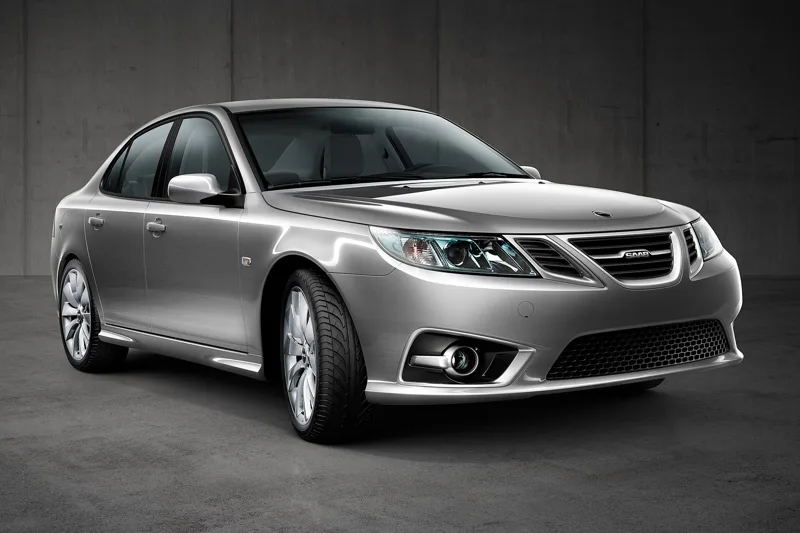
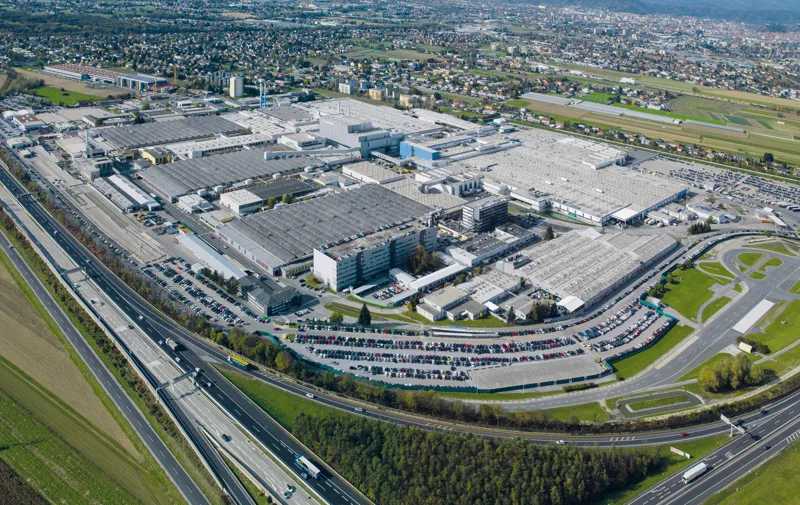
By June 2018 the company said it had reached a minimum of 5,000 reservations. A battery contract with the German supplier ElringKlinger was announced in May 2018, covering several hundred million euros over eight years. Production was first set for late 2020 at the NEVS plant in Trollhattan, Sweden, a former Saab factory, and later delayed to 2022.
Fundraising was a recurring problem. In late 2019 the company set a target of 50 million euros, missed it, extended the deadline and reached it about three weeks later, in January 2020. By 2021 it was targeting production in 2023, and in April 2022 Valmet Automotive of Finland was named as the manufacturer.
In December 2022 the co-founders said they could not raise enough money and asked supporters to help. February 2023 brought the decision to end development, with the company pointing to a failure to raise enough money from crowdsourcing.
Why was the Sion criticised?
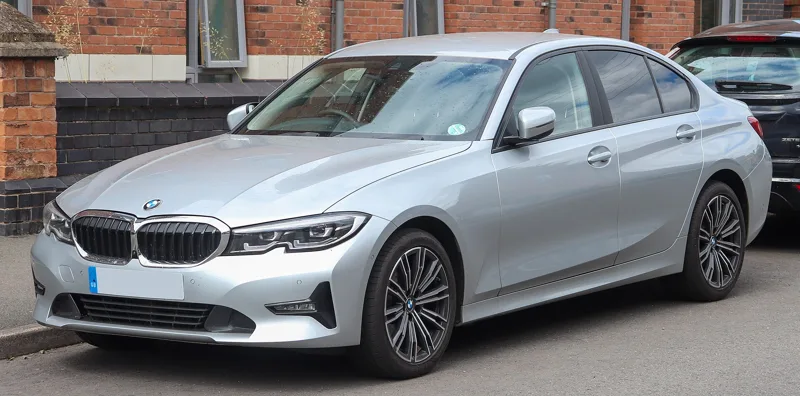
Electromobility forums questioned whether the company's claims were realistic. Observers said that parts of the BMW i3's interior, chassis and drivetrain could be recognised in the prototypes, with the BMW badge hidden or removed. Sono Motors responded to the criticism on 14 September 2017.
The company also faced questions about its business plans. It intended to move part of its operations to the Netherlands and to hold tours in 18 cities across the Netherlands and Germany.
What were the planned price and production?
Projected pricing put the car at 16,000 euros without a battery, and 25,500 euros complete. In April 2022 the price was raised to 29,900 euros. The battery was offered for rent, lease or purchase, and its purchase price was first put at less than 4,000 euros before being revised to a realistic estimate of 9,500 euros.
The long-term aim was 43,000 vehicles a year, rising to 260,000 by 2028. With 10,000 pre-orders by late 2019, the company forecast production starting in September 2021. Deliveries were planned free of charge to Trollhattan in 2021, with a two-week right of revocation for buyers.
Why was the Sion cancelled?
The Sion was cancelled because Sono Motors could not raise the money it needed. Its crowdfunding and investor rounds never reached the sums required for series production,. The company's final attempt to raise funds in late 2022 did not succeed.
In August 2025 the company announced an online auction of the remaining Sion assets, including 10 prototypes and tooling, which closed on 9 September 2025.
What are the Sono Sion specifications?
| Specification | Detail |
|---|---|
| Maker | Sono Motors, Germany |
| Status | Cancelled in February 2023 |
| Motor | Three-phase asynchronous, 120 kW (161 hp), 400 V |
| Top speed (planned) | 140 km/h (87 mph) |
| Solar roof | 330 modules, 7.5 square metres, 21 percent efficiency |
| Range (planned) | 320 km NEFZ, about 250 km real |
| Battery | 35 to 45 kWh lithium-ion, later LFP |
| Luggage | 650 litres, up to 1,250 litres |
| Price (projected) | 16,000 euros without battery; 29,900 euros in 2022 |