A 1994 to 2000 sport compact with inline-four and V6 engines, a tiptronic-style automatic, grey-market fame abroad and a 1971 name to live up to.
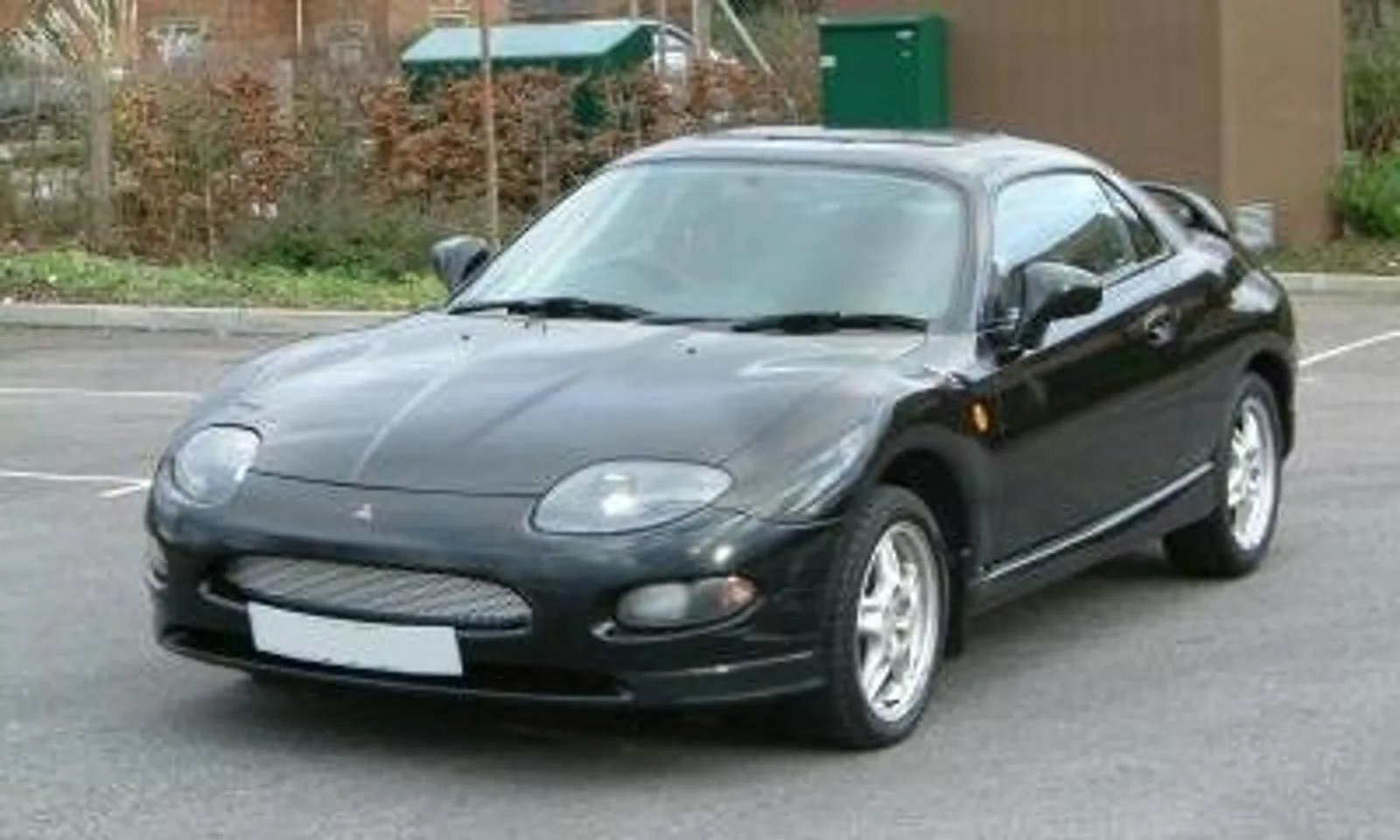
The Mitsubishi FTO was a front-wheel-drive two-door coupe built from 1994 to 2000, with inline-four and V6 engines. It won Japan's Car of the Year award for 1994 to 1995 and later found a following through grey-market imports. Side-impact rules and slow sales ended production in July 2000.
The Mitsubishi FTO was a front-engined, front-wheel drive sport compact that Mitsubishi Motors built from 1994 to 2000. It was first aimed at Japan, but grey-market demand in the United Kingdom and elsewhere led to limited official sales abroad near the end of its life.
Where did the FTO name come from?
FTO stands for Fresh Touring Origination, and the name recalls the Galant FTO coupe of 1971, one of Mitsubishi's first sports cars. The name was a deliberate link to that earlier car. The 1971 car was rear-wheel drive, and it was built from November 1971 to March 1975.
That compact coupe replaced the earlier Colt 11-F Super Sports as Mitsubishi's sporty entry. Its name was once meant to stand for Fresco Turismo Omologato, a playful piece of Japanese-Italian naming.
Early Galant FTOs used a 1378 cc 4G41 Neptune engine rated between 86 and 95 PS (63 to 70 kW), depending on specification. The February 1973 redesign brought 1597 cc 4G32 Saturn units tuned to 100 PS (74 kW) or to 110 PS (81 kW), and a 1439 cc Saturn with 92 PS (68 kW) was also available.
An October 1973 facelift restricted the lineup to four versions. Production gradually ended in August 1975, after the Lancer Celeste took over in March that year.
A front-drive Mitsubishi coupe that carried a 1971 name, won Japan's Car of the Year and then fought the side-impact rules.
What made the 1994 FTO different?
The 1994 FTO was a new coupe concept. Its only body style was a two-door coupe, and every FTO was front-wheel drive. Buyers chose between an inline-four and a transversely mounted V6, paired with either a five-speed manual or the INVECS-II automatic.
The INVECS-II was Mitsubishi's own transmission with a tiptronic-style manual mode, based on similar Porsche technology. Cars with it are often called Tip or Tiptronic FTOs. Early automatics had four speeds, and most later facelift automatics had five.
Its debut season brought the Car of the Year Japan prize, won for 1994 to 1995. Mitsubishi later celebrated the win with a Limited Edition GPX.
Which trims were offered before the facelift?
The inline-engined GS was the base model, and it came on 14-inch wheels with automatic climate control. The larger-engined V6 GR added auto air conditioning and 15-inch wheels, while the V6 MIVEC GPX completed the range with 16-inch alloys. The GPX added a rear spoiler and side air dams, both standard.
A Mivec GP model arrived in 1996, followed by a semi-race Nakaya-Tune dealer package. The GP Special, marked with a '2' in its model code, came with five-speed manual or four-speed automatic gearing.
The Nakaya-Tune package was a limited pre-facelift dealership option tied to racing driver Akihiko Nakaya. It was offered on the V6 GPX, GP and GR. The kit added a stainless exhaust silencer, better pads, a carbon lip spoiler and Ohlins dampers. Advertising material of the time limited it to 300 units.
Did the FTO have recalls?
The FTO had four relatively minor defects that required manufacturer recalls over its history. Three of those recalls came in 2004, some four years after production had ceased, at a time when Mitsubishi was attracting media attention for defects across its range.
What was the GPX Limited Edition?
To mark the Car of the Year win, Mitsubishi built a Limited Edition GPX finished in dandelion yellow, with emblems on the C-pillar marking the award. It came with a rear screen wash and wiper and a limited-slip differential as standard.
Only 207 GPX Limited Edition cars were produced in April 1995, of which 20 were manuals and 187 automatics. Enthusiasts usually refer to it by the Car of the Year acronym, COTY.
A GR Limited Edition followed from April to September 1995, aimed at buyers of the cheaper V6. Colours were limited to Pyrenees Black, Passion Red and Steel Silver.
What changed with the 1997 facelift?
In February 1997 the FTO received a new front bumper. Its two air intakes became one large intake blended into a full-width splitter, and the fog and indicator units became four circular lights. An HID headlamp option was also introduced, fitted into a deeper housing.
The rear spoiler gained an aero wing, and the GP was given a full makeover as the GP Version R. The Version R came in Scotia White, Passion Red or Pyrenees Black, with HID headlamps, uprated anti-roll bars and a limited-slip differential.
Two GX models brought a wider throttle body bore, from 60 mm to 63 mm, which added 10 PS over the earlier GR engine. The GX Sport and GX Sport Aero were offered with five-speed manual or five-speed automatic transmissions.
Why did FTO production end in 2000?
In July 2000 new side-impact safety standards were due in Japan. With sales slowing, Mitsubishi judged that updating the car was not cost effective, so the FTO was discontinued. The bigger GTO was discontinued at the same point, which shows how closely the two sports coupes were tied.
Many facelift cars were written off over the years, so a good number of pre-facelift cars on the road now wear facelift bumpers. An accurate build date comes from the VIN plate or the seat-belt tags.
Was there an electric FTO?
An experimental electric version, the FTOEV, used high-performance lithium-ion batteries, and it was built as an experiment rather than for sale. It was never offered to ordinary buyers. In December 1999 it set a record by covering 2,000 kilometres (1,200 mi) in 24 hours.
The FTOEV showed how far the platform could be pushed, although it never went into production. It remains a footnote in the car's story rather than a model buyers could order.
How did the FTO fare abroad and in awards?
Grey-market demand carried the FTO to Britain and several Asia-Pacific markets, and official distribution began in those regions at the end of production. Just before its demise it became an official import to the UK, sold through Mitsubishi dealers. Its reputation abroad rested on the grey-market cars that reached those buyers first.
Top Gear reviewed the facelift model in this period, with Vicki Butler-Henderson at the wheel, and the review helped the car reach a wider British audience. Later, in November 2007, the car was voted Best Used Sports Car by the British Auto Trader Awards.
In racing, a Team Taeivon Ralliart FTO driven by Takahiko Hara and Akihiko Nakaya was among the best five GT300 finishers in the 1998 JGTC season.
How fast did one FTO go?
Richard Batty's heavily modified FTO has appeared in British drag racing results since 2009, a long run of consistent appearances at the strip. In 2014 he set a European front-wheel-drive record with a run of 8.859 at 174.59 mph, in an EVO-engined car producing 1,051 hp (784 kW).
The record car is far removed from a standard FTO, but its results show what the platform could take with the right engine.
What options did buyers get?
Many FTOs were bought with extras like anti-lock brakes, traction control and a passenger airbag, which the trim list alone does not show. Original equipment catalogues listed many options, from cosmetic stickers and chromed goods to side skirts and spoilers. Practical items included a passenger airbag above the glovebox, ski racks and PIAA alloy wheels in 15 and 16 inches.
Anti-lock braking and traction control, called TCL on FTOs, could be fitted to some earlier models such as the GX. ABS was standard on the facelift models, and strut braces, standard on the GP Version R, were among the Ralliart-linked extras.
Ralliart also modified many FTOs imported to the UK, adding an aftermarket rear fog light and its illuminated switch to meet UK rules.
How can you date an FTO?
Numeric suffixes to the model code generally mark later build changes. Reading the first three chassis digits on the VIN plate gives the build year. Chassis numbers starting 000 date to 1994 or 1995, 010 to 1995 or 1996, 020 to 1997 and 030 to 1998.
The model code, usually four letters stamped on the VIN plate, reads left to right. The first letter gives the body style, the second the transmission, the third the model type and the fourth the engine. A DE2A prefix means the 1.8 4G93 engine, while DE3A means the 2.0 6A12 V6.
What was the FTO like to drive?
The INVECS-II automatic could be shifted manually, and in that mode the gearbox gradually learns the driver's style. The four-speed and five-speed automatics used different gear ratios, so the four-speed and five-speed cars behaved differently on the road.
The MIVEC cars had larger front brake calipers with twin pistons, while the single-piston rear calipers were common across the range. Some owners later fitted the larger rear units from the Evo models, or Evo 4 front brackets with bigger discs.
How can you tell the engines apart?
Each engine can be told apart by looking in the engine bay. The oil cap sits on the right of the engine cover on the 2.0 DOHC V6, and on the left on the 1.8 SOHC and the 2.0 DOHC MIVEC V6.
That quick check matters because the MIVEC and non-MIVEC V6 cars can look alike at first glance, and the brake calipers are the other clue to the specification.
What are the Mitsubishi FTO specifications?
| Specification | Detail |
|---|---|
| Production | 1994 to July 2000 |
| Layout | Front-engined, front-wheel drive, two-door coupe |
| Inline-four engine | 1.8-litre 4G93, 16-valve, DE2A prefix |
| V6 engine | 2.0-litre 6A12, DE3A prefix |
| Transmission | Five-speed manual or INVECS-II automatic |
| Wheels | 14-inch on GS, 15-inch on GR, 16-inch on GPX |
| GX throttle bore | 63 mm, up from 60 mm, adding 10 PS |
| GPX Limited Edition | 207 cars in April 1995 |
| Electric FTOEV | 2,000 km (1,200 mi) in 24 hours, December 1999 |
| Galant FTO (predecessor) | 1378 cc 4G41, 86 to 95 PS (63 to 70 kW) |
| Galant FTO later engines | 1597 cc 4G32, 100 to 110 PS (74 to 81 kW) |
| Galant FTO small engine | 1439 cc Saturn, 92 PS (68 kW) |
| European FWD record | Run of 8.859 at 174.59 mph, 1,051 hp (784 kW) |