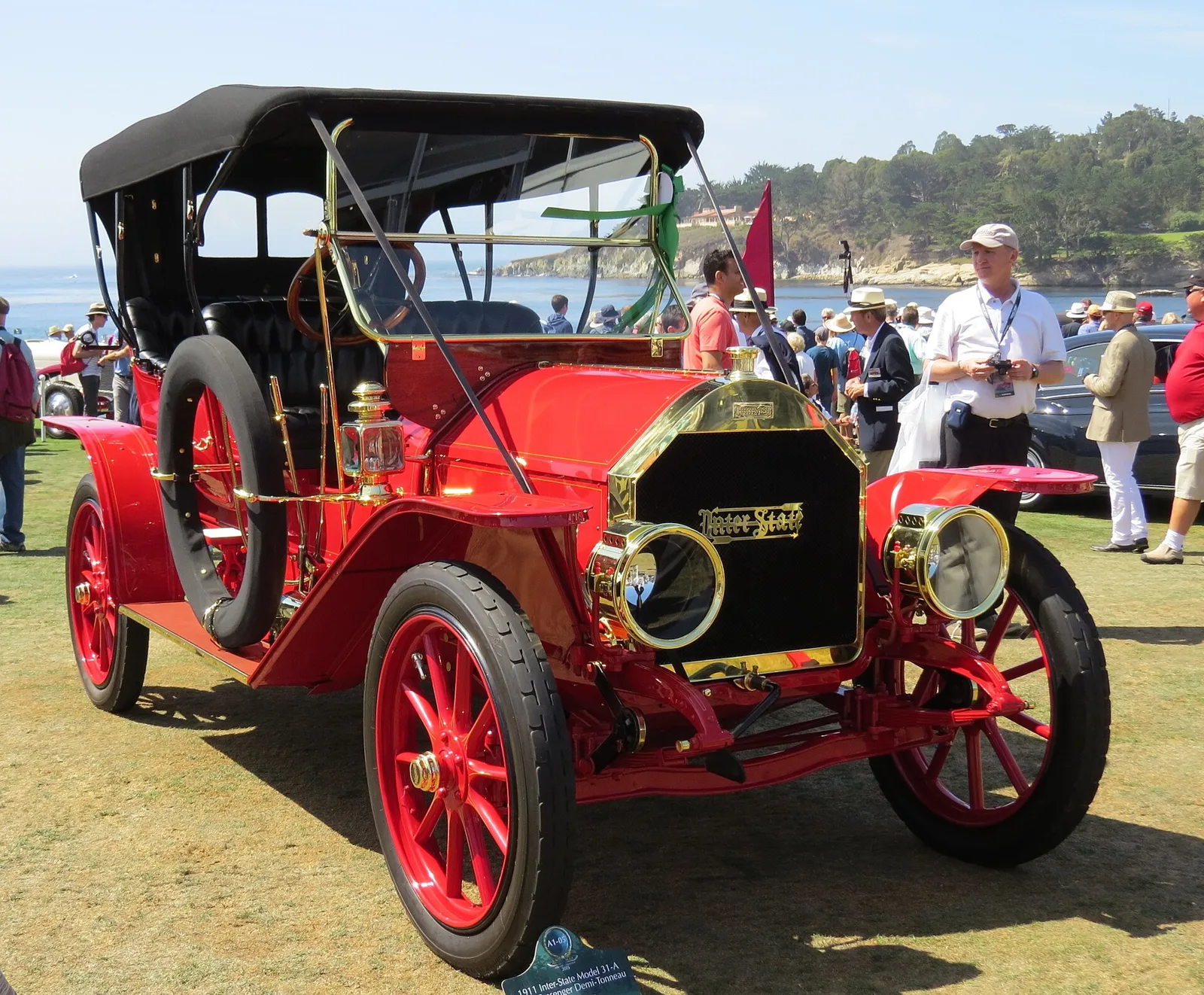
A two-year American upper-class car from Muncie, Indiana, with a T-head four-cylinder, a 124-inch wheelbase and a racer at the first 500 Miles of Indianapolis.
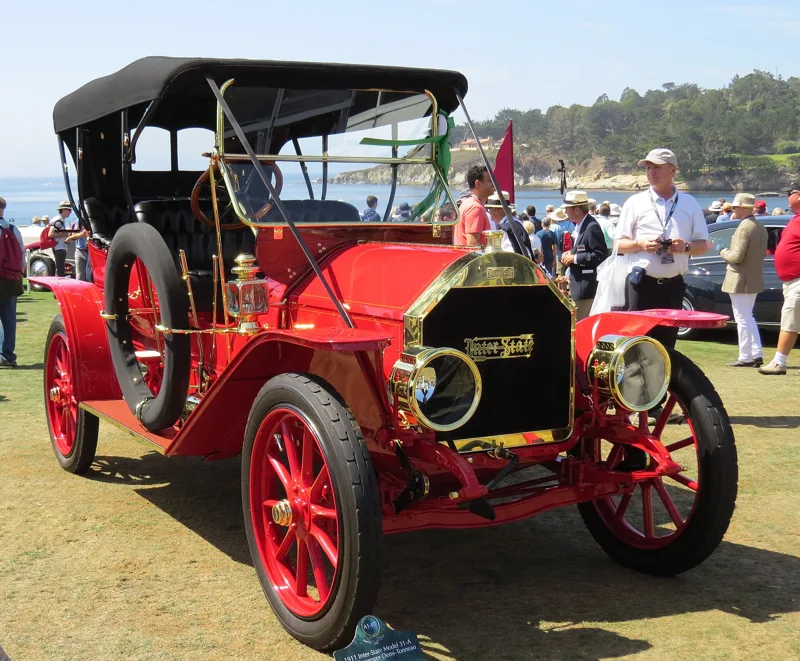
Built in Muncie, Indiana, the Fifty was offered only in 1911 and 1912 as an upper-class American car. Its name reflected engine output, and it used a 6.4 litre four-cylinder in 1911 before switching to a 7.7 litre T-head four-cylinder in 1912.
The Inter-State Fifty was an upper-class American passenger car built by the Inter-State Automobile Company in Muncie, Indiana, and offered only in 1911 and 1912. It was the flagship of the marque, and its name came from the engine output of each model. The engine grew from a 6.4 litre four-cylinder in 1911 to a 7.7 litre T-head unit in 1912.
A racer called the Bulldog 50 also started in the first 500 Miles of Indianapolis, and its driver finished 16th.
Where did the Inter-State Fifty come from?
Thomas F. Hart set up the Inter-State Automobile Company at the close of 1908, backed by several investors, and its office stood at 142 Willard Street in Muncie. The Forty of 1910 was the company's second model, after the Inter-State 35/40 hp, and the Fifty was derived from it in 1911.
The company's name and the name of its product came from a competition that Hart held in Muncie. The Forty was a conventional upper-middle-class machine with a strong four-cylinder, and it stayed on sale until 1912.
The Fifty arrived in 1911 with a list price of US$2,700, which gave buyers an attractive way into the upper class of the time. In its first production year it had a 6.4 litre four-cylinder engine and was offered only as a touring car.
A flagship that lasted only two model years, with a T-head engine and a 124-inch wheelbase.
How did the Fifty change for 1912?
For 1912 the Forty and Fifty received larger engines, and the old Forty carried on as the Thirty with a nominally lower output. The Fifty kept its 50 bhp (37.3 kW) rating, but now drew it from a 7.7 litre T-head four-cylinder with dual ignition.
The new fore-door bodies looked more modern, though also more massive, and they had doors to every seat. The Fifty was offered in three open versions that year. The weight rose with the new bodies, and the 1912 car probably weighed 1,360 kg (3,000 lb), against 1,045 kg (2,300 lb) for the 1911 touring car.
All three series were discontinued for 1913. The Thirty had no replacement, while the new six-cylinder Inter-State Model 45 was priced and rated to sit between the Forty and the Fifty and to replace both.
What engines did the Fifty use?
The 1911 Model 35 engine was a large four-cylinder with a 121 mm (4 3/4 in) bore and a 140 mm (5 1/2 in) stroke, giving 6,388 cc (389.9 cu in). The 1912 Model 50, 51 and 52 engine was a T-head unit that produced 50 bhp (37.3 kW) in the Fifty.
The 1912 engine was the largest Inter-State fitted to a car, and on nominal rating it shared the top spot for power with the 6.4 litre unit. A T-head puts the inlet and exhaust valves on opposite sides, so each needs its own camshaft. The layout was reserved for expensive automobiles and had first been used in the Mercedes 35 PS of 1901.
Its bore was 127 mm (5 in) and its stroke 152.4 mm (6 in), giving 7,722 cc (471.2 cu in), with a crankshaft carried in three main bearings. The Fifty used old-fashioned splash lubrication rather than oil pumps. That choice may have had to do with the unreliability and noise of early pumps.
The mixture was probably prepared with a Stromberg carburettor, although that is documented only for 1912. The cylinder bore gave an A.L.A.M. rating of 36.1 PS for the 1911 engine and 40 PS for the 1912 engine. The A.L.A.M. method was common at the time, but it was very imprecise.
How was the Fifty's chassis built?
The Fifty used a conventional ladder frame, most likely derived from the 35/40, with rigid axles at the front and rear. Its wheelbase was 3,150 mm (124 in) in both model years, while the Forty and Thirty shared a shorter 2,997 mm (118 in) chassis.
The front axle was sprung on half-elliptic springs, and the rear on three-quarter elliptic springs. Old photographs reveal wooden artillery wheels: ten spokes at the front, twelve at the rear. Every Inter-State built between 1909 and 1912 was right-hand drive.
Spare tyres appear to sit on detachable rims, a small step towards comfort when wheels could not be removed. Changing meant swapping only the rim, and the flat tyre could then be taken off and fixed at home or handed to a professional. The Fifty was meant to run 36 x 4 1/2 in tyres.
Drive went to the rear axle through a propeller shaft, behind a conventional three-speed manual gearbox and a multi-plate clutch. Both the Forty and the Fifty used a floating rear axle, so the drive half-shafts carried no side loads. The brake pedal worked internal-shoe drums on the rear axle, and the handbrake an external-band brake.
The petrol tank held 75.8 litres (20 US gallons). The chassis number for the 1912 Thirty, Forty and Fifty sat in the car in front of the driver's seat. It had four digits, running from 4,104 to 6,000.
What bodies did the Fifty come in?
The 1911 car came in one body only, a touring type with five open seats, usually in two rows, and an emergency hood. In Europe the touring car was also called a double phaeton. When front doors began to catch on, cars with them were called fore-door touring cars for a short transition period.
Larger touring versions had emergency seats that folded out of the backs of the front seats or out of the floor, or they had three rows. Body terms moved on quickly. Touring gave way to phaeton, more common in the USA, and to torpedo, more common in Europe. In that transition a torpedo was usually a four-seat body with four doors and a smooth line from bonnet to body.
The roadster was originally another name for a motor buggy, a two-seat carriage without horses with its engine under the seat or in the tail. The Forty could be had as a roadster with three or four seats, and in four-seat form it was sometimes called a tourabout.
The tonneau dates back to carriages, and its rear compartment was usually reached through a door at the back. A demi, or close-coupled, body shortened that rear compartment and moved the rear bench forward, which looked sportier. Some people call this type a toy tonneau.
Inter-State Fifty at a glance
| Specification | Detail |
|---|---|
| Years built | 1911 and 1912 |
| List price (1911) | US$2,700 |
| 1911 engine | Model 35 four-cylinder, 6,388 cc (389.9 cu in), 36.1 PS A.L.A.M. rating |
| 1912 engine | T-head four-cylinder, 7,722 cc (471.2 cu in), 50 bhp (37.3 kW) |
| Wheelbase | 3,150 mm (124 in) |
| Touring weight (1911) | 1,045 kg (2,300 lb) |
| Fore-door weight (1912) | 1,360 kg (3,000 lb), probably |
| Gearbox (1912) | Three-speed manual, multi-plate clutch |
| Fuel tank | 75.8 litres (20 US gallons) |
| Tyres | 36 x 4 1/2 in |
Did an Inter-State race at Indianapolis?
A racing car called the Bulldog 50 took part in the first 500 Miles of Indianapolis. Driven by Harry Endicott, it finished 16th and missed out on prize money. His brother William, known as Farmer Bill, also took part in the same race.
William Endicott was the better-known racing driver of the two, and his brother was killed in a road accident in 1913.
Harry Endicott's dark blue Bulldog 50 has survived. It has light grey wheels and chassis and carries race number 3. Owners of the few Inter-States share information through the Inter-State Motor Car Registry.
How did the company come to an end?
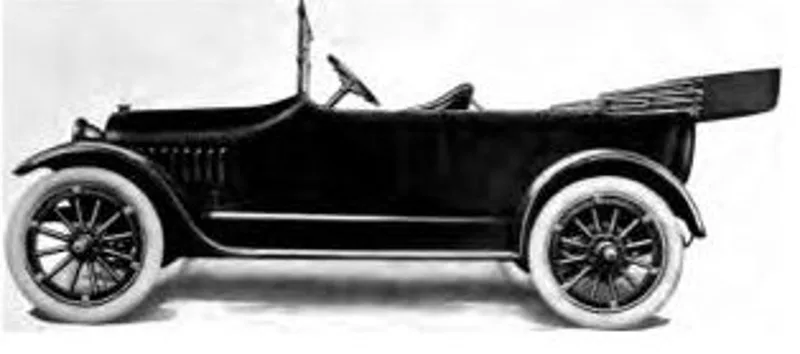
The company went bankrupt at the end of 1913. A new management tried to save it as the Inter-State Motor Company, realigning it towards the lower middle class with the Inter-State Model T, built from 1915 to 1918. It closed for good at the end of 1918, after switching to war production in May 1918.
The six-cylinder Model 45 had been designed to fit between the Forty and the Fifty, so that it could replace both. It was offered only as a fore-door touring car.
Production figures by model year come from the Standard Catalogue of American Cars 1805-1942, compiled by Beverly Rae Kimes and Henry Austin Clark, jr. They cover the Forty (without 1910), the Fifty (1911 and 1912) and the Thirty (1912 only), but a split by model or body is not possible. The Fifty probably had the smallest share of that total.