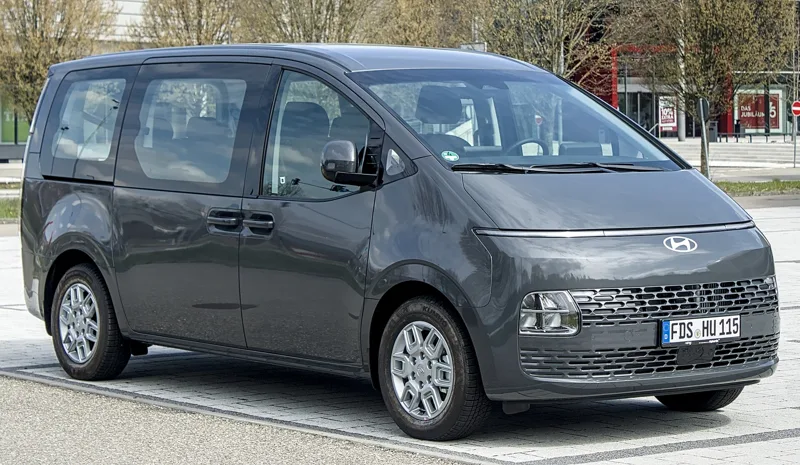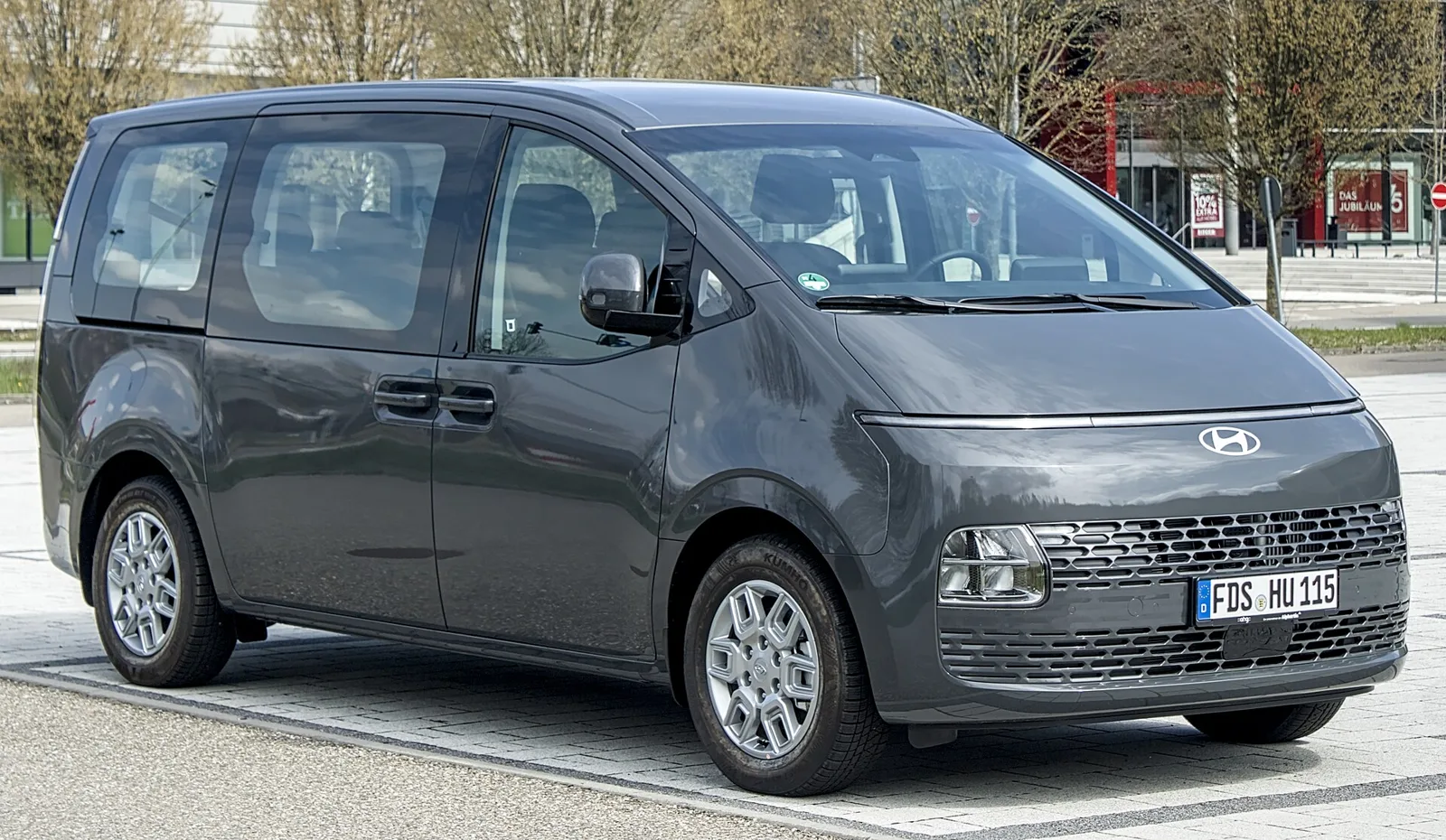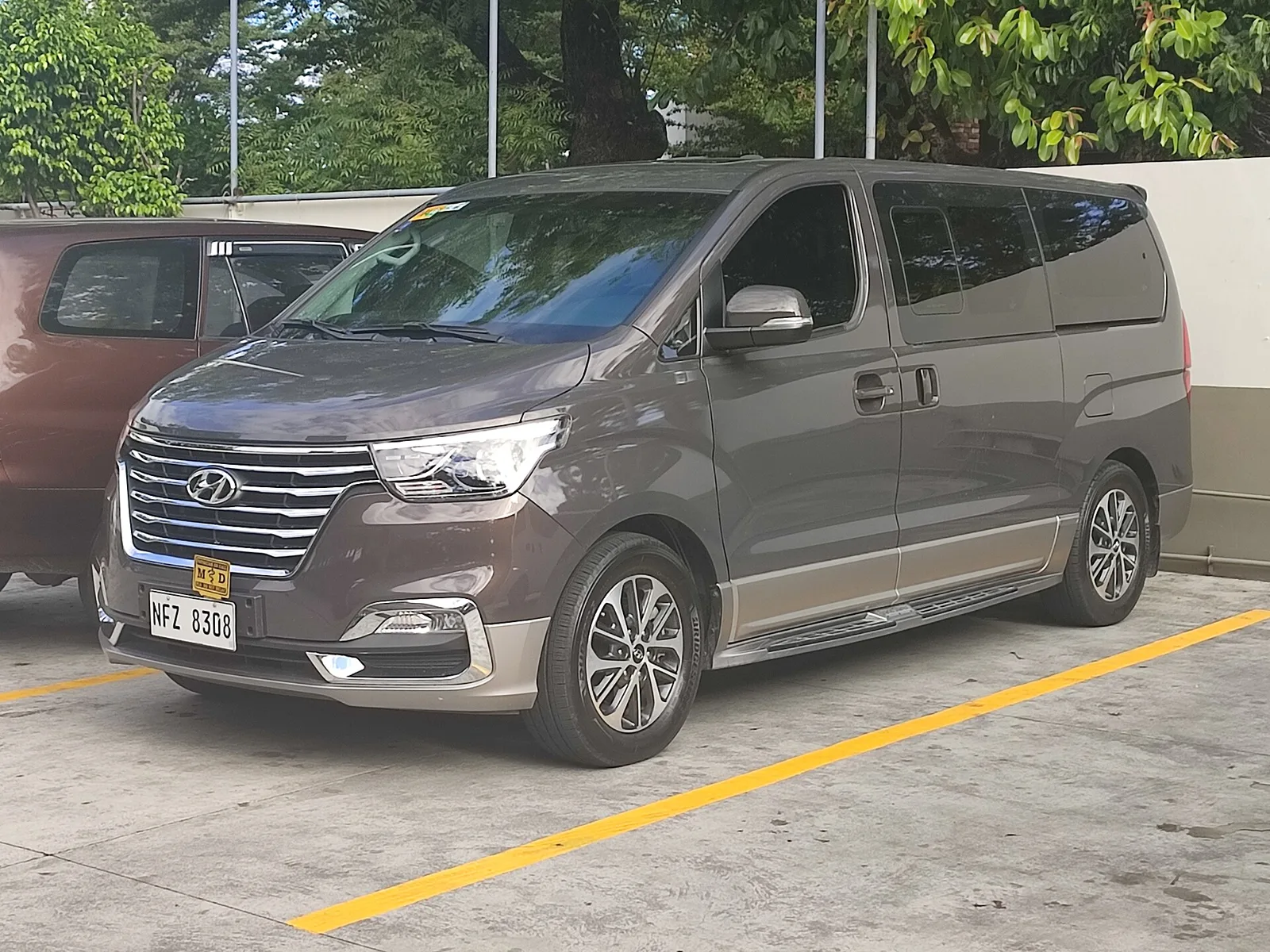
Built from 1996 to 2023, the Starex was a van, minibus and luxury people mover that wore a different name in almost every market it entered.
Hyundai's Starex ran from 1996 to 2023 in forms that included vans, pickups, minibuses and luxury MPVs. The H-1 name covered several markets, and the South Korean Grand Starex gave way to the Staria in 2021.
The Hyundai Starex is a family of light commercial vehicles that Hyundai built from 1996 to 2023. It was sold as a van, a pickup, a minibus and a luxury people mover, and it carried a different name in almost every market where it was sold. The first generation was known in Europe as the H-1, while the second generation split into cargo and passenger versions with their own names in Australia and the United Kingdom.
What names did the Starex carry in different markets?
In Europe the first generation was called the Hyundai H-1, and in the Netherlands it was sold as the H200 and later the H300. The second-generation cargo van was marketed as the iLoad in Australia and the United Kingdom, while its passenger sibling was the iMax in Australia and the i800 in the United Kingdom.
In Europe the cargo version became the H-1 Cargo and the passenger version the H-1 Travel. Malaysia sold a luxurious 11-seat MPV under the Grand Starex name, and Thailand and Indonesia used the H-1 badge for their versions of the second generation.
A van built in many forms, renamed in almost every market and best known in some places as an ambulance or a hearse.
Where did the first-generation Starex come from?
The Hyundai Grace, also called the H100, preceded the Starex in most countries. The first generation came in a similarly broad range of forms, from minivan and minibus to panel van, pickup, taxi and ambulance.
The very first 1996 models used a derived 2.5-litre 4D56 SOHC eight-valve naturally aspirated diesel, producing 55 kW (75 PS) and 142 Nm at 2,500 rpm. The model was initially restricted to the domestic South Korean market before exports reached a number of Southeast Asian countries and some parts of Europe.
How did the first generation develop?
For 1998 a gasoline engine was offered, a Mitsubishi-derived 4G64 producing 108 kW (147 PS) at 5,250 rpm. The diesel was updated to a more powerful turbocharged 4D56 without an intercooler, rated at 62 kW (84 PS) and 201 Nm at 2,000 rpm.
Two trims, SVX and Club, were offered alongside body styles including the Commercial Panel Van, the Pick-Up Truck and the Libero. The Club brought a dual sunroof, cream upholstery and a six-disc CD changer, while both trims received power windows and an Aisin Seiki four-speed automatic with overdrive.
In the Philippines the Starex proved a success in the grey market, where it undercut the Mitsubishi Space Gear despite offering more equipment. The gasoline version was dropped there the following year because of unusually high fuel consumption, although it remained available in other markets.
For 1999 the diesel gained a more powerful 2.5-litre SOHC eight-valve turbo unit with an intercooler, producing 63 kW (86 PS) at 4,000 rpm and 170 Nm (130 lb ft) of torque. A hood scoop fed the intercooler, and the Club gained blacked-out B-pillars.
What changed in the 2000 to 2004 models?
The 2000 to 2002 version, known in its home market as the millennium model, kept the earlier diesel specification. Its domestic V6 option was a Mitsubishi-derived 2,972 cc 6G72 with 145 kW (197 PS) at 5,000 rpm and 278 Nm of torque. Its front styling was refreshed with multi-reflector headlamps and jewel-like tail-light treatment.
From 2003 to 2004 a new 2.5-litre DOHC 16-valve common-rail direct-injection turbo-diesel became available. It produced 104 kW (141 PS) and 360 Nm (270 lb ft), and the cabin kept the previous model's styling and gained digital climate control on the higher Club model.
What did the 2005 facelift bring?
The 2005 to 2007 models featured a new front with squared bug-eye headlights and an extended bumper to fit an oversized square radiator grille with three vertical chrome bars. Squared fog lamps and differently finished tail-lights completed the look.
The engine line-up was a Sirius 2.4-litre DOHC 16-valve MPi petrol rated at 107 kW (143 hp) and 192 Nm (142 lb ft), along with the 2.5-litre common-rail diesel and the 2.5-litre intercooled turbo diesel. The interior gained upgraded upholstery, back-seat cup holders and a DVD player, and the Gold models added leather, an overhead console and an immobiliser.
What was the Libero pickup?
Between 2000 and 2007 Hyundai built a pickup version of the A1-series Starex. Known as the Libero in South Korea, it was meant to replace the Porter in the Hyundai range. It used a 2.5-litre diesel in naturally aspirated and turbocharged forms, or a 3.0-litre Sigma V6 petrol engine.
The Libero was offered as a pickup and as a flatbed. Across most of Europe its name was H-1 SR, and in the Netherlands it was the H200 or H300 Pickup.
How did the JAC Refine relate to the Starex?
Anhui Jianghuai Automobile built the Starex in China as the JAC Refine from March 2002 to 2015, under a Hyundai licence. The Refine was very successful, with a market share of about 20 percent. It won the Year's MPV award from 2003 to 2008 and The Best Official Car title from 2004 to 2008.
Engine choices ran from a 2.0-litre turbo and a 2.4-litre petrol unit up to a 2.8-litre turbodiesel, paired with five-speed manual or four-speed automatic gearboxes. Later 1.8-litre petrol and turbo diesel variants, along with a 1.9-litre turbo diesel, arrived in 2012, 2013 and 2015. The Refine also appeared in North Korea as the Pyeonghwa Samcheonri 0713.
How did the second-generation Starex develop?
The second generation, code TQ, arrived in 2007. In 2012 Hyundai revised the diesel engines for the UK and Australian models. The main change was a six-speed manual that replaced the earlier five-speed, which cut official fuel consumption by 0.5 litres per 100 km.
Manual power fell from 125 to 100 kW (170 to 136 PS) because a conventional turbocharger replaced the variable geometry unit. The automatic kept its maximum power, while its torque rose to 441 Nm (325 lb ft).
In the UK the passenger model was sold as the i800 in SE and SE Nav trims, with the 2.5 L CRDi diesel and a choice of manual or automatic. The panel van was the iLoad.
How did the Starex sell in Malaysia?
The second-generation Starex launched in Malaysia in May 2008 with 11 seats. In August 2009 it was updated and renamed the Grand Starex Royale, with a new grille, body-coloured wing mirrors, a rear windscreen wiper and a roof-mounted entertainment system.
In July 2011 the Malaysian model gained LED daytime running lights, side skirting and a rear spoiler with a built-in stop light. The second row gained swivel seats, and electronic stability programme and GPS navigation became standard. The 2014 model had Base and Deluxe variants, and the 2018 Kuala Lumpur show brought a new front end and a single Executive variant.
How did the Starex sell in the Philippines?
In the Philippines the Starex became the Hyundai Grand Starex, launched in December 2007 in three grades. The GL came in ten and twelve-seat versions with manual transmissions, the GLS offered ten seats with a five-speed automatic, and the Gold was a higher-end version of the GLS. The Grand Starex Platinum became the top model in 2014.
The Philippine vans served as delivery vans, public transport, ambulances and even funeral hearses, which became the model's best-known role.
What were the VIP and Premium versions?
The Grand Starex VIP was based on the H-1 and offered seven seats, with second-row Double VIP seats that could electrically adjust the seat angle and leg support. It also had a 19-inch TV and DVD player, and it reached the market in late 2010.
In late 2012 the Grand Starex Premium arrived with sliding Double Super VIP seats in the second row and a DVD player with a smaller 10.2-inch screen. Both versions were aimed at buyers who wanted a chauffeur-style rear compartment.
How did the Starex fare in Indonesia and Thailand?
Indonesia introduced the second-generation Starex as the H-1 in 2008, with GLS, Elegance and XG options. Only petrol engines were available at first, and diesels arrived in February 2010, when Hyundai decided to build the H-1 in Indonesia for the ASEAN market.
In Thailand the H-1 came in Touring, Executive and Deluxe forms, all with 12 seats. Until a minor change in 2011, the Executive and Deluxe carried the Maestro badge. A facelifted H-1 went on sale in August 2018, and a limited H-1 Elite NS of 300 units followed in November 2021.
The H-1 Elite Final Edition was released on 26 September 2023, a limited run before the model was discontinued. The Euro 4 diesel did not meet Thai requirements, and Hyundai began using a Euro 5 diesel for other models from January 2024.
How did the Starex end in South Korea?
In 2018 the Grand Starex received its second facelift, with new Urban and Limousine models, a refreshed interior and revised special versions for ambulances, school service and camping. Only the exterior was updated for right-hand-drive markets.
The Grand Starex was discontinued in South Korea on 18 March 2021, and the Staria took over as its successor. The Starex name had by then covered vans, pickups, minibuses and luxury people movers across Asia and Europe.
What are the Hyundai Starex specifications?
| Specification | Detail |
|---|---|
| Production | 1996 to 2023 |
| First-generation diesel (1996) | 2.5 L 4D56 naturally aspirated, 55 kW (75 PS), 142 Nm at 2,500 rpm |
| 1998 gasoline | 4G64, 108 kW (147 PS) at 5,250 rpm |
| 1999 turbo diesel | 2.5 L SOHC intercooled, 63 kW (86 PS) at 4,000 rpm, 170 Nm |
| 2000 to 2002 V6 | 2,972 cc 6G72, 145 kW (197 PS) at 5,000 rpm, 278 Nm |
| 2003 diesel | 2.5 L DOHC common-rail, 104 kW (141 PS), 360 Nm |
| 2005 gasoline | Sirius 2.4 L DOHC 16-valve MPi, 107 kW (143 hp), 192 Nm |
| 2012 manual diesel | Six-speed manual, 100 kW (136 PS) |
| 2012 automatic diesel | Torque 441 Nm (325 lb ft) |
| Libero engines | 2.5 L diesel or 3.0 L Sigma V6 |
| Discontinued (South Korea) | 18 March 2021 |