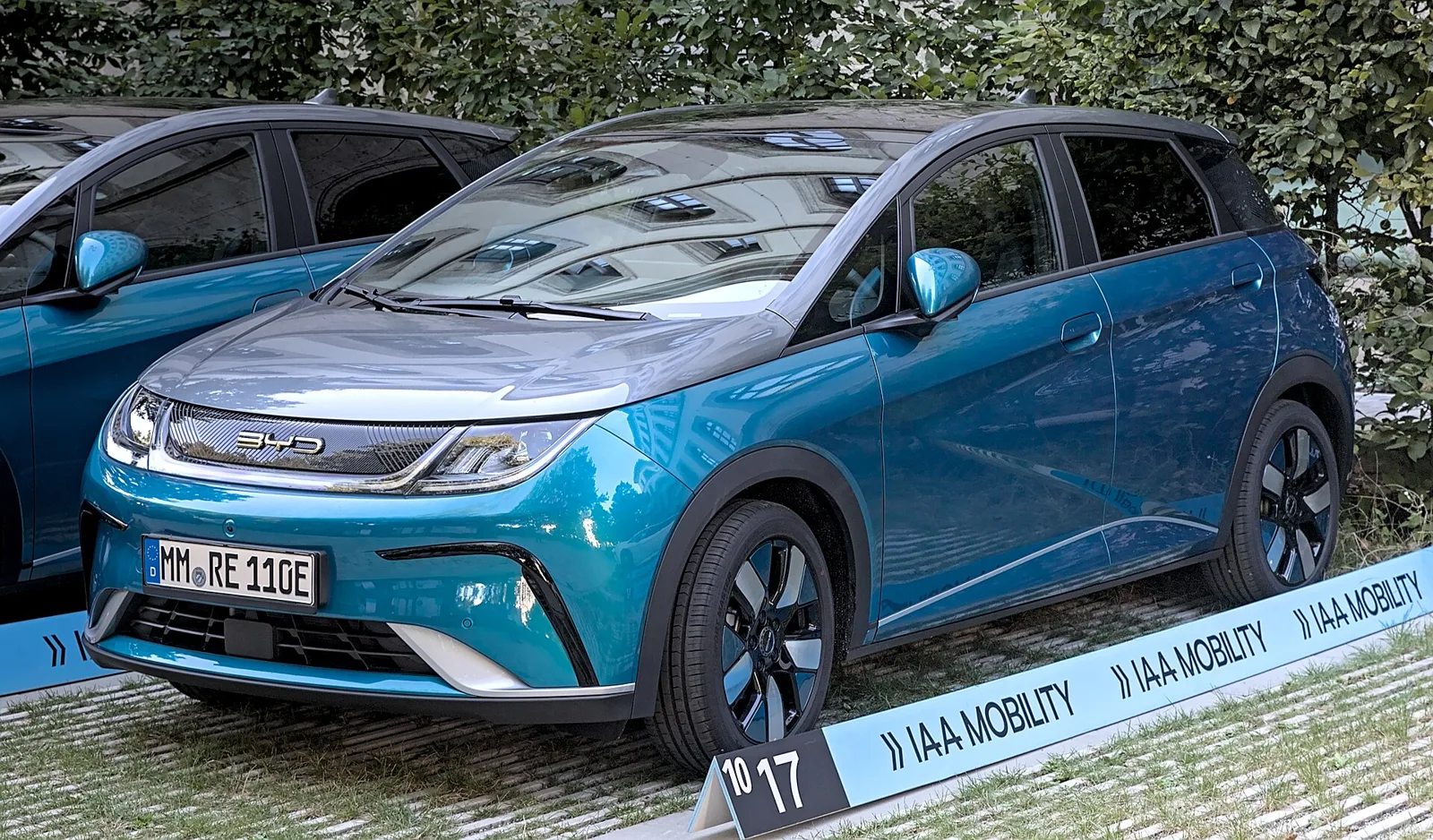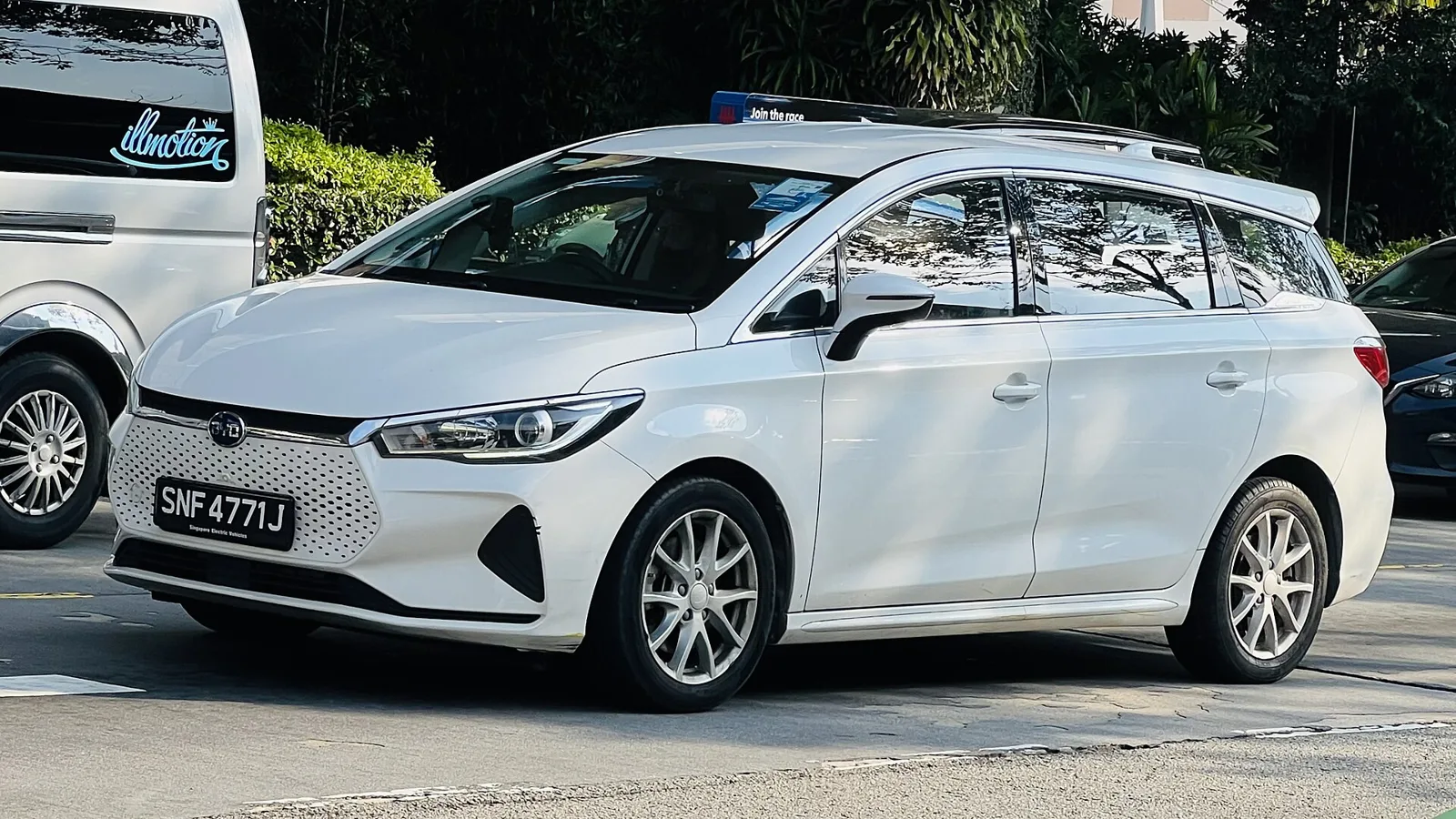
From Shenzhen taxi trials in 2010 to fleets in Europe, Asia and the Americas, the e6 showed what an electric taxi could do and where it stalled.
The BYD e6 is an electric car from BYD Auto, built from 2009 and widely used as a taxi. Its battery was claimed to deliver up to 400 km, and the car became China's best-selling pure electric car in 2016 with cumulative sales of 34,862 units.
The BYD e6 is a battery electric vehicle that BYD Auto began building in 2009, and it entered service as a taxi in Shenzhen. Its lithium iron phosphate battery and a claimed range of up to 400 km made it a strong fleet car, and it became the best-selling pure electric car in China in 2016. A second generation followed in 2021 with a 70 kW motor and Blade batteries.
Where did the e6 come from?
BYD began field testing the first-generation e6 in China in May 2010, with 40 demonstration units running as taxis in Shenzhen. Public sales began in Shenzhen in October 2011, more than two years behind the release date BYD had planned for 2009. The car was built with an integral body and frame, and its battery sat in a sealed compartment.
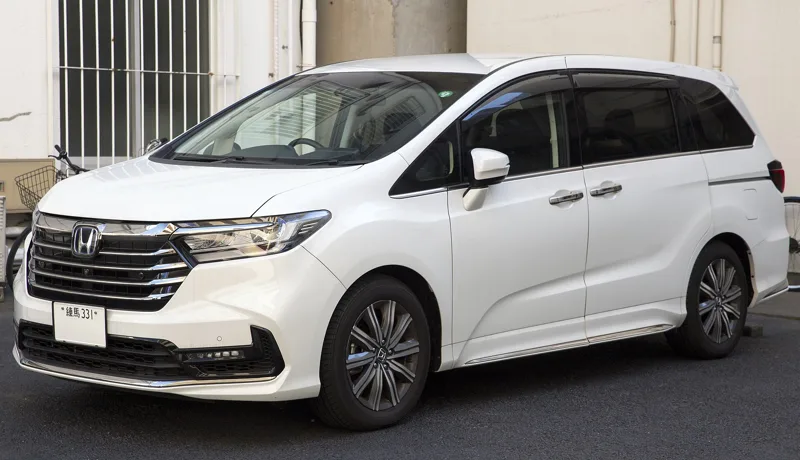
The exterior design drew on the third generation Honda Odyssey, with a redesigned front fascia and a shorter rear end. BYD sold the five-passenger e6 as a family-oriented crossover, although the taxi fleets were where most cars ended up.
An electric taxi that sold well in its home market and stalled everywhere the charging network did not follow.
How was the battery pack packaged?
The battery pack is 175 cm (69 in) in length, 95 cm (37 in) across and 30 cm (12 in) deep, and it sits in a compartment fully integrated into the body. Most of the pack, or at least part of it, lies under the belly pan of the vehicle.
How far could the e6 go on a charge?
BYD first claimed a range of 300 km (186 mi) for the 2009 e6, and its demonstration taxis were rated the same. In August 2011 the company said real range under demanding conditions, such as air conditioning and hill driving, was 230 to 240 kilometres (140 to 150 mi).
The company's figures were never verified by independent testing. A later claim of 400 km (249 mi) relied on an 82-kWh battery pack, which is larger than the 81-kWh pack of the first long-range Tesla Model S. Singaporean reviewers estimated 370 km (230 mi) in practice.
What did the battery and powertrain do?
The e6 uses BYD's Fe lithium iron phosphate battery, one of the company's core technologies, and every chemical in it can be recycled. The guaranteed cycle life is 4000 charge cycles. The battery reaches 80 percent in 15 minutes at a fast charger, and a full charge to 100 percent takes 40 minutes.
Four power options were offered, from 101 hp (75 kW) to 215+54 hp (160+40 kW). Two-motor versions gave all-wheel drive. Three-phase AC fast charging at up to 40 kW was carried over from the first generation, which mattered to taxi operators that had already built that charging infrastructure.
What were the original specification claims?
BYD's 2009 claims included power consumption of less than 18 kWh per 100 km (62 mi), 0-60 mph in under 8 seconds and a top speed of 100 mph (160 km/h). The 2009 normal charge used a 220V/10A household socket, and quick charging used three-phase AC.
By the 2010 North American International Auto Show, BYD had revised its range claim to 205 mi (330 km) per charge, with an estimated 0-60 mph time under 14 seconds and a maximum of 87 mph (140 km/h). The US version was then described with a 60-kWh pack and a 160 kW motor capable of reaching 0-60 mph in under 8 seconds.
Key specifications
| Specification | Detail |
|---|---|
| Field testing | May 2010, 40 taxis in Shenzhen |
| Public sales | October 2011, Shenzhen |
| Range claim (first generation) | 300 km (186 mi) |
| Range claim (82-kWh pack) | 400 km (249 mi) |
| Battery | Fe lithium iron phosphate; 4000 charge cycles |
| Fast charge | 80 percent in 15 minutes; 100 percent in 40 minutes |
| Power options | 101 hp (75 kW) to 215+54 hp (160+40 kW) |
| Second generation motor | 70 kW (95 PS; 94 hp) |
| AC fast charging | Three-phase, up to 40 kW |
| Consumption (2009 claim) | Under 18 kWh per 100 km (62 mi) |
| Shenzhen demonstration consumption | 21.5 kWh per 100 km |
| Top speed (2009 claim) | 100 mph (160 km/h) |
How did the Shenzhen taxi trial go?
The trial began in May 2010 with 40 e6 electric cars run as taxis by BYD's subsidiary, Pengcheng Electric Taxi. BYD released a positive announcement about the programme in September 2010, during a visit by the investor Warren Buffett, but it gave no range or speed figures.
In April 2011 the Shenzhen taxi fleet had covered around 1,730,000 miles (2,780,000 km). BYD said the cars were quick charged in 20 to 30 minutes without visible loss of range. A further batch of e6 cars was also going to the International University in Shenzhen before August 2011. By June 2011 the fleet had surpassed 1,864,114 miles (3,000,001 km).
How did sales develop in China?
Sales to the public in Shenzhen began in October 2011 at 369,800 RMB before subsidies, or 249,800 RMB after them. Annual sales rose from 33 units in 2010 to 20,605 in 2016, and cumulative sales reached 34,862 by December 2016.
In early 2013 BYD won an order for 500 e6 police vehicles for the Shenzhen Municipal Public Security Bureau, which added to the 300 e6 taxis already running in the city. In 2016 the e6 became the top-selling all-electric plug-in passenger car in China. Asia remained the car's main market throughout, and China accounted for the bulk of its sales even as export deals were announced elsewhere.
Why did the US launch fail?
BYD planned to sell the e6 to US consumers for US$35,000 before incentives. In 2009 it had indicated a 2010 arrival at just over US$40,000, but each date slipped. By October 2011 BYD said retail sales would be delayed by at least 18 months because of a lack of charging infrastructure.
In May 2013 BYD said the e6 would be offered only to fleet customers at US$52,000, and the company turned its attention to electric buses in North America. By February 2016 fewer than 100 vehicles had been imported for fleets, with about 80 units by that point and about 50 taken to New York for hire companies.
Uber drivers in Chicago were a small exception. By March 2015 about 25 e6 cars were in use there, and the most popular offer let a driver lease one for US$200 a week and return it to the dealer lot after each shift.
Where else did the e6 operate?
Brussels selected BYD to provide electric taxis, and 35 e6 cars started service there in 2014. In Quebec, the first 25 vehicles arrived in 2019 and were offered to taxi drivers on a lease-purchase basis. Costa Rica agreed in January 2013 to deploy 200 e6 green taxis.
In Colombia, the BIOTAXIS project put 45 e6 taxis into service from September 2013, operated with the local distributor Praco Didacol, after Bogota launched the first South American all-electric taxi fleet earlier that year.
Hong Kong's trial of 45 units began in May 2012, but the government halted the two-year project after the operators registered their cars as private vehicles. Uruguay had at least 25 e6 taxis in Montevideo by January 2018, and Singapore's ComfortDelGro added 100 e6 in 2022.
A 50-unit London deal with Green Tomato Cars was cancelled in February 2014, but a new firm, Thriev, put 20 units into minicab service. Indonesia's Bluebird Group ran 25 units from 2019 to 2024, and Thailand received 50 cars in 2018 for airport taxi work.
Taiwan offered a different model. BYD's joint venture there said a local taxi association had ordered more than 1,500 e6 cars, with deliveries starting in the first quarter of 2014. A local automaker was commissioned to assemble the first cars, which sped up regulatory inspections. In Germany, the energy storage company Fenecon acted as a distributor and made the car available to European motoring journalists.
Was the e6 safe in a crash?
On 26 May 2012 a drunk driver crashed a high-speed Nissan GT-R into an e6 taxi at 180 km/h (112 mph) in Shenzhen. The taxi hit a tree and caught fire, and all three occupants died. The Chinese investigation concluded that the collisions, rather than the fire, caused the deaths.
Investigators noted that the battery pack did not explode, and 75 percent of the single cells did not catch fire. They found no flaws in the car's safety design, although electric arcs in the high-voltage distribution box had ignited materials inside the cabin.
What did the costs and policy programme claim?
BYD calculated that an e6 taxi would save about $74,000 in energy costs over five years, compared with running a petrol car. In November 2012 the company launched a zero-vehicle-purchase-price programme, backed by China Development Bank with over 30 billion RMB, which claimed a taxi saving of 326,400 RMB over five years.
BYD also said an e6 taxi saves 14,120 litres of fuel a year and 32 tonnes of CO2. The programme was limited to the Chinese market, and it targeted public transport operators rather than private buyers.
How did the second generation change?
The second-generation e6 is heavily based on the BYD Song Max, but it has a redesigned front with the Dragon Face design language, and it is longer and taller than the Song Max. It uses Blade batteries and a 70 kW (95 PS; 94 hp) electric motor, and it has generous boot space for a five-seat car.
Two trims were offered. The GL supports DC charging through CCS2 but no AC charging, while the GLX adds 1-phase charging at 6.6 kW. The car was sold in right-hand drive markets including Singapore, Australia, Hong Kong, Thailand, Nepal and India, with only 15 vehicles in Australia.