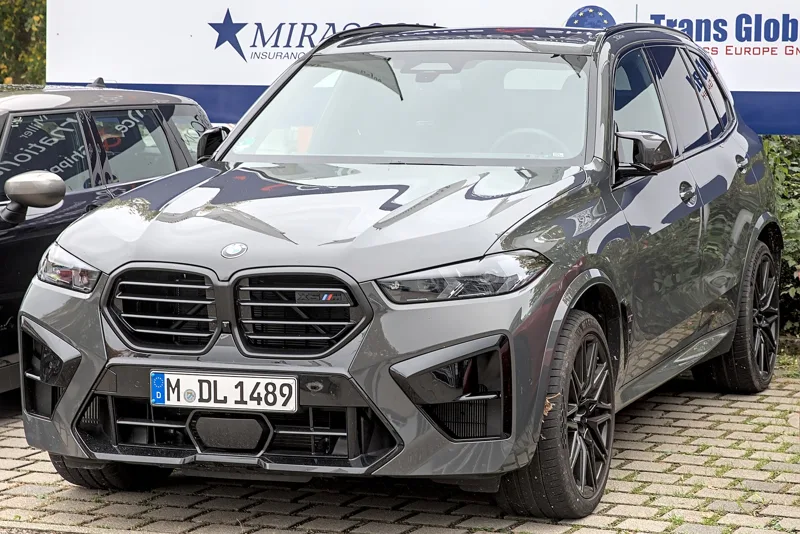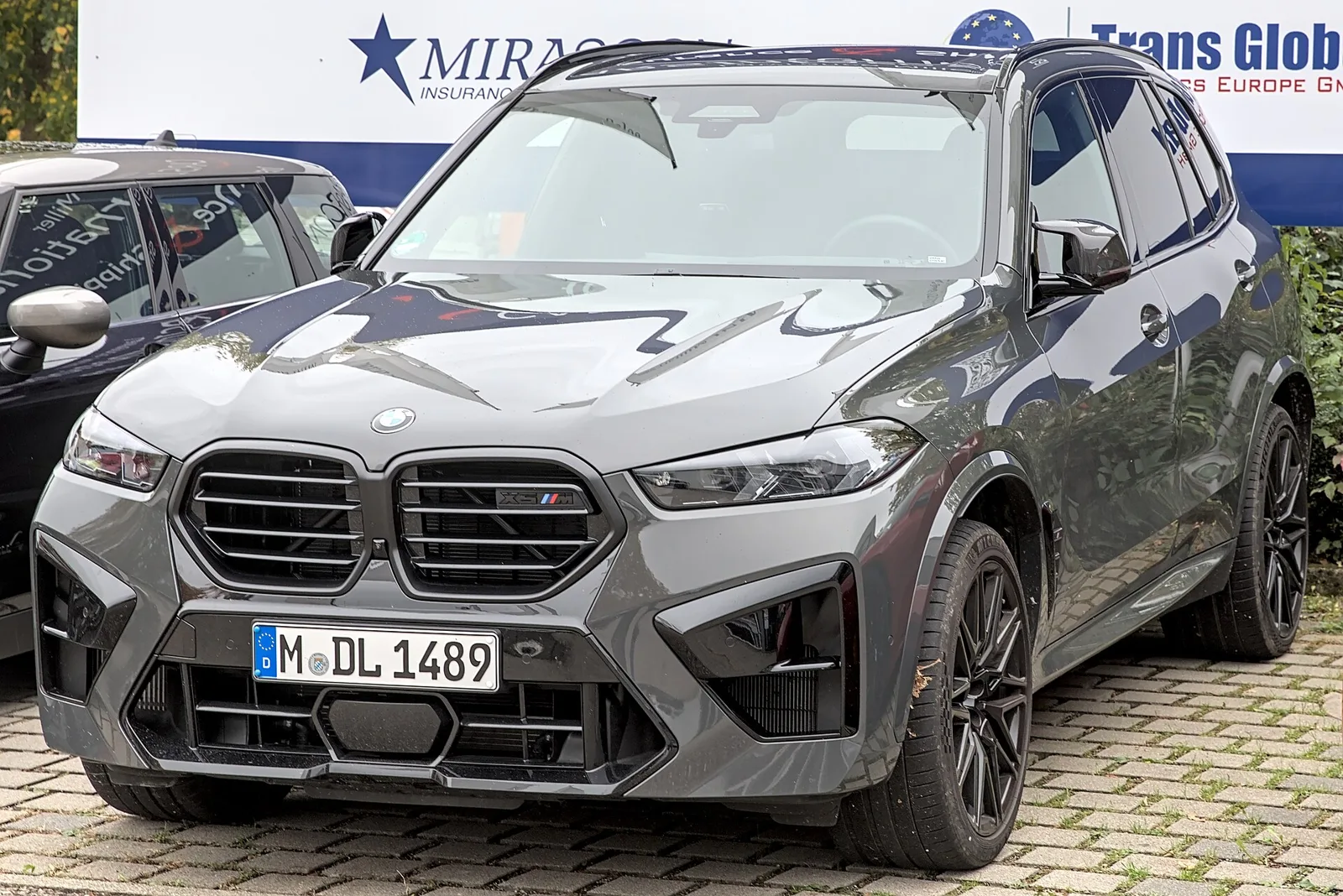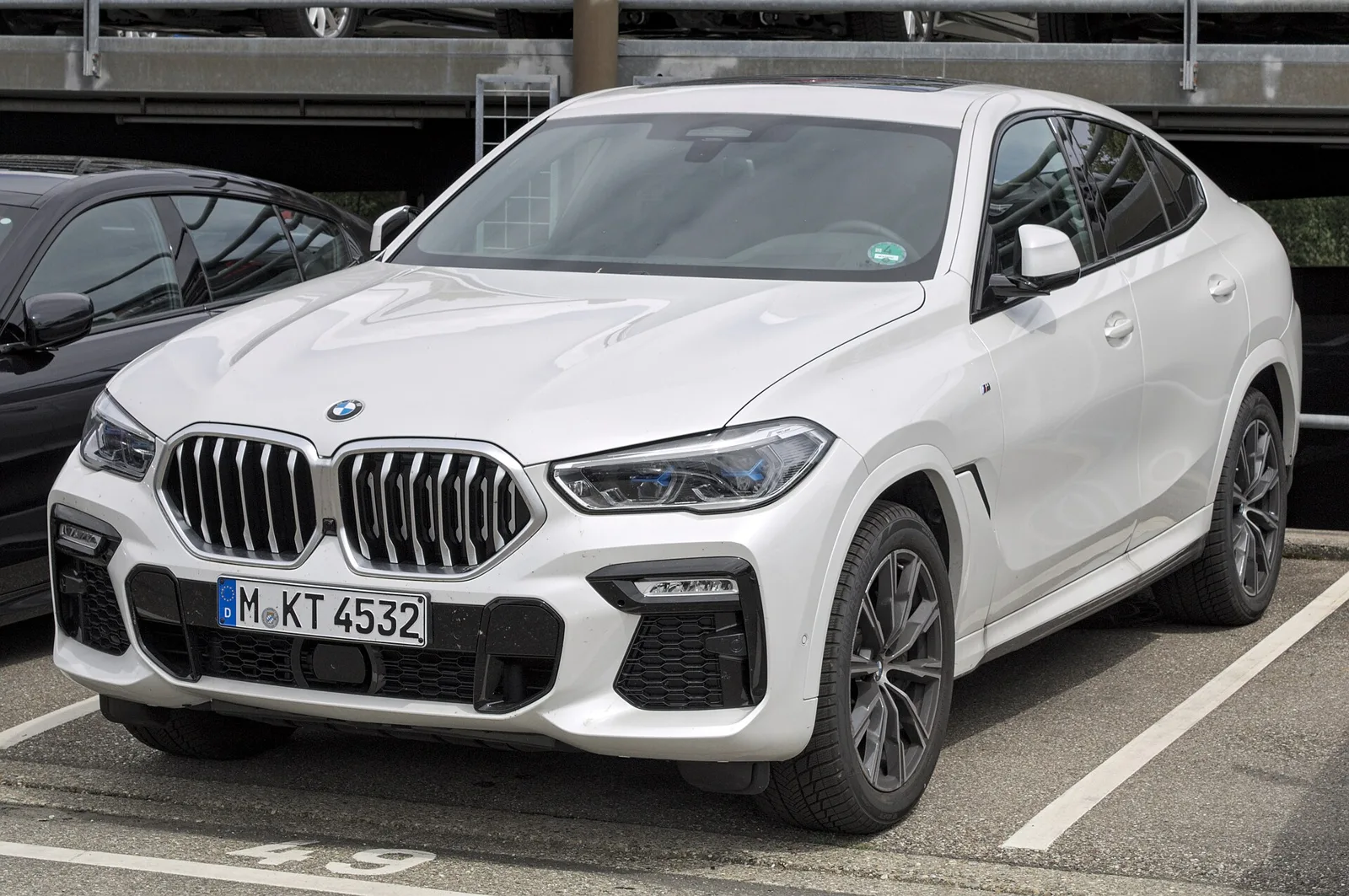
BMW says the X6 started the sports activity coupe, a sloping-roof SUV that ran from the 2008 original to the 2019 G06 and its 2024 update.
BMW's sloping-roof X6 is credited with creating the sports activity coupe. Launched as the E71 in 2008, it passed through the F16 in 2014 and the G06 in 2019, with M and hybrid versions along the way, and each generation kept the sloping roofline.
BMW's X6, a mid-size luxury crossover, is credited by the maker with creating the sports activity coupe, a body style that blends SUV traits with a sloping coupe roofline. It shares its platform with the X5 and was BMW's flagship SUV until the X7 arrived, and over three generations it grew into one of the brand's most distinctive models.
When did the BMW X6 arrive?
The first generation, the E71, went on sale in April 2008 as a 2008 model after its concept appeared at the 2007 Frankfurt show. The second generation, the F16, debuted at the 2014 Paris Motor Show, and the third, the G06, was revealed in July 2019.
Production models were shown in Detroit in 2008 and at the Montreal show. Compared with the X5 it was a little longer and wider, but much lower, and it seated four at first, with a fifth seat optional from 2011.
A sloping-roof SUV that BMW says started a body style, now in its third generation with a 2024 update.
How was the first-generation X6 developed?
Development of the E71 began in 2003 under Peter Tuennermann, after work on the E70 X5 had started in 2001. Pierre Leclercq, who had also styled the X5, saw his design frozen in 2005, and production began on 3 December 2007.
Test mules ran from the summer of 2005, and prototypes were tested from late 2006. The car was built in Greer, South Carolina, at the same plant as the X5.
The X6 was BMW's first car with Dynamic Performance Control, or DPC, which works with xDrive all-wheel drive to regulate traction and correct over- and understeer. Both systems were standard.
The DPC differential has clutch packs on both output sides, actuated by an electric motor. A clutch pack drives a planetary gearset that overdrives one wheel. A conventional system would brake the faster wheel and cut engine power, which wears brakes and slows progress, while DPC speeds up the wheel with more grip.
In a corner the outer wheel is overdriven for extra acceleration, and in oversteer the inner wheel is overdriven to restore balance. The side-to-side split of torque at the rear axle is called torque vectoring.
Initially only four seats were offered, with five seats available from the 2012 model year.
What was the X6 M?
The X6 M was announced in April 2009 with a 4.4-litre twin-turbo V8 tuned to 408 kW (547 hp), the BMW S63. It was the first BMW M vehicle with xDrive all-wheel drive and an automatic gearbox, and it went on sale in September 2009.
The S63 makes 408 kW (547 hp), peaking at 6,000 rpm, with 499 lb-ft (677 N-m) available from 1,500 to 5,650 rpm. The twin-scroll turbo layout used cylinder-bank manifolds to feed it.
The chassis came with Adaptive Drive set 10 mm (0.4 in) lower, big 20-inch wheels shod in 275/40R20 at the front and 315/35R20 run-flats at the rear, with 15.6-inch front and 15.2-inch rear discs. Hill descent control and dynamic stability control were fitted, along with a 6-speed M Sport automatic with aluminium paddles.
The quoted sprint times were 4.5 seconds to 60 mph and 4.7 seconds to 62 mph. Dealers could add M Performance Parts, including darker kidney grilles, carbon-fibre spoiler work, metal pedals and an M-badged sport wheel.
What was the ActiveHybrid X6?
The ActiveHybrid X6 was BMW's first full hybrid, with its concept shown at the 2007 Frankfurt show. The production car was unveiled at the 2009 Frankfurt show, reached US showrooms in December 2009 and was listed at US$89,765.
Its drive system paired a 300 kW (402 hp) V8 using TwinPower Turbo engineering with two electric motors rated 67 kW (90 hp) and 63 kW (84 hp). Maximum system output was 357 kW (479 hp), with peak torque of 780 N-m (575 lb-ft).
The hybrid used a Two-Mode active transmission. Mode 1 gives high torque from rest and at low speed, while mode 2 suits higher speeds, so the system always draws on the most efficient power source.
Electric-only running was possible up to 37 mph (60 km/h), and 485 hp (362 kW) was available for short bursts of acceleration. Stop-start and other efficiency measures helped too, but the heavy body and petrol engine limited the savings, so the diesel models used less fuel. BMW called it the world's most powerful hybrid vehicle, and it was not sold in the UK.
Which engines did the X6 use?
The base X6 xDrive35i used a 225 kW version of the 3.0-litre twin-turbo N54 inline-six, while the xDrive50i used the N63 V8 at 300 kW (402 hp). At launch, the diesel models were the xDrive30d and xDrive35d.
Diesel output was 173 kW (232 hp) for the xDrive30d and 210 kW (282 hp) for the xDrive35d. The 35d unit opened diesel sales across the country in late 2008.
A 40d replaced the 35d by 2010, and the M50d arrived in 2012, still with a 3.0-litre engine despite its name.
What changed in the second generation?
The F16 arrived at the 2014 Paris show with a new eight-speed automatic and a slightly larger luggage bay. Most markets had sales by the end of 2014.
The xDrive50i gained 37 kW (50 hp) and 41 N-m (30 lb-ft) on its predecessor. Power reached 332 kW (445 hp) at 5500 rpm, and torque 651 N-m (480 lb-ft) at 2000 rpm.
The F86 X6 M was unveiled at Qatar's Losail circuit and counted among the quickest cars of its kind. M Performance Parts fitted 25-50 models with M Sport trim, including a sport steering wheel, carbon trim, aluminium pedals, M rims and sport brakes.
Power boost kits took the 30d to 207 kW (277 hp) with 431 lb-ft (584 N-m), and the 35i to 243 kW (326 hp) with 332 lb-ft (450 N-m). Standard-trim F16 models got softer, more comfortable suspension and tyres, with a more executive look and optional side steps.
What did the third-generation G06 bring?
The third-generation G06 was unveiled on 3 July 2019 with more aggressive bodywork, an angular grille that can be illuminated as an option, and an M50i replacing the xDrive50i. Sales began in November 2019.
The headlamps share the X5's design, while bumpers and tail lamps are exclusive to the X6. A panoramic roof comes as standard, and it is 83 percent bigger than the earlier car's.
The G06 is built on the CLAR platform, with double-wishbone front suspension and five-link rear suspension. Compared with the car it replaced, it is roughly an inch longer (26 mm), 0.6 inch wider (15 mm), and 0.2 inch lower (6 mm).
The boot holds 580 litres (20 cu ft), or 1,530 litres (54 cu ft) with the seats folded in the 40:20:40 ratio. All G06 models meet the Euro 6d-Temp emissions standard.
The X6 M (F96) and X6 M Competition were revealed on 1 October 2019. At the 2019 Frankfurt show BMW displayed a G06 in Vantablack, although it had no plans to make that colour for production cars.
What did the 2024 update change?
The 2024 life-cycle update revised the front grille and bumper, added new headlights and taillights, and brought a BMW Curved Display with a toggle switch for the automatic transmission. The car also received Highway Assistant, which the G70 7 Series and the facelifted G05 X5 already had.
The earlier 2023 update, which arrived in March 2023, made M Sport standard, revised the grille, headlights and taillights, and introduced BMW Operating System 8 with the Curved Display. New engines arrived in the xDrive30d, xDrive40i and M60i, and the X6 M non-Competition was dropped.
In June 2026 BMW brought the X6 back to India as a single top-spec M60i xDrive, with a V8 making 530 hp, priced at 1.78 crore rupees ex-showroom.
What awards and equipment did the G06 get?
What Car? magazine crowned the xDrive30d M Sport its Coupe SUV of the Year in January 2021, and it scored the X6 four stars.
The launch range came in xLine or M Sport trim. xLine cars had 19-inch wheels, chrome accents, and protection under the body. M Sport cars added gloss black trim, M Sport suspension and brakes. The M50i and M50d added a sporty exhaust and a computer-controlled limited-slip differential.
Every car had LED headlights, a light-up floor carpet, and an iDrive 7.0 system with a pair of 12.3-inch screens. Options included laser headlights, an illuminated kidney grille, cooled cupholders, and air suspension with an 80 mm (3.1 in) height range, plus snow, sand, gravel and rock modes.
The G06 could also take Reverse Assistant, which stores the last 50 metres travelled and can reverse back along that path. In 2020 a mild hybrid option was added to the xDrive40d.
How did production continue after 2022?
In March 2025 Avtotor resumed assembling the X5, X6 and X7 from remaining kits, after BMW cut ties with the company in 2022, the year of Russia's invasion of Ukraine. BMW said it was not involved in that production, which ran irregularly.
Avtotor sold 145 vehicles in 2025. They were registered as 2025 and 2026 models but kept the pre-facelift 2022 exterior, and locally sourced parts such as wiring harnesses and painted body panels increasingly replaced imported components.
What are the BMW X6 specifications?
| Specification | Detail |
|---|---|
| Generations | E71 (April 2008); F16 (2014); G06 (July 2019) |
| Base engine (2008) | xDrive35i: 225 kW version of the 3.0-litre N54 twin-turbo inline-six |
| Top engine (2008) | xDrive50i: N63 V8, 300 kW (402 hp) |
| X6 M (2009) | 4.4-litre twin-turbo V8, 408 kW (547 hp) |
| ActiveHybrid system (2009) | 357 kW (479 hp) output, 780 N-m (575 lb-ft) torque |
| Second-generation xDrive50i | 332 kW (445 hp) at 5500 rpm |
| G06 size against predecessor | 26 mm (1.0 in) longer, 15 mm (0.6 in) wider, 6 mm (0.2 in) lower |
| G06 boot | 580 litres (20 cu ft); 1,530 litres (54 cu ft) with seats folded |
| Five-seat option | From the 2012 model year |
| 2024 update | Revised grille, headlights and taillights; BMW Curved Display |