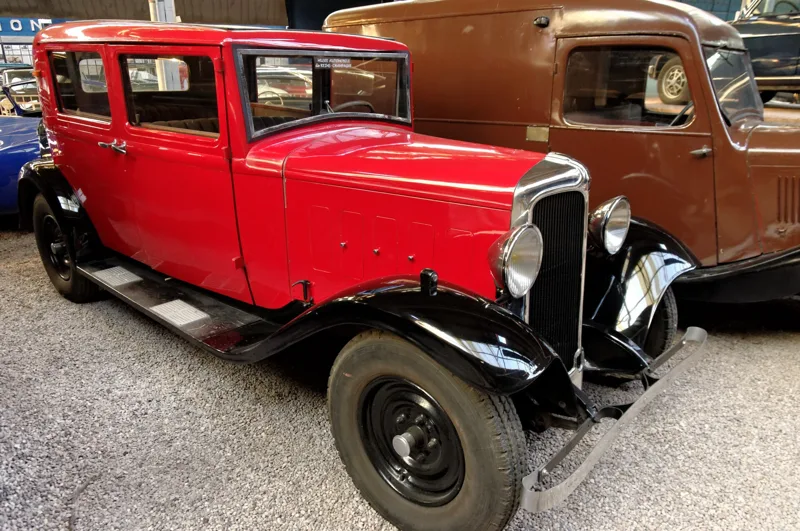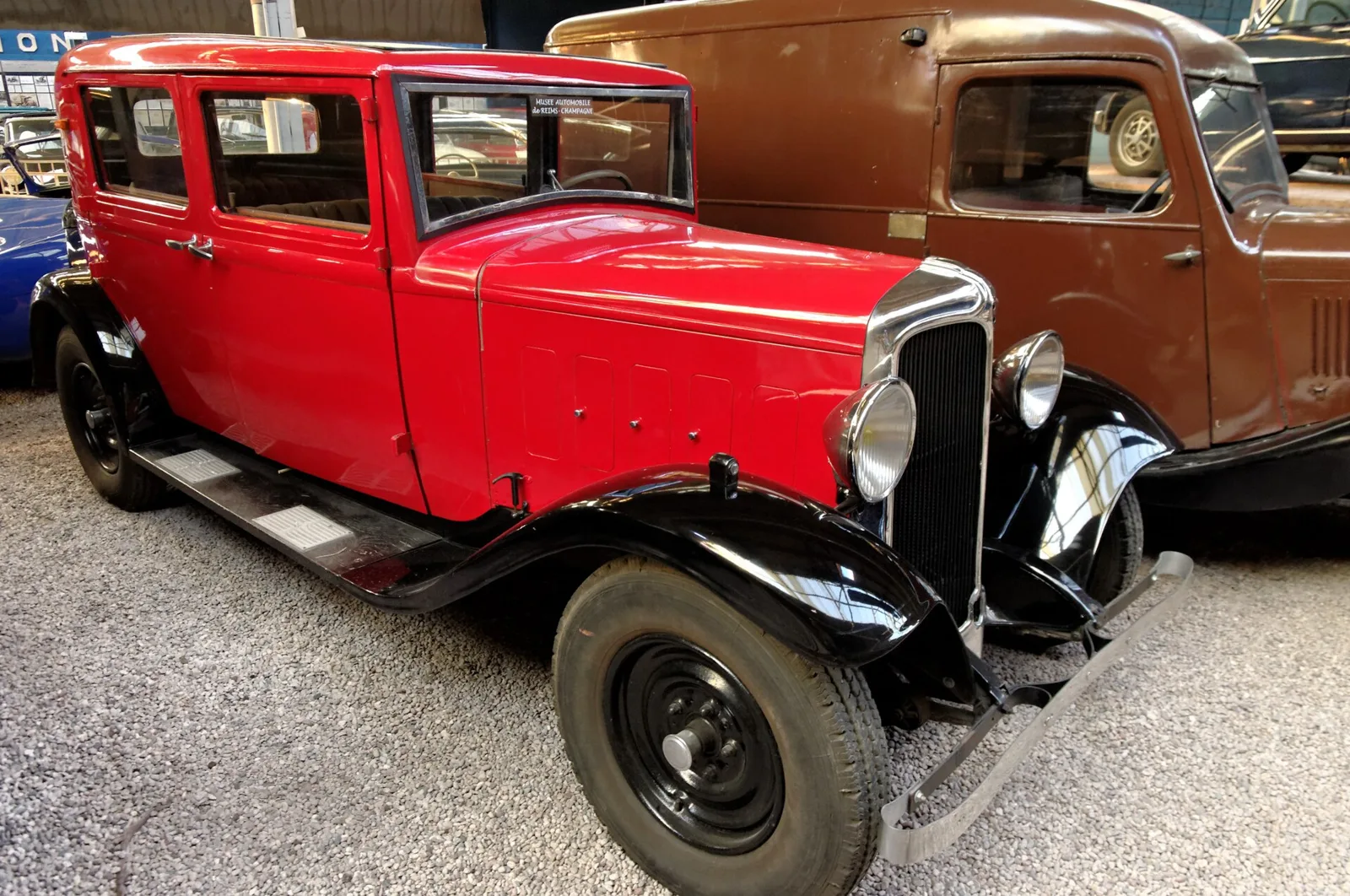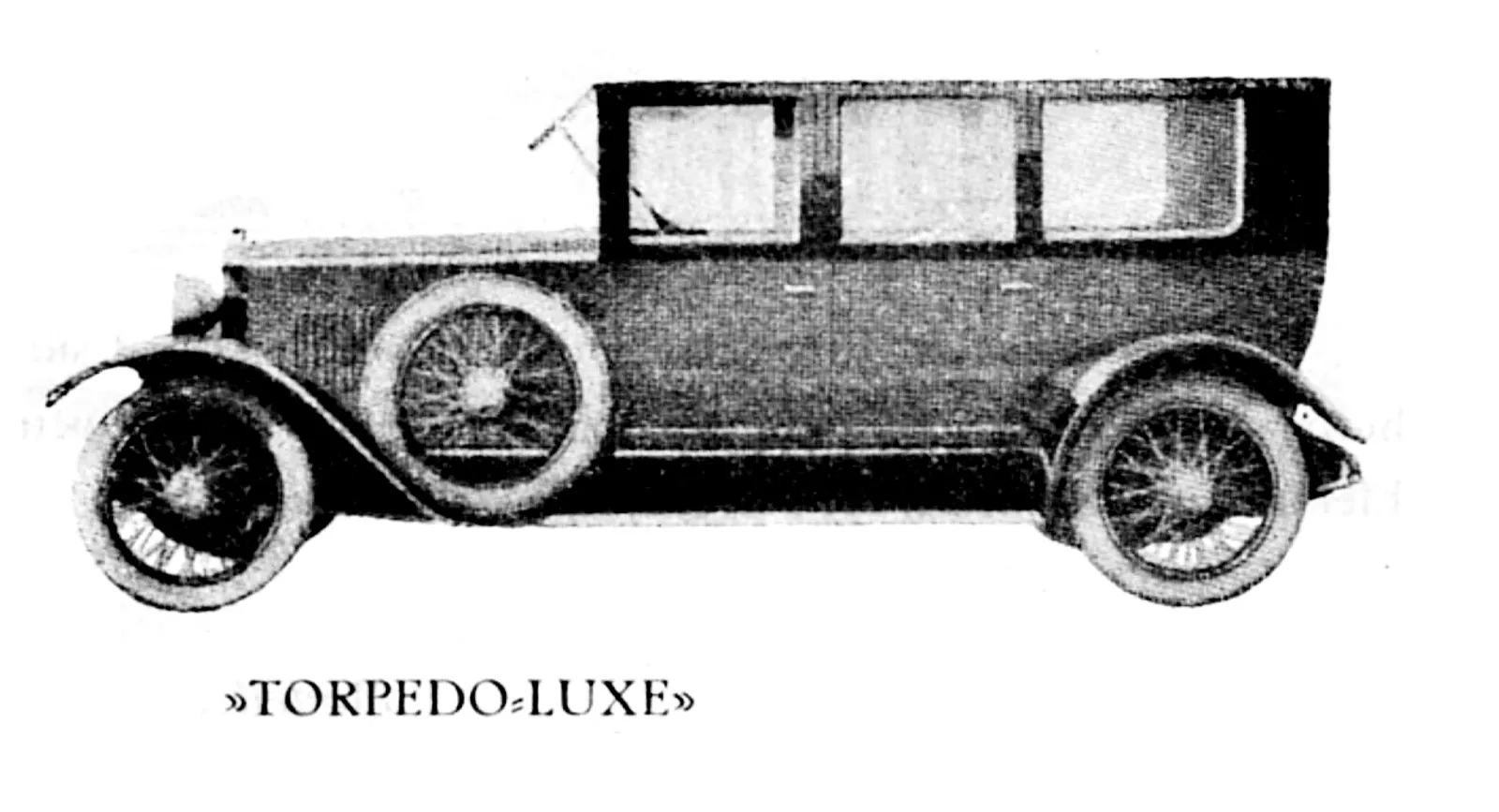
A 1922 passenger car from Lyon whose chassis carried a long run of army vans, light trucks and wood-gas variants into the early 1930s.
The Berliet VM, known as the 16 HP, came from the Lyon maker Berliet and debuted at the Paris motor show of 1922. Its chassis fed a family of army vans and light trucks that ran into the early 1930s.
Berliet of Lyon built the VM, also known as the 16 HP. Its chassis became the starting point for a large family of vans and light trucks, some of which stayed in production until 1933.
Where did the Berliet VM come from?
The VM debuted at the Paris motor show of autumn 1922, and its road approval followed on 29 June 1923. It belonged to the upper middle class and came after the VL model from the same maker. It was also exhibited at the Paris shows of 1923 and 1924.
No production figures survive for the car. A mid-sized model built over four years, however, points to a count in at least the upper hundreds. Production appears to have ended during 1925, and no obvious direct successor followed.
A 1922 Lyon passenger car whose chassis lived on in army vans and light trucks.
What did the Berliet VM cost?
In 1922 the bare chassis could be had for 17,500 francs. Inflation lifted that to 23,000 francs by autumn 1923 and 24,800 francs a year later, when a complete car sold for between 31,000 and 41,650 francs, according to the body.
The gap between the chassis price and the finished car shows how much the bodywork mattered. A buyer who ordered a fully bodied vehicle in 1924 paid well above the chassis figure.
What engine and gearbox did the Berliet VM have?
The VM swapped its three-speed gearbox for a four-speed unit, and its wheelbase grew to 3.15 m (10.33 ft), up from 3.13 m (10.27 ft). The engine, with a 90 mm bore and 130 mm stroke, displaced 3,308 cc (201.9 cu in), and the car was rated at 16 CV for tax purposes.
French makers of that period usually left the peak figure out, and here it survives only as a speed: 1,550 rpm. The car probably produced at least 40 PS (39 hp; 29 kW).
The variants did not all share the same unit. The VMA used an MLX engine that had been slightly throttled, the VMBG ran on wood gas and was rated at 14 CV, and the VMAB was taxed at 19 CV and peaked at 1,800 rpm.
Which vans and light trucks shared the chassis?
More than a dozen type codes used the VM chassis, most of them vans or light trucks known as camionettes. Their payloads ran from 1.5 tonnes to 3 tonnes, and several were built longer and in greater numbers than the car itself.
What did each camionette variant offer?
Each variant had its own permit date, weights and engine, and the list below sets them out with the army orders where they applied.
- VMA: a van with a permit dated 28 June 1923, one day before the car's; it may have remained a prototype
- VMAB: permit 4 March 1929, rated at 19 CV, with the peak at 1,800 rpm; bare chassis of 1,360 kg (2,998 lb) and a payload of 1,500 kg
- VMABL: a VMAB-based type (the L may stand for longue) with a 3.613 m (11.85 ft) wheelbase, of which the French army ordered and received 127 in 1929
- VMB: a 1.8-tonne light truck with a 3,308 cc engine, built in larger numbers from 1923 until 1930
- VMBC: ambulance subtype with covered-wagon bodies on a 3.65 m (11.98 ft) wheelbase, six of them ordered in 1925
- VMBG: wood-gas version of the VMB, rated at 14 CV, with no chassis number block reserved
- VM6B: permit 18 May 1925, payload of 1.8 tonnes raised to 2 tonnes in February 1928, with 1,500 chassis numbers reserved
- VMD and VME: army vehicles of 1923 with a 3.52 m (11.55 ft) wheelbase, a kerb weight of 2,375 kg (5,236 lb) and six tyres
- VMK: 151 supplied to the army in 1924, with the same data as the VMD and VME
- VMKD: permit 13 August 1928, a 19 CV vehicle that apparently stayed a one-off, made for a competition in Morocco
- VMP: permit 1 May 1925, a 3-tonne payload and 40 PS, with 2,750 chassis numbers reserved
- VM8P: 3-tonne version of the VM6B, with no chassis number block reserved
- VMP2: permit 24 March 1933, with the peak at 2,000 rpm, a 1,800 kg chassis and a permitted gross weight of 6,100 kg (13,448 lb)
- VMPG: wood-gas version of the VMP, rated at 12 CV
- VMRB: side-valve variant with a 3-tonne payload, permit 8 July 1926, and 200 chassis numbers reserved
- VMRBG: wood-gas VMRB, permit 9 May 1927, rated at 13 CV
- VMS: lowered chassis with a 2-tonne payload, permit 12 February 1925, and a 500-number block shared with the VHS
- VMSD: side-valve engine, permit 11 March 1927, a 2-tonne payload and 200 chassis numbers reserved
How many Berliet VMs were built?
No production figures are known for the car itself. Reserved chassis number blocks give some sense of scale, with 2,500 numbers and then 3,000 more for the VMB (shared with the VHB type), 2,750 for the VMP and 1,500 for the VM6B, although it is unknown whether every number was issued.
The French army placed many orders across the family. It ordered 200 VMD and 84 VME in 1923, 151 VMK in 1924, six VMBC ambulances in 1925, and 79 VMB in 1926. A further 127 VMABL followed in 1929.
Year-by-year figures exist for the VMP: 128 were built in 1930, 65 in 1931, 54 in 1932 and 10 in 1933. In 1930 the VHB type, which apparently shared the VMB chassis, was also still being built, with 177 units that year against 377 VMB.
What were the wood-gas versions?
Several variants carry a G in their names for gazogene, which marks a wood-gas engine. Their engines matched the VM in bore and stroke, but each carried a lower tax rating, and none received a chassis number block.
The VMBG was permitted on 1 March 1926 and rated at 14 CV, while the VMPG of 15 March 1926 was rated at 12 CV. The VMRBG followed on 9 May 1927 at 13 CV. Whether these were built in series, or only as prototypes, remains unclear.
Why did the camionettes outlast the car?
Vans and light trucks were built in far greater numbers and for far longer than the passenger car. Some, such as the VMB, were produced until 1930, and the VMP2 received its permit as late as 1933.
Army orders for camionettes included 79 VMB in 1926 and 127 VMABL in 1929. The car itself appears to have finished in 1925, while some of the vans stayed in production until 1933.
How did the engines and chassis change across the family?
The engine codes followed the variants. The VMB used the ML5, ML10 and MD5 units, the VM6B and VMRB used the MLR, the VMP used the MD5, and the VMSD used the MLK, which used side valves rather than overhead ones. The VMP2 carried the MLX16, with its peak at 2,000 rpm.
Wheelbases ranged from 3.15 m for the car to 3.65 m for the VMBC and VMB, and the army's ambulance and light-truck versions were built on the longer frames. Kerb weights ranged from 1,360 kg for a bare VMAB chassis to 2,492 kg for the VMABL subtype.
What survives today?
One Berliet VMP is known to survive. It stands in the Fondation Berliet's Conservatoire at Le Montellier, about 30 km north-east of Lyon.
The VMP2 does not appear in the production statistics from 1933, which suggests that it remained a one-off, although 80 chassis numbers had been reserved for it.
Specifications at a glance
| Specification | Berliet VM 16 HP |
|---|---|
| Type | Passenger car, with van and light-truck variants |
| First shown | Paris Motor Show, autumn 1922 |
| General operating permit | 29 June 1923 |
| Tax rating | 16 CV |
| Displacement | 3,308 cc (201.9 cu in) |
| Output | Peak at 1,550 rpm; probably at least 40 PS (39 hp; 29 kW) |
| Gearbox | Four-speed |
| Wheelbase | 3.15 m (10.33 ft) |
| Chassis price, 1922 | 17,500 francs |
| Production | Apparently ended during 1925 |