A cybersecurity founder who helped create vulnerability management, co-founded CrowdStrike, raced to a 2026 IMSA class title and invested in Mercedes Formula One.
George Kurtz is an American cybersecurity founder who co-founded CrowdStrike in 2012 and has served as its chief executive. He is also a racing driver who won sportscar class titles, and in 2025 he took a minority interest in a leading Formula One team.
George Kurtz is an American entrepreneur who co-founded and leads CrowdStrike, the cybersecurity company. He is also an FIA Bronze-rated racing driver who won the Pro-Am class at the 24 Hours of Le Mans and the 24 Hours of Spa, and he became the IMSA SportsCar LMP2 class champion in 2026. Since 2025 he has held a stake in the Mercedes-AMG Petronas Formula One Team.
How did Kurtz get into computing and accounting?
Kurtz grew up in Parsippany-Troy Hills, New Jersey, and started programming video games on a Commodore in fourth grade. He built bulletin board systems in high school, then earned a Bachelor of Science in accounting from Seton Hall University. He later qualified as a Certified Public Accountant.
He attended Parsippany High School before going to Seton Hall, a private university in South Orange, New Jersey.
A penetration tester who named a discipline, co-founded a Nasdaq-listed company and then won a sportscar title.
What did penetration testing at Price Waterhouse and Ernst & Young involve?
In 1993 Kurtz joined the new security division at Price Waterhouse, where he conducted penetration testing, a then-new approach to finding vulnerabilities in corporate networks. He later joined Ernst & Young, where he continued that work and helped develop internet security practices that remain part of the field.
After a few years at Ernst & Young he left to start his first company.
Why does Foundstone matter in cybersecurity?
Kurtz launched Foundstone in 1999 to offer cybersecurity products and services, a pairing that was novel at the time. Frustrated by slow and incomplete vulnerability assessment tools, he pioneered vulnerability management, creating both the category and its name.
The company also pioneered professional training in penetration testing and vulnerability management. That training was based on Hacking Exposed, a book Kurtz co-wrote in 1999 with Stuart McClure and Joel Scambray. It helped create a global community of practitioners who understood the new discipline.
Sales of the book have passed 600,000 copies, and it has appeared in more than 30 languages. Foundstone was competing with Internet Security Systems, which IBM later acquired, and Fast Company named Kurtz to its inaugural Fast 50 list for his work there.
How did McAfee shape his career?
Kurtz sold Foundstone to McAfee in August 2004, taking on the job of running risk management as a senior vice president and general manager. By October 2009 he had risen to executive vice president and chief technology officer, with responsibility for technology strategy and innovation.
As CTO he took part in McAfee's response to Operation Aurora in 2010, the attack on Google and other organisations. He also directed research into threats such as Night Dragon and Shady RAT.
Intel's 2011 acquisition of McAfee led Kurtz to leave and start his own firm.
How was CrowdStrike founded?
In November 2011 Kurtz became an entrepreneur in residence at Warburg Pincus, where he began shaping the idea of a new security company. By February 2012 he had teamed up with Gregg Marston and Dmitri Alperovitch to found CrowdStrike in Irvine, California. Warburg Pincus provided the first $25 million, and Kurtz became chief executive.
The company's flagship product, Falcon, launched the following year. It offered a cloud-native, intelligence-driven model intended to move away from traditional on-premise solutions and reduce the performance impact on client systems.
CrowdStrike drew attention early. It appeared on MIT Tech Review's 50 Disruptive Companies list in 2013, and in 2015 Kurtz received the ISSA President's Award for Public Service for his contributions to the cybersecurity community.
How did CrowdStrike grow after its early years?
Based in Austin, Texas, with offices in Sunnyvale, California, the company expanded rapidly. In 2017 EY recognised Kurtz as one of 34 regional Entrepreneurs of the Year for his work building it.
The company held its initial public offering on the Nasdaq in 2019, reaching a valuation of about $6.6 billion. A July 2020 IDC report called CrowdStrike the fastest-growing vendor in its market.
Inc. Magazine's inaugural list of the 250 best-led companies put the firm fourth in 2021. In 2024 it joined the S&P 500, becoming the fastest cybersecurity company to join the index.
Cybercrime Magazine named Kurtz its Cybersecurity Person of the Year that year. His total compensation for 2024 was $47 million, an increase of 29 percent on the previous year.
What went wrong with the July 2024 update?
A software update from CrowdStrike in July 2024 hit millions of Microsoft Windows machines, and the event has been called the largest outage in information technology history. Kurtz publicly apologised and said the company would restore affected systems and change its internal development and testing processes.
Media coverage noted that Kurtz had also been involved in a 2010 McAfee software update that caused widespread disruption.
How did Kurtz's racing career begin?
Kurtz made his racing debut in the Pirelli World Challenge in 2016, driving an Aston Martin Vantage GT4 for TRG-AMR. The series remained his base for two more seasons, and in 2017 he took the GTS Am class in a McLaren 570S GT4.
In 2019 the championship was renamed GT World Challenge America, and Kurtz raced it in the GT3 category with the professional driver Colin Braun. The duo finished fifth in the Pro-Am standings.
They reunited in 2020, and Kurtz made eight podiums that year, including his first overall win in GT3 machinery at Virginia International Raceway. The pair finished as runners-up in the Pro-Am standings.
Results by season
| Season | Series | Class | Result |
|---|---|---|---|
| 2016 | Pirelli World Challenge | GT4 | Debut with TRG-AMR in an Aston Martin Vantage GT4 |
| 2017 | Pirelli World Challenge | GTS Am | Class win in a McLaren 570S GT4 |
| 2019 | GT World Challenge America | GT3 Pro-Am | Fifth in the standings with Colin Braun |
| 2020 | GT World Challenge America | GT3 Pro-Am | Runner-up, with a first overall GT3 win |
| 2021 | IMSA SportsCar Championship | LMP3 | Endurance win at Sebring |
| 2022 | GT World Challenge America | SRO3 | Series title, ten wins from 16 races |
| 2023 | IMSA SportsCar Championship | LMP2 | Petit Le Mans win; second in the standings |
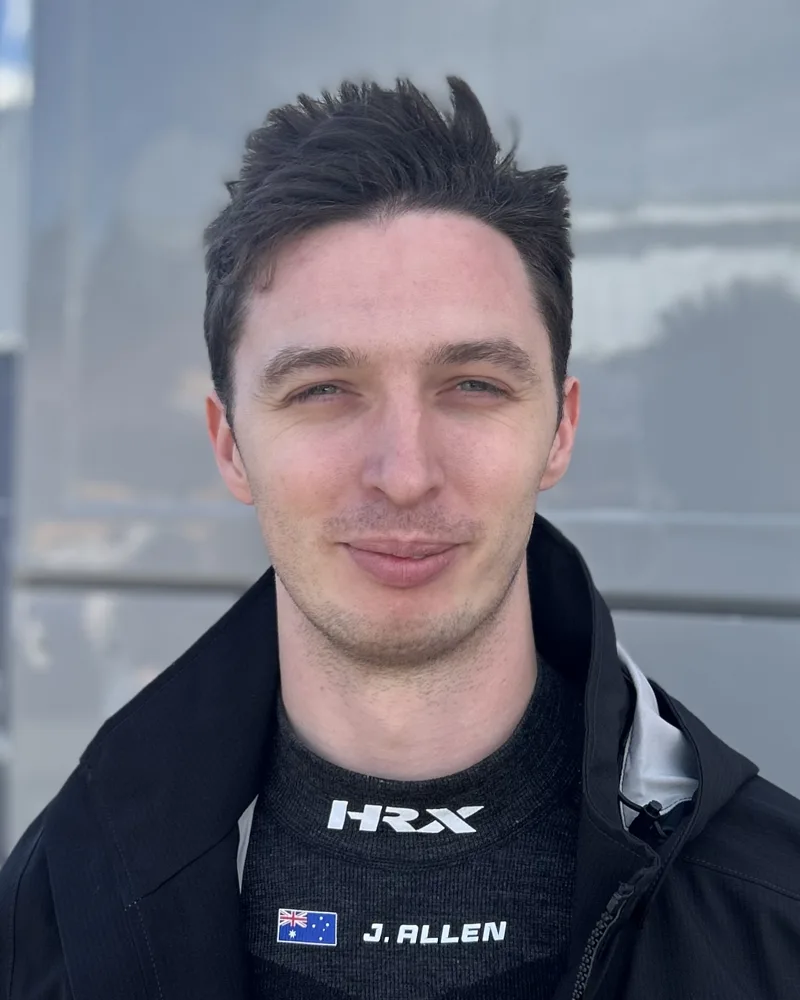
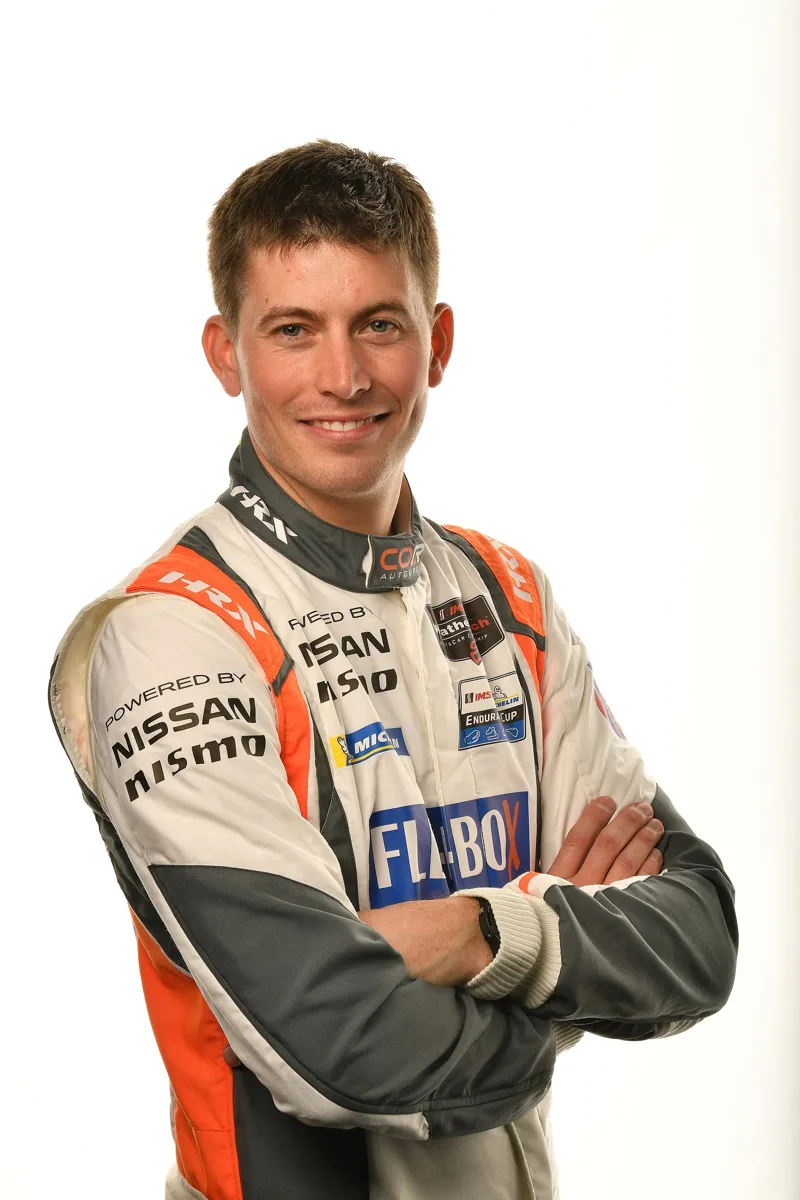
| 2023 | 24 Hours of Le Mans | LMP2 Pro-Am | Class win with Colin Braun and James Allen |
| 2026 | IMSA SportsCar Championship | LMP2 | Class champion |
How did Kurtz move into prototypes and win at Le Mans?
In 2021 Kurtz raced a Ligier JS P320 in the IMSA LMP3 category, competing only in the endurance events and winning at Sebring. In 2023 he stepped up to LMP2 full-time with his own CrowdStrike team, supported by Algarve Pro Racing and alongside Ben Hanley.
That year he and Hanley won the season-ending Petit Le Mans, although they finished second in the standings. At Le Mans, his debut, he shared the LMP2 Pro-Am win with Colin Braun and James Allen.
In the Michelin Endurance Trophy, which counted only the four endurance races, the Kurtz and Hanley combination came out on top.
That winter, Kurtz and Braun ran the Asian Le Mans Series with the young pro Malthe Jakobsen. They won two races on the way to the championship.
Why did Kurtz miss the 2024 season?
After the 2024 outage he sat out the season, and he returned to racing at the 2025 24 Hours of Daytona.
By 2026 he had become the IMSA SportsCar LMP2 class champion.
What is his role at Mercedes-AMG Petronas?
In 2025 he became a co-owner of the Mercedes-AMG Petronas team through a minority stake in an ownership company controlled by Toto Wolff. He joined the team's strategic steering committee as a technology adviser.
His remit covers data security, systems resilience and large-scale digital infrastructure.
What real estate has Kurtz developed?
Since 2019 Kurtz has developed real estate in the Southwestern United States, most visibly in Scottsdale, Arizona. He bought the site of Cracker Jax, an amusement park and driving range, and submitted plans in 2023 for a 2-million-square-foot mixed-use campus called The Parque.
The Scottsdale City Council voted 5-2 to approve The Parque, despite some community opposition. The plan mixes homes, offices, restaurants, shops, a hotel and a green space.
He also owns The Promenade, a 730,000-square-foot shopping centre with a spire designed by Frank Lloyd Wright, where he has carried out environmental improvements. In 2025 his FalconEye Ventures acquired Scottsdale Quarter, a 755,000-square-foot mixed-use property, with plans for a $100 million upgrade.
Where has Kurtz invested outside CrowdStrike?
Kurtz has invested in emerging technology and cybersecurity startups, including Lovable, an AI-assisted software development platform, and 1Password, an enterprise password and identity management platform. He has also backed Doppel, Grip Security and VISO TRUST.
In 2026 he joined Armadin as a board member.