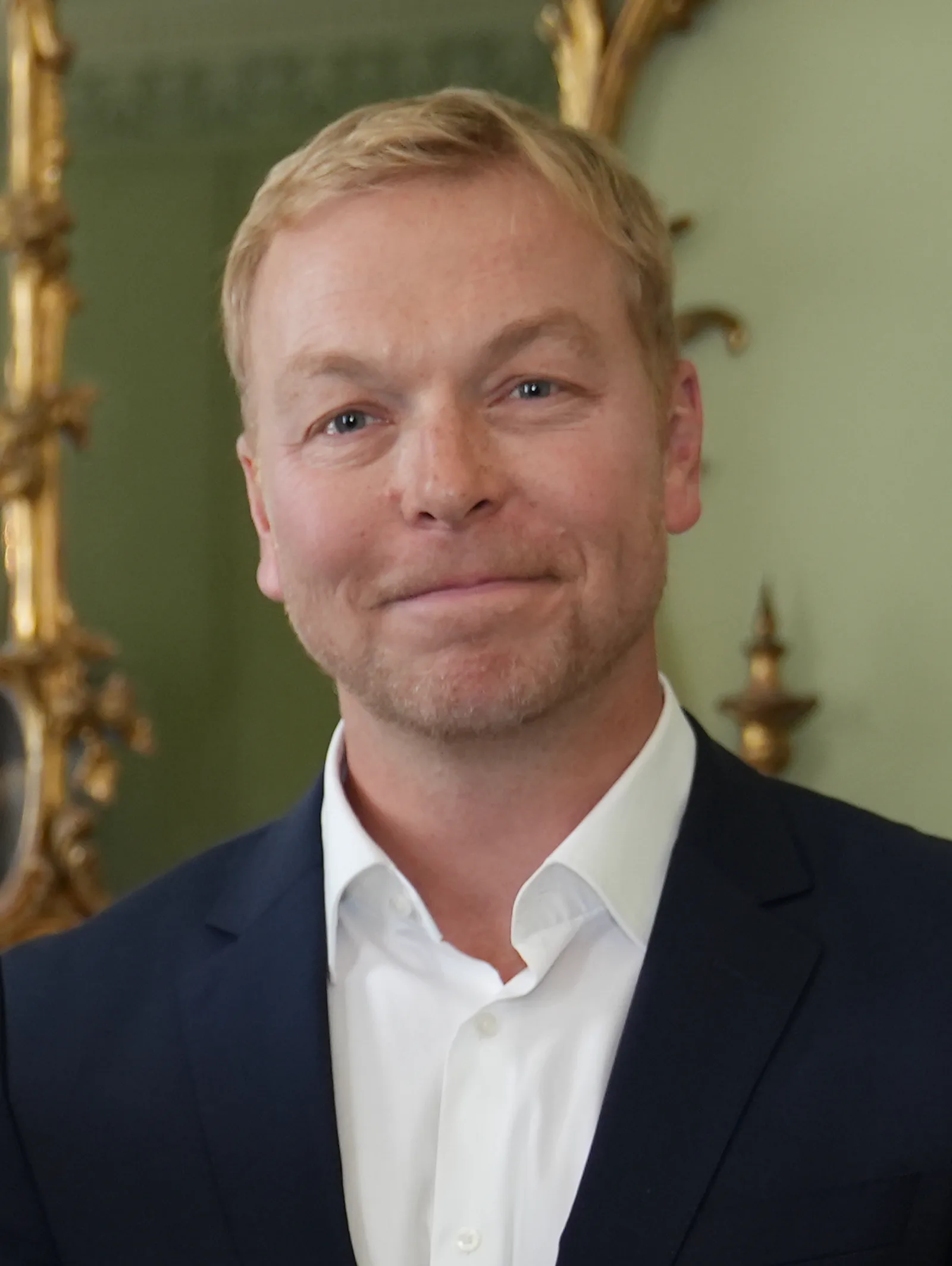
From a BMX racer in Edinburgh to a six-time Olympic champion, with a late run at Le Mans and a public stand against cancer.
Hoy, born in 1976, is a Scottish cyclist turned racing driver. Across the velodrome he won six Olympic golds, three of them at Beijing in 2008. He quit cycling in 2013 and later competed at Le Mans in 2016, finishing 17th overall.
Chris Hoy is a former track cyclist from Scotland who won six Olympic gold medals and eleven world titles. He also became a racing driver and took part in the 24 Hours of Le Mans in 2016. This profile traces his route from BMX racing in Edinburgh to the Olympic podium, then covers his years on four wheels and his later life.
Who is Chris Hoy?
Chris Hoy is a Scottish former track cyclist and racing driver, born in 1976. He won seven Olympic medals, six of them gold, and was the first British male Olympian in 100 years to take three golds at one Games in 2008. He retired from cycling in 2013 and later raced at Le Mans.
Born on 23 March 1976, Hoy was raised in Murrayfield, Edinburgh. He was educated at George Watson's College and spent two years studying Mathematics and Physics at St Andrews before moving to the University of Edinburgh, where he took a degree in Applied Sports Science in 1999.
Across his career he won 11 world titles. The 2008 Beijing Games made him Scotland's most successful Olympian at that point, and in the same year he became the most successful Olympic cyclist of all time.
Six Olympic golds on the track, a late run at Le Mans, and a public fight with cancer that has made him a voice for change.
How did Hoy get into cycling?
Hoy took up cycling at six after watching E.T. the Extra-Terrestrial in 1982, and he raced BMX from age 7 to 14. At BMX he was ranked second in Britain, fifth in Europe and ninth in the world. His first bike cost 5 pounds.
He joined Dunedin Cycling Club in 1990, aged 14. In 1993 he moved into track cycling with City of Edinburgh Racing Club. The move from BMX to the velodrome set the course for the rest of his career.
The turning point came at the 1986 Commonwealth Games in Edinburgh, when he first became aware of track cycling by watching it on television.
What did Hoy win at the 1999 and 2000 Games?
At the 1999 UCI Track Cycling World Championships in Berlin, Hoy took silver in the team sprint with Craig MacLean and Jason Queally. He then won his first Olympic medal at Sydney in 2000, when the same trio took silver in the team sprint, beaten by France.
That Sydney medal was the start of a British track cycling revival, which followed the Atlanta debacle. The silver set the foundation for the success that came later at Athens, Beijing and London.
What happened at the Athens 2004 Olympics?
At Athens 2004, Hoy won the kilo time trial with a sea-level world and Olympic record of 1 minute 0.711 seconds. It was his first Olympic gold, and it came after a crash in the athletes' village just days before the event. Great Britain could only finish fifth in the team sprint.
Hoy had come off his bike in front of a village bus, and his scarred arms and legs showed how close he came to missing the start. He still set the record in the kilo that had been his specialist event.
The Athens gold was the peak of that chapter. Afterwards the kilo left the Olympic schedule, which pushed him to look for new ways to win.
Why did Hoy turn to the keirin and the sprint?
The kilo was dropped from the Olympic programme after the 2004 Games, so Hoy turned to the keirin and the individual sprint. His first major keirin success came at the Manchester round of the World Cup Classics in 2007.
A keirin race has six to eight riders following a Derny, a small motorbike, around the track for 5.5 laps. The Derny leaves the race with 2.5 laps to go, and the riders contest the finish. It is a tactical event, which made it a natural step for a rider whose power had carried him through the kilo.
The individual sprint is widely seen as the blue ribbon event of track cycling. Kilo riders had struggled in it, so Hoy's decision to compete in it was a real change of direction for him.
How close did Hoy come to the kilometre world record?
On 12 May 2007 Hoy attempted the kilometre world record and clocked 58.880 seconds, falling 0.005 seconds short. The outright record of 58.875 seconds was set by Arnaud Tournant in 2001 at La Paz, where Hoy also tried to break it.
He did set a flying-start record time of 24.758 seconds, well below the 25.850 posted by Arnaud Duble. Before his attempts only three kilos under one minute had ever been ridden, and Hoy rode two of them in La Paz.
The sprint title that followed came next. He beat Roberto Chiappa 2-0 in the semi-final, then beat Kevin Sireau 2-0 in the final, making him the first British sprint champion in 52 years, the last having been Reg Harris.
What did Hoy win in Beijing in 2008?
At the 2008 Summer Olympics in Beijing, Hoy won three gold medals in the keirin, the team sprint and the individual sprint. The 100-year gap since a British male Olympian last won three golds at one Games closed in Beijing, and he also took BBC Sports Personality of the Year.
The triple left him as Scotland's most successful Olympian to date. Each of the three golds came in a different event.
Hoy was only the second cyclist to win the BBC award, after Tom Simpson in 1965. His success in Beijing set a high bar for the rest of his career.
How did injuries and setbacks affect 2009 to 2011?
A crash in the keirin final at Copenhagen in February 2009 caused a serious degloving injury. It kept him off the bike for almost three months, and he missed the World Championships in Poland at the end of March.
He returned to form in the 2009-10 season. At the British National Championships he won the keirin, the sprint and the team sprint. At one World Cup weekend in Manchester he won 12 events over the course of the weekend.
At the 2010 UCI Track Cycling World Championships he lost in the sprint quarter-final to Robert Forstemann, but he took the keirin gold despite crashing in the heats. That keirin title was one of his 11 world titles.
In 2011 he lost in the semi-finals at Manchester to Jason Kenny, but he took the British National match sprint title in October that year.
How many medals did Hoy win at London 2012?
At the London 2012 Games Hoy carried the Team GB flag at the opening ceremony and then won two more golds. He won the team sprint alongside Jason Kenny and Philip Hindes, setting a new world record, and the keirin on 7 August. His six Olympic golds overtook the five of Sir Steve Redgrave as the most by a British Olympian.
The keirin win took him past Redgrave, and it made him the joint most-medalled British Olympian with Bradley Wiggins and Jason Kenny. Hoy finished with seven Olympic medals in total, six of them gold.
Among British athletes, only Jason Kenny has won more Olympic golds than Hoy.
Career highlights at a glance
| Year | Event | Result |
|---|---|---|
| 1999 | UCI Track Cycling World Championships, Berlin | Silver, team sprint |
| 2000 | Sydney Olympics | Silver, team sprint |
| 2004 | Athens Olympics | Gold, kilo (1 minute 0.711 seconds Olympic record) |
| 2007 | Kilometre world record attempt | 58.880 seconds, 0.005 seconds short |
| 2008 | Beijing Olympics | Three golds: keirin, team sprint, sprint |
| 2010 | UCI Track Cycling World Championships | Gold, keirin |
| 2012 | London Olympics | Two golds: team sprint, keirin |
| 2016 | 24 Hours of Le Mans | 17th overall, 12th in class |
Did Chris Hoy race cars?
Yes. He began with the Radical SR1 Cup, announced a move into British GT in 2014 and raced in the European Le Mans Series from 2015. He finished 17th overall at the 24 Hours of Le Mans in 2016 with a Ligier JS P2-Nissan.
His first motorsport podium came at Snetterton in the inaugural SR1 Cup season. He later contested selected rounds of the Radical SR3 Challenge and the Radical European Masters, both in open sportscars.
On 8 April 2014 it was announced that he would join British GT, driving a Nissan GT-R Nismo GT3 with an eye on the 24 Hours of Le Mans in 2016.
His first international win came at Silverstone, in the opening round of the 2015 European Le Mans Series. He drove a Ginetta-Nissan to a class victory with Charlie Robertson. The pair added two more wins in the LMP3 class and clinched the class title at Circuit Paul Ricard with a round to spare.
At the 2015 Race of Champions he raced for Team All Stars alongside Romain Grosjean. They were knocked out in the first round by the Young Stars team, which included Pascal Wehrlein and Jolyon Palmer.
In 2016 he shared the Ligier with Andrea Pizzitola and Michael Munemann at Le Mans. He was the first Summer Olympic medallist to race at Le Mans and the second Olympic champion to do so, after Henri Oreiller. They finished 17th overall and 12th in class.
Life after the velodrome
Hoy retired from competitive cycling on 18 April 2013. He said he was proud to have helped transform the sport, and the years that followed saw him take up broadcasting.
He became a regular BBC cycling pundit and has covered three Commonwealth Games, in 2014, 2018 and 2022, along with the Summer Olympics in 2016, 2020 and 2024.
In November 2012 he launched Hoy Bikes, three months after the London double gold. The debut range included three road bikes, four city bikes and a track bike.
Honours followed the medals. He received an MBE for services to cycling in the 2005 New Year Honours and a knighthood for services to sport in 2009. He was given the Freedom of the City of Edinburgh in August 2013 and the Freedom of the City of London in June 2025.
Two more markers of his standing are the Sir Chris Hoy Velodrome, built for the Glasgow 2014 Commonwealth Games and named in 2012, and a Class 395 high-speed train that SouthEastern named after him in 2009.
What did Hoy say about his cancer diagnosis?
Hoy was diagnosed with stage 4 prostate cancer in September 2023. In October 2024 he made public that the disease had spread to his bones and was terminal, and he said he had been given between two and four years to live.
The diagnosis followed a pain in his shoulder. News of his condition became public on 16 February 2024, when it was revealed that he was undergoing chemotherapy, though no details were given at that stage.
When he described the nature and severity of the illness, he also called for change. In November 2024 the Health Secretary, Wes Streeting, announced that NHS England would review prostate cancer screening after Hoy spoke out.
Legacy
Hoy's place in cycling rests on the British track revival that began with the Sydney team sprint silver and grew into a run of gold medals. His six Olympic golds, 11 world titles and the 2008 triple remain the reference points for his career.
Away from the track his reach has been wide. He has been an ambassador for Scottish Action for Mental Health since 2009 and has worked with UNICEF as an International Inspiration ambassador since the same year, and as an ambassador for UNICEF UK from 2013. He has also written for younger readers, with the Flying Fergus series starting in 2016 and the guide Be Amazing appearing in 2020.
His autobiography came out in 2009, and All That Matters followed in 2024. He also backed the Scottish social enterprise Social Bite, sleeping out at its Sleep in the Park events in December 2016 and December 2017 to help homeless people.