A new family of naturally aspirated and turbocharged engines is designed for platforms built first for battery-electric cars.
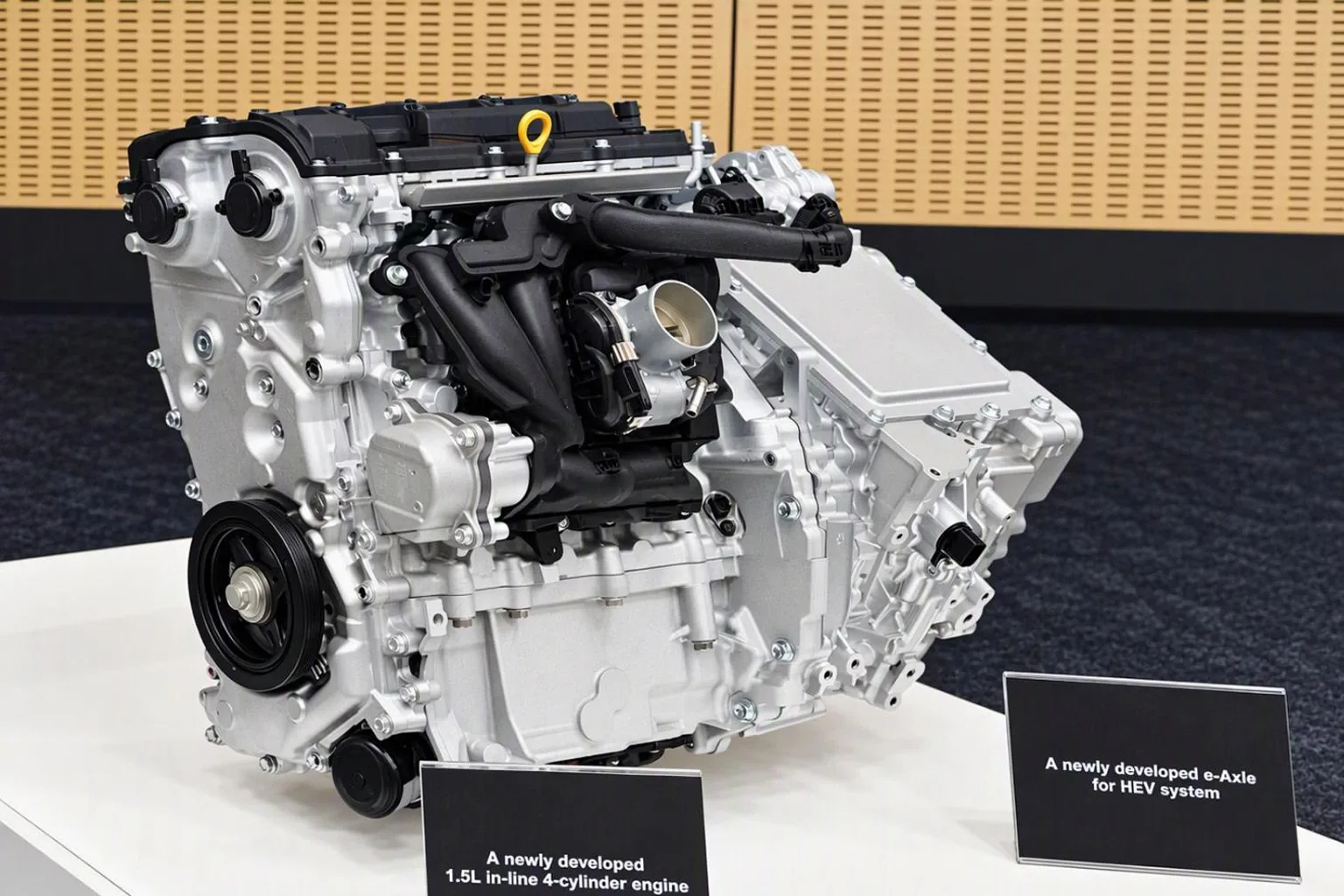
Toyota said on 28 October it is developing a new hybrid powertrain built around an all-new 1.5-litre four-cylinder engine in naturally aspirated and turbocharged forms. It targets more than 15 per cent better fuel economy and is small enough to fit platforms designed first for battery-electric vehicles.
Toyota is working on a clean-sheet hybrid powertrain that is small enough to sit inside platforms designed first for battery-electric cars. Announced on 28 October, it pairs a new four-cylinder, 1.5-litre engine family with smaller, lighter electric motors, power control units and inverters. The company is aiming for fuel economy more than 15 per cent better than today.
One powertrain, designed together
Toyota says it did not adapt an existing engine for the job. The engine, the hybrid system and the power electronics were developed together, and the new 1.5-litre units were designed around electrification from the outset. They come in naturally aspirated and turbocharged versions, and Toyota describes the engine as modular.
The naturally aspirated version is meant to cover the performance range now handled by two engines: Toyota's 1.8-litre unit and its current three-cylinder 1.5. Alongside it sit Toyota-developed silicon carbide (SiC) power electronics. Bringing the components closer together is intended to cut losses across the whole system, the company says.
Where the economy gain comes from
The 15 per cent figure is a target, not a measured result. Toyota expects it to come from lower mechanical friction, better thermal management, smaller electrical losses and reduced aerodynamic drag.
Packaging and platforms
Size is the other half of the story. The new hybrid is considerably smaller than earlier Toyota systems, which lets it fit what the company calls multi-pathway platforms, built without compromise for battery-electric performance. Toyota says hybrid and plug-in hybrid powertrains can share the same basic architecture without any effect on the silhouette, the interior space or the capability of the vehicle.
There is a styling benefit too. A lower-profile engine and hybrid package allows lower bonnet heights and more dynamic proportions, and Toyota says designers will face fewer constraints when shaping the body.
Sharing one architecture across battery-electric, plug-in hybrid and hybrid models means development and production investment can be spread over higher combined volumes. Toyota expects greater financial and engineering economies of scale as a result, with no loss of performance or capability in any variant. It also intends the common design to let factories shift the powertrain mix to follow customer demand.
Fuels and outside customers
Toyota argues that energy conditions and customer needs differ from region to region, which is why it offers a range of electrified powertrains and adjusts the mix by market. It regards efficient hybrid technology as an ongoing element of that route to carbon neutrality.
Toyota also plans to sell more of the new engine and hybrid technology to outside customers over the coming years. Development includes running the system on renewable and carbon-neutral fuels, a step Toyota says lets electrified cars with combustion engines keep helping to lower emissions as battery-electric and fuel cell cars become more widespread.
Toyota has not named the models, launch dates or power outputs for the new system.