From a 2005 prototype built on a shoestring at Vellore to a first international podium in 2019, Pravega Racing has grown into one of India's most decorated Formula Student teams.
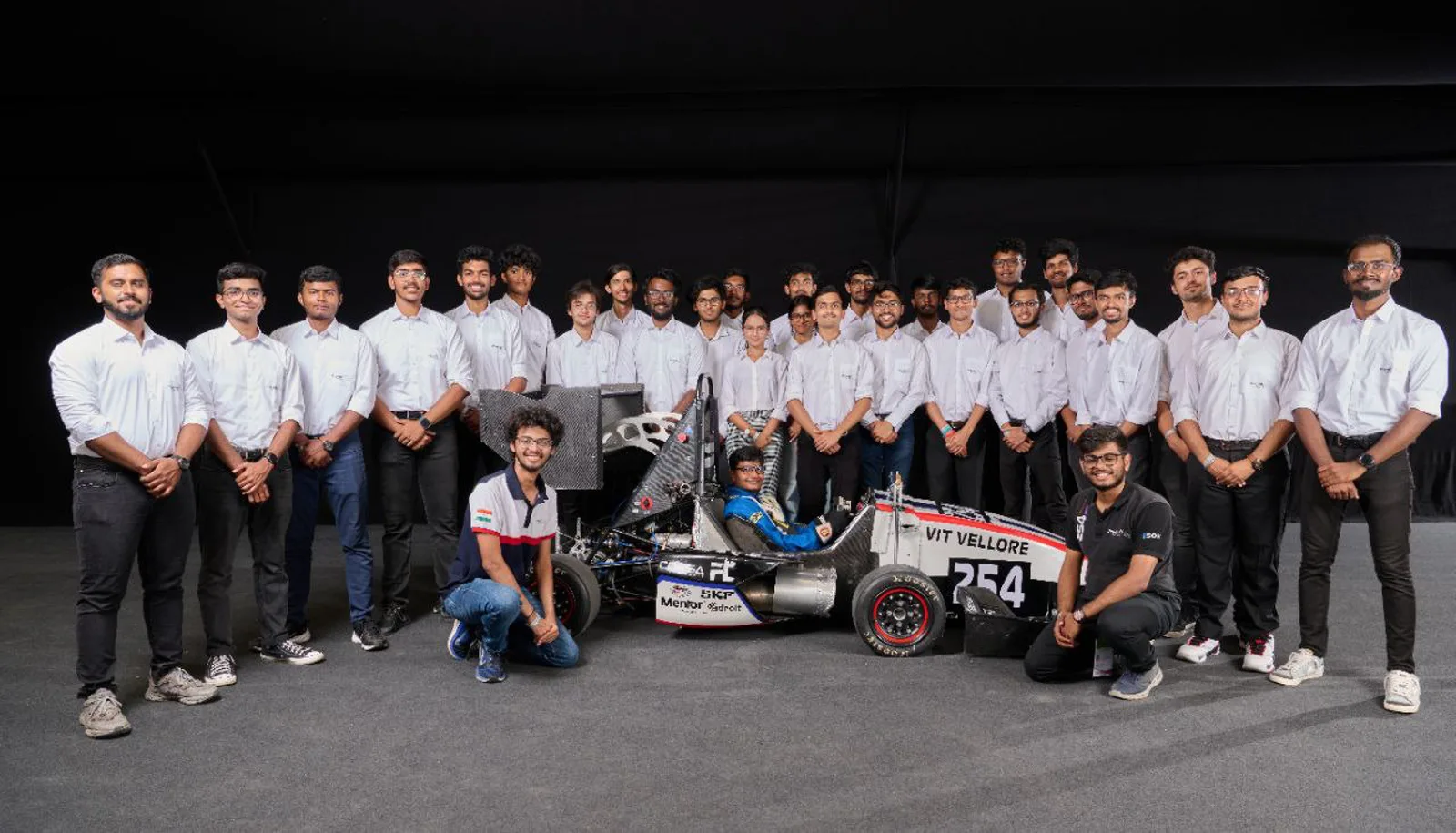
Founded in 2005 by students at Vellore Institute of Technology, this India-based Formula SAE team designs and builds single-seaters for Formula Student events. It has raced internationally since 2010 and won its first international podium at Formula Student Germany in 2019.
Based in Vellore, India, Pravega Racing is the combustion-engine Formula SAE squad run by students at Vellore Institute of Technology. Its job is to design and build a single-seat racer, test it, and take it to Formula Student and FSAE events. Founded in 2005, it has grown from a bootstrapped prototype into one of the best-known student teams in India.
The team's progress has been measured season by season. Each year a new car, a new leadership group and new goals have built on the last, and the results have climbed the Formula Student ladder. The 2019 international podium, the first in the team's history, marked a turning point in its reputation.
How did Pravega Racing begin?
The team was set up in 2005 by students at the university, with the goal of giving them hands-on engineering experience. It built a prototype race car within the next two years, working with very little money. A shortage of funds limited the final prototype, but the car proved the concept.
The first formal result came at the 2009 SAE Design Challenge, where the team placed third at its first attempt. That result encouraged the members to take the car to international Formula Student events, and in 2010 they travelled to Formula SAE West in California.
Built on a shoestring, the team has turned each season into a step up the Formula Student ladder, from a 2009 third place to a 2019 international podium.
What were the early international outings like?
Building a car to international standards proved the biggest challenge at Formula SAE West. The team could not get through technical inspection, but its members still secured eighth place in the Cost and Manufacturing Event. It was a lesson in how demanding the international rules were.
In 2011 the team changed its engine from a 500 cc Kawasaki to a 600 cc Honda CBR RR. The switch caused manufacturing delays, and the team finished 45th overall at Formula SAE Italy that year. The setback did not stop the team from taking on a bigger project the following season.
How did the 2012 and 2013 seasons change the team?
In 2012, led by Hemant Agarwal, the team set out to build two cars in one season. It improved its dynamic events at Formula SAE Italy and dominated the statics, finishing third in the Cost and Manufacturing Event. Its overall third place at SAE-SUPRA 2012 made the team one of the front runners on the Indian Formula Student circuit.
Building two cars meant planning the work across two builds, which was a new kind of challenge for the squad.
2013 was the breakthrough year. The car received a complete makeover and was named PRV13, and the squad led by Prateek Sibal won several awards at Formula SAE Italy. The team finished second on cost and manufacturing, 11th on business presentation and 19th on design, with 20th overall. It also entered the endurance event for the first time. Compared with earlier cars, PRV13 had a whole new look.
| Season | Event | Headline result |
|---|---|---|
| 2013 | Formula Student Italy | 20th overall; first endurance entry |
| 2015 | Formula Design Challenge | 3rd overall; national autocross record |
| 2016 | Formula Student India | Won 7 of 11 trophies |
| 2017 | Formula Bharat | Defending champions; 1st overall |
| 2018 | Formula SAE Australasia | 14th overall; 4th in Engineering Design |
| 2019 | Formula Student Germany | First international podium |
| 2020 | Formula Student Online | 11th overall; 3rd in Business Presentation |
| 2023 | Formula Student Germany | 18th overall; fastest Indian team |
Who led the team, and how did leadership rotate?
Each season has had its own leader. Hemant Agarwal led the 2012 build, Prateek Sibal the 2013 breakthrough, and Sanshray Agarwal the 2014 trip to Germany. Kushagra Sinha led the 2015 design challenge alongside manager Shyam Mohan, and Tribhuvan Singh, with Vyom Gautam, the 2016 season.
From 2017 the rotation continued. Abhijai Tibrewala led the defence of the Formula Bharat title, Naman Shukla and Nikhil Agrawal went to Australasia in 2018, and Nithin Shanmugam and Akash Porwal led the 2019 squad. Prudhvi Rao led the 2020 online entry, Harsh Singh and Ashwath Nagraj the 2021 effort, and Chetan Pratapaneni and Shubhankar Dodkar the 2023 season.
Each car has carried the season's name, from PRV13 in 2013 to PRV23 in 2023, and each was built on lessons from the one before.
What happened in Germany in 2014 and 2015?
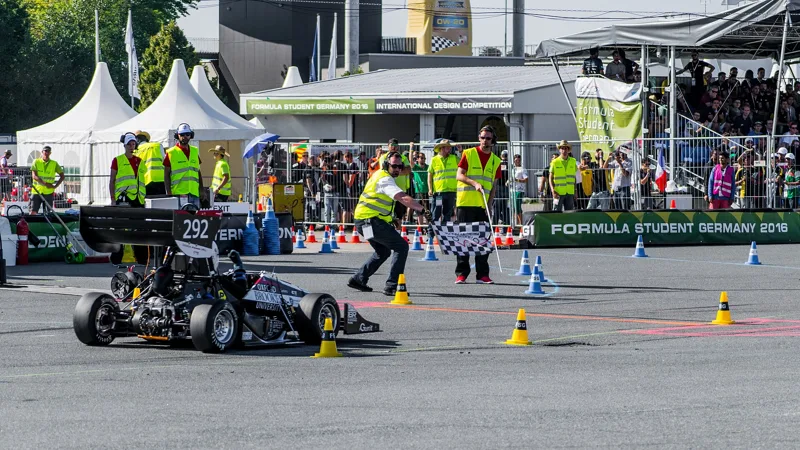
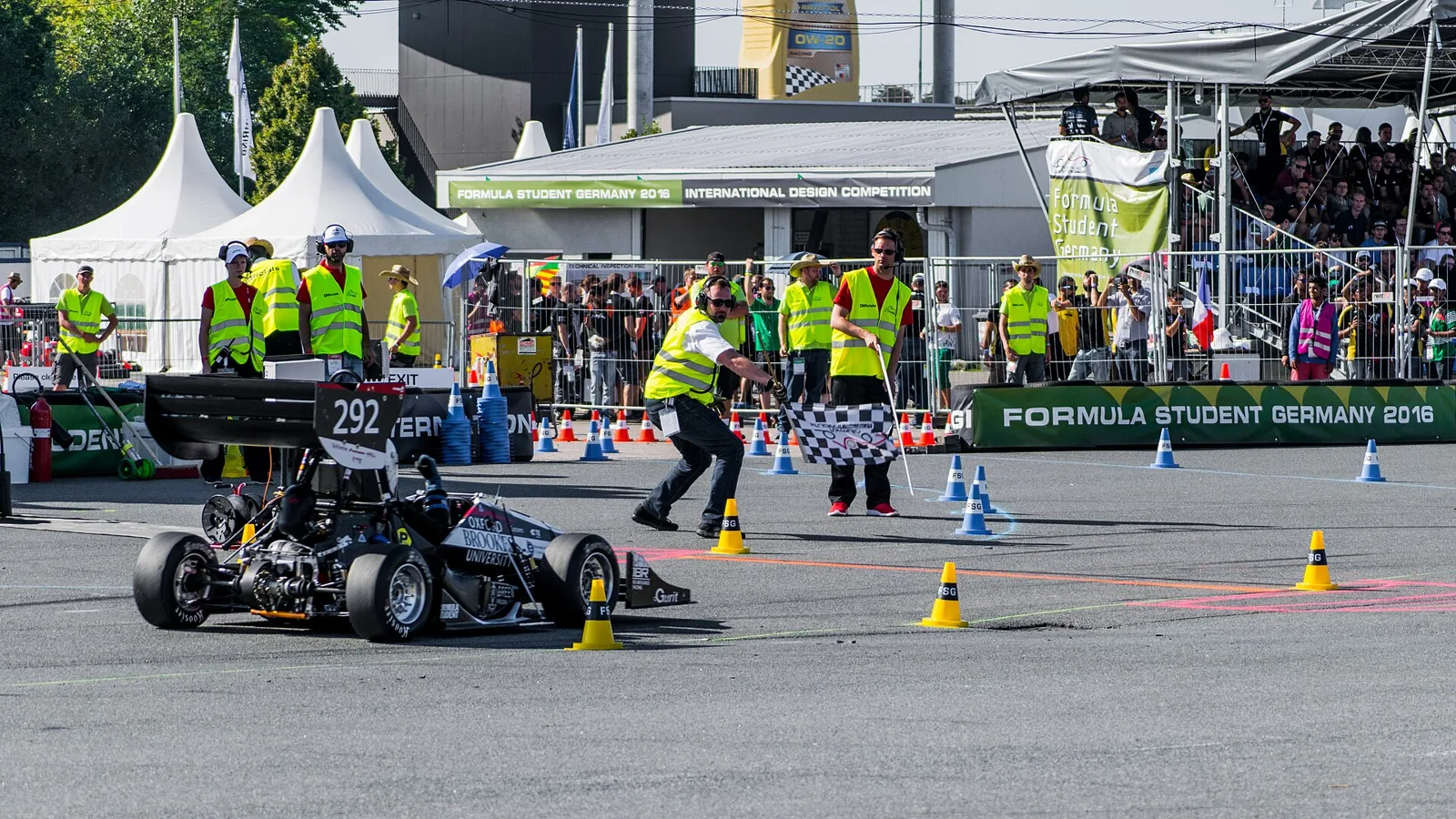
In 2014 the team, led by Sanshray Agarwal, entered Formula Student Germany after gaining experience at other events. It finished first worldwide in the scrutineering exam, and it was the only Indian team to take part in all the dynamic events.
The 2015 season began with the JK Tyre Formula Design Challenge, the first Indian event the team had entered. Under Kushagra Sinha, with team manager Shyam Mohan, the squad won several accolades and set a national autocross record of 1 minute 23 seconds, which remains unbeaten. The team then returned to Germany and posted the best static results by any Indian team at that event. The 2015 design challenge drew industry figures, including Claude Rouelle and Pat Clarke, who judged the design sessions.
Why were 2016 and 2017 a turning point?
The 2016 season changed the team's standing in India. Under Tribhuvan Singh and team manager Vyom Gautam, it won seven of the 11 trophies at Formula Student India 2016. It finished first in Acceleration, Skid pad and Business Presentation, and it was the fastest Indian car at Formula Student Germany that year.
At Formula Student Germany 2016 the team's results were uneven: 13th in Business Presentation, 39th in Design and 40th in Cost. Its acceleration run took 4.65 seconds for 37th place, its skidpad 6.39 seconds for 41st, and its autocross 87.88 seconds for 53rd.
The 2017 team, led by Abhijai Tibrewala, began the season with a burning wish to become the best team in India, and went on to defend the title at Formula Bharat 2017. It collected nine trophies and an overall win, and it earned the Best Driver honour and a Spirit of FSI special award. The team also finished among the best Indian entries at Formula Student Germany that year.
How did the team reach its first international podium?
The 2018 season saw the team compete at Formula SAE Australasia under Naman Shukla. It recorded the highest points ever scored by an Indian team in the Engineering Design Event and won the FSAE-A Encouragement Award. It also finished fourth in design and 14th overall.
Learning from earlier setbacks, the 2019 season focused heavily on the static events. Nithin Shanmugam and Akash Porwal headed the squad that went to Formula Student Germany, where it won a special award for best use of 3D printing. That was its first international podium, and the team was also the highest-scoring Indian entry in Engineering Design. Winning an award for a manufacturing choice, rather than a race result, showed where the squad's strengths lay.
How did the team cope with online events in 2020 and 2021?
In 2020 the team took part in Formula Student Online, led by Prudhvi Rao. It was the only Indian team in the virtual event. It achieved its highest ever overall finish, 11th, and a first podium in Business Presentation at an international event, finishing third in that category.
The 2021 season started with Formula Bharat, where Harsh Singh and Ashwath Nagraj guided the squad to first in Business Presentation and third overall. It then competed in the FSEV, its first EV concept challenge, finishing 10th overall, and in Formula Student Online it placed second in Business Presentation and third overall.
What did the 2023 season deliver?
The 2023 season opened at Formula Bharat, where Chetan Pratapaneni and Shubhankar Dodkar led the squad to a win in Business Presentation and second in Statics, finishing seventh overall. At Formula Student East the team placed second in Business Presentation and 12th overall.
The team was the sole Indian squad on the FS East podium, among 100 teams from more than 30 nations. At Formula Student Germany 2023 it finished eighth in the Cost Analysis Event, ninth in Engineering Design and 10th in Business Presentation, with an overall 18th place among the world's teams. It was also the fastest Indian team there in both the combustion and electric categories.
How is the team organised?
The team uses a functional organisational model, led by a chief executive officer, a chief technical officer, a chief operations officer and a chief management officer. The CEO oversees technical and management functions, while the CTO makes sure the technical departments coordinate. The COO handles day-to-day administration and operations, and the CMO manages communications and sponsor offerings.
Work moves through principal engineers and department leads, who check and approve the tasks of student engineers. A Testing Lead measures the improvements made after each testing phase and trains the drivers. Static Leads supervise the presentation, cost and design report work, and the department leads also run research and development.
What guides the team's philosophy?
The team's motto is a respectful disregard for the impossible. It builds an A team first and then an A car, and its members are not just engineering students but also writers, designers, managers, analysts and drivers. Its three pillars are pride, discipline and consistency, which the team sees as the basis of its reputation.
Bloggers, strategists and analysts sit alongside the engineers, so the team's output reaches well beyond the workshop.
Who backs the team?
Designing and building a Formula car is expensive, and sponsors play a central role. Volkswagen, Continental, Autodesk, SKF and Vega are title sponsors, while Mentor Graphics, Wipro, Mahale, Novoflex and TE Connectivity hold gold status. The marketing team approaches large companies for technical and financial support.
The team repays sponsors through PR activities, which have included a Red Bull calendar shoot, a Cornitos calendar shoot and stunt shows at the college cultural festival. At the annual car rollout, a drag race between PRV18 and a Volkswagen was staged for sponsors. It also works with PR partners Wharf Street Strategies and Autoguru.