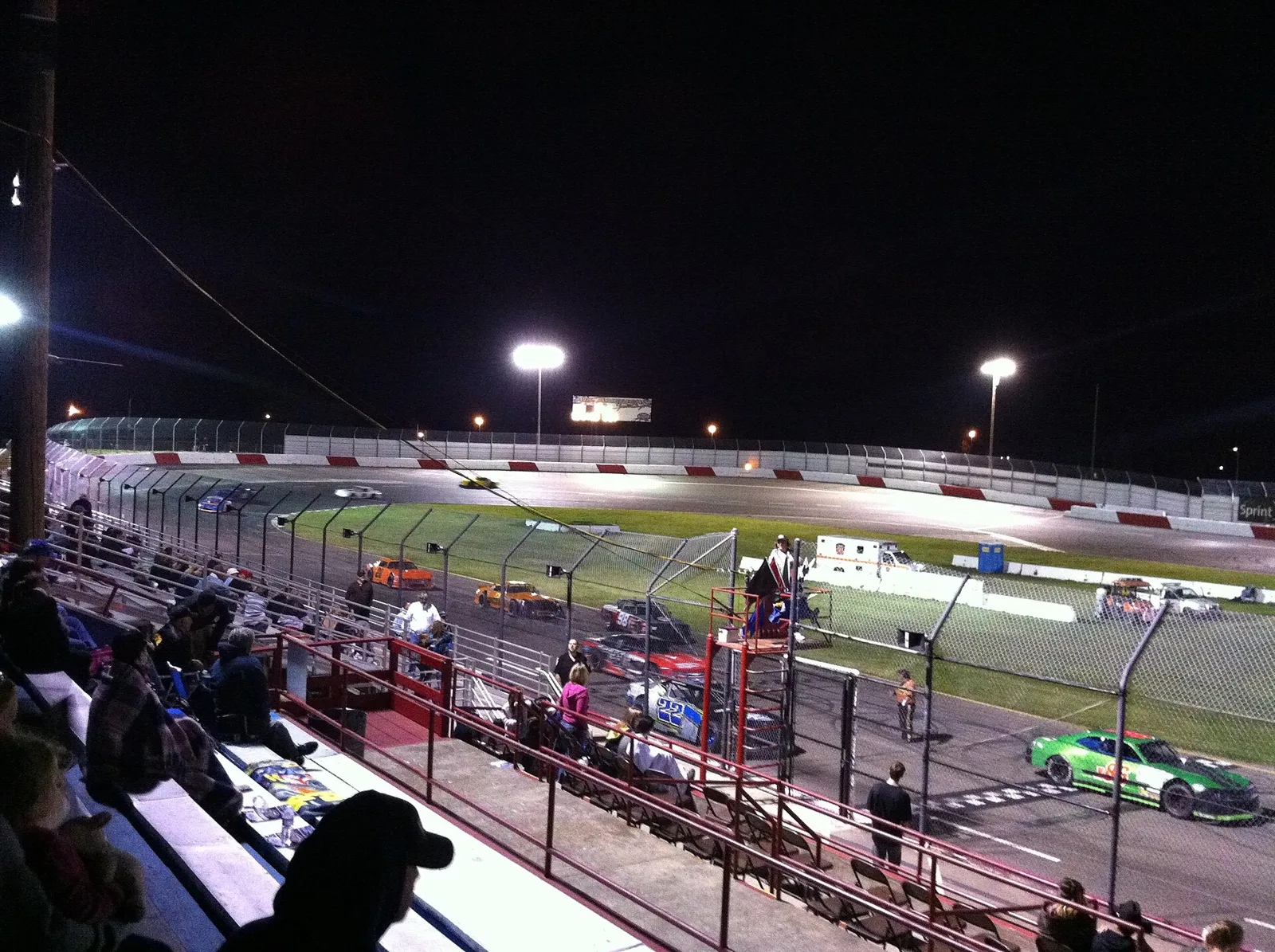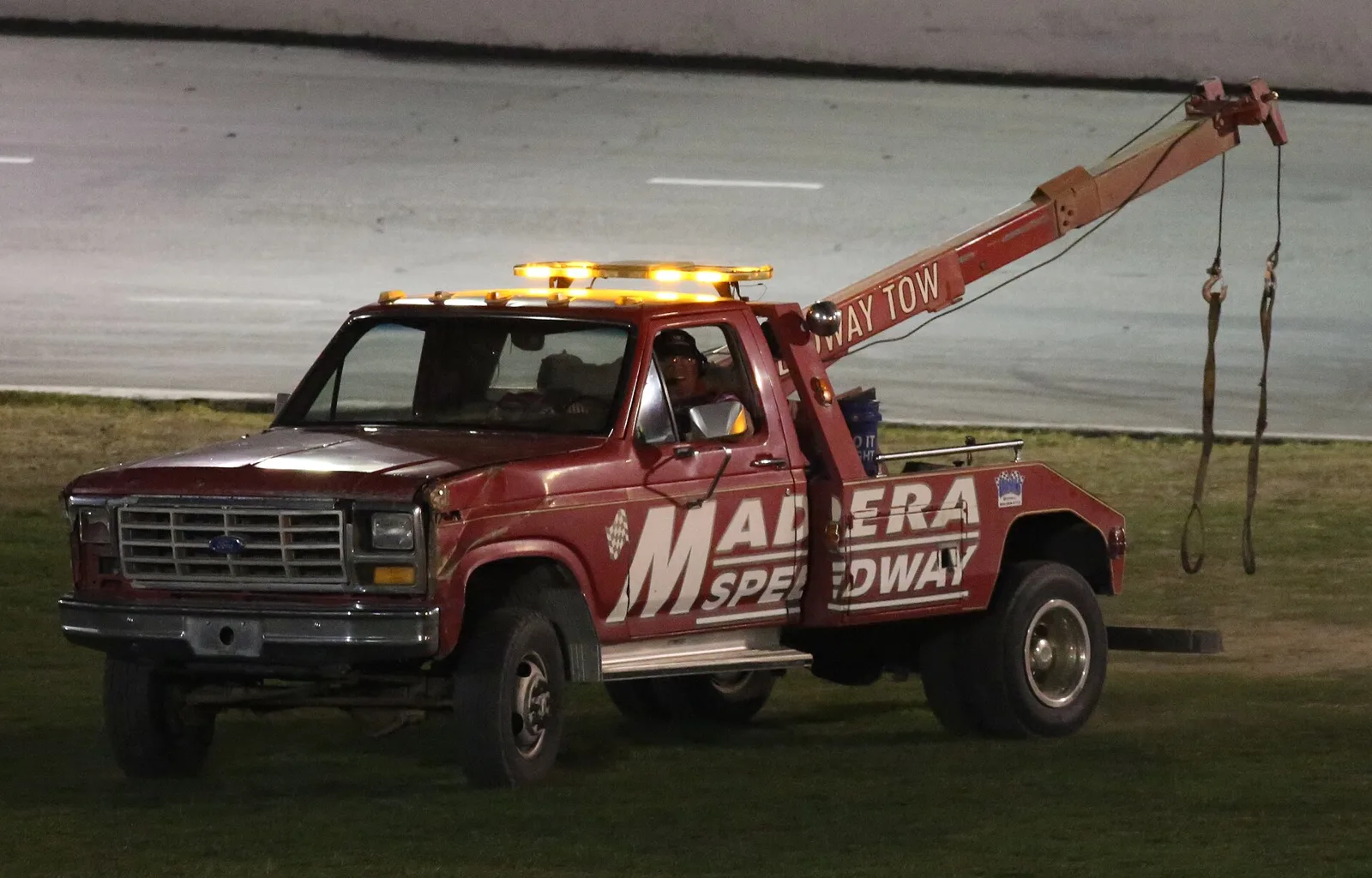
A 0.333 mile California oval run from a county fairground, rescued by a determined promoter and now home to a junior late model series.
Madera Speedway is a 0.333 mile oval at the Madera District Fairgrounds in California, which opened in 1972. Kenny Shepherd rescued it from closure in 2006, and it now hosts ARCA Menards West Series events and a junior late model series.
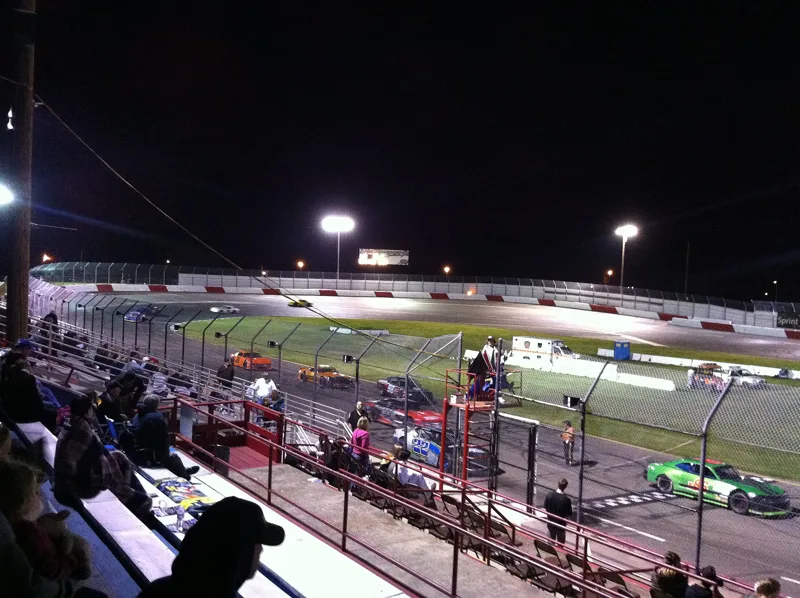
The 0.333 mi (0.536 km) oval sits in Madera, California, on the Madera District Fairgrounds. It opened in June 1972 and has hosted a wide mix of racing since, including NASCAR-sanctioned events. Its survival has depended on a fair board, a series of promoters and one owner who spent his first years running the place in what he called survival mode.
When did racing start at the Madera fairgrounds?
Motorsport on the Madera District Fairgrounds goes back to the 1930s. The first races there in 1939 were motorcycle events on a half-mile dirt track, and the first main event was won by Jimmy Kelley on April 30 that year.
Midget racing arrived in 1947. The Bay Cities Racing Association scheduled its debut on a newly built quarter-mile dirt oval at the fairgrounds for March 23, 1947, and the track was paved soon after. Ed Normi won the first feature event. That track operated for 25 years before the current one replaced it, and its site is now a commercial development.
A county fair track that nearly closed in 2006 now runs a junior late model series that starts children in race cars.
How was the current track planned and built?
Plans for the present speedway were announced in January 1971, when a Fresno group wanted a new track among the many then being proposed in the San Joaquin Valley. On April 19, 1971 the fair board signed off on a banked oval of 0.54 km (1/3 mi), and appointed Pete Marovich, a Fresno trucking employee, as the first promoter of Madera Raceways.
Groundbreaking took place on February 24, 1972. The opening was pushed back more than once, and the first single-day event was finally held on June 25, 1972. Larry Yarimie won the first feature event at the track. The venue was then known as Madera Raceways until 1976.
Who ran the track in its early years?
When Marovich's five-year lease ended, Clovis Speedway promoter Blackie Gejeian took over on a five-year lease starting in 1977 and renamed the track Madera Speedway. Average attendance rose by more than 1,000 people per event within three years under his tenure. When his lease ended, the Madera District Fair took over operations, with fair secretary-manager Jim Pacini becoming promoter.
The fair spent heavily on the place. New lights and a repaved track surface came before the 1982 season, and a seating expansion of 1,200 seats followed the next year. Not every change went well. On May 4, 1982, Danny Bingham died after a stuck throttle sent him into the first turn, the track's first fatality.
By the end of 1985 low car counts and attendance had put the track at a financial loss. The fair board voted on November 25 that year to continue racing under conditions, including fewer supermodified races and a smaller budget. Ken Coventry was hired as promoter for the 1986 season, and the program grew in 1987. A $30,000 scoreboard went up in 1991.
Why did the track change operators again?
Profits dropped by nearly $100,000 within a year in 1993, and the fair board began searching for another promoter. Roland Jones, who worked in student services at National University's Sacramento campus, took over from Coventry, yet the decline continued.
On July 20, 1994, the fair board unanimously gave operational control to Madera Speedway, Inc., from 1995. Ken Clapp and Rick Gerhardt ran the company, with Clapp then vice president of NASCAR's western operations and co-owner of the Stockton 99 Speedway. The first year brought lower attendance and fewer cars, which the partners blamed on the economy and poor spring weather.
A second fatality came on April 6, 1997, when Tom Boune died in a midget car crash at the third turn after a stuck throttle. The track responded by installing new concrete retaining walls in 2000 in place of the old wooden barriers.
How did Kenny Shepherd save the track?
Kenny Shepherd took over after a long fight over the lease. The fair board ended Williams' lease on September 20, 2006, by an 8-1 vote, three years early. Commercial development near the track threatened its future, and the board had earlier said the track would close temporarily for 2007.
Shepherd, a promoter from Altamont Raceway Park and a former racing driver, bid for the job and was accepted as promoter for 2007, with a 22-race schedule. Looking back, he said the early seasons were a struggle to keep the place running, and he focused on redeveloping the fan amenities. His lease was renewed for five years from 2012, and the track was repaved.
A third fatality came on August 11, 2018, when Donnie Large Sr. died during a supermodified race, possibly from a heart attack. He crashed on the 21st lap of the event.
Who has the track served in recent years?
Madera Speedway has hosted annual ARCA Menards West Series events since 2023, which are regional NASCAR-sanctioned races. The track also runs pro late model, junior late model, sportsman, legends car and bandolero divisions, and INEX classes.
Junior late model is the track's own development series. Shepherd created it in 2016 so that drivers aged 10 to 16 could race late models, and it has become the feature that most sets the track apart.
Why did the 2006 lease fight matter so much?
The lease fight was the most dangerous moment in the track's history. Williams had been installed as president and chief executive, and his lease was terminated on September 20, 2006 by an 8-1 vote, three years before it was due to end. Williams threatened to sue the fair board in response.
The fair board then said the track would close temporarily for 2007, because commercial development was taking over the track's parking lot, and the CEO, Scott Samples, was 95% sure that a six-month 2007 season was still possible once construction plans were finalised. Shepherd's proposal was the only full bid the board received, so the track's survival rested on a single offer.
What was Kenny Shepherd's approach to running the track?
Shepherd's first season as promoter exceeded his expectations, despite concerns about further commercial development. He described the first three years as survival mode and concentrated on the fan amenities. His mentor, Clapp, described him as fanatical about maintaining the facility.
That focus showed in the details of the track. Shepherd cared about the restrooms and the lawn, and Clapp recalled that a single weed was one weed too many. Those habits helped turn the track from a place people might leave into one they returned to.
Why does the track's location matter?
Madera Speedway is served by California State Route 99, and Clapp said he always loved the location, right alongside busy Highway 99. That visibility was one reason the track had been worth keeping, even when commercial development pressed in from around it.
Clapp left the partnership while Gerhardt was still running the track, because he was preoccupied with other duties, and Gerhardt, who lived locally, was able to be at the track far more often than Clapp had been.
What is the track's configuration?
The track is a short oval with progressive banking. The turns are banked from 6 to 12 degrees, and the straights are banked at 6 degrees, which gives the cars a steady line through each corner. At 0.333 mi (0.536 km) the lap is short enough for quick, tight racing, which suits the junior and development divisions as much as the feature events.
The layout has changed little in its life. Shepherd's lease renewal in 2012 brought a repaving, which kept the surface in good order for the divisions that followed.
Key moments in the track's history
| Year | Event |
|---|---|
| 1972 | Madera Raceways opens on June 25 |
| 1977 | Blackie Gejeian renames it Madera Speedway |
| 1994 | Fair board hands operations to Madera Speedway, Inc. |
| 2006 | Lease ended early by an 8-1 vote; Kenny Shepherd takes over |
| 2016 | Junior late model series created |
| 2023 | ARCA Menards West Series events begin |