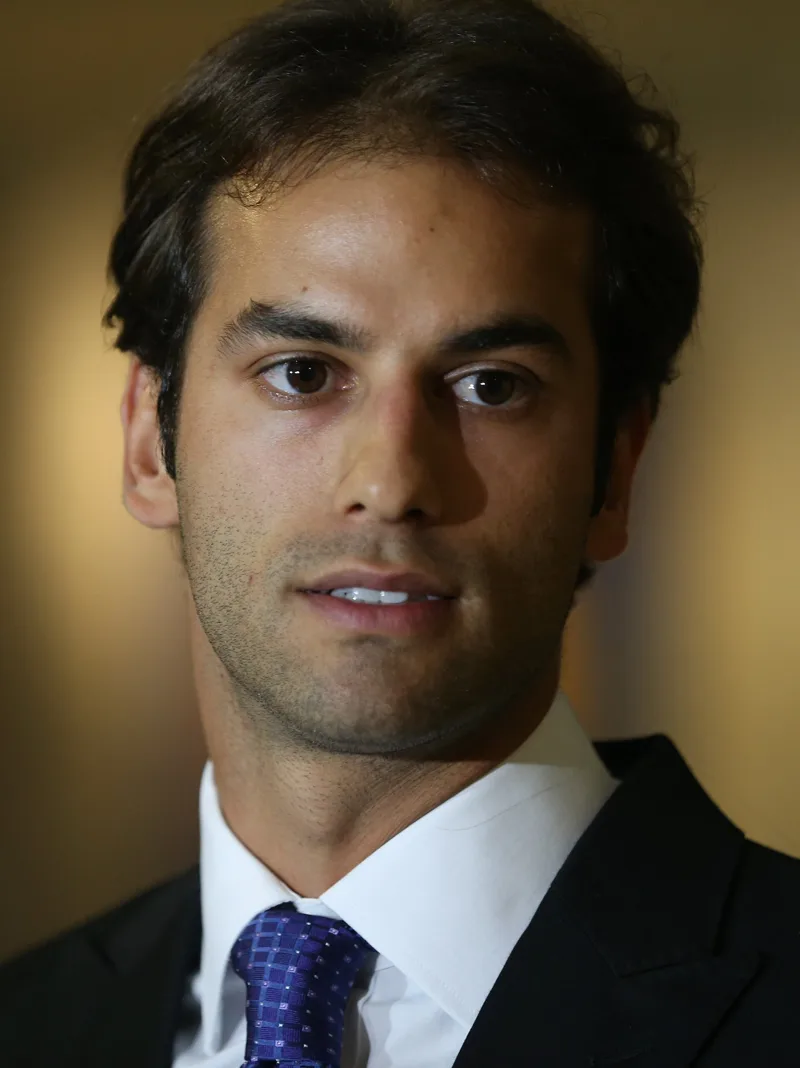
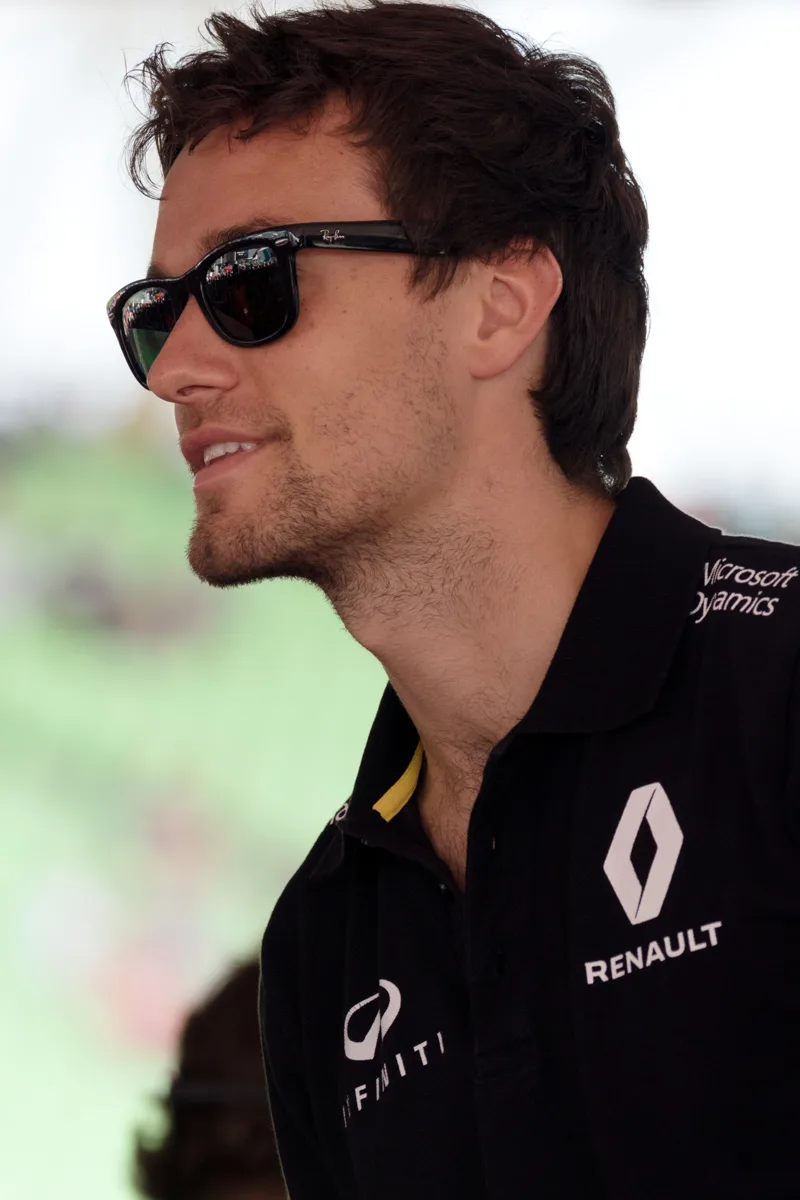
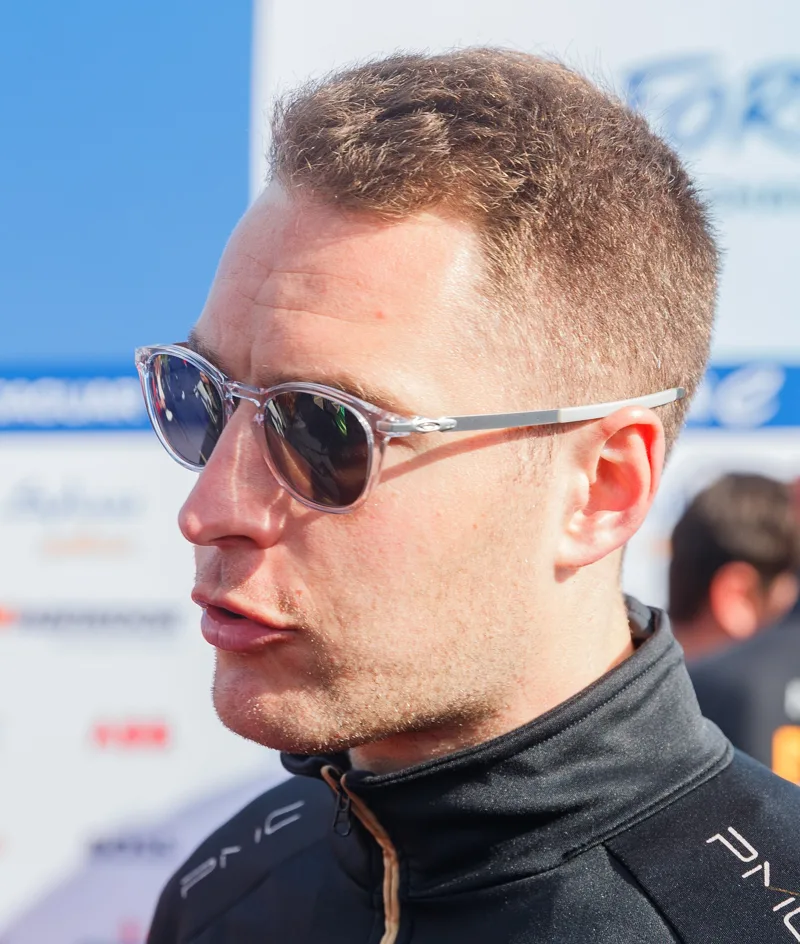
The opening round of the 2014 GP2 Series at Sakhir ran a night qualifying session, two races and a feature win for Stoffel Vandoorne on his debut.
Two races were run at Sakhir on 5 and 6 April 2014 as the first round of the GP2 Series. Stoffel Vandoorne took the feature on his debut, and Jolyon Palmer took both pole and the sprint win, with Julian Leal second in the feature.
The 2014 Bahrain GP2 Series round was the opening meeting of the season, two races held at the Bahrain International Circuit in Sakhir on 5 and 6 April 2014. Stoffel Vandoorne won the feature race on his series debut, while Jolyon Palmer took the sprint. The weekend was staged alongside the 2014 Bahrain Grand Prix and opened the year.
When and where was the 2014 Bahrain GP2 round held?
The round took place on 5 and 6 April 2014 at the Bahrain International Circuit in Sakhir. It was the first round of the 2014 GP2 Series and the first of eleven scheduled events that year. The races were held in support of the Bahrain Grand Prix on the same weekend.
Thirteen teams entered, with 26 participants in total. Every car was a Dallara GP2/11. Pirelli supplied two dry compounds, a yellow-banded soft known as the options tyre and an orange-banded hard known as the primes tyre.
Testing before the season took place over 19 to 21 March. Rio Haryanto posted the fastest time across the three days, 1:39.129, set in the morning of the second day. On the final day Daniel Abt was fastest in the afternoon with 1:41.061, and Jon Lancaster had led the morning with 1:39.693.
One night of qualifying, two races and a debut win: the GP2 season opened at Sakhir with a clear message about tyres.
How did practice and qualifying set the grid?
Jolyon Palmer took pole with a lap of 1:38.865, the first pole of his 2014 season and the second of his GP2 career. Qualifying took place on Friday evening and lasted 30 minutes. It was the first night qualifying session in the series.
Practice came first, a 45-minute session held in windy conditions on a dusty track. Mitch Evans set the fastest time at 1:42.062, six-hundredths of a second ahead of Stoffel Vandoorne. Practice ended early after Daniel de Jong stopped on a run-off area with two minutes left, and Evans later dropped to seventh in qualifying as others went faster.
Palmer flat-spotted his first set of tyres and had a second set ready for his pole run. The surface improved from practice, and several drivers held pole at different points in the session. Vandoorne was second on the grid. Stewards looked into his track-limits record at turn 13 but took no action. Abt was third, Richelmi fourth, Haryanto fifth and Coletti sixth.
Felipe Nasr was given a three-place grid penalty for blocking Johnny Cecotto Jr in the closing minutes. Artem Markelov spun on cold tyres at turn one and stalled, and the red flag let marshals move his car off the racing line, so he started from the back of the grid.
What format did the two races follow?
The feature race ran for 170 km (110 mi) or 60 minutes, and every driver had to make one pit stop. The first ten finishers scored points, with two more awarded for the fastest lap. The sprint race was shorter at 120 km (75 mi) or 45 minutes, with no mandatory stop, and the top eight finishers scored.
Pirelli expected the hard tyre to last a full race, although tyre degradation was predicted to be a major factor in the event. That expectation shaped the strategy choices that followed.
The grid for the sprint was set by the finishing order of the feature, but the first eight drivers were placed in reverse order. That reversal meant the feature's winner started the sprint from the back of the top eight.
What happened in the feature race?
Palmer spun his wheels at the start, and Vandoorne took the lead into the first corner. Richelmi and Coletti got past Palmer and Abt, moving up into second and third. Regalia's race ended early after a broken front suspension, caused by contact with Cecotto Jr after turn four.
Simon Trummer had stalled on the formation lap and started from the pit lane. A lap three crash between Axcil Jefferies and Kimiya Sato brought out the safety car for three laps. Sato struck the rear of Jefferies' car and pushed him into the wall at high speed. Jefferies was unhurt, and Sato later took a ten-second stop-and-go penalty for his role.
At the lap six restart, Richelmi, Coletti, Haryanto and Nasr pitted for the mandatory hard tyre. Vandoorne stayed out to make track position pay, and extended his lead to five seconds over Pic. He pitted at the end of lap nine and handed the lead to Nathanael Berthon, who led for nine laps before Trummer took over.
Trummer moved into third with a pass on Rene Binder and Izawa on lap 14, and went past Daly for second two laps later. On lap 18 Berthon pitted from the lead, and he came close to colliding with Trummer as he entered the pit lane. Trummer pitted at the end of lap 30, by which point he was eight seconds behind Vandoorne.
Berthon's race was then disrupted by a wheel nut problem after he left the pit lane, which slowed him until he could return. Markelov also delayed Leal heavily, which allowed Palmer to pull away at the front of the chasing group.
Leal attacked Palmer at turn one and passed him by braking later on the inside for second. Trummer came out of the pits in tenth with two laps left, on the newest soft tyres. He passed Quaife-Hobbs, Nasr and Binder on the final lap to take seventh.
Vandoorne crossed the line after 32 laps to take his maiden GP2 win on his debut. Leal finished one and a half seconds behind, and Palmer held off Coletti for third. Pic and Izawa finished fifth and sixth on their debuts. Afterwards Vandoorne said his team had chosen to pit to protect the lead, which he felt was the right call.
How did the sprint race unfold?
The sprint started at 14:15 local time in hot, sunny weather, with the air at 28 degrees C (82 F) and the track at 51 degrees C (124 F). Every driver started on the hard tyre. Trummer took the lead as Nasr spun his wheels, and Palmer moved up to second.
Vandoorne's access cover above the pedals came loose on an installation lap, and his mechanics taped it in place. Tyre preservation was key because the sprint was run in hotter conditions than the feature race.
Palmer passed Trummer on lap two, slipstreaming him on the main straight to take the lead into the first corner. Vandoorne passed his teammate Izawa and then hit the rear of de Jong's car at turn four. The impact damaged his front wing, and he fell out of the top ten.
Rossi had a puncture on lap three and made an unscheduled stop for soft tyres. Daly retired on lap 15 after a possible puncture caused by a turning vane from Binder's car. Coletti had stalled on the grid earlier, forcing the mechanics to push his car and Marciello's into the pit lane so they could start.
Evans passed de Jong for eighth on lap six, and by lap 11 Haryanto had fallen behind Izawa, Daly and Markelov. Quaife-Hobbs slowed as his tyres degraded, which let Nasr close up, and Pic, Richelmi, Evans and Binder then closed up behind them with minor contact.
With six laps left the top three were separated by less than two seconds. Palmer and Leal were reminded to preserve their tyres, while Trummer was told over the radio that he had to attack if he wanted a chance of winning. Richelmi later passed Pic at turn eight for fifth on the final lap.
Palmer kept the lead to the flag for his fourth GP2 win. Trummer finished eight-tenths of a second behind, his first podium since the 2009 International Formula Master. Leal was a further six-tenths back in third, with Nasr fourth and Richelmi fifth.
Which drivers gained or lost the most places?
Trummer made the biggest recovery of the feature, rising from a late pit stop to finish seventh. Leal was the other big mover, climbing from seventh to third in the sprint to take a podium after a strong start to the weekend.
Vandoorne lost the most ground in the sprint. A collision with de Jong's car at turn four damaged his front wing, and he dropped out of the top ten. Evans had also fallen back, to seventh, during qualifying.
What were the results of the round?
| Session | First | Second | Third |
|---|---|---|---|
| Qualifying pole (5 April) | Jolyon Palmer, DAMS | Stoffel Vandoorne, ART Grand Prix | Daniel Abt, Hilmer Motorsport |
| Feature race (5 April) | Stoffel Vandoorne, ART Grand Prix | Julian Leal, Carlin | Jolyon Palmer, DAMS |
| Sprint race (6 April) | Jolyon Palmer, DAMS | Simon Trummer, Rapax | Julian Leal, Carlin |
Vandoorne's feature win was his first in the GP2 Series. Palmer's sprint win was the fourth of his career, and he also took the pole. Both drivers therefore left Bahrain with strong reasons to feel good about the season ahead.
What did the championship look like after the opening round?
Palmer led the Drivers' Championship with 38 points after the round, ten ahead of Leal. Vandoorne was third on 25 points, while Trummer was fourth, seven points behind Vandoorne. Nasr was fifth on 12 points. The gap at the top was the first real indicator of the title race.
DAMS took the Teams' Championship lead on 44 points. Carlin was second on 40 points and ART Grand Prix third on 33. With ten rounds left in the season, the table was still wide open.
Why did the opening round matter?
It mattered because it set the pattern for a season that would run through eleven events. Vandoorne's debut win gave ART Grand Prix an early benchmark, and Palmer's combination of pole and sprint victory gave DAMS the early lead in both championships.
Palmer admitted that his starts still needed work, but he did not change his race strategy after a slow getaway. Trummer said he had been wrong not to defend more against Palmer, because Palmer kept a strong pace for the whole sprint. Leal's team noted that his pace had been strong throughout pre-season testing, and Will Buxton conducted the podium interviews.