A qualifying penalty that cost Sebastien Bourdais pole, a fuel gamble that failed and Graham Rahal's record podium made Houston one of the season's most eventful races.
Sebastien Bourdais won the 2007 Grand Prix of Houston on 22 April 2007 after losing pole to Will Power for blocking. Graham Rahal, his Newman/Haas teammate, took second and became the youngest podium finisher in Champ Car history, 4.818 seconds behind the winner.
The 2007 Grand Prix of Houston was a Champ Car World Series race held on 22 April 2007 at Reliant Park in Houston, Texas. Sebastien Bourdais won it after losing pole position for blocking Will Power, and the race ended with Graham Rahal becoming the youngest driver in series history to stand on the podium.
The race was decided by fuel strategy as much as by speed. A gamble on saving fuel went wrong for one leader near the end, and that gave Bourdais the win he had been chasing since the start of the weekend.
What was the 2007 Grand Prix of Houston?
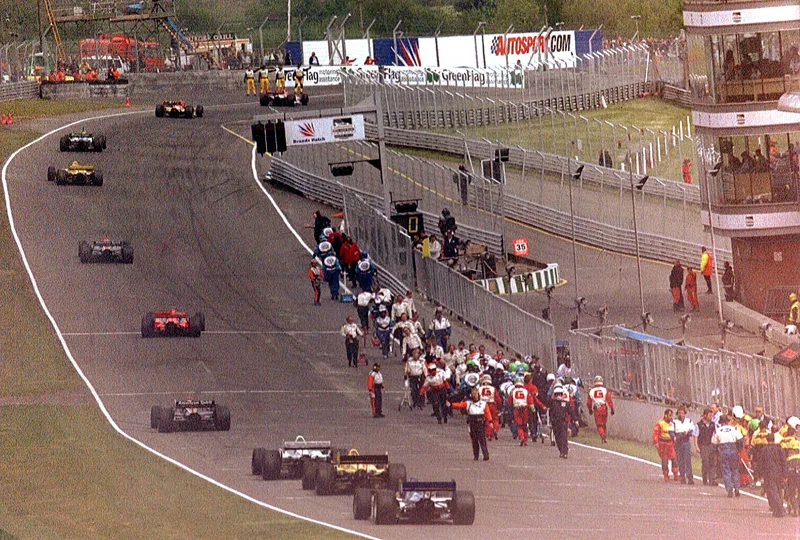
On 22 April 2007, Champ Car's Houston round took place at the JAGFlo Speedway at Reliant Park. It was the third round of the 2007 season and the sixth running of the event. The 93-lap race was timed to last one hour and 45 minutes, and it was the first race outside the western United States that year.
The circuit was a 10-turn street course of 2.709 km (1.683 miles), laid out in the stadium's parking lot. Bridgestone supplied primary, alternate and rain tyres, and all 17 cars used the Panoz DP01 chassis with Cosworth engines.
A penalised pole, a fuel strategy that ran dry and an 18-year-old's record podium made the 2007 Grand Prix of Houston a memorable Champ Car race.
Why did the Houston race matter for the season?
The first three races of 2007 came in three successive weekends. Bourdais, the defending winner, had crashed out of the season-opening Vegas Grand Prix before winning from pole at the Grand Prix of Long Beach. He said that win had given the team momentum to carry into Houston.
Will Power led the Drivers' Championship with 59 points before the race, followed by Alex Tagliani on 44. Bourdais was 19 points behind Power, while Bruno Junqueira had 36 and Robert Doornbos 35. The championship was tight, and the Houston result would shift the order.
Paul Tracy was out after fracturing a vertebra in a practice crash at Long Beach, and Oriol Servia stood in for him again after a second-place finish at Long Beach. Mario Dominguez's future with Forsythe Championship Racing was uncertain, because his contract was due to expire after the Houston race.
What were the problems with the track?
Practice began with Power setting the early pace at 59.417 seconds, with his teammate Simon Pagenaud almost a tenth of a second behind. Tagliani was fastest in the first preliminary session at 59.569 seconds, and the Friday sessions were full of spins and red flags.
Drivers had complained about the bumpy surface at the venue. The previous year's race had produced complaints that the bumps were worse than those at the San Jose Street Circuit. To improve the track, organisers added a chicane in the second turn and laid concrete slabs on sections of the stadium parking lot. The slabs did not fit together seamlessly, so the surface stayed uneven.
Doornbos walked a lap of the circuit and said that there were no visible traces of motor racing anywhere, as if no one had ever raced there before.
How was the grid decided?
Qualifying took place in two sessions of 60 minutes, on Friday and Saturday. Each session was split into 15 minutes of open practice, a 10-minute break and an open qualifying period of at least 20 minutes under green flags. Each driver could complete no more than 15 timed laps, and the fastest driver in each session earned a front-row start and one championship point.
On Friday, Bourdais set the fastest time at 58.376 seconds, but Power's best time was thrown out after he was judged to have blocked Wilson. Rahal qualified third, ahead of Wilson and Tagliani, and Servia took sixth. Figge, who had been injured in a crash at Long Beach, withdrew and was replaced by Roberto Moreno, a driver coach at Pacific Coast Motorsports who had not raced in the series since 2003.
On Saturday Bourdais recorded a time of 57.242 seconds and took the pole. However, Champ Car vice president of operations Tony Cotman ruled that he had held up Power during a flying lap and slowed him by between 2.5 and 3 seconds. The penalty moved Bourdais back to second, and Power took pole with a lap of 57.405 seconds. It was the third pole of Power's career.
Wilson started third, ahead of Jani, who recorded the best qualifying result of his career in fourth, and Servia in fifth. Rahal took sixth, and Pagenaud seventh. Gommendy was eighth and Dominguez ninth, while Junqueira's spin brought the session to an early end and left him 10th. Legge had to start from the back in 17th place.
How did the race start?
The race began at 2:00 pm local time under sunny skies, with air temperatures of 26 to 27 C (79 to 81 F) and track temperatures of 33 to 36 C (92 to 97 F). A caution flag came out on the first lap because the drivers had not lined up correctly for the rolling start.
Bourdais drove through the turn-two chicane on the second lap and took the lead from Power, who then fell behind Wilson. Officials ordered him to give up the place for cutting the course, which he did. Later he out-braked Wilson at the chicane to retake the lead, and he stayed ahead for most of the race.
Team Australia had a bad start, as Pagenaud picked up a puncture and pitted. Moreno then hit Halliday at the chicane, which brought out a second caution, and Moreno had to make a second stop when his team left a tool on the nose of his car.
What happened in the middle of the race?
Bourdais led the field at the restart, and Servia was promoted to second after saving fuel in the early green-flag running. Rahal, Wilson and Jani completed the top five. Legge bypassed the chicane and had to let Gommendy pass her as a penalty. Moreno stalled his engine after spinning at turn eight, which brought out a third caution.
Racing resumed with Bourdais still in front. Power and Wilson made contact on the restart, damaging Power's front wing and puncturing one of Wilson's rear tyres. Legge then hit Tagliani from behind and spun him, though no caution was shown. Pit stops followed, and Dominguez drove off pit road on cold tyres and collided with Power's nose, which led to the fourth and final caution.
Bourdais had pitted just before that caution and so avoided a penalty. Gommendy inherited the lead, and his team planned to keep him out front in the hope of a late caution to save fuel.
Why did Gommendy's fuel plan fail?
Gommendy's strategy depended on a caution that never came. The race was timed, so it would end when the clock ran out rather than at a fixed lap count. His team wanted a caution lasting at least four laps, which would let him save fuel while the others kept running. Bourdais applied heavy pressure in the closing laps, and with about eight minutes left Gommendy's car slowed to a halt near the entrance to pit road. Bourdais retook the lead while grazing Gommendy's car with his front wing.
No caution was shown for Gommendy because officials ruled his car was in no danger of being hit. Bourdais held the lead to the flag, and he set the fastest lap of the race, 58.018 seconds, on the final tour.
Who finished where?
Bourdais won, his 25th career victory. That equalled Gordon Johncock, the two-time Indianapolis 500 winner, for the 11th-most wins in top-level American open-wheel racing. He earned US$75,000 for the victory.
Rahal finished second, 4.818 seconds behind. At 18 years, 3 months and 18 days old, he became the youngest driver in series history to finish on the podium, beating the record set by Andrew Ranger at the 2005 Grand Prix of Monterrey. It was also the first one-two finish for Newman/Haas/Lanigan Racing since the 2005 Hurricane Relief 400.
| Specification | Detail |
|---|---|
| Race date | 22 April 2007 |
| Race length | 93 laps, timed at 1 hour and 45 minutes |
| Winner | Sebastien Bourdais, 62 laps led |
| Second | Graham Rahal, 4.818 seconds behind |
| Third | Robert Doornbos |
| Fourth | Oriol Servia |
| Fifth | Simon Pagenaud |
| Race winner's prize | US$75,000 |
| Lead changes | Six, between four drivers |
| Attendance | 168,259 over three days |
Doornbos finished third, his second podium in his first three starts. Servia took fourth and Pagenaud fifth. Power was 11th, one lap down, and Moreno 12th, three laps down.
How did the drivers react?
Bourdais called the weekend weird. He said he had let Wilson take the lead because he thought Wilson was struggling to make his fuel target, and that he had kept the pressure on until Wilson could no longer keep the pace.
Rahal said his team had sorted out its problems after a disappointing qualifying session, and that he had saved a lot of fuel to keep pace with Servia. Doornbos was thrilled with third and credited his engineers' pit strategy.
Gommendy said the car had not been good when the team arrived, but the crew worked hard every day and reached the race with a strong car. Power was disappointed. He said he had been slow on fuel at his stop, lost positions and then made a move that was not on, which he took responsibility for. Wilson agreed that Power was at fault for their collision, which cost his strategy. Gommendy was proud of his team despite the lost lead.
What did the result mean for the championship?
Bourdais took the Drivers' Championship lead with 73 points from the first three races, three points ahead of Power. Doornbos moved to third and led the Rookie of the Year standings with 61 points. Tagliani dropped to fourth on 57, and Junqueira fifth on 53, with 11 races left in the season.
What happened to the event afterwards?
The Grand Prix of Houston drew a three-day attendance of 168,259, a 31 percent increase on the 2006 weekend. It was cancelled in 2008, when Champ Car merged into the IndyCar Series, because organisers judged that staging it outside Champ Car was financially unworkable.
The event returned as an IndyCar Series race in 2013.