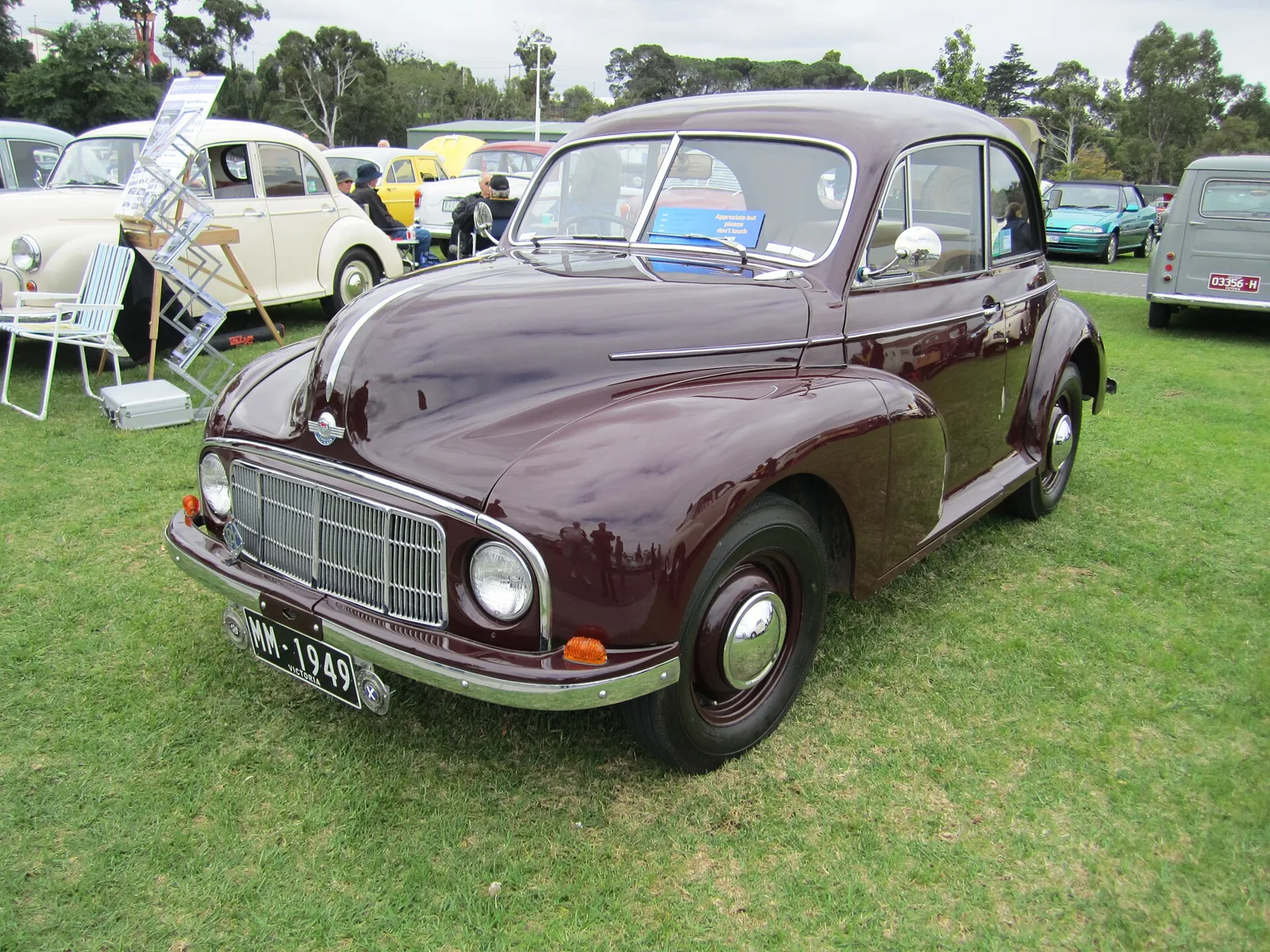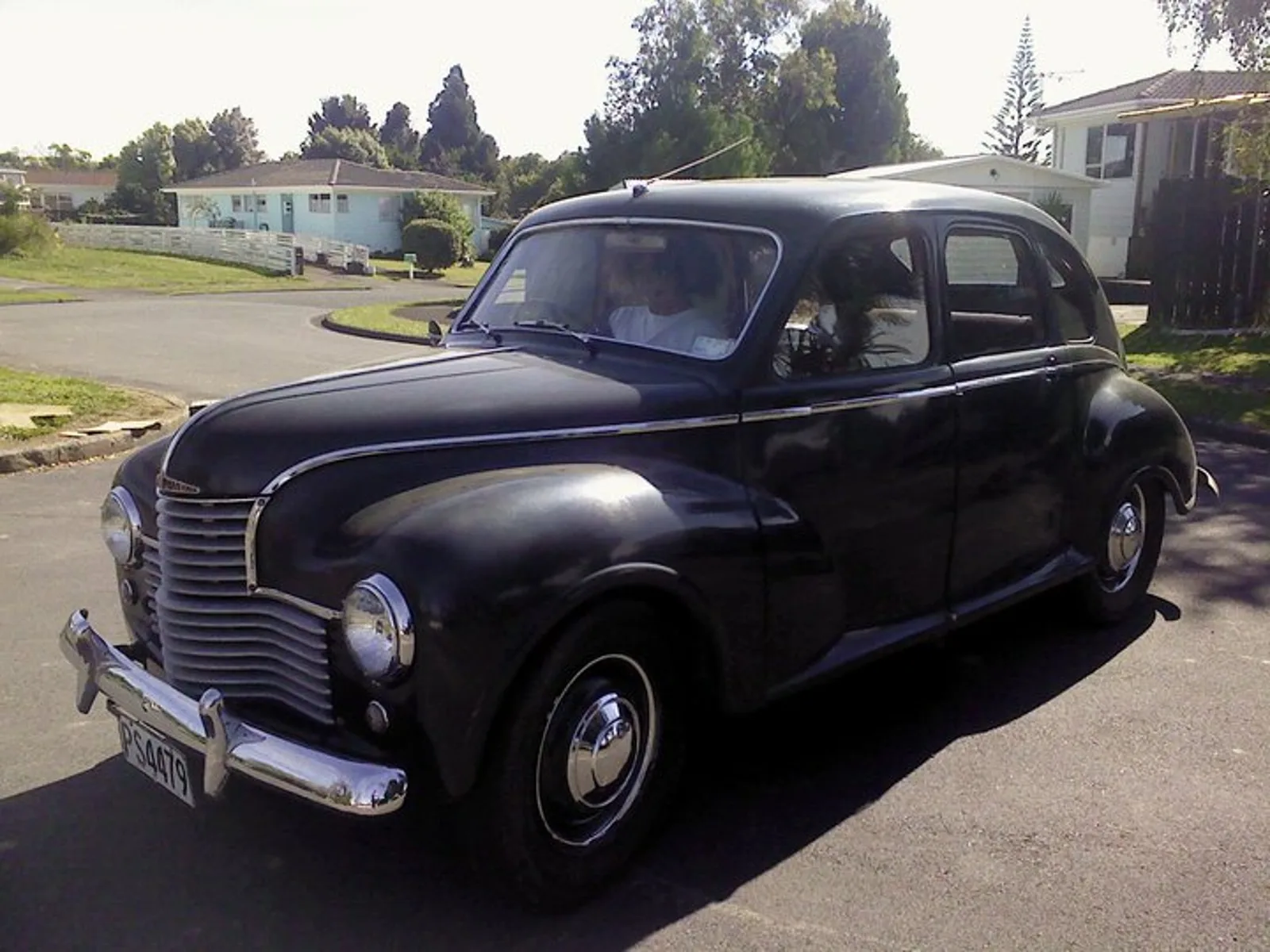
A Bradford firm that started with a flat-twin light car in 1906, built the Javelin and Jupiter after the war and closed its car business in 1954.
Jowett Cars was a Bradford manufacturer of light cars and commercial vehicles from 1906 to 1954. Founded by two brothers in 1901, it built the flat-twin Seven and the postwar Javelin before a 1953 purchase tax change and body supply problems ended car production.
Jowett Cars built light cars and light commercial vehicles from a works in Bradford, Yorkshire, between 1906 and 1954. It began as a cycle and engine business run by two brothers, and its engineering was built around low weight and low running costs. The postwar Javelin was its most ambitious car, but a purchase tax change and supply problems brought the car business to an end.
Who founded Jowett?
Jowett was founded in 1901 by the brothers Benjamin and William Jowett, with Arthur V. Lamb. The brothers started out in the cycle trade, then made V-twin engines for machinery drives. Some of those early engines found their way into other makes as replacements,, which were used in other local makes.
In 1904 the brothers formed the Jowett Motor Manufacturing Company, based in Back Burlington Street, Bradford. Their work covered general engineering, engine experiments and the building of the first six Scott motorbikes. That broad workload meant the first light car, though completed in February 1906, did not go into production until 1910.
A Bradford light car that grew into the advanced Javelin, then fell when the body supply and the purchase tax turned against it.
What was the first Jowett car?
The first Jowett car was a light car with an 816 cc flat twin water-cooled engine of 6.4 hp, a three-speed gearbox and tiller steering. Its aim was low weight, low price and low running costs. Its engine and gearbox were designed for a light car and built largely from aluminium, which kept the whole machine light.
The body was a lightweight open two-seater. Before production began, the car covered more than 25,000 miles (40,000 km) of exhaustive trials. Its low-speed torque and gear ratios suited the hills around Bradford, where poor roads made high top speed less important than pulling power.
The production car quickly became popular. Twelve cars were built before an improved model with wheel steering appeared in 1913, and 36 more followed before the First World War. The factory was then turned over to munitions manufacture, and two of the tiller-steered cars still survive.
How did Jowett grow between the wars?
Jowett Cars Limited was formed in June 1919 to make and sell motor cars, and it bought the car manufacturing part of the business. A new works site was bought at Springfield, Bradford Road, Idle, on the site of a disused quarry, and car making started there in 1920. The company went public on the London Stock Exchange in 1935.
The first vehicle from Idle was the Jowett Seven, using an enlarged version of the flat twin. It grew to 831 cc and then to 907 cc in 1921, and all Jowetts were Sevens until the four-cylinder engine arrived in 1936. Commercial vehicles based on the car chassis were built from 1922 and became an increasingly important part of the output.
The Long Four tourer came in 1923 with coil ignition and electric starting, priced from GBP 245, and a closed saloon followed in 1925. By 1929 the engine had removable cylinder heads for easier maintenance, and braking was on all four wheels. A fire swept through the works in September 1931 and halted production briefly.
The 1933 Kestrel brought a four-speed gearbox, and the 1935 Weasel was a sports tourer. The first four-cylinder Jowett came in 1936 with the 1166 cc twin-carburettor Ten, which ran alongside the twin-cylinder models that had grown to 946 cc in 1937. Benjamin Jowett retired in 1936, and William carried on until 1940.
What happened during the Second World War?
Car production stopped in 1940, but the factory kept making engines for motor-generator sets. It also built aircraft components and other military hardware, including a fire pump powered by a Jowett engine. Charles Clore, a property developer, bought the company in 1945, and he sold it in 1947 to the bankers Lazard Brothers.
The twin-cylinder engine was dropped from new cars after the war, although a 1005 cc version stayed in the commercial vehicles until the end. Those vehicles included the Bradford van and two Utility estate versions, along with chassis front ends for outside coachbuilders at home and abroad.
Why was the Javelin so important?
The Javelin was a complete change from earlier Jowetts. Designed by a team led by Gerald Palmer, it used a flat-four engine with pushrods, torsion-bar independent suspension at both ends and a unitary body. It was good for 80 mph (130 km/h) and had excellent handling, so it set a new standard for the marque.
In 1950 the Javelin was joined by the Jupiter sports car, whose chassis was designed by Eberan von Eberhorst, who had worked for Auto Union. Javelin production was planned at volumes the company had never attempted. Briggs Motor Bodies built a new plant at Doncaster to supply the Javelin and Bradford bodies fully trimmed, while the Jupiters were always built in-house at Idle.
The new running gear proved troublesome at first, and the Javelin bodies kept being mass-produced to the original schedule, leading to stockpiles. The engine and gearbox problems were eventually solved, but the Idle plant could not build the expected volume in the first place.
Why did Jowett stop making cars?
Export sales collapsed by 75 per cent in 1952, followed by sluggish domestic sales. Buyers waited for a temporary increase in purchase tax to be removed, and it was finally eased in April 1953, from 66 2/3 per cent to 50 per cent. The timing hit Jowett hard, because home sales in the last quarter of 1952 were only 15 per cent of the three quarters before it.
The body supply problem came next. Ford bought majority control of Briggs Motor Bodies in April 1953, and its Doncaster plant was sold on to Fisher and Ludlow. Fisher and Ludlow was swallowed up by the newly formed British Motor Corporation. Jowett could no longer get the bodies it needed, and car production ceased.
Javelin production was suspended in 1953, and the Bradford was outdated by then, although new tooling was ready. Demand for the Jupiter held, and it was built until the end of 1954. The company did not go broke, but it sold its main factory at Idle to International Harvester, which made tractors there until the early 1980s.
Jowett then switched to aircraft parts for Blackburn and General Aircraft at a former woollen mill at Howden Clough, near Batley. Blackburn took over the shell of the company in 1956, and parts for postwar cars stayed on sale until 1963, when the rest of the firm shut. About 65,000 vehicles had been made since 1946.
Jowett models at a glance
| Model | Years | Detail |
|---|---|---|
| First light car | 1906 (built from 1910) | 816 cc flat twin, 6.4 hp, tiller steering |
| Jowett Seven | 1920-1936 | Enlarged flat twin, 831 cc then 907 cc |
| Long Four | 1923 onward | Four-seater tourer from GBP 245 |
| Kestrel | 1933 onward | Four-speed gearbox |
| Jowett Ten | 1936 to the war | 1166 cc twin-carburettor flat four |
| Javelin | Postwar to 1953 | Flat-four push-rod engine, unitary body, 80 mph |
| Jupiter | 1950 to 1954 | Sports car built at Idle |