Reasonable suspicion, probable cause, voluntary roadside tests and the licence rule that turns driving into agreement to a chemical test.
Police can stop a car on reasonable suspicion, and need probable cause to arrest. Roadside sobriety tests are voluntary in the US, but after an impaired-driving arrest, implied consent laws attach to the driving licence and refusing a chemical test can mean suspension.
Nobody has to take a roadside balance test in the United States, and yet a single traffic stop can still end with a driver losing their licence for refusing a test. Both statements are true at once, and the gap between them is the whole subject of implied consent. A traffic stop is a short detention, but it moves through distinct legal stages, and what an officer can ask for, and what you can decline, changes as it passes from one stage to the next.
Why can police pull you over?
A traffic stop is a brief detention of a driver and everyone in the vehicle so that police can investigate a possible crime or a minor violation. In the United States it is usually treated as a Terry stop, named after the Supreme Court case Terry v. Ohio, and counts as a seizure. The bar for starting one is low. The standard the justices set asks only for a reasonable, articulable suspicion that a crime has happened or is imminent.
In practice that covers a lot of ground: an officer sees what looks like an equipment violation, or notices driving behaviour that suggests the driver is under the influence. Some places also run general roadblock checkpoints and check drivers at random. Traffic stops themselves date back to the 1920s, and they can occur at any point in the process, from a simple check before a ticket is written to a stop made with an arrest in mind.
At this opening stage, one purpose often matters more than the ticket. Police are frequently working out whether they have probable cause to make an arrest.
Before arrest the roadside tests are voluntary. After arrest, the licence you hold can make the chemical test close to compulsory.
What happens during a traffic stop?
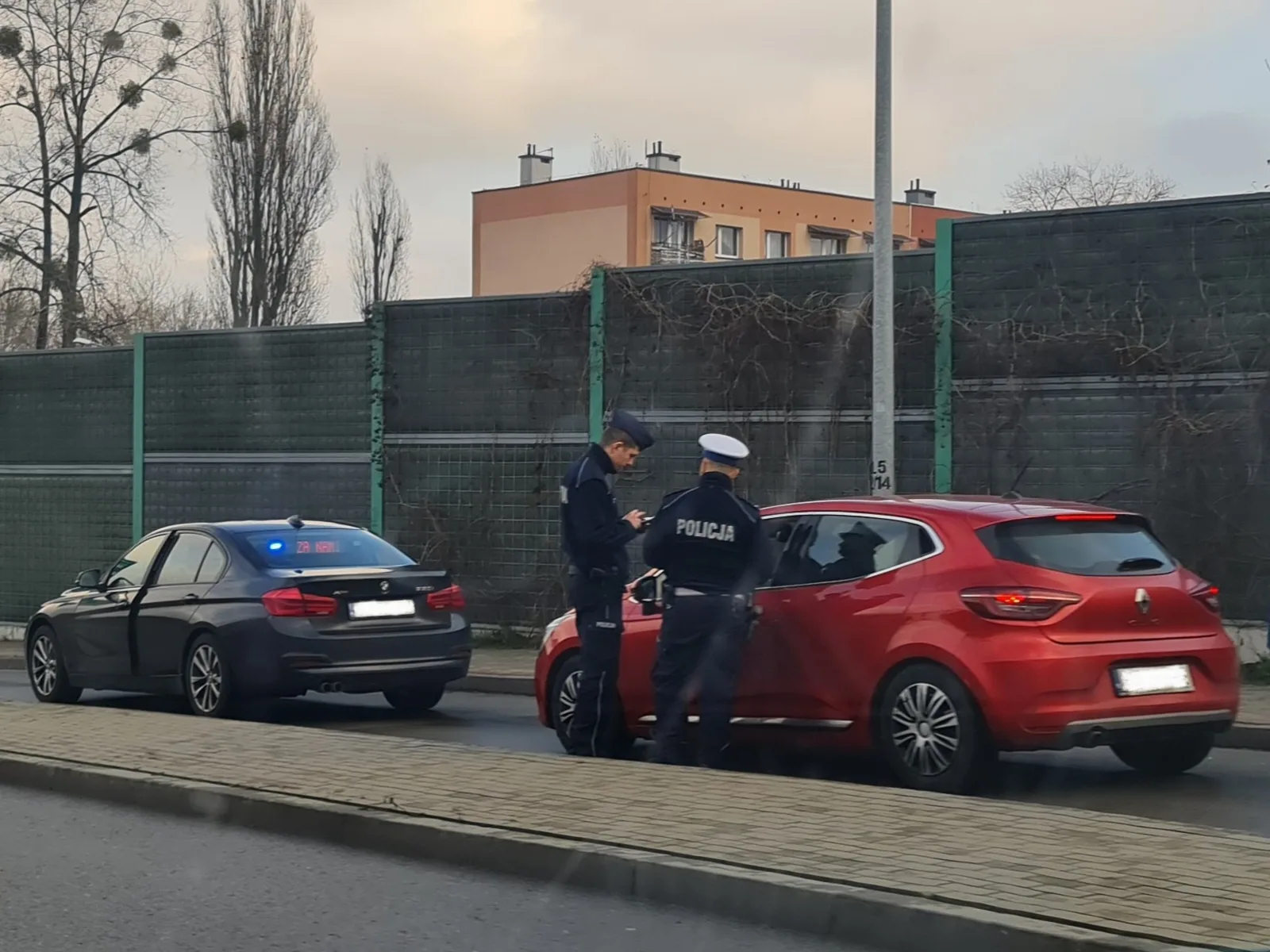
The stop begins with signals: sirens, loudspeakers, and rotating or flashing lightbars on every marked patrol vehicle, traditionally, with undercover cars the exception. Police departments often use blue lights to tell a driver to pull over. The officer expects the car to move to the shoulder and stop. Ignoring the signal can earn a citation for failing to yield to an emergency vehicle, and it can make the officer suspect that the driver is trying to flee. Unlike other emergency responses, where the patrol car would sweep past, the officer pulls in behind the stopped vehicle.
What follows depends on how serious the officer believes the offence to be. The driver may be arrested and taken to jail. More often, the officer checks for outstanding warrants and then issues a citation, a ticket known in some places as a notice to appear or a summons. Sometimes the officer simply gives a warning, spoken or written.
When the driver is not the owner, only the driver is penalised for the ticket. Even so, the owner of a stopped vehicle will usually see higher insurance rates, a rule introduced to protect insurers from fraud. Many US states also require traffic approaching a stopped police vehicle on a freeway to merge away and leave a full lane as a buffer.
Once the car is stationary the officer holds a useful power. In a routine stop the Supreme Court allows the officer to tell the driver to step out, and passengers too.
What can police ask before an arrest?
Quite a lot, and without the warning many people expect. Police do not have to read a Miranda warning during an ordinary stop, because a stop before formal arrest is not treated as custodial under Miranda. Officers often use that window to ask questions designed to draw out answers that could be used as evidence if an arrest follows.
Testing behaves differently at this point. In the US, implied consent laws mostly leave the Preliminary Breath Test alone, the small handheld device used at the roadside, as opposed to the evidential breath machines used later. Roadside field sobriety tests are voluntary in the US. A few exceptions exist: some jurisdictions apply implied consent consequences if a commercial driver or a driver under 21 refuses a handheld test, although these are generally not counted as refusals under the main implied consent laws. Michigan, for example, has a roadside breath test law, but for non-commercial drivers the penalty is a civil infraction with no points on the licence.
A handheld unit can only produce evidence usable like a station breath test when the device is certified and calibrated, evidential procedures are followed, and an implied consent warning may have to be given before the test.
What does probable cause change?
Probable cause is the point where officers hold enough evidence to support a warrant for arrest. It sits above reasonable suspicion and below the proof needed to convict. In drink-driving stops, that evidence is what lets police demand an evidential chemical test by invoking implied consent. Whatever label a state puts on it, the testing itself counts constitutionally as a search incident to arrest.
That is why the order of events matters. Before probable cause, the driver can say no to the roadside balance and eye tests. After arrest, the choice looks very different.
What is implied consent?
Implied consent is permission that nobody speaks aloud. It is granted by a person's actions and circumstances, and sometimes by silence. The standard example is an unconscious crash victim who receives medical treatment without having been asked.
On the road, it works through the driving licence. All US states have licensing laws under which a licensed driver is taken to have agreed to a certified breath test or a blood sample, or a similar way of finding blood alcohol concentration. A driver who then refuses to cooperate after being arrested on suspicion of impaired driving can be punished, including civil penalties such as a suspended licence.
How the courts have shaped it
| Case | Year | What the court held |
|---|---|---|
| Schmerber v. California | 1966 | A blood sample taken without a warrant was justified because the body's metabolism steadily lowers blood alcohol; the Fifth Amendment does not bar blood tests |
| Birchfield v. North Dakota | 2016 | Breath tests without a warrant are constitutional; blood tests that pierce the skin are not |
| People v. Arredondo (California) | 2016 | A warrantless blood draw from an unconscious suspect was upheld on statutory implied consent, exigent circumstances and good-faith reliance |
The Schmerber ruling rests on timing. Waiting for a warrant would let the body clear the alcohol, so the pressing circumstances justified the blood draw. The court also reasoned that blood test results are not testimony or any other communicative act, so the Fifth Amendment, which covers interrogation and testimony, was not breached.
Birchfield drew a line inside the same family of tests. The court agreed that breath and blood tests are both searches under the Fourth Amendment, but it found that requiring a breath test without a warrant is constitutional, while requiring a more invasive blood test that breaks the skin is not, since traffic safety can be served by less invasive means. On implied consent, the court noted that its earlier opinions had referred approvingly to the concept, then added that the penalties attached to that supposed consent cannot be unlimited. In the court's words, drivers can be treated as having agreed only to conditions that are reasonable and linked to the privilege of driving.
California went in a different direction in Arredondo. A court of appeal there considered a blood sample drawn from an unconscious suspect, and ruled that the defendant had consented in advance, purely through the state statute declaring that anyone who drives in California is deemed to have consented to blood alcohol testing under specified conditions.
How do high-risk stops and car searches work?
The most dramatic version of the question is the high-risk stop. When officers have strong reason to think someone in the car has committed a serious crime and may be armed, such as armed robbery or a felony warrant for the registered owner, they work to keep absolute control. Extra officers arrive first, and they use patrol cars as cover and often draw weapons. Instructions come over the loudspeaker. The driver switches off the engine and removes the keys, sometimes tossing them out of the window. Occupants then leave one at a time with empty hands, place their hands on their heads, walk backwards and lie flat. Only when all have done so do officers approach, handcuff, search the occupants and put them in patrol cars. After that the vehicle is usually searched for weapons and evidence, following the department's standing procedures.
Searches in ordinary stops are a different matter. Some North Carolina cities encouraged drivers to decline searches by requiring officers to obtain a signed form, which made the voluntary nature of a search explicit.
Why traffic stops are under scrutiny
A number of states and cities now restrict or discourage minor stops, such as those for broken equipment, to cut the risk to both police and drivers and to protect trust in the police. Across the country, speeding accounts for 43% of stops, broken equipment for 24% and suspected criminal activity for 9%.
Technology offers another route. Some jurisdictions use traffic cameras and mail the ticket, or pull the car over afterwards. Texas allows police to send a text message when both driver and agency have signed up. In California the registered owner is liable for injuries and damage, and equipment tickets can be mailed to that owner. The law makes driver and owner both answerable for equipment faults, yet Vehicle Code 40001(e) says not to cite the driver, apart from out-of-state cars, so there is little reason to stop a car instead of posting the ticket.
There is a training gap as well. Roughly three in four police officers (75%) have had no recent hands-on training in getting an uncooperative person out of a car. Of the noncompliance cases, 42% involved disobeying the officer and 24% involved not answering the officer's questions, which lawyers recommend.
Pressure to produce stops is another theme. Some departments set minimum monthly stop quotas for officers, or supervisors push for numbers, and federal grants to states often treat ticket counts as a measure of performance. The federal government has long funded and trained local traffic enforcement. Its programme, known as DDACTS (Data-Driven Approaches to Crime and Traffic Safety), is backed by NHTSA with two Department of Justice agencies and trains local forces to combine traffic enforcement with crime fighting, and similar approaches have in the past been accused of promoting racial profiling.
Illinois found contraband in one stop out of 242 in 2016. A July 2021 study found no link between state patrol traffic stops and fewer deaths in motor vehicle crashes. Elsewhere, France and also England and Wales stop drivers at between a quarter and a third of the American rate.
Who gets stopped, and the argument over the data
Researchers at Stanford have compiled data on the race of drivers in 200 million stops. California's annual report under its Racial and Identity Profiling Act shows minorities forming a bigger share of stops than of residents in each area. Several organisations reply that comparing stops with resident population is the wrong approach, and prefer other yardsticks: the driving-age population, licensed drivers, traffic violators, arrests or crime suspects. They point out that minorities, on average, hold more jobs and are less often at home to work, so spend more time on the road than their share of the residential population suggests. In 2007 the New Mexico Sentencing Commission dismissed resident Census figures as a "very poor method".
Data quality is a separate worry. A Connecticut investigation found that 26,000 tickets reported by state police were missing from court records. The researchers suggested troopers were trying to look productive, and that the unmatched stops were disproportionately white, which narrowed the apparent racial gap. The union blamed data entry mistakes.
The professional courtesy card
One oddity of the system is the card. Some police unions print cards for members to hand to friends, family and professional contacts, and an officer who is shown one at a stop faces pressure from colleagues and supervisors to give the holder a warning instead of a ticket. Unions in New York City, New Jersey, Boston, Los Angeles and Philadelphia have issued them. In Los Angeles they were a time-honoured tradition by 1923, despite attempts by the police chief and a councilman to end them, and the California Highway Patrol handed them out under Chief Cato, appointed in 1931. They have been in use since at least 1936 and were widespread in the 1950s. In 2006 the New York City Civilian Complaint Review Board ruled that they are private property that officers may not confiscate without cause. Law firms warn that showing a card, and especially asking for leniency, can be illegal if it amounts to trying to influence an officer.