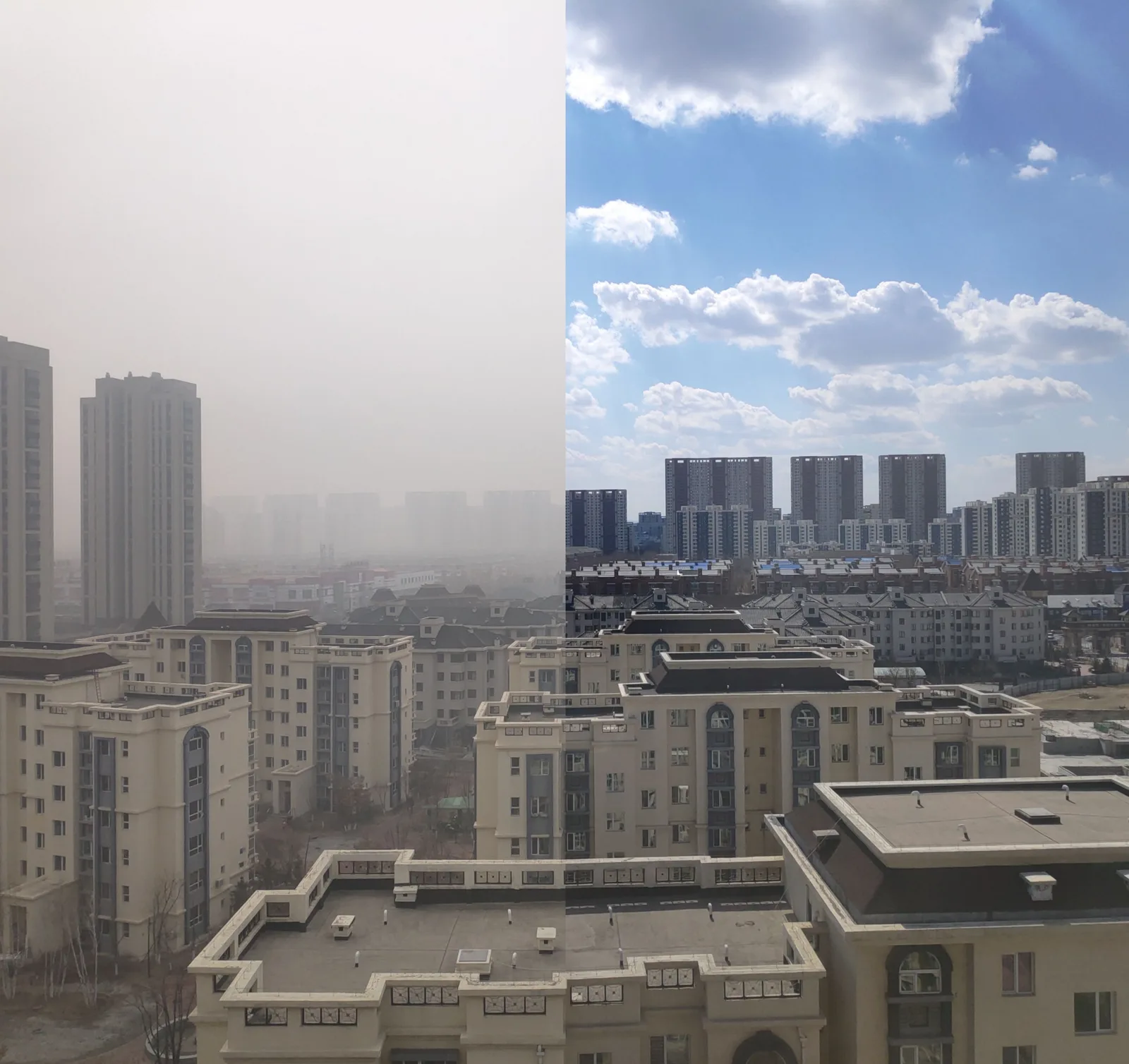
Sunlight, nitrogen oxides and hydrocarbons make smog; a 1963 law and its 1970 rewrite then set the emission rules cars in the United States must follow.
Smog forms when sunlight reacts with nitrogen oxides and volatile organic compounds from vehicle exhaust and industry, producing ground-level ozone. The Clean Air Act, first enacted in 1963 and expanded in 1970, lets the EPA set the emission rules that cars in the United States must meet.
The man who worked out what was choking Los Angeles was a flavour chemist. Arie Haagen-Smit spent his working life analysing tastes and smells, and in 1948 he adapted his laboratory equipment to trap chemicals from polluted air. He found ozone in the city's smog, and then he found where it came from: sunlight acting on nitrogen oxides in car exhaust and on hydrocarbons from cars and oil refineries. That discovery began the story that ends with the federal emission limits cars in the United States must meet.
What is smog, and where did the word come from?
Smog is smoky fog. The word joins smoke and fog, and it first described the dense murk that hung over London from the nineteenth century to the middle of the twentieth, a fog so thick it was nicknamed the pea-souper, the London particular or simply London fog.
Credit for the word usually goes to Henry Antoine Des Voeux, who used it in a 1905 paper called Fog and Smoke for a Public Health Congress. A London newspaper reported the idea on 26 July 1905 and praised him for coining it. The history is messier than that. The term turns up in a Santa Cruz and Monterey handbook from 1880, and a writer in the Sporting Times claimed in December 1881 to have invented it.
What the word describes is a mixture, not a single substance. Smog contains nitrogen oxides, a sulfur oxide, ozone, soot and fine particles, and it comes from burning coal, from vehicles, from farming, from industry and from forest fires, plus the products of the chemical reactions those emissions set off in the air.
A flavour chemist found ozone in Los Angeles smog in 1948, then traced it to car exhausts and oil refineries.
What causes smog: the summer type and the winter type
Smog comes in two seasonal flavours. Winter smog belongs to cold weather and to atmospheric inversions, which trap pollution close to the ground like a lid. People burn more coal and other fossil fuels to heat their buildings, and the lid stops the smoke from dispersing. London's pea-soupers were winter smog, and so are the autumn and winter episodes in China, where burning coal for heat is among the biggest contributors to dirty air. Some Chinese cities have shut roads, schools or airports because of the smoke. Harbin did so in 2013. Coal smoke is an old problem, too: English records of it go back to the Middle Ages.
Summer smog is a different animal. Warm temperatures and strong sunlight drive chemical reactions between pollutants, and the main product is ground-level ozone. This is photochemical smog, and Los Angeles is the textbook case, with its sunshine, its warm dry climate and its great number of motor vehicles. It is not confined to California. Photochemical smog is present in every modern city, and because it drifts with the wind it can reach thinly populated areas too. In Delhi, stubble burning on neighbouring farmland has made the smog worse since the 1980s. Beijing, Lahore, Mexico City and Tehran are among the other cities where an inversion often pushes pollution levels up.
Chemists split the ingredients into two groups. Primary pollutants are emitted directly: sulfur dioxide from a coal fire, nitric oxide from an exhaust pipe. Secondary pollutants are made in the air when primary ones react, and ozone is the one that matters most.
How do cars make smog?
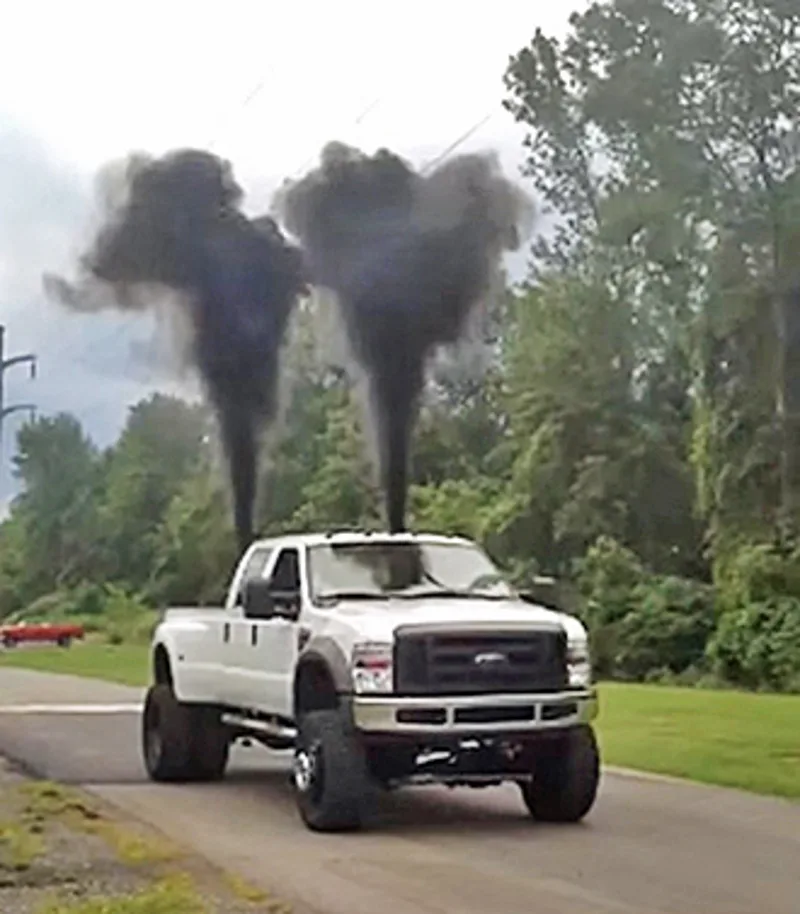
Trucks, buses and cars all add to it. Exhaust systems and air conditioning both release by-products that go into the mix, and in some large cities vehicles are a major ingredient of smog.
Three groups of pollutant do most of the damage on the transport side. Carbon monoxide is one. Nitrogen oxides, written NO and NO2 and lumped together as NOx, are another. The third is the volatile organic compounds, which include the hydrocarbons that make up petrol and diesel. Sulfur dioxide and particulate matter come out of tailpipes as well, but in far smaller quantities than the other three.
Nitrogen oxides and volatile organic compounds are the pair to watch. Given sunlight, heat, moisture and ammonia, they turn into toxic vapours, ozone at street level and fine particles.
How sunlight turns exhaust into ozone
The chemistry is easier to follow with a picture in mind. Think of ozone as water in a basin. Sunlight is the tap. Nitrogen dioxide absorbs solar energy and splits into nitric oxide and a loose oxygen atom, and that atom attaches itself to an ordinary oxygen molecule to make ozone. Nitric oxide, meanwhile, is the plug hole, because it works to remove ozone again. Here is where the volatile organic compounds come in. They react with the nitric oxide and, in effect, block the drain, so the basin fills.
The timing matters. During the morning rush hour, traffic and industry push a burst of nitric oxide and hydrocarbons into the air. Some hydrocarbons are quickly oxidised by hydroxyl radicals and become peroxy radicals, which in turn convert nitric oxide into more nitrogen dioxide, and that is fresh raw material for the sunlight to work on. Ozone does not settle at a steady level. Its concentration keeps climbing through the day, which is why photochemical smog is favoured by high summer sunshine.
A temperature inversion makes it worse by stopping the air from mixing upwards. Pollutants, ozone included, pile up near the ground. The atmosphere does have a way of cleaning itself: nitrogen dioxide can be converted to nitric acid, a sticky compound that clings to surfaces or dissolves in water and rains out. But in a polluted city the supply of fresh pollutant outruns the clean-up.
Ozone is not the only product. The reactions also make peroxyacetyl nitrates, known as PANs, which are potent irritants of the eyes and lungs, and aldehydes such as formaldehyde, which add to the irritation and the smell of a smog episode. When sulfur dioxide and nitrogen oxides are oxidised in the troposphere they become sulfuric and nitric acid, and mixed with water those are the main components of acid rain.
Nature makes smog ingredients too
Cars are not the only source. An erupting volcano pours out sulfur dioxide and particles, two key ingredients, but the haze that results is called vog to mark it as natural, and its chemistry differs from the photochemical kind.
Plants contribute as well. Vegetation and soil together release a large quantity of hydrocarbons, mainly isoprene and terpenes, and plant hydrocarbons can be more reactive than man-made ones. Isoprene reacts very fast with hydroxyl radicals in the air, and the products of that reaction increase ozone formation.
The discovery that tied smog to car exhausts
Until the 1950s nobody properly understood what photochemical smog was made of. Haagen-Smit's 1948 work changed that. He identified ozone in Los Angeles air, and he went on to show that the key ingredients of ozone, and of the smog around it, were two things reacting in sunlight: nitrogen oxides coming out of car exhausts, and hydrocarbon gases from cars and from oil refineries.
He collaborated with Arnold Beckman, an instrument maker who built smog detection equipment. Beckman patented a device for logging gas levels in the atmosphere on 7 October 1952, and he also built mobile air-testing vans for government and industry.
What smog does to people
Ozone, PANs and aldehydes irritate the respiratory system and the eyes, and they reduce lung function. Older people, children and anyone with a heart or lung condition such as emphysema, bronchitis or asthma are hit hardest. Ozone can inflame the breathing passages, cut the lungs' working capacity and bring on wheezing, coughing, shortness of breath and pain when inhaling deeply. It also dries out the lining that protects the nose and throat, which lowers the body's resistance to infection. Hospital admissions and respiratory deaths often rise when ozone levels are high.
Researchers are still working out the long-term effects. An experiment that recreated pollution like that of the 1952 Great Smog of London found a link between early-life exposure and the development of asthma. A study published in Nature on smog episodes in Jinan, eastern China, during 2011-15 tied them to a 5.87% increase in overall mortality, within a 95% confidence interval of 0.16% to 11.58%. In Xi'an, a comparable study linked ambient air pollution with more deaths from respiratory disease.
The United States Environmental Protection Agency publishes an air quality index so the public can read these numbers. For ozone averaged over eight hours, a reading of 85 to 104 parts per billion by volume counts as unhealthy for sensitive groups, 105 to 124 as unhealthy, and 125 to 404 as very unhealthy.
Clean Air Act history: from 1963 to the 1970 rewrite
The Clean Air Act is the United States' main federal air quality law. It was first enacted in 1963 and has been amended many times since. The name is slightly slippery. The 1963 act carried the title, but when people talk about the Clean Air Act they usually mean the 1970 act, and the statute as it now stands is the product of several acts of Congress. The Environmental Protection Agency administers it with state, local and tribal governments and writes the detailed regulations.
The early years were thin on national control. Before 1965 there was no national programme for setting standards on how much of a pollutant could be present in outdoor air, and before 1970 the federal government did not hold primary responsibility for setting them. The 1965 date matters to car owners for another reason: from then on Congress ordered ever tighter limits on vehicle engine technology and tailpipe emissions.
The 1970 amendments changed the balance of power. They told the EPA to work out which pollutants were the biggest danger to people and their surroundings, and to set National Ambient Air Quality Standards for each. Standards that protect health are called primary, and those that protect other aspects of welfare, farm crops for instance, are called secondary. In 1971 the agency issued its first rules, for six pollutants: sulfur oxides, particulates, hydrocarbons, nitrogen dioxide, carbon monoxide and photochemical oxidants. Lead was left off at first and handled through the powers over mobile sources, until the Natural Resources Defense Council won a court case in 1976 that forced the agency to list it.
The 1977 amendments added a regular review of the standards and a permanent independent scientific committee to advise the agency. The EPA added a rule for the finest particles, PM2.5, in 1997, and it updates the standards from time to time as health science develops.
Clean Air Act cars: the tailpipe rules
For anyone who drives, the mobile source programme is the part of the law that counts. It covers pollutants from internal combustion engines in cars, trucks and buses: carbon monoxide, which is colourless and odourless and interferes with the blood's ability to carry oxygen; nitrogen oxides, which feed ground-level ozone and acid rain; particulate matter, volatile organic compounds, hydrocarbons and carbon dioxide.
The legal test is demanding but flexible. The law requires the EPA to set and regularly update rules for each class of motor vehicle, using technology that delivers the greatest emission reduction achievable once availability, cost, energy use and safety have been weighed. Rules cannot ignore what manufacturers are able to build, and they cannot stand still either.
How much cleaner are cars since 1970?
| Pollutant | Fall since 1970 | Credited to |
|---|---|---|
| Carbon monoxide | More than 80% | Engine design and catalytic converters |
| Nitrogen oxides | Over 50% | Engine technology and stricter standards |
| Particulate matter | More than 90% | Cleaner-burning engines and diesel particulate filters |
| Volatile organic compounds | Around 85% | Fuel management and evaporative emission controls |
| Hydrocarbons | Approximately 80% | Combustion technology and engine control strategies |
Nitrogen oxides fell by the smallest margin, and they are one of the two ingredients, with volatile organic compounds, that the smog chemistry above depends on.
Other parts of the law that reach drivers
A separate programme deals with hazardous air pollutants, a list of 187 toxic substances that includes benzene, which is found in gasoline, and formaldehyde, which also forms during smog. Most of those rules target industrial sites, and mobile sources are mainly handled under their own powers. The 1990 amendments fixed the list in law, demanded technology-based controls and required the EPA to review and update its standards every eight years.
The 1990 amendments also created the Acid Rain Program, the first cap-and-trade scheme in the country. It aimed at sulfur dioxide and nitrogen oxides from power plants, and sulfur dioxide emissions from power plants fell by 50% by 2000. A further title in the same amendments phased out chemicals that damage the ozone layer in line with the Montreal Protocol, including chlorofluorocarbons that were once common in refrigeration and air conditioning, and the EPA licenses technicians who use such chemicals.
The law in court
None of this has gone unchallenged. Environmental groups have taken the Clean Air Act to court to demand stricter enforcement, and states and utilities have done the same to win more room in how the rules apply. The law has substantially reduced air pollution and improved air quality in the United States. The EPA counts the savings in trillions of dollars and in thousands upon thousands of lives each year, though the exact benefits depend on what is counted.
What it means for someone buying or driving a car
The practical result is that vehicle emissions of the main smog pollutants have fallen since 1970, by margins running from over half to more than nine-tenths according to the figures above. The equipment doing that work is ordinary hardware: catalytic converters, diesel particulate filters, evaporative controls and engine management. Carbon dioxide is on the list of pollutants the vehicle rules address too.
The pollutants that matter most for the smog a car helps to create are the nitrogen oxides and the hydrocarbons. They are also the ones that react in sunlight, which is why the same exhaust is a bigger smog problem in a sunny, warm, dry city full of traffic than in a cold, cloudy one.
How the rules keep changing
The law builds in its own revision. The EPA must keep updating the vehicle rules in step with technology, the ambient standards are revised from time to time as health evidence grows, and the toxic-pollutant standards come up for review every eight years. Newer programmes under the act deal with acid rain, the ozone layer and climate change.