What green, yellow, red and chequered tell a driver, how a yellow becomes a safety car or a full-course slowdown, and how Friday to Sunday is carved up in Formula One.
Racing flags tell drivers about track conditions: green means racing or a restart, yellow means hazard ahead and no overtaking, red means the session is too dangerous to continue, and chequered ends a session. An F1 weekend runs Friday to Sunday with practice, a three-part qualifying knockout and a Sunday race, or a sprint format.
The same yellow flag that makes a Formula One driver lift off tells a jockey in horse racing to pull up and the race to be declared void, and tells a snowmobile racer to keep his skis on the ground. Flags mean different things in different sports, and even within motor racing the colours shift from series to series.
Most of them share a core vocabulary, though, and the Formula One weekend built around them has been reshaped so often that it is worth following the changes.
What do racing flags mean?
Racing flags indicate track conditions and carry important messages to drivers. The starter, sometimes the grand marshal, waves them from a stand near the start-finish line, while marshals at observation posts around the circuit relay both local and course-wide conditions. Some circuits add lights to back up the main flag.
There is no universal system for all of motorsport, but most series have standardised their own, and some flags travel between them. The chequered flag, for instance, is commonly used everywhere to end a session, whether practice, qualifying or a race, whereas penalty flags differ by series. The flags set by the FIA are the most widely used internationally, which cover Formula 1, the World Endurance Championship and the WTCC and are taken up, occasionally adapted, by bodies such as the UK's MSA.
Status flags tell every driver the general state of the course. Green, yellow and red may be supplemented or replaced by lights at points around the circuit.
The same yellow flag that slows a Formula One driver tells a horse-racing jockey to pull up and the race to be declared void.
What does the green flag mean?
A plain green flag is usually the starter's signal that a race has begun, and mid-race it tells drivers that a caution or delay is over and racing resumes. The waving is almost always matched by green lights placed around the course, particularly on ovals. A race that is neither neutralised nor delayed runs under green-flag conditions; the starter does not wave continuously, and an empty flag stand means all is safe, with the green lights still lit.
A marshal's green flag can close a local yellow zone, and a separate one at pit entry says the pit lane is open. NASCAR adds a twist: green and yellow waved together means a start or restart under caution with laps counting towards the distance, the "running yellow" that typically follows a rain delay as the track dries.
Tradition has a role. In 1980 USAC flagman Duane Sweeney began waving twin green flags at the start of the Indianapolis 500, while restarts get a single flag. Since about the 1990s, some races have invited celebrity guests to wave the flag. Before starting lights arrived in Formula One and most FIA events, the national flag of the host country started the race, a practice kept for equipment failures or tradition at events such as the 24 Hours of Le Mans.
What does the yellow flag mean?
The solid yellow flag, or caution flag, obliges drivers to slow because of a hazard, whether a crash, a stationary car, debris or a spot of rain. How it is shown differs by sanctioning body.
In Formula One a yellow at the starter's stand or a marshal station warns of a hazard downstream, and the way it is displayed says how serious it is. A single waved flag means the hazard is on the racing surface. A single stationary flag means it is near the surface. Two flags waved together mean the hazard wholly or partly blocks the track, as in an accident, so marshals may be on the circuit and drivers should be ready to stop. Overtaking is forbidden from the flag until the hazard or the next station showing green is passed.
When the safety car is out, every flag point shows an SC board with a waved yellow, and the whole circuit is under standard yellow conditions with overtaking completely forbidden. As the safety car comes in, a green flag appears at the start line and at every flag point for one lap, and nobody may overtake until the cars have crossed the start-finish line.
When double-waved yellows are needed without a safety car, the race goes virtual: VSC boards at flag points and a flashing yellow border around the letters VSC on the light panels. Every driver must slow down and stay above an official minimum time in each marshalling sector. Overtaking is barred unless a car enters the pits or slows with an evident problem. Teams get 10 to 15 seconds' notice, via the official messaging system, before green flags end the period.
Some national regulations, including the UK's MSA rules, let yellows give way to a fixed hazard board, a yellow triangle on white carrying a black exclamation mark, once the hazard is secured, for instance a broken-down car parked behind the barriers. It stays up for the rest of the session to warn drivers who were in the pits.
What is a full-course yellow?
The race director in the World Endurance Championship can declare a full-course yellow whenever safety demands it. Flag points display an FCY board, every car must at once drop to 80 km/h (50 mph) and hold its gaps, and overtaking is banned until green flags wave. The procedure was used at the 2019 24 Hours of Le Mans, following Porsche's dominant GTE-Pro win in 2018. Slow zones cover just part of the circuit, marked at each end; inside, marshal posts show double-waved yellows and slow boards, and cars must hold 80 km/h until they pass the green flag.
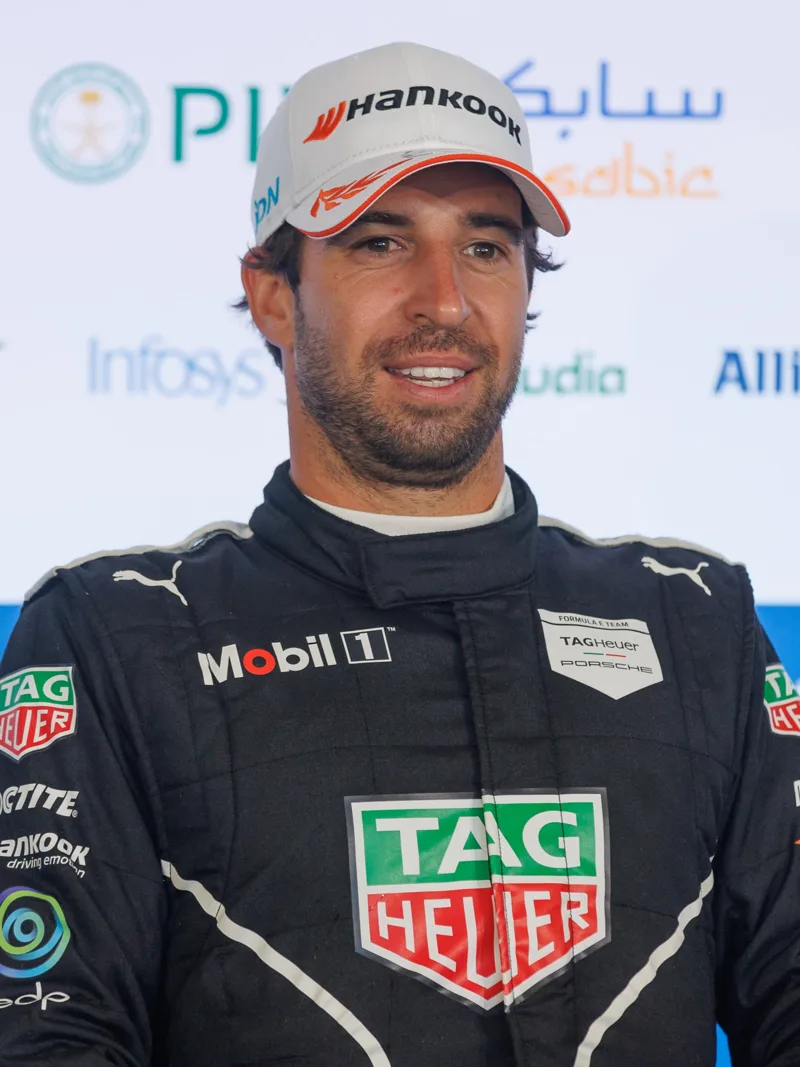
Formula E applies it with a limiter holding the cars to 50 km/h (31 mph). Overtaking under it can bring a penalty, as Jean Eric Vergne found at the 2019 Rome ePrix when he passed Antonio Felix da Costa and received five seconds. From the 2019-20 season attack mode could not be activated during a full-course yellow, and each minute under it removes 1 kWh from a car's energy allocation.
The 24H Series prefers what it calls Code 60, signalled with purple flags and lights. Cars must not exceed 60 km/h (37 mph), overtaking is not allowed, and racing restarts the moment green flags wave and green lights flash at each post. Yellows are still used for local cautions.
How do NASCAR and IndyCar use the yellow?
NASCAR and IndyCar both neutralise a race with one yellow flag waved by the starter. A pace car takes the field round at reduced speed, the order is frozen and passing needs mutual consent, crashed and stopped cars excepted. On ovals, flashing yellow lights supplement the flag, and a furled yellow means one lap to green.
On IndyCar road courses, a single yellow at a marshal station is a local yellow, similar to Formula One, with no pace car and green-flag racing elsewhere. Twin yellows at the starter's stand mean a full-course caution. NASCAR has tried local yellows at road courses too, but with a plain blue flag.
Where the caution begins has always caused argument on ovals. The order used to be fixed as cars crossed the start-finish line; technology now freezes it at the moment the caution is declared. That killed the race back to the caution, when drivers sped up to beat the leader to the flag. Lapped runners got a chance to regain a lap, but it sometimes sent drivers into hazardous scraps, and safety workers could not respond until the pace car had control. To compensate, NASCAR and other series introduced the free pass, which lets the highest-placed car at least a lap down complete an extra lap during the caution. Some series let lapped cars between the pace car and the leader drop to the back when the signal comes two laps before a restart, so they cannot hold up the leaders, and Formula One lets every lapped car between the leaders unlap itself.
What do the red and yellow striped and red flags mean?
The red and yellow striped flag, also called the surface or oil flag, is shown stationary at local stations when the state of the surface has changed through oil, coolant, localised water, small debris or gravel, any of which can reduce grip. Many organisations show it for only two laps, after which drivers are assumed to know about the hazard, and it can be shown again if conditions change.
A plain red flag stops the session because it has become too dangerous to go on.
How is a Formula One race weekend structured?
A Grand Prix weekend runs over three days, normally Friday to Sunday: practice and qualifying first, then the race on Sunday afternoon or evening. The current regulations provide for free practice on Friday, a further practice session and qualifying on Saturday, and the race on Sunday, although the pattern has changed many times. Monaco kept practice on Thursday until 2021, and Las Vegas, from its first race in 2023, runs its whole schedule a day early, as did Bahrain and Saudi Arabia in 2024. Races in other FIA series, such as Formula 2 and Formula 3, support most weekends.
Since 2006 there have been three free practice sessions, FP1, FP2 and FP3. In the standard format FP1 and FP2 are on Friday and FP3 is on Saturday before qualifying, giving teams extra time to settle their set-ups before parc ferme restrictions begin. From 2021 each lasts one hour; before that the Friday sessions were 90 minutes. Also from 2021, cars go under parc ferme conditions after the third practice session rather than after qualifying. A reserve, test or junior driver may take the place of a regular driver in the first Friday session. At night races in Bahrain, Singapore and Abu Dhabi the second practice is held in the evening, and at Las Vegas all practice was at night.
How does F1 qualifying work?
Qualifying decides the starting grid. The fastest lap earns pole position, with slower times lined up behind and any driver without a time at the back. Since 2006 it has been a three-stage knockout in an hour on Saturday afternoon. The target is for all but ten cars to be eliminated by the third period, Q3, and that is done in two stages: half the cars to be dropped go in Q1 and the other half in Q2. With 20 cars in 2025 and earlier that meant packs of five, and with 22 cars entered in 2026 it means packs of six.
Since 2010 Q1 has lasted eighteen minutes with every car competing. The slowest are eliminated and fill the bottom places on the grid by their fastest lap. Q2 follows, 15 minutes long, and the slowest drivers again drop out, filling the places above those eliminated in Q1. Q3, previously 12 minutes and 13 from 2026, features the ten fastest drivers on new soft tyres, and their best times decide the top ten. From 2022 every driver has been free to pick any starting tyre; before that, the top ten had to start on the tyre they used for their fastest Q2 lap.
Drivers can run as many laps as they like within the time. The usual pattern is an out-lap to the start-finish line, one or more flying laps and an in-lap, though no team has to follow it. For the first two races of 2016 a modified format eliminated drivers during sessions and sent only eight to the final, but it reverted from the Chinese Grand Prix.
How has Formula One qualifying changed over the years?
| Period | Format |
|---|---|
| Before 1996 | Two one-hour sessions, Friday (Thursday at Monaco) and Saturday from 13:00 to 14:00; best time from either counted; twelve laps per session |
| 1996-2002 | Single Saturday afternoon session; twelve laps; 107% rule |
| 2003-2005 | One-lap runs, one car at a time; Friday and Saturday sessions, later Saturday and Sunday morning, then a single Saturday run from the 2005 European Grand Prix; no refuelling after Saturday qualifying began |
| 2006 onwards | Three-stage knockout in one hour; Q1 eighteen minutes and Q2 15 minutes from 2010; Q3 12 minutes, then 13 from 2026 |
Who is in the starting grid, and what is the 107% rule?
As of 2026 eleven teams are entered, each with two cars, giving 22, and the regulations allow up to twenty-six. The number of entries has at times exceeded the circuit limit, which used to vary with the track; Monaco, for many years, allowed only twenty. Cars that missed the cut were listed as having not qualified. In the late 1980s and early 1990s as many as thirty-nine cars tried to enter some races, so pre-qualifying was brought back for the weakest teams. It was dropped after the 1992 Hungarian Grand Prix, by which time many small teams had pulled out.
As entries shrank, any entered car would qualify however slowly it ran, and the 107% rule arrived in 1996. A car outside 107% of the pole time failed to qualify unless the stewards relented; behind a pole of one minute and forty seconds, the cut-off was one minute and forty-seven. It was removed in 2003, because the single-lap system made it unworkable, and reintroduced for 2011 once the knockout format made it possible and there were worries about new teams. Now the test is applied to cars eliminated in Q1, against the fastest Q1 time.
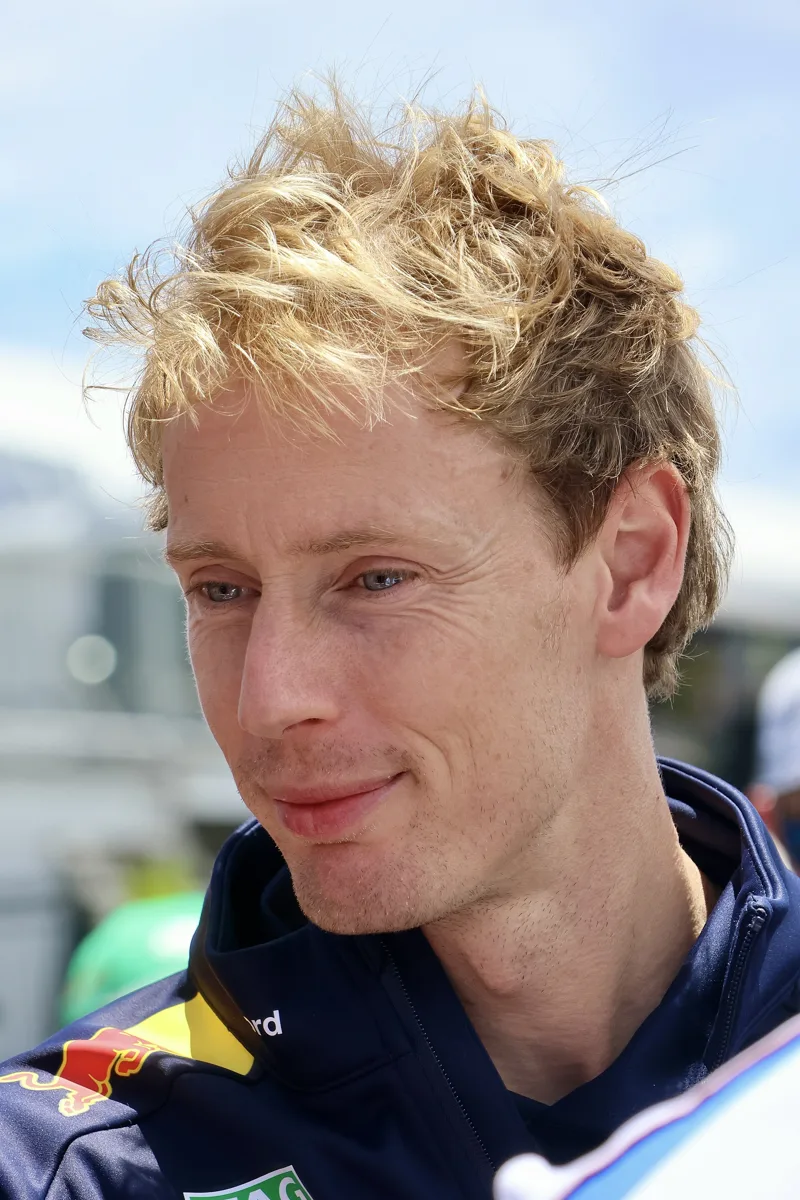
Only twice since then have cars failed to qualify, both times Hispania Racing cars at the Australian Grand Prix: Vitantonio Liuzzi and Narain Karthikeyan in 2011, and Karthikeyan and Pedro de la Rosa in 2012. Stewards can use discretion, as at the 2018 British Grand Prix, when Lance Stroll and Brendon Hartley were allowed to race on the strength of practice times. Rain at the 2016 Hungarian Grand Prix left eleven drivers without satisfactory Q1 times, and from 2018 wet sessions were exempt. Grid penalties, for exceeding component limits or for sporting offences, can make the starting grid look very different from the qualifying order.
What is the F1 sprint weekend format?
Formula One trialled sprint qualifying in 2021 at three Grands Prix, in Great Britain, Italy and Sao Paulo, using a 100 km sprint on Saturday to set the grid for the Sunday race. Friday then had one practice session and a traditional qualifying limited to soft tyres, which set the sprint grid.
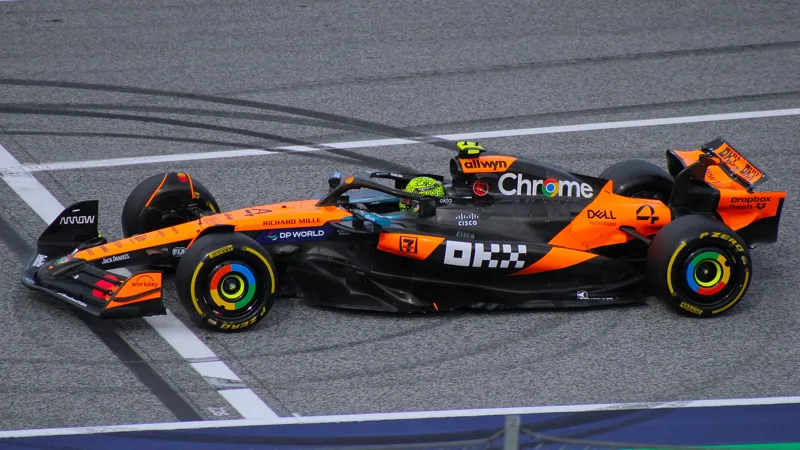
From 2023 sprints became standalone events with their own qualifying session, called the sprint shootout in 2023 and sprint qualifying from 2024. It follows the same format as normal qualifying, with segments named SQ1, SQ2 and SQ3 that are shorter, at 12, 10 and 8 minutes. Fresh tyres were first compulsory in every phase, medium for SQ1 and SQ2, soft for SQ3. After Lando Norris, out of soft tyres, missed SQ3 at the 2023 Azerbaijan Grand Prix, the rule was relaxed at the Austrian Grand Prix to allow any soft set in SQ3.
A sprint weekend offers a single hour of practice ahead of Sprint Qualifying. Sprint Qualifying and the sprint itself stand in for FP2 and FP3, with the sprint run on Saturday ahead of Grand Prix qualifying.
Where this goes next
The regulations for 2026 already reflect a larger grid: 22 cars from eleven teams, elimination in packs of six in Q1 and Q2, and a Q3 extended from 12 to 13 minutes.