From crocodile cracking and spring thaw to patching methods, road spray and recalls, a plain guide to how roads damage the cars that use them.
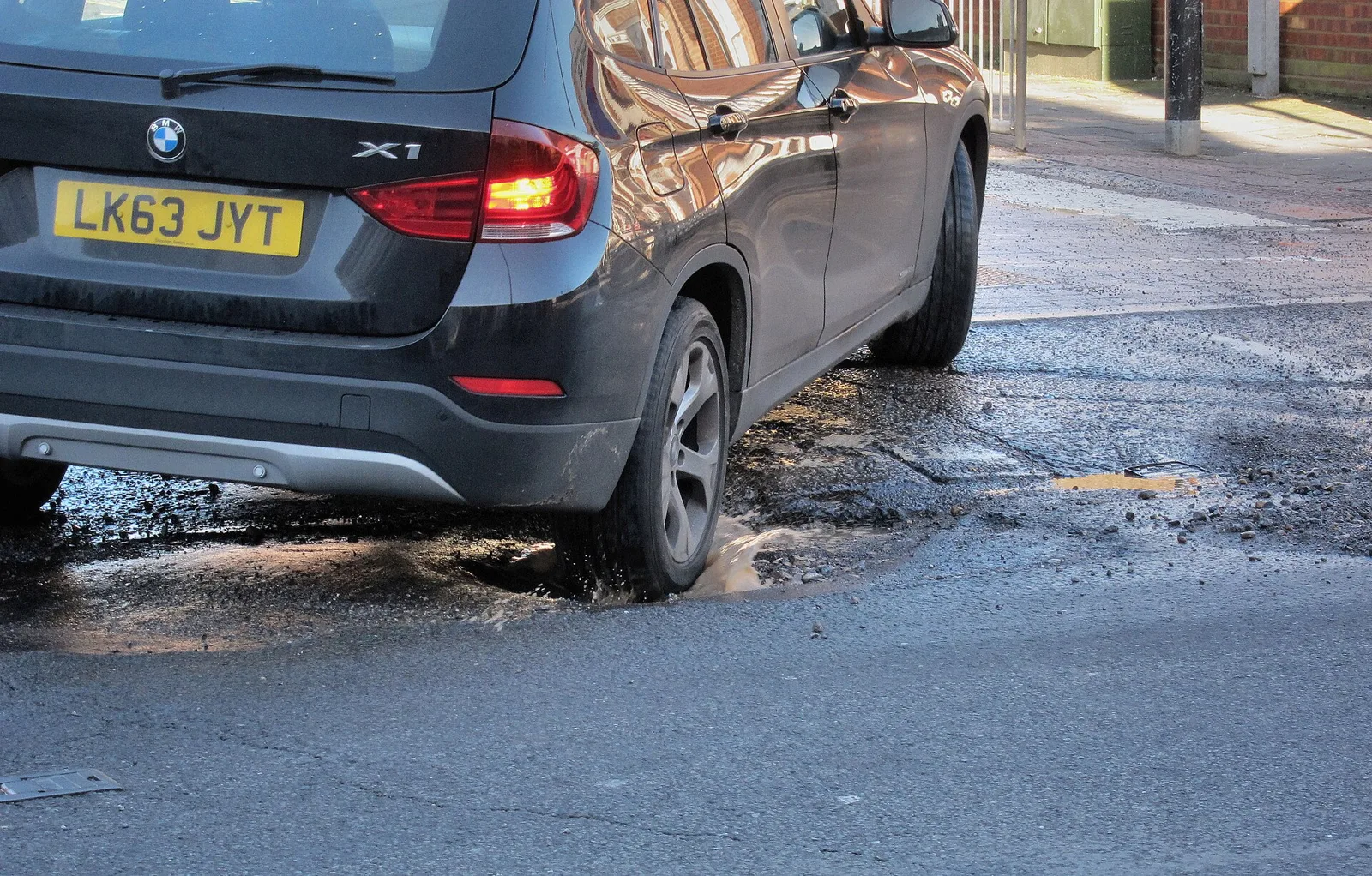
A pothole forms when water weakens the soil under a road and traffic breaks the unsupported surface. Potholes and loose debris can puncture tyres, bend wheels and damage suspensions. The AAA estimated 16 million US drivers suffered pothole damage in the five years before 2016, costing $3 billion a year.
The American Automobile Association estimated that in the five years before 2016, 16 million American drivers suffered pothole damage to their vehicles, at a cost of $3 billion a year. The damage ran from punctured tyres to bent wheels and ruined suspensions. Behind it sits a recipe with only two ingredients, and loose debris adds its own list of hazards.
What is a pothole?
A pothole is a bowl-shaped hole in a road, nearly always asphalt, left where traffic has carried away pieces of broken pavement. It results from water in the soil beneath the road combined with traffic passing over the area. Water softens the soil first. After that, wheels fatigue the poorly supported surface until it breaks, and continued traffic throws out both asphalt and soil to leave a hole.
A pothole may open up to several feet across yet seldom goes deeper than a few inches. Once large enough, they are liable to damage tyres, wheels and suspensions, and serious road accidents can follow, especially where vehicle speeds are higher.
A pothole needs only two ingredients, water under the road and traffic on top of it.
How does a pothole form?
According to the US Army Corps of Engineers' Cold Regions Research and Engineering Laboratory, two things must be present at once: water and traffic. Water softens the soil under the pavement, and traffic delivers the loads that push the weakened surface past breaking point.
The process is gradual. Fatigue builds in the road surface and shows first as a pattern called crocodile or alligator cracking. Eventually the chunks of pavement between the cracks work loose, and passing wheels pluck or force them out.
Frost and thaw
Where the ground freezes and thaws, frost heaving can damage the pavement and open routes for water to enter. In spring the process speeds up. The upper part of the soil thaws but cannot drain past the lower layers, which are still frozen, so the soil that supports the road becomes saturated and weak.
What makes some roads worse than others?
The main causes of potholes are:
- Pavement too thin to carry traffic through freeze and thaw periods without local failures
- Poor drainage
- Failures at utility trenches and castings, meaning manhole and drain covers and their frames
- Cracks and defects left unsealed and unmaintained, which let in moisture and compromise the pavement's strength
- Rocks or pebbles grinding the surface
The roads most at risk are usually local roads rather than major arteries. They are built to lower structural standards and carry more complicating features, such as underground utilities.
What does a pothole do to a car?
The AAA's tally lists punctured tyres, bent wheels and damaged suspensions as the typical harm. The same hole can do more than damage a car. In India, an average of 3,000 people a year were killed in accidents involving potholes between 2015 and 2017. In Britain, road defects killed or seriously injured 255 cyclists from 2017 to 2023.
The cost of putting roads right is large too. Britain has estimated that fixing every road with potholes would cost 12 billion pounds. It is estimated that the United States has 55 million potholes, and Edmonton in Alberta, which calls itself the pothole capital, reportedly spent $4.8 million on 450,000 of them as of 2015.
How are potholes repaired?
Patching is either temporary or semi-permanent. Temporary patching suits weather that rules out anything better and normally uses a cold-mix asphalt compound laid quickly to restore a smooth surface for now. Semi-permanent patching takes more care in rebuilding the edge of the failed area so it blends with the road around it, and usually fills it with hot-mix asphalt over replaced base material.
The US Federal Highway Administration (FHWA) names four patching techniques as best practice: edge seal, spray injection, semi-permanent and throw-and-roll. Outside winter, any of the four can be used. In winter, throw-and-roll may be the only choice. South Africa's Council for Scientific and Industrial Research offers similar methods.
| Method | Steps | Trade-off |
|---|---|---|
| Throw-and-roll | Put hot or cold mix in the hole, compact it with a vehicle such as a truck, leave a crown of 3 to 6 mm | Simple and fast; the most basic method |
| Semi-permanent | Clear water and debris, cut clean sides, apply a tack coat, place the mix, compact with a vibratory roller or plate | Durable, but needs more labour and equipment |
| Spray injection | Blow out the hole, spray a binder coat, blow in asphalt and aggregate, cover with aggregate | Efficient, needs specialised equipment, no compaction |
| Edge seal | Do a throw-and-roll, then add a ribbon of tack material and sand over the patch edge once dry | May need a second visit while water dries |
What goes in the hole
Patch material is a binder plus aggregate, in two broad families: hot mix and cold mix. Some agencies use hot mix made at local asphalt plants. The FHWA manual describes three kinds of cold mix, two made at a local plant, either from whatever aggregate and binder are on hand or to the specifications of the agency using it, and a third, proprietary type built to an advertised standard.
Which repair lasts?
An FHWA-sponsored study compared methods directly. It found that throw-and-roll matched semi-permanent patching in effectiveness where comparable materials were used, and that it was generally the cheaper route when the materials were good. Spray-injection repairs held up as well as control patches, though that depended on how skilled the operator was.
Eaton and colleagues sound a warning on repairs made in a hurry: such repairs fail often and may cost up to five times the price of getting the job right. They favour them only when the weather prevents proper techniques.
Can potholes be prevented?
Five steps help keep potholes from forming in existing pavements: surveying roads for risk factors, providing proper drainage, preventive maintenance, managing utility cuts and sealing cracks. Surveys look for distress that both weakens the asphalt and lets water in. Ditches and storm sewers carry water off, well-draining base soils reduce frost action, and an adequate crown sheds water to the sides.
Utility work needs its own control. Eaton and colleagues advocate a permit process for utility cuts, with specifications that protect the pavement's continuity, and some municipalities make contractors fit repair tags that name who is responsible for a deteriorated patch. A US Air Force manual recommends inspecting cracks twice a year and starting to seal those wider than 6.4 millimetres (0.25 in).
How many potholes get reported?
Some jurisdictions run websites or mobile apps where citizens can report potholes and other road hazards, optionally with a photograph and GPS coordinates. UK reports passed half a million in 2017, which was 44% more than in 2015. Reports go through processes at different levels of government, and the route for claiming compensation varies by jurisdiction.
The subject has also reached popular culture. John Lennon's final verse of "A Day in the Life" was inspired by a newspaper brief headed "The holes in our roads", which counted 4,000 holes in Blackburn, Lancashire, and projected from that a national total of two million, with 300,000 in the capital. In December 2025 the BBC programme Panorama broadcast an episode called "The Pothole Problem", where reporter Richard Bilton looked at the growing number of UK potholes, the harm to people and vehicles, and the struggle of local authorities to keep pace.
Artists have turned potholes into canvases. Jim Bachor of Chicago set mosaics of ice cream in them, Baadal Nanjundaswamy of Bengaluru placed a sculpture of a crocodile in one, and activists in Russia painted caricatures of local officials with potholes for mouths to show their anger at the state of the roads.
What counts as road debris?
Road debris is any substance, material or object foreign to the normal roadway, from vehicles or elsewhere. It includes dust, sand and mud, rocks and pebbles, road salt, litter, broken glass and nails, car parts and tyre tread, and loads dropped from moving vehicles such as luggage, roof racks, lumber and pallets. It also covers roadkill, ice and snow, flood water, spilled fuel and oil, and branches and leaves.
Falling loads are one source; the other is the weather, from wind and storms to tornadoes and hurricanes.
Debris gathers where wheels do not go. In towns that means the road edge and the crown of the road, and around traffic islands and junctions. Rural debris settles mid-lane and on the outer side of bends. Cyclists are especially exposed, since they may have to leave the cycle lane and enter traffic to get around it.
What does debris do to a car?
It can cause a loss of control, with results from a flat tyre to a rollover, debris pushing into the passenger compartment, or a serious collision with injuries or deaths. In 2011 the National Highway Traffic Safety Administration found that more than 800 people died across America from "non-fixed objects", a category that includes roadway debris. California recorded more deaths than any other state, but road users in New Mexico faced the highest probability of dying in a debris crash. A 2004 study by the AAA Foundation for Traffic Safety linked vehicle-related debris to 25,000 accidents and nearly 100 deaths a year. At highway speeds, even a small object can kill.
The harm can also be mechanical. Rocks striking a catalytic converter can break its internal mat and clog it. Debris has prompted recalls too: the 2005 Scion TC's wind deflector could shatter on impact, a February 2010 recall covered the 2004 Mitsubishi Endeavor, where mud mixed with road salt could settle between a bracket and the fuel filler pipe and corrode it, and the 2001 Chevrolet C/K chassis cab was recalled after it emerged that flying debris might hit its pressure relief valves.
Spray as debris
Road spray, also called tyre kickup, is water thrown from a tyre, and large vehicles can throw up a lot of it. It cuts visibility for oncoming, nearby and following drivers. A following driver can ease the problem by slowing and leaving more distance, headlights or fog lights help everyone see, and driving manuals warn against tailgating in such conditions. Stone mastic asphalt and open-graded asphalt reduce spray, and fenders and mud flaps cut it further.
Bicycles suffer in their own way. Road spray and gunk from brake pads coat the wheel rim over time and weaken the braking power.
The wider damage
Dust and small particles from tyre wear and exhaust can wash into soil and groundwater, and the zinc and organic toxicants in leached tyre debris have been shown to have environmental impact. Blocked storm drains and gutters can flood a road. In motor racing, debris can make a car lose traction, which is why a yellow flag and a pace or safety car are used.
How can debris be reduced?
On the car, a car bra can limit damage from minor debris, and mud flaps cut spray. On the road, street sweepers and winter service vehicles clear most solid debris, the Adopt a Highway programme helps, and road signs or variable-message signs can warn drivers of hazards.
The AAA recommends education, law and maintenance. Drivers should know how to secure loads and obey littering laws, check cargo regularly, watch the road for hazards such as potholes and report unsafe vehicles and unsecured loads. Governments should require covered loads, raise fines and demerit points for unsecured loads, and make debris incidents an absolute-liability offence. Road maintenance bodies should inspect regularly and remove debris in good time, with better design so stationary objects are visible at highway speeds.
Where this goes next
Researchers at the University of Minnesota Duluth have tested asphalt mixed with iron ore containing magnetite, 1% to 2% of the mixture, which is then heated with microwaves using ferromagnetic resonance. The group found that the material could be warmed for a patch to 100 degrees C (212 degrees F) in about ten minutes, producing a more effective repair that drove out moisture and improved adhesion.