Two Australian petrol chains, one American trademark owner and a 2020 vote in which more than 99% of shareholders chose to give up the Caltex name.
Caltex and Ampol were separate Australian petrol companies founded in the 1930s that merged their operations in May 1995. Caltex Australia then replaced Ampol branding, until Chevron ended its Caltex trademark licence and shareholders approved renaming the company Ampol in May 2020.
In May 2020 more than 99% of shareholders in Caltex Australia voted to give up the Caltex name and become Ampol, the brand the company itself had spent years phasing out. The reason was simple: the Caltex trademark belonged to Chevron of the United States, which had ended the licence. Two rival Australian petrol chains, both born in 1936, ended up with Ampol as the surviving name.
What is Caltex and where did the name come from?
Caltex began as a joint venture formed on 30 June 1936 between Socal, the Standard Oil of California that became Chevron, and the Texas Company, which became Texaco. It was set up as the California Texas Oil Company, and Caltex was the shortened form. In exchange Texaco received half of the Bahrain Petroleum Company, and in December 1936 it took a half share in the Arabian oil venture later known as Aramco. The joint venture officially adopted the shortened name Caltex in 1968.
Caltex grew into a regional brand across the Eastern Hemisphere, present in 29 countries as of 2015. Its headquarters moved from Dallas to Singapore in 1998. Chevron took full ownership when it bought Texaco in 2001, forming ChevronTexaco, which became simply Chevron again in 2005. Today Caltex is a Chevron brand across Asia-Pacific, the Middle East and Southern Africa, and it is also licensed to other companies in some countries.
The early decades were expansive. After the Second World War Caltex bought surplus American wartime tankers, partnered with Japan's Nippon Oil in 1948 and, from 1949 onwards, built or took part in new refineries in 20 countries. In 1967 it handed its European interests back to its parents and refocused on Africa and Asia, and in 1968 it entered Korea as LG Caltex.
Ampol and Caltex started the same year as rivals, merged in 1995 and then traded names in 2020.
How did Caltex become a household name in Australia?
Texaco products first reached Australia in 1900, sold by R. W. Cameron & Co. The Sydney-based Texas Company (Australasia) Limited, formed in New South Wales in 1918, ran operations across Australia and New Zealand. On 2 January 1941 it became Caltex Limited, five years after the joint venture came into being.
The legal company behind today's Ampol has a different origin. Caltex Australia Limited began as California Asphalt Products Pty Ltd in May 1935, went public in December 1958 and took its final name in March 1981. It opened the Kurnell Refinery in 1956. In March 1981 it bought Golden Fleece for A$75 million, and that July it offered a quarter of its shares on the open market, a first for a multinational oil company in Australia.
Caltex also found itself in court over a pipeline. In 1971 a dredge damaged the line that connected the Kurnell refinery to a refinery beneath Botany Bay owned by Australian Oil Refining, and in 1976 Caltex sued a surveying company and the dredge operator. It lost in the New South Wales Supreme Court and won on appeal in the High Court, despite not owning the line itself. Pure economic loss is generally not recoverable, but the court made an exception where the defendant could foresee that this particular plaintiff would suffer.
Who started Ampol and why?
William Walkley incorporated the Australian Motorists Petrol Company, known as AMPOL, in New South Wales in 1936. He acted on public concern about what looked like unfair petrol prices, and on claims that foreign oil companies were using transfer pricing to cut their Australian tax bills.
Walkley, joined by William O'Callaghan and George Hutchison, went to the NRMA with an offer to help it set up a petrol-marketing company. The motoring club's board declined to sponsor one but looked for investors, and an advertisement for the Ampol float ran in its magazine in early 1936. The first oil was delivered to White Bay in December 1937, and Walkley sat on the board as managing director by 1939. In 1945 Ampol bought Alba Petroleum, which sold modestly in South Australia and Tasmania, in a friendly takeover.
It listed on the ASX in 1948 and became Ampol Petroleum Ltd in 1949, largely to avoid confusion with the minerals explorer Ampolex. Ampol's first service station of its own opened at Mosman, on Sydney's Military Road, in 1952, with help from Caltex. Six years on, 600 new Ampol stations had opened. A grease plant at Balmain and a tyre and tube factory at Somerton followed in 1959, and the Lytton refinery in Brisbane came on stream in 1965. In 1963 the company gave free packets of mystery postage stamps to drivers who bought its petrol.
Pioneer International bought 20% of Ampol in 1979, and in 1982 it took over the marketing and refining side of Total Australia and adopted the name Ampol Limited. Pioneer took it over fully in 1988, and a year later it came off the ASX.
Were Caltex and Ampol bitter rivals?
They competed hard, but they also worked together. Before 1995 both were relatively small next to the major oil companies. In 1952 they set up West Australian Petroleum, a joint venture to look for oil and gas in Western Australia, and in 1964 they joined Golden Fleece to build Australia's first lube oil plant at Kurnell.
How did the 1995 merger of Caltex and Ampol work?
In May 1995 the two companies merged their petroleum, refining and marketing assets as Australian Petroleum Pty Ltd, with Pioneer International and Caltex Australia each holding half. The new business held a 28% share of the market. Pioneer was to run it, with Caltex as an investor, and the Caltex brand was meant to be retired in favour of Ampol.
That never happened. In 1997 Pioneer decided to leave petroleum and sold its half to Caltex Australia, a deal finalised on 31 December 1997, and the business was renamed Caltex Australia Petroleum on 1 January 1998. Pioneer received 90 million Caltex Australia shares, a 33.33% stake, and sold them to the public in April 1998. From then until 2015, half of Caltex Australia belonged to the global Caltex company, which Chevron fully owned from 2001, and half to ASX shareholders.
Caltex Australia then gradually replaced Ampol branding with its own over the next decade. The new global Caltex identity reached Australia in February 1999 and the convenience stores became Star Mart. A few Ampol stations survived, mostly in country areas where customer loyalty and brand recognition mattered.
Who owned Caltex Australia over the years?
| Period | Ownership |
|---|---|
| May 1995 | Australian Petroleum Pty Ltd: 50% Pioneer International, 50% Caltex Australia |
| Late 1997 | Caltex Australia: 50% Caltex Petroleum Corporation, 33.33% Pioneer, 16.66% public |
| April 1998 to 2015 | Caltex Australia: 50% Caltex (Chevron from 2001), 50% ASX shareholders |
| March 2015 | Chevron sold its 50% stake, in a deal valuing the company at AU$9.24 billion |
What did Caltex Australia do between 1998 and 2019?
It tried to widen what a petrol station could be. In February 1999 it opened an IGA Everyday supermarket at its Bondi site to take on Woolworths and Coles. In 2009 it proposed buying 302 Mobil and Mobil Quix stations in four capital cities, but the competition regulator opposed it, Caltex dropped the idea and Mobil sold the sites to 7-Eleven.
Refining shrank. Caltex announced the closure of the Kurnell lube oil refinery, Australia's last, by 2011, calling it not viable. It ran two fuel refineries until 2014, Kurnell in Sydney and Lytton in Brisbane, inherited from Caltex and Ampol respectively. Kurnell stopped refining in 2014, and by May 2019 its wharfs and tanks had become a fuel import and blending terminal.
An odd detail of the 2012 push into imports: because Chevron already ran Caltex in Singapore, Caltex Australia named its Singapore trading arm Ampol. In 2016 and 2017 it bought 46 Milemaker sites in Victoria, 30 of them in Melbourne. Then in November 2019 Alimentation Couche-Tard made an offer for the company, improved it in February 2020 and dropped it in April 2020 because of economic uncertainty during COVID-19. EG Group also made an offer, which the board declined.
Why did Caltex Australia become Ampol in 2020?
When Chevron sold its stake in March 2015, Caltex Australia kept the Caltex name under a trademark licence. In December 2019 Chevron gave notice that it would end that licence from 30 June 2020, because it planned to re-enter Australia by buying Puma Energy's Australian business and rebranding it as Caltex. Caltex Australia chose to go back to Ampol.
Shareholders approved the change by more than 99% at the annual meeting on 14 May 2020. The company cited the continued high recognition and regard for Ampol, and expected to save $20 million a year in licence fees to Chevron. A new logo rolled out across Australia from 2020 to 2022.
The licence set a thirty-month work-out period after 30 June 2020. For the first 18 months, to 31 December 2021, Ampol had exclusive use of the Caltex name. For the final twelve months, to 31 December 2022, Ampol and Chevron could both use it. After that Ampol was no longer allowed to, so the rebrand had to be complete by then.
Is there still a Caltex in Australia?
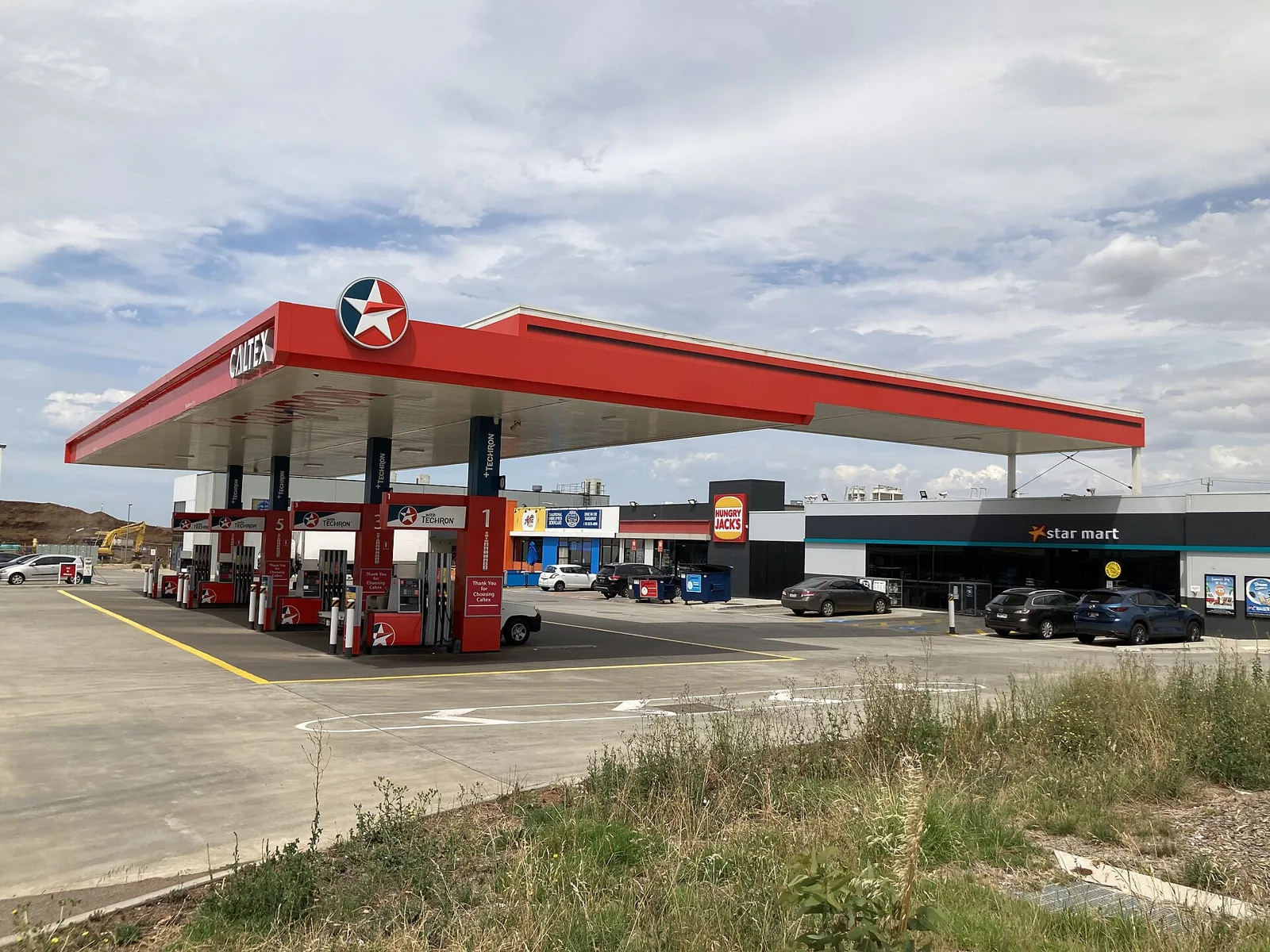
Yes, but it is Chevron's. Chevron completed its purchase of Puma Energy's Australian operations in July 2020, including the Gull and Choice Petroleum brands. In early 2022 it began relaunching Caltex with new stations and former Puma sites, and since 2023 the brand has been used only by Chevron Australia. The relaunched network uses Techron fuel additives.
In early 2023 Chevron sold 17 former Puma sites across the Northern Territory and the north of Western Australia to the South Australian chain OTR, with Caltex fuel supplied. In early 2024 it agreed to buy most of Viva Energy's Coles Express outlets in South Australia, following a Viva undertaking to the competition regulator to dispose of 25 outlets there. In exchange Viva received 13 Chevron sites, in Western Australia, Queensland and New South Wales.
Ampol, headquartered in Alexandria, Sydney, is Australia's biggest distributor and retailer of transport energy, with more than 1,800 Ampol-branded service stations as of June 2025. It also operates in New Zealand through Z Energy.
Where else does the Caltex name survive?
New Zealand's story goes back to the Star Oil Company in 1920, which imported Texaco-brand fuel from the United States, with service stations selling Texaco fuel from the early 1930s. Caltex Oil (N.Z.) Limited was registered on 12 January 1945. The country was the first place Caltex sold Boron fuel, which had run for two years as Texol and stayed Caltex's global fuel brand until the 1980s. In 1999 the first stand-alone Star Mart store opened in Wellington, and 20 such stores existed by the start of 2006. They were sold and renamed Fix in 2009, and the remaining Fix stores became Night 'n Day in 2017.
Elsewhere the name has long roots. In the Philippines Texas Company began marketing in 1917 with Wise and Co as its local distributor, and Texaco (Philippines) was formally set up in 1921. Singapore's story began in 1933 with Texas Company (China) Ltd, and Caltex took a one-third stake in the Singapore Refining Company in 1979, raised to 50 per cent in 2004. South Africa's Texas Company was incorporated in 1911 and based in Cape Town.
Chevron's local business was acquired by Z Energy in June 2016. Z supplies wholesale fuel to an independently owned Caltex network and uses the brand under a five-year licence renewed in March 2022. As of February 2026 there were more than 120 Caltex stations and about 60 truck stops. In South Africa and Botswana, 850 stations began rebranding as Astron from September 2022, after Glencore and Off the Shelf Investments bought Chevron South Africa in 2018.
Hong Kong had 32 Caltex stations in November 2022, and on 13 February 2026 Bangchak of Thailand bought Chevron's fuel business there for $270 million, with the name still used under licence. Malaysia has about 420 stations, the Philippines nearly 600 and Singapore 25.
What does the Caltex and Ampol story mean for drivers?
For anyone filling up in Australia, the old Ampol and Caltex rivalry now plays out between different companies. Ampol is the large fuel network, and Caltex is a Chevron brand rebuilding from stations it bought or converted. The Caltex name on a forecourt can mean Chevron, an operator such as OTR supplied with Caltex fuel, or, overseas, a licensee.
Where this goes next
The latest moves on record are Chevron's early 2024 agreement to buy most of Viva's Coles Express outlets in South Australia and, in New Zealand, the renewal of Z's Caltex licence for another five years from March 2022. Hong Kong's Caltex stations now sit under new ownership, with the name licensed.