A farmers' mutual, a government-employee insurer that nearly collapsed, an insurer of riskier drivers and an insurer born inside Sears each took a different road.
State Farm began in 1922 as a farmers' mutual and became the largest US auto insurer. GEICO started in 1936 for government employees, Progressive in 1937 by two Cleveland attorneys, and Allstate in 1931 inside Sears. Each grew through a different sales model: agents, direct, usage data or advertising.
Allstate takes its name from a tyre. In 1925 Sears ran a national contest to name a new brand of car tyres, drew 2,253,746 entries from 937,886 people, and picked "Allstate", paying the winner, Hans Simonson of Bismarck, North Dakota, $5,000. Six years later, when a broker proposed selling car insurance the way Sears sold everything else, the insurer took the tyre brand's name.
The other three giants of American motor insurance began just as differently. State Farm was a farmers' mutual, GEICO a company for government employees that nearly went under, and Progressive a firm that found its niche insuring riskier drivers. What they have in common is that each settled on a different way of reaching customers.
Which is the biggest US car insurer?
State Farm holds the top spot. It is the largest property and casualty insurer and the largest auto insurer in the United States, ranked 39th in the 2024 Fortune 500, and its auto share was 18.3% in the 2023 fiscal year. Progressive followed with 15.2% in that year, and ranked 62nd in the 2024 Fortune 500. GEICO is variously described as the third-largest auto insurer, after State Farm and Progressive, and as the second-largest, so the rankings are not consistent. Elsewhere Progressive is called the top private automotive insurer as of 2026, measured by premiums written over twelve months. Allstate reported 2018 revenues of $39.8 billion and ranked 79th in the 2019 Fortune 500.
Allstate takes its name from a Sears tyre brand, picked from more than two million entries in a 1925 naming contest.
How did State Farm start?
A retired farmer, George J. Mecherle, set up State Farm in June 1922 as a mutual auto insurer, meaning its policyholders owned it. Farmers were the target. The firm specialised in farm drivers and offered better rates than rival companies, which also insured the more expensive urban motorists. The group is based in Bloomington, Illinois, and relies on exclusive, or captive, agents: the agents are tied to the brand and may sell nothing else. As of December 2017 it had 70,000 employees and 19,000 agents.
Its path since has included a bank, opened in May 1999 with no branches and serving customers online, by phone and through agents. In 2014 the group sold its Canadian operations to Desjardins Group, with policies moving on 1 January 2015, the brand rebranded in 2018 and the transition complete in 2019. In May 2023 it said it would stop issuing new home policies in California, citing wildfire risk and surging construction costs.
Jingles, Jake and the Safety Patrol
Barry Manilow wrote the company's jingle, "Like a good neighbor, State Farm is there", in 1971. Its more recent advertising centres on "Jake from State Farm", first played by an actual employee, Jake Stone, in 2011, and by Kevin Miles from 2020. A Semrush report named State Farm the top digital advertiser in finance in 2023. Less glamorous but practical is the State Farm Safety Patrol, run with highway authorities, which gives stranded motorists free fuel, radiator and engine oil refills on participating roads including Florida's Turnpike and the Pennsylvania Turnpike.
How did GEICO start, and why did it nearly fail?
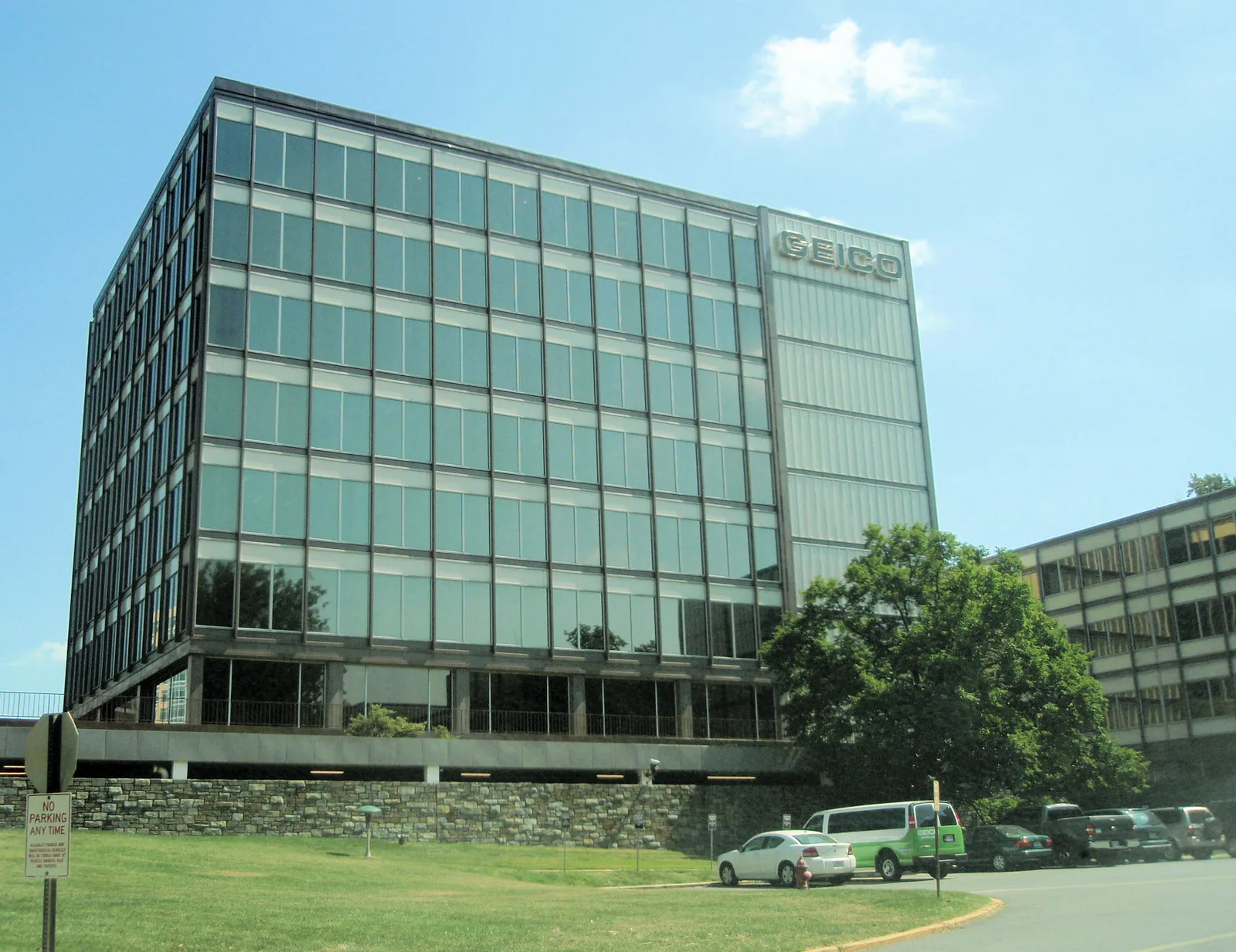
The "Government" in its name is misleading, because GEICO has always been privately owned. Leo Goodwin Sr. and his wife Lillian founded it in 1936 to sell auto insurance to federal employees. Goodwin had worked at USAA since 1925 but left after rising as far as a civilian could in its military-dominated hierarchy. The couple contributed $25,000 of their own, and a banker, Cleaves Rhea, added $75,000. In 1937 they moved the company from San Antonio to Washington, D.C., where federal workers were most concentrated.
Investors followed. In 1948 the Rhea family sold its 75% stake to a group led by Benjamin Graham's Graham-Newman Partnership, which took 50%, worth $712,000. A securities rule forced Graham-Newman to sell part of its holding in 1949, and GEICO became publicly traded at roughly $27 a share. That stake was worth $400 million by 1972. In 1951 Warren Buffett, then a student under Graham, interviewed Lorimer Davidson and named GEICO "The Security I Like Best". From 1948 to 1958 its market capitalisation grew almost 50 times, and under Davidson from 1958 premiums grew at a compound 16% a year, from $40 million to $250 million.
The near-collapse of 1975
In 1974, with real-time computerised driving records available across the country, GEICO began insuring the general public and briefly became the fifth-largest US auto insurer. It had expanded far too fast. By 1975 it reported a US$126.5 million loss, and by 1976 its share price had fallen from $42 to $5. To keep it afloat, 45 insurers jointly took on a quarter of its policies, and it sold new stock to pay claims. Recovery took five years of shrinkage and a reorganisation led by John J. Byrne, with substantial support from Buffett.
Today GEICO belongs outright to Berkshire Hathaway. It covered more than 24 million vehicles owned by over 15 million policyholders as of 2017, and writes private passenger auto insurance in all 50 states and the District of Columbia. It sells mostly by phone and internet, with a local agent programme of more than 300 independent offices. It began covering ridesharing drivers in select states in 2015. In October 2023 it announced it would lay off 2,000 staff, or 6% of its workforce.
How did Progressive find its niche?
Two Cleveland attorneys, Jack Green and Joseph M. Lewis, formed Progressive in 1937 as Progressive Mutual Insurance Company. In 1956 it found its niche by insuring riskier drivers. In 1965 Joseph's son Peter B. Lewis and his mother borrowed $2.5 million against their controlling stake to complete a leveraged buyout. The company went public in 1971, and its written premiums passed $1 billion in 1987 and reached $20 billion by 2016.
Progressive claims a series of firsts in selling: policies by phone in 1993, a website in 1995, online purchase in 1997, and 24/7 claims reporting. It sells through the internet, by phone, and through more than 30,000 independent agents. Its personal lines segment covers cars, motorcycles, boats and recreational vehicles, and its commercial auto segment covers vehicles owned by businesses. In September 2007 it began offering pet injury cover free with collision coverage, and its response vehicles are specially modified Ford Explorers and Escapes.
Snapshot and usage-based insurance
Progressive's best-known product idea is Snapshot, a pay-as-you-drive scheme. A device about the size of a garage door opener plugs into the car's on-board diagnostic port and sends driving data to Progressive. After 30 days, the customer learns whether they qualify for a discount, and at the end of the six-month policy period the renewal discount is calculated and the device returned. The system ignores how fast the car goes but notes how hard and how often the driver brakes. Participation is voluntary, a customer can opt out at any time, and a charge of up to $50.00 applies if the device is not returned. Snapshot is available in 45 states plus the District of Columbia but not Alaska, California, Hawaii or North Carolina, since insurance is regulated by state. The Wall Street Journal reported in February 2011 that Progressive led its rivals in this field, and the company holds seven US patents on usage-based methods.
How did Allstate start?
Broker Carl L. Odell floated an idea to his neighbour Robert E. Wood: sell car insurance through the post. Wood liked it, the Sears board approved, and Allstate Insurance Company began business on 17 April 1931, selling by mail and through the Sears catalogue in the same way Sears sold its merchandise. Lessing J. Rosenwald was the first board chairman. In 1933 Allstate staffed a booth at Chicago's Century of Progress World's Fair, and in 1934 it opened its first permanent office in a Chicago Sears store.
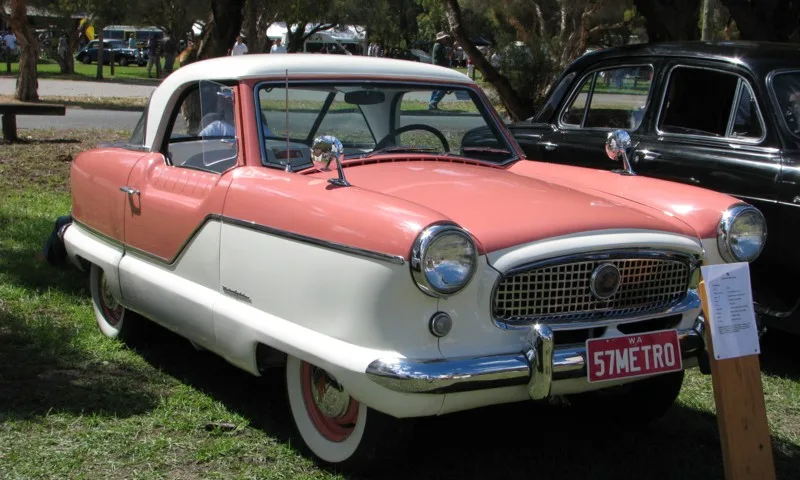
The "You're in good hands" slogan arrived in 1950, created by general sales manager Davis W. Ellis, and spokesman Ed Reimers fronted it for 22 years. A 2000 Northwestern University study ranked it the most recognisable slogan in America. Allstate added fire insurance in 1954 and homeowners and life cover in 1957. It even sold a car: in 1952 and 1953 Sears marketed an Allstate automobile based on the Henry J from Kaiser Motors, a flop pulled from stores by 1953.
The route to independence was gradual. In June 1993, 19.8% of Allstate went public, and in June 1995 Sears distributed its remaining 80% as 350.5 million shares, then the largest IPO to date. Later deals included the purchase of Esurance and Answer Financial for about $1 billion in May 2011, SquareTrade for a reported $1.4 billion in January 2017, and National General for $4 billion, announced in July 2020 and closed in January 2021. In 2021 Allstate sold its life insurance and annuity businesses.
The four insurers side by side
| Insurer | Founded | Headquarters | How it reaches customers |
|---|---|---|---|
| State Farm | June 1922, by George J. Mecherle | Bloomington, Illinois | Exclusive captive agents |
| GEICO | 1936, by Leo and Lillian Goodwin | Bethesda, Maryland | Mainly phone and internet, plus local agents |
| Progressive | 1937, by Jack Green and Joseph M. Lewis | Mayfield, Ohio | Internet, phone and independent agents |
| Allstate | 17 April 1931, inside Sears | Glenview, Illinois | Originally direct mail and the Sears catalogue |
The advertising wars
These four spend heavily to be recognised. GEICO spent over US$1.1 billion on advertising in 2012, or 6.8% of its revenue, and its mascots include a gecko voiced by Jake Wood. Progressive's campaigns revolve around Flo, played by Stephanie Courtney since 2008, and its marketing is known for offering quotes from competitors alongside its own. Allstate's Dennis Haysbert appeared in more than 250 commercials between 2003 and 2016, in ads meant to show Allstate's service as better than that of low-cost providers GEICO and Progressive.
Then Allstate created Mayhem. It developed the character in response to ranking fourth in advertising spend behind GEICO, State Farm and Progressive, and wanted a campaign that would skew younger than the Haysbert ads. Mayhem, played by Dean Winters, launched in April 2010 and had around 80 industry awards by mid-2011. A February 2011 Advertising Age report placed him third among insurance characters, behind the gecko and Flo, each of which customers tied to the right company over 90% of the time. Only 41% of the whole sample could link Mayhem to Allstate.
What this means for someone buying car insurance
The structure of the company shapes what a buyer can do. A State Farm customer buys through an agent who sells only State Farm products. GEICO is mostly a phone and website operation. Progressive sells directly and through independent agents and is known for showing rivals' quotes, and for Snapshot, which trades driving data for a possible discount: it counts braking rather than speed, can be left at any time, and is not offered in every state. Allstate, once a mail-order insurer, now competes on brand and, in its own telling, on service.
What is happening at the four insurers now?
Several threads are still running. State Farm, which is the largest home insurer in California, asked regulators in February 2025 for an emergency rate rise averaging 22%, effective 1 May 2025, after payouts linked to the January 2025 Southern California wildfires. Jon Farney, the former chief financial officer, has taken over from Michael L. Tipsord as chief executive. Progressive extended its naming rights deal for the Cleveland baseball ground, Progressive Field, in April 2024 for 12 more years, until at least 2036. And in 2025 Allstate's chief information officer said the company uses AI to generate customer emails with less insurance jargon, which claims agents still check for accuracy.