Walter Hill's spare 1978 crime film with Ryan O'Neal as a nameless getaway driver, the Los Angeles chases behind it and the cult that grew after its flop.
The Driver is a 1978 Walter Hill crime thriller starring Ryan O'Neal as an unnamed getaway driver hunted by a detective played by Bruce Dern. It flopped on release but gained a lasting reputation for its chases and its spare style.
The Driver, a 1978 neo-noir from Walter Hill, follows a getaway specialist whose skill keeps him out of prison. Ryan O'Neal plays the Driver, Bruce Dern plays the detective who is obsessed with catching him, and Isabelle Adjani plays a mysterious woman. The film flopped in the United States but later became one of Hill's most admired works, with a cult following that continued to grow.
What happens in The Driver?
The Driver steals cars for robberies across Los Angeles, and criminals know him for his high skill and his high price. A detective who calls him Cowboy is determined to catch him, and he sets up a sting: three arrested criminals will go free if they deliver the Driver for a bank heist. The gang consists of Glasses, Teeth and their driver, Fingers.
Roger Ebert, reviewing the film, described its characters as symbols rather than people, and he argued that the chase scenes were what held the picture together. The lack of names is therefore not an accident but the central choice of the film, which turns the Driver into a type rather than a man with a past.
The Driver refuses to work with them at first. When they question his skill, he wrecks their car to prove his point, and when Teeth threatens him with a gun, the Driver beats him. He agrees to the job only on his own terms, with his fee doubled and Teeth kept out of the crew.
During the heist, Glasses kills Fingers and tries to make off with the money. The Driver turns the tables, kills Glasses and stashes the cash in a locker at Union Station. Teeth, meanwhile, finds Glasses dead, and he kills The Connection while searching for the money. A car chase ends in a warehouse, where the Driver flips Teeth's car.
The climax takes place at the train station. The Exchange Man boards a train with the dirty money, and the detective follows him and kills him in a shootout. When the Driver returns to the locker, the bag is empty, leaving the detective holding nothing as each character walks away.
The story also threads in a second line of pressure. The Player, a woman the Driver meets at a casino, is first seen by him in public and then denies identifying him to the detective. The detective later threatens her and alludes to her criminal history, which shows how far he will go to pressure anyone close to the Driver.
A getaway driver with no name, a detective with no patience and a heist that ends with an empty bag.
Who made The Driver?
The Driver was Hill's second film after Hard Times (1975), and he wrote an original screenplay over the summer of 1975. Producer Larry Gordon suggested the getaway-driver idea, and Hill wrote a deliberately tight script in a sparse, minimalist style. He sent the draft to director Raoul Walsh, who approved it.
Hill said he wanted to see how pure a genre film he could make, one that did not conform to conventional Hollywood ways. He believed spare writing made readers pay closer attention, and he thought the minimalist approach he had used on Hard Times could carry a whole feature.
EMI Films was then run by Michael Deeley and Barry Spikings, who co-financed Hollywood films aimed at international audiences, and they were willing to finance The Driver if a suitable star could be found. The script took about a year and a half to attract talent, which says a great deal about how hard it was to sell a film this spare.
Casting proved difficult. Steve McQueen turned the role down because he did not want another film built around cars, and Charles Bronson was unhappy with Hill over Hard Times. Ryan O'Neal, then mainly known as a comedy and romance star, agreed after a meeting about the minimalist approach. Robert Mitchum declined the detective, and Bruce Dern was cast instead because Hill wanted his personality to offset the distance of the Driver.
Isabelle Adjani had gained international fame with The Story of Adele H. She had turned down another Hollywood film, but she accepted The Driver because she admired Hard Times. Her character has no name, and Adjani later described the roles of the two leads as being like Bogart and Bacall.
Adjani's later view was less generous. She said the only American offers she received afterwards were bad ones, and she came to feel that the film had cost her a chance at Hollywood work she had hoped for. Hill, meanwhile, said he had been shooting The Warriors at the time and that his career might not have survived without it.
How was the film shot?
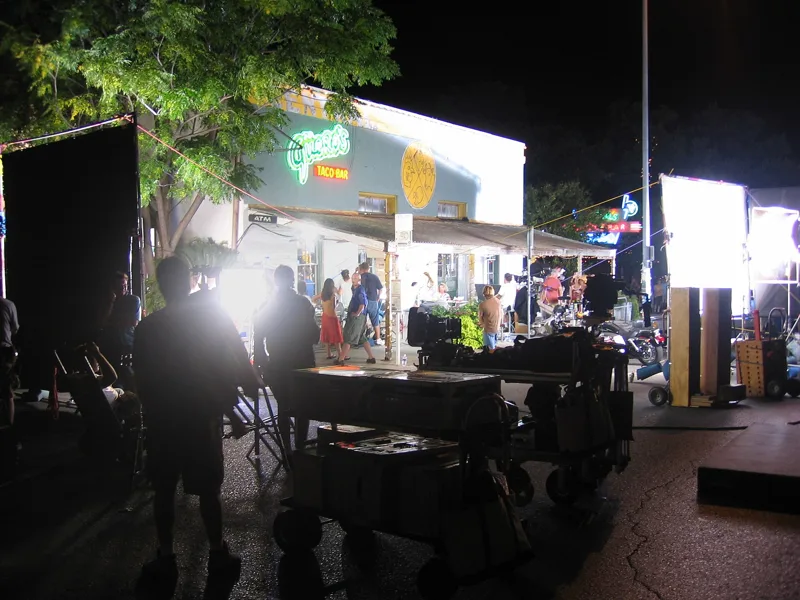
Principal photography took place entirely on location in Los Angeles. The chases were designed by Hill and stunt coordinator Everett Creach, and Hill shot the dramatic scenes during the day and the chases at night. Hill wanted to film chases at night, which he felt had not been done often, and he found the night shoot exhausting.
Hill compared the night shoot to swimming underwater or being hypnotised. He was a person who stayed up late and woke early, but the long run of night shoots still drained him, and he later said he made decisions during that period that he could not fully explain.
Not every sequence went well. Hill felt the first chase failed because an electrician fell from the roof on the last night of shooting, leaving him to cobble the result together. He was happier with the final chase, which he felt was as fully realised as he could make it.
The Mercedes 250 S garage sequence was another moment he was pleased with, and the chase rhythms in the film owe much to that kind of compact, enclosed space. The camera stays close to the cars, which keeps the audience inside the action rather than watching from a distance.
Hill said the major visual influence was the work of the painter Edward Hopper. He also drew on his experience as second assistant director on Bullitt (1968), where the chase shots from inside the cars fascinated him. Production wrapped in April 1978, and the film was released by 20th Century Fox on July 28, 1978.
How did The Driver perform?
The film was a commercial disappointment in the United States, although it performed better overseas. It opened in 642 theatres and grossed $2 million over the weekend, and it drew 1,102,183 admissions in France, where it was the 33rd most popular film of the year.
| Measure | Detail |
|---|---|
| Production wrap | April 1978 |
| US release | July 28, 1978 by 20th Century Fox |
| US opening | $2 million from 642 theatres |
| French admissions | 1,102,183 |
| Rotten Tomatoes | 80% from 30 reviews, as of March 2026 |
| Metacritic | 56 from 13 critics |
Producer Larry Gordon later reflected on the film's poor reception in the United States. He said that a bigger star such as Eastwood, McQueen or Bronson might have brought an audience, because the picture was treated as an art film rather than an action film. Hill's own verdict was blunter: the film, he said, made exactly zero dollars in the United States.
How did critics respond to The Driver?
Contemporary reviews were extremely poor. Kevin Thomas of the Los Angeles Times called the film ultraviolent trash, and Vincent Canby of The New York Times called it pretentious. Roger Ebert gave it 2.5 stars out of 4, writing that it was a movie about symbols rather than people, but that its chase scenes saved it.
Hill later recalled that the studio handed him a thick stack of reviews, nearly all of them negative, with only one good notice among them. The reaction was harsh, but it did not reflect how the film would be remembered by later critics and filmmakers.
Other reviewers were harsher. Variety called the film a bleak wreck, though it praised the car chases, and Vincent Canby's review in The New York Times was similarly dismissive. Duncan Shepherd of the San Diego Reader went the other way, giving the film five stars and calling it a coded message for noir fans.
The reputation has since changed. Peter Bradshaw of The Guardian gave the film five stars out of five in 2022, calling it a thoroughly watchable, hardboiled and ruthless drama. Over the decades the film has been reappraised, and it is now often shown first in retrospectives of Hill's work.
Eddie Harrison of Film Authority argued that the film endured because of its labyrinthine plotting and the sweaty physical intensity of its Los Angeles locations. Its realistic, tarmac-hugging approach to action was out of step with the high-flying stunt films of its period, which is part of why it stands apart now.
Critics who revisited the film praised its atmosphere and performances. Peter Bradshaw found Dern's flinching face a joy in contrast to O'Neal's tough purity, and he called the film thoroughly watchable and cynical in a way that suits its hardboiled style. Hill himself said he was very happy with O'Neal's work and thought it was the best he had ever been.
What is The Driver's legacy?
Quentin Tarantino borrowed from the film in Pulp Fiction, where a shot of a car skidding onto the road copies the opening chase. Kill Bill: Volume 2 also refers to the film, with a description of the lead character echoing the Driver's own label as a cowboy who cannot be caught.
The film also shaped other directors. Michael Mann pitched his script for Heat to Hill in the 1980s, and Nicolas Winding Refn's Drive (2011) was influenced by it. Edgar Wright cited the film's influence on Baby Driver (2017), and the video game Driver (1999) took several themes from it. The game Driver: Parallel Lines (2006) opens in 1978, the year the film was released.
Nicolas Winding Refn told Hill that the film's influence on Drive was a homage, and Hill took that in good spirit, saying he bore Refn no animosity and thought him a remarkably talented director.
A remake was also considered. Around 1996, Fox developed a version to be directed by Luc Besson, who was working on The Fifth Element at the time, but the project never moved forward.