John Carpenter's adaptation of Stephen King's novel, the 1958 Plymouth Fury at its centre, the stunts that brought it to life and its box office.
Christine is a 1983 horror film directed by John Carpenter, based on Stephen King's novel. It tells the story of a teenager who buys a haunted 1958 Plymouth Fury. It was released by Columbia Pictures and grossed about $21 million.
Christine is a 1983 supernatural horror film from John Carpenter, drawn from a Stephen King novel published the same year. It follows a bullied teenager who buys a 1958 Plymouth Fury with a malevolent personality, and the car's influence on him grows darker by the week. The film was released by Columbia Pictures in December 1983 and grossed about $21 million.
What is Christine about?
Arnie Cunningham is a bullied high school senior in Rockbridge, California, in 1978. He buys a dilapidated 1958 Plymouth Fury named Christine and restores it at Will Darnell's garage, and his personality shifts as the car takes hold. His only friend, Dennis Guilder, grows suspicious that the car is pushing Arnie toward arrogance and violence.
Arnie is an easy target at the start of the school year. The story is told largely through his transformation, so the audience watches the car's influence grow scene by scene. Buddy Repperton and his gang go after him on the first day, and Dennis steps in, and a teacher sends the gang to the principal. Buddy is expelled for possessing a switchblade, which only sharpens his grudge against Arnie.
The story opens in 1957 on a Detroit production line, where a newly built car slams its hood shut on a worker's hand. The opening sets up the car's dark history. The car's earlier life is grim, because a young girl and later members of the family that owned it died inside the car, which Dennis discovers when he confronts the owner's brother. Later, Arnie learns that the car's previous owners came to bad ends inside it, and the film makes clear that the malice is part of the car itself.
Buddy Repperton and his gang sneak into the garage one night and vandalise the car. Across two evenings the car kills Buddy and his gang members, and a gas station explodes in the process. Christine then crushes Darnell against the steering wheel, and the police find his body by morning, with the car fully repaired.
The climax brings the threads together. Christine crashes into Darnell's office while Arnie is behind the wheel, and Arnie dies, impaled on a shard of glass. Dennis and Leigh corner the car and flatten it with a bulldozer, and the remains are compacted into a cube in a scrapyard. The film closes on a faint twitch that hints the threat is not finished.
A teenager, an old car and a bulldozer: Carpenter turned a King novel into a machine that refuses to stay dead.
How did the novel become a film?
Richard Kobritz, who had earlier overseen the 1979 miniseries Salem's Lot, another King adaptation, was the producer. He bought the rights to Christine after being drawn to the novel's celebration of America's love of the car, and he approached John Carpenter as his first choice to direct. Carpenter was initially unavailable because of two other projects, but delays on those films let him take on Christine.
Carpenter and Kobritz had already worked together on the 1978 television film Someone's Watching Me!, which helped their partnership. Bill Phillips was brought in as writer shortly after Carpenter arrived, and special effects supervisor Roy Arbogast joined from The Thing. Carpenter treated the job as a commission rather than a personal project, and he later said the story was not very frightening.
The film changes a central idea from King's book. In the novel, the car is possessed by the spirit of its previous owner. In the film, the evil manifests on the day the car is built, which shifts the menace from a human past to a machine that was dangerous from the start. Carpenter's version also reshapes the death scenes into a more cinematic style.
Who plays the main characters?
Keith Gordon plays Arnie Cunningham, a bullied teenager who becomes obsessed with the car. Gordon's performance moves from shy to hostile across the story, which lets the audience feel the car's grip on him. John Stockwell plays Dennis Guilder, Arnie's friend, while Alexandra Paul plays Leigh Cabot, the new student who becomes Arnie's girlfriend. Harry Dean Stanton and Robert Prosky also star, and the cast is built around young actors who were still fairly unknown.
Gordon had some film experience, notably in Jaws 2, and he was also working in theatre when he was cast after an audition in New York City. Stockwell won his part in an audition held in Los Angeles. Paul was nineteen when she was cast after a New York audition, and Carpenter said she had a great quality for the role, despite her inexperience.
Kevin Bacon auditioned for the lead but opted out when he was offered Footloose. Columbia Pictures had wanted Brooke Shields for the role of Leigh, but the filmmakers decided to use lesser-known actors. That choice kept the focus on the car rather than on a star.
What did the car look like on screen?
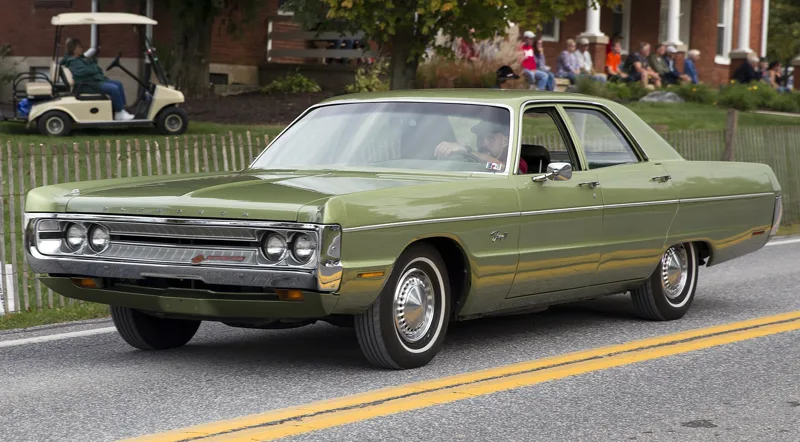
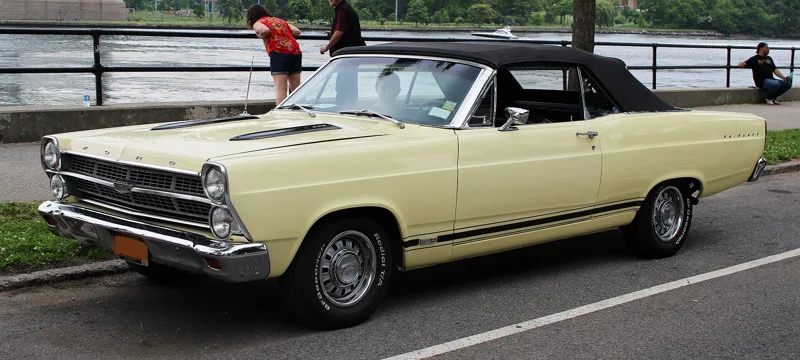
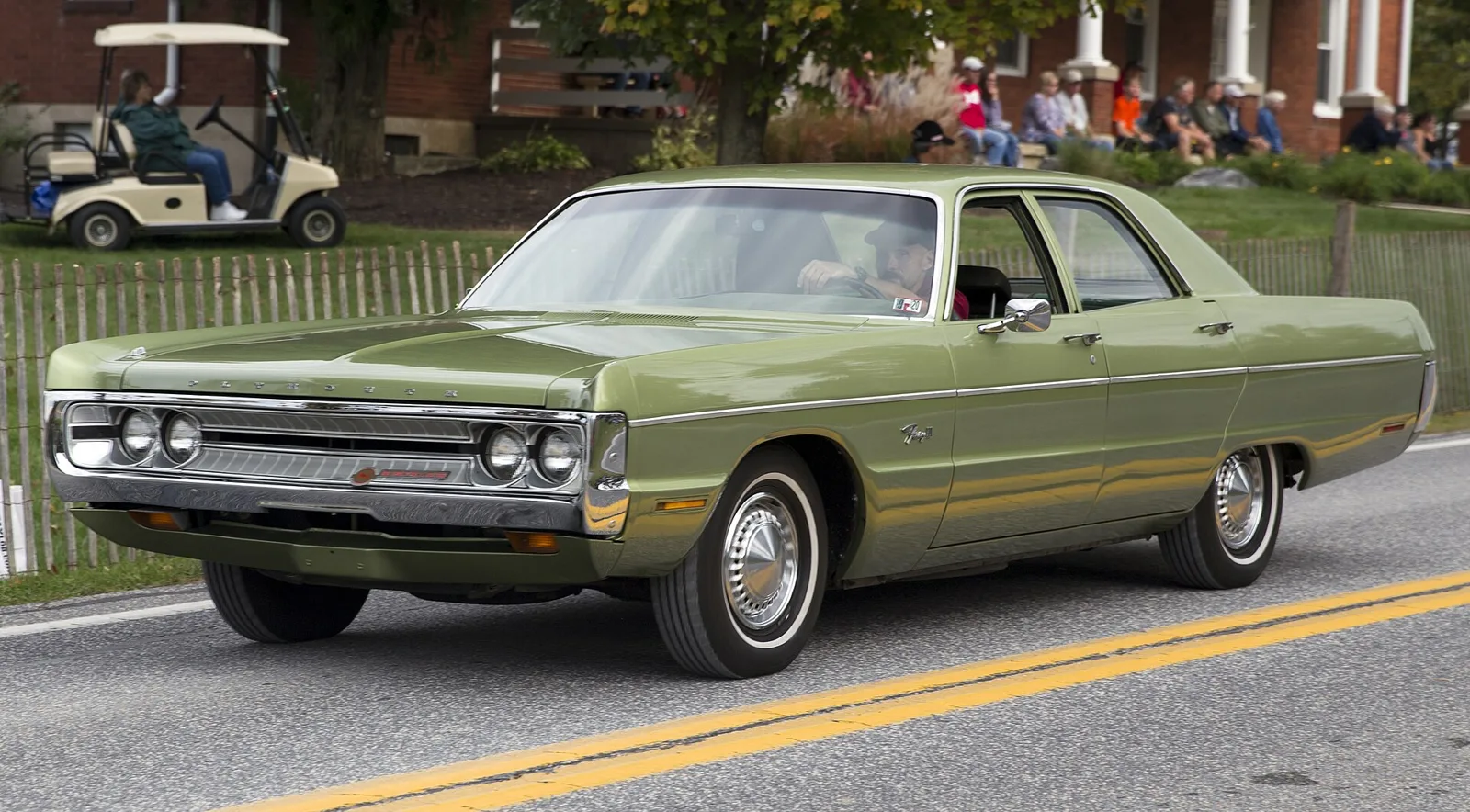
The car is identified as a 1958 Plymouth Fury, but the Belvedere and Savoy, two other Plymouth models, also appeared on screen. Carpenter placed advertisements across Southern California looking for cars, and he bought twenty-four Plymouths in various states of disrepair. Those cars were used to build the film's fleet of duplicates.
Real 1958 Furys were scarce. Total production for the model was only 5,303, and the cars came only in Sandstone White, while the novel's car had a red-and-white custom paint job. The film's crew had to find period cars that could be rebuilt for the many stunts and destruction scenes. The filmmakers also had to match the period look, which meant hunting for the right models and parts.
The regeneration scenes posed a special challenge. Carpenter had originally not planned to film the car rebuilding itself, but he gave Roy Arbogast three weeks to work out a method for showing it. Arbogast's crew cast rubber molds of one vehicle, and one car had its engine removed to fit internal hydraulics that pulled the framework inward. The shot was filmed in reverse to create the effect.
The production relied on twenty-three vehicles in total. After filming, many were sold as scrap, but one of the most recognised survivors was rescued from a scrapyard and restored. The car was later bought by a collector in Pensacola, Florida, and one of the Christines was auctioned in Florida in January 2020, showing how the film's cars continue to change hands.
How did the film open at the box office?
Christine opened in North America on December 9, 1983 in 1,045 theatres. It landed at number four in its first weekend, earning $3,408,904. The second weekend dropped 39.6% as the film slid to eighth place, and its run ended with a final gross of $21,017,849.
| Box office step | Figure |
|---|---|
| Release date in North America | December 9, 1983 |
| Theatres at opening | 1,045 |
| Opening weekend | $3,408,904, number four |
| Second weekend | $2,058,517, down 39.6% |
| Final gross across seven weekends | $21,017,849 |
The film's run was modest, but it found an audience on video and later formats. A standard Blu-ray arrived on September 29, 2015 from Sony Pictures Home Entertainment, with the film reaching a fresh audience. Its distributor Columbia Pictures released it on VHS, and a DVD followed on August 4, 1998, with a re-release in 2004. Twilight Time released a limited Blu-ray of 3,000 copies in 2013, and a 4K UHD Blu-ray followed on September 11, 2018.
How did critics and King respond?
Critics were split. Rotten Tomatoes recorded 69% approval from 120 reviews, with the consensus praising Carpenter's brisk direction and stylish flourishes. Metacritic gave the film 57 from 10 critics, which signals mixed reviews rather than strong praise.
Roger Ebert gave the film three stars out of four, saying the car became such a formidable character that audiences ended up taking sides in its duel with a bulldozer. Janet Maslin found the early part engaging but thought the later part was slow and predictable. That complaint about the second half recurs in many later discussions of the film. Variety was harsher and called the story a retread of the novel's premise.
Stephen King himself was less enthusiastic. While promoting Dreamcatcher in 2003, he named Christine as one of two King adaptations that had left him unimpressed, with The Shining as the other. The film's reputation has grown since then, and its car remains the main reason people remember it.
What music and soundtrack does Christine have?
There are two soundtrack albums. One holds the music written by Carpenter and Alan Howarth, and the other gathers the period pop songs used in the film. The songs album was released on LP and cassette by Motown Records, and it held ten of the fifteen tracks credited in the film, plus one track from the Carpenter and Howarth score. Fans can therefore hear the film's rock and roll as a standalone collection or as the electronic score that Carpenter built around the car.
The songs include George Thorogood and the Destroyers with Bad to the Bone, Buddy Holly and the Crickets with Not Fade Away, and Johnny Ace with Pledging My Love. Pledging My Love, one of the album's songs, plays from Christine's radio as Arnie dies, which makes it one of the film's most memorable moments.
What is the legacy of Christine?
Christine has influenced later films and continues to be discussed by fans and filmmakers. The 2004 film Taarzan: The Wonder Car, a Bollywood production by the Abbas-Mustan duo, is loosely based on the story, and the Telugu film Taxiwaala in 2018 has a similar premise. A 2022 song and a 2022 film also reference the work.
Green framed his 2022 film Halloween Ends as a love letter to Carpenter's films, Christine included, though Carpenter later said he saw no similarity. The comparison shows how strongly the film's identity is tied to its car and its director.
A remake was announced in June 2021, when Sony Pictures and Blumhouse Productions said Bryan Fuller would write and direct a new version. Jason Blum, Vincenzo Natali and Steve Hoban were set to produce. As of September 2026, the project had not moved forward, so the 1983 film remains the definitive version.