A Winston-Salem oval that hosted Cup races from 1958 to 1971, fell into decline, then returned to the Cup calendar for the Clash in 2025.
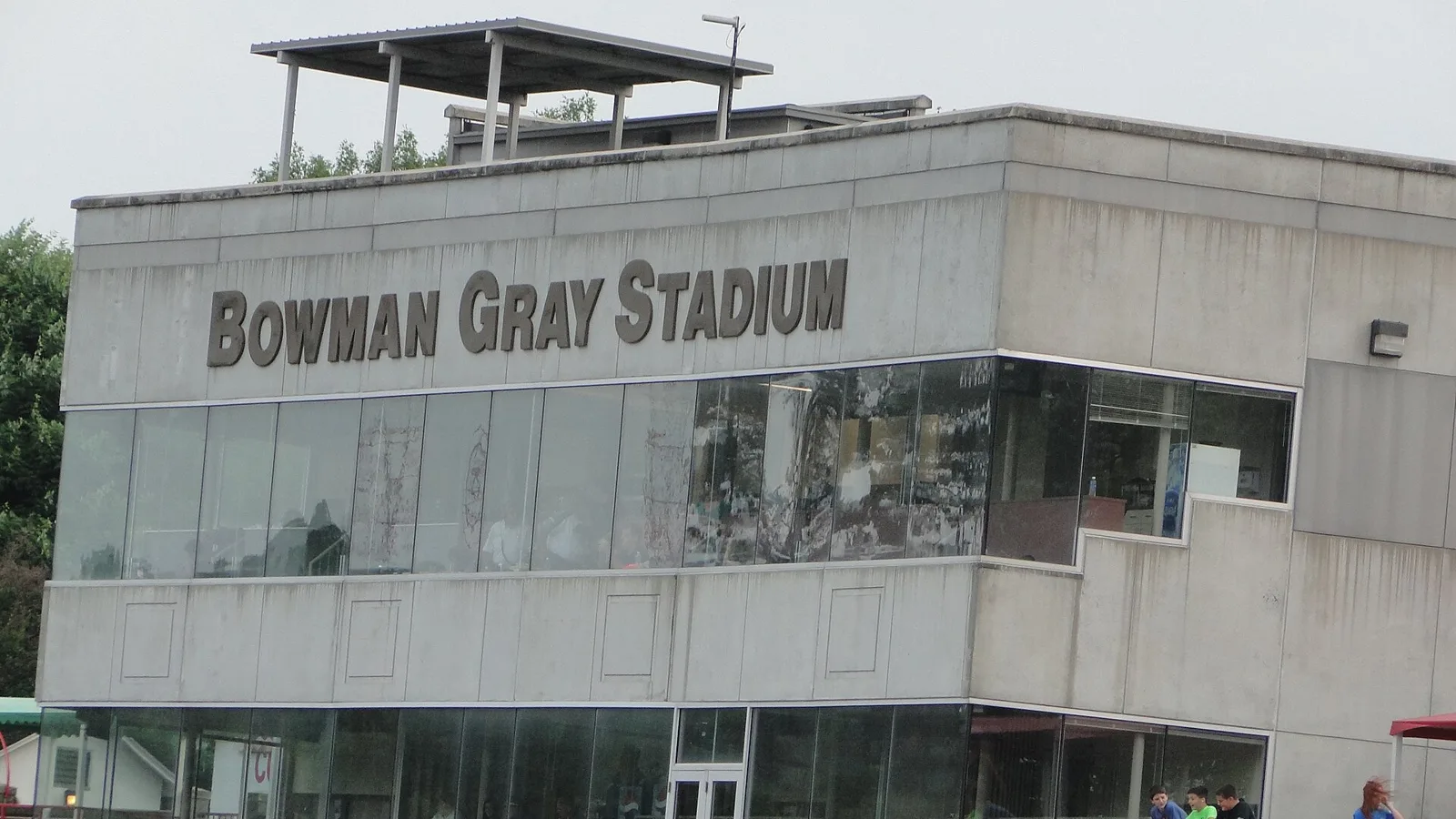
Bowman Gray Stadium sits in Winston-Salem, North Carolina, and combines a short oval with a gridiron. It opened in 1938, hosted NASCAR Cup races from 1958 to 1971, and returned to the Cup calendar with the Clash in 2025.
Bowman Gray Stadium is a multi-use complex in Winston-Salem, North Carolina, with a 0.40 km (0.25 mi) paved oval and a football field. It opened in 1938, hosted Cup Series races from 1958 to 1971, and in 2025 returned to the Cup calendar after more than half a century away.
When did Bowman Gray Stadium open and what was it built for?
The stadium was built during the Great Depression. Plans were filed in November 1936 for a horseshoe design, paid for by the city and by Nathalie Gray Bernard. She was the widow of Bowman Gray Sr, who had been president of R. J. Reynolds Tobacco. It opened on May 1, 1938 for a Christian music festival, and the first college football game followed that October, with Duke beating Wake Forest 7-0.
The costs grew as the work went on. By July 1937 only parts of the grandstand were finished, and in August a further $54,000 was approved for parking and amenities. The final bill came to $200,000, twice the original budget.
A 1938 football ground that became a NASCAR oval and waited half a century for the Cup Series to return.
Bowman Gray Stadium at a glance
| Feature | Figure |
|---|---|
| Opened | May 1, 1938 |
| Track length | 0.40 km (0.25 mi), paved oval |
| Track banking | Flat throughout |
| Capacity, 1954 expansion | 17,970 |
| Capacity, 2024 | 17,000, per The Athletic |
| Field house, completed late 2007 | $5.1 million, 2,000 m2 (21,000 sq ft) |
| Cup Series races | 1958 to 1971 |
| Cup Series return | 2025, the Clash |
| Renovation project | $9 million, approved April 2019 |
| Scoreboard | $1,000,000 digital LED board |
How did the first racing come to the stadium?
Auto racing arrived the year after the stadium opened, when promoter J. C. Calhoun staged midget car races on the dirt track around the football field on September 1. Johnny Wohlfiel won the first race. The programme did not last, and a second midget series came in 1947.
The National Sports Syndicate, led by Lou Franco, organised midget programmes in 1947 and agreed with the city to pave the track and fit guardrails by June. Both the races and Franco drew heavy scrutiny for poor attendance and weak safety measures. A crash killed driver Bernie Fox, and other crashes caused severe injuries.
Franco left the city in August owing about $1,400, which is roughly $20,200 adjusted for inflation. Four months after that, reports said the city had lost $1,700 because the syndicate had not paid rent. Red Crise ran a further auto racing period, which also failed because attendance was low.
How did NASCAR come to run the track?
In 1949 the promoters Bill France Sr. and Alvin Hawkins took over the racing lease and began staging stock car races under NASCAR, the newly formed sanctioning body. In a 1956 interview with the Twin City Sentinel, Hawkins said France had been hesitant to host races at the stadium until he was persuaded.
The two men agreed to clear Franco's debts for the paving work, a detail recalled by Hank Schoolfield, a former BGS publicist. Their first year was a success, and they renewed the lease for the year after. The Hawkins family ran the racing for 75 years before NASCAR took it over in March 2024.
By the fourth year of the partnership the promoters had cleared the stadium's debt and the label of a white elephant. Profits paid for better scoreboard and lighting systems, and in 1954 the field house and seating were expanded at a cost of about $100,000. Capacity rose to 17,970.
When did the stadium first host a Cup Series race?
The first NASCAR Cup Series race at Bowman Gray was held on May 24, 1958, and Bob Welborn won it. The stadium kept hosting Cup races until 1971, when the final race before a long gap was held at the track.
That 1971 race ended with Bobby Allison taking the win, but he was disqualified for running a smaller Grand American car rather than a larger Grand National car. The race had been a combination event where both styles of car could compete. The decision held until 2024, when NASCAR restored the win to Allison.
The track changed in the years around those races. In 1966 the oval was repaved with a slight banking, the first complete repave since it was first paved. Early in the 1970s the racing officials hosted motorcycle races on a temporary sand and dirt surface laid over the paved track. Two years after the 1971 race the track was completely repaved again, this time with wider turn exits and straights.
Why did the stadium fall into decline?
By 1978 the condition of the stadium had been declining for some time. Joe Hawkins, who took over the promoting after his father Alvin died, said it had become hard to get the city to do anything at the stadium after the track general manager Ivan Basch left in 1967.
In 1979 Winston-Salem State University chancellor Douglas Covington offered $125,000 for the stadium, with support from the city's Recreation and Parks Commission. A year later the university raised its offer to $450,000, after the city had put $100,000 into renovations. The board of aldermen delayed its vote for so long that the purchase died.
In 1997 the city proposed $1.15 million in bonds to renovate the stadium, but residents killed the plan at the ballot box. Two years later the city moved to rebuild the press box, which was infested with termites, and the plans were approved that October.
How did the field house get rebuilt?
In 2001 Percy Caldwell, the athletic director at WSSU, opened talks with the city about the field house. After four years the renovation was approved, and after a year of delays the old building was demolished in April 2006. Construction of the new one began four months later.
The field house cost $5.1 million and covers 2,000 m2 (21,000 sq ft). It was completed in late 2007, and the project included a new scoreboard.
What happened in the second sale attempt?
In March 2012, with the city short of money, plans were drafted to sell Bowman Gray Stadium to WSSU. The university tried to borrow $7.5 million from the state, but lawmakers rejected the request in June. NASCAR team owner Richard Childress backed the next attempt.
The purchase price was set at $7.1 million, and the sale went to the North Carolina General Assembly under bill S.B. 480, which was approved on July 26. By April 2014 there was still no firm word on when the university would take over. After the state approved a $7.3 million price in June, the sale waited for environmental approval until 2017.
In November 2018 the city announced a $9 million renovation that focused on resurfacing the track and improving the amenities. The stadium stayed under city control, and by then WSSU had pulled out of the purchase.
How was the 2019 renovation completed?
The Winston-Salem City Council approved the $9 million plan in April 2019, and construction began in November 2020. The project was later widened to include regrading of the football field. The repave and regrading were completed in 2021, and the whole project was finished in April 2022.
Within April 2022 a further $530,020 state grant arrived for more renovations. Five months later the track was repaved again, after it deteriorated unusually during the 2022 racing season.
What changed after NASCAR took over the lease?
The city still owns the stadium, Winston-Salem State still plays football there under a lease that runs until 2037, and NASCAR now runs the racing. The Hawkins arrangement that began with France and Hawkins in 1949 had lasted 75 years, so the handover was a clean break from that era.
The council kept the capital work in its own hands, and the scoreboard funding is the clearest example of that.
When did NASCAR take over the lease?
In March 2024 the sanctioning body took over the auto racing operations lease from Winston-Salem Speedway, Inc., the Hawkins family company, ending a 75-year lease. Five months later NASCAR executive vice president Ben Kennedy announced that the Cup Series would return in 2025.
The non-points Clash moved to Bowman Gray from the Los Angeles Memorial Coliseum. By January 2025 a new lighting system was installed, and the guardrails had been replaced with SAFER barriers and protective catchfence. The first Clash at the facility ran on February 2, and it was the first Cup race held there since 1971.
In June 2025 the city council approved funding for a new $1,000,000 scoreboard, on the condition that NASCAR kept hosting one of its top three series at the facility for five years. Designers planned it as a digital LED video board, and the December 8 announcement made it official.
What safety changes followed the deaths?
The stadium has seen several fatalities. The first was Bernie Fox, killed in a 1947 crash. Driver William Justice burned to death in 1950, and the stadium then required fuel cells to prevent fires. Driver Billy Myers collapsed in 1958, most likely from a heart attack, making him the third fatality at the track.
The fifth driver to die at the stadium was Robbie Brewer, on August 10. He suffered a heart attack and slammed head-on into the outside barrier during a Sportsman division race. He was the first fatality at the track since Bubba Beck died in 2002 after a heart attack during a race.
What racing takes place at the stadium now?
The stadium hosts local NASCAR Weekly Series races across four divisions: modified, sportsman, street stock and stadium stock. The weekly racing has a rowdy reputation, and fights between drivers are commonplace.
The Clash, a NASCAR Cup Series exhibition that paid no championship points, used the track from 2025 to 2026, so its results never counted toward the title. The city's scoreboard funding was tied to NASCAR continuing to host one of its top series there.
Which teams have played football at Bowman Gray?
The Winston-Salem State Rams are the current tenant, with a lease that runs until 2037. Wake Forest played its college football at the stadium from 1956 to 1967, and several North Carolina high schools used the field from the early 1950s until 1994.
From 1955 to 1960 the stadium held a yearly NFL preseason game, with the Green Bay Packers facing the Washington Redskins. The football field, now named Bill Hayes Field after a former Winston-Salem State coach, is grass.
Baseball arrived in July 2023, when the minor league Carolina Disco Turkeys played the stadium's first baseball game as tenants.
How has the stadium appeared on television?
The weekly racing was the focus of MadHouse, a History Channel mini-series from 2010 that ran for one 13-episode season. Discovery Channel's Race Night at Bowman Gray followed in 2018 as an eight-episode season.
Race Night was pulled from television after three episodes aired, and the series moved to the Discovery Channel's streaming app.