One 80 kg shot of molten aluminium replaces dozens of welded parts.
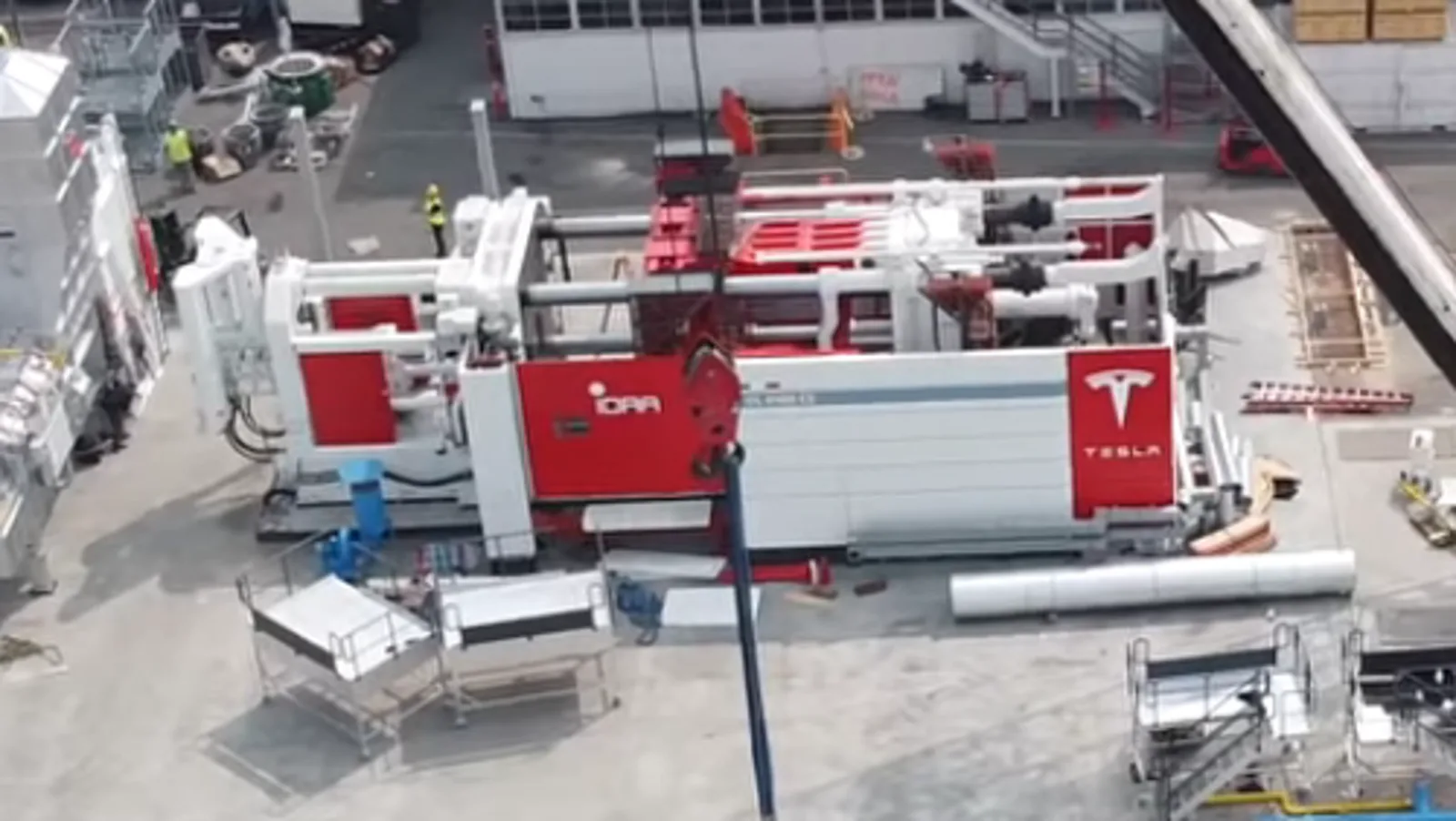
Gigacasting, or integrated die casting, uses huge presses to inject molten aluminium into a mould and make large car body sections in one piece, replacing dozens of welded parts. Tesla pioneered it with Idra's Giga Press. Drawbacks include costly tooling and parts that may be difficult or costly to repair.
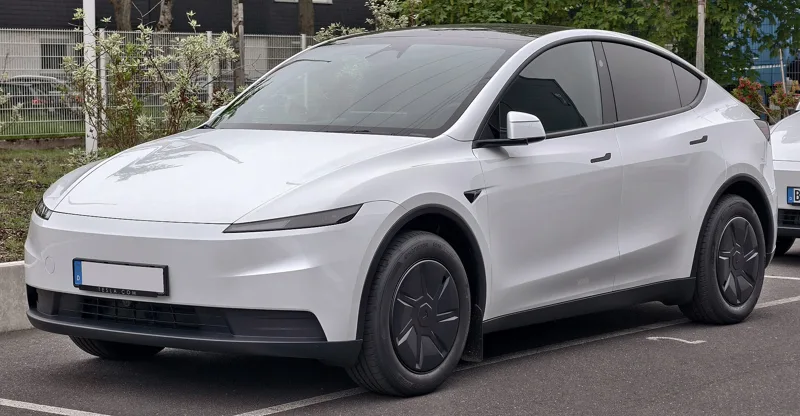
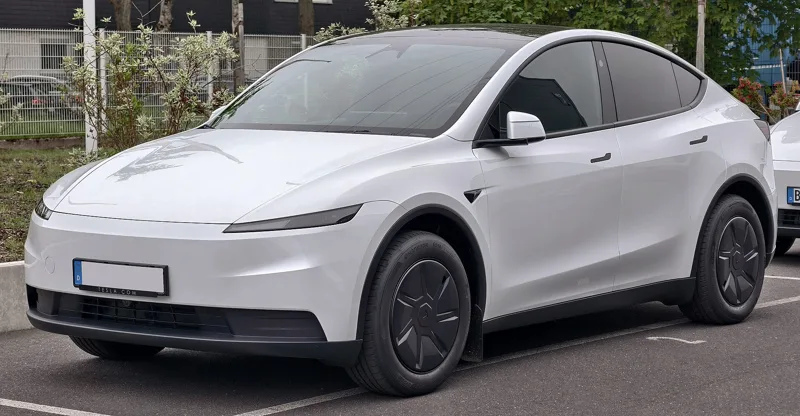
A single machine weighing 410 to 430 tonnes squirts 80 kg of molten aluminium into a mould at 10 metres per second and, about a minute and a half later, delivers a piece of car body that used to be dozens of separate parts. That is gigacasting, and it is why the underbody of a Tesla Model Y looks so different to the one on a conventional car.
What is gigacasting?
Gigacasting, also called integrated die casting, is a manufacturing technique in which several metal components are merged into a handful of very large castings, made on high-pressure die casting machines. A normal car body structure is built from many stamped and welded pieces. A gigacasting replaces whole groups of them with a single cast piece, which cuts the number of parts, the assembly steps and the complexity of the process.
The concept emerged in the late 2010s as casting equipment and aluminium alloys improved. It gained its popular name from the Giga Press, a series of aluminium die casting machines built for Tesla, first by the Italian firm Idra Group.
One shot of molten aluminium now does the work of dozens of stamped and welded parts.
How does die casting work?
The old idea behind the new machines is simple. Die casting forces molten metal under high pressure into a cavity formed by two hardened tool steel dies, a process that works much like injection moulding for plastic. When the metal sets, the dies open and the part is removed. It is one of the oldest industrial methods around: die casting equipment was invented in 1838 to make movable type for printing, and Ottmar Mergenthaler's Linotype of 1885 cast an entire line of type in one go.
The textbook process has four steps: preparing the die with a spray of lubricant, filling it, ejecting the casting and shaking out the scrap. Injection pressures run between 10 and 175 megapascals (1,500 and 25,400 psi). Because the metal enters so fast, air has little time to escape, which is why even a well-refined process leaves some porosity, tiny voids, in the centre of a casting.
Aluminium needs a cold-chamber machine. The metal is melted in a separate furnace and a measured shot is carried to the press. A hot-chamber machine cannot be used because molten aluminium picks up iron from the pool. The price of the cold-chamber method is a slower cycle.
Why the dies and alloys decide everything
A die is two blocks of hardened tool steel, a cover half and an ejector half, that meet along a parting line. Molten metal enters through a shot hole in the cover half. When the die opens, the casting is designed to stay on the ejector half, where a plate of pins pushes it out evenly so that the still-hot part is not damaged. Dies are made from tool steel because cast iron cannot cope with the pressure, which is a large part of why they are so expensive.
Cores and slides, the parts that form holes and undercuts, make dies dearer still. The more complex the shape, the more of them it needs, and a car floor is about as complex as castings get. Some are movable, some are loose pieces placed by hand before every cycle, and the loose type is the costliest because of the extra labour and cycle time. Tesla's Model Y rear dies show how this works at scale: they have two large facing dies, set vertically, and two smaller side wedge dies that move in for injection and out for removal.
Alloy choice follows from the job. Of the common die casting metals, aluminium is light, stable in complex thin-walled shapes, resistant to corrosion and keeps its strength at moderately high temperatures. Zinc is the easiest to cast and magnesium is the lightest.
Inside a Giga Press: one casting, step by step
As of 2020 no production die caster was bigger than Idra's press, which could clamp the mould shut with 55,000 to 61,000 kilonewtons (5,600 to 6,200 tonnes-force). A single casting runs through these steps.
- Aluminium ingots and offcuts are melted at 850 degrees C in a gas-fired furnace, then pumped through heated pipes to a holding oven at 750 to 850 degrees C. A blanket of nitrogen keeps oxides from forming, and argon and a rotary degasser remove impurities. A silicon carbide filter takes out particles larger than 25 micrometres.
- Robots spray 35 millilitres of soybean oil on each half of the mould so the casting can part from it.
- The mould closes and a low vacuum of 50 millibars is drawn, to cut porosity.
- A precise dose of metal at 750 degrees C is forced in by a high-speed plunger. The 80 kg shot fills the cavity at 10 metres per second.
- The mould opens and the raw casting comes out at 400 degrees C. A robot drops it into a quench tank that cools it to 50 degrees C.
- A trim press cuts off the excess, which goes straight back to the furnace. Each casting then passes through an X-ray scanner to inspect the metal inside, followed by laser trimming, drilling for fittings and a computer-guided check of its dimensions. CNC machining finishes the job.
Meanwhile the mould is cooled to 185 degrees C and cleaned, and the next cycle starts a minute or two after the first. The cycle takes about 80 to 90 seconds, giving an initial output of 40 to 45 finished castings an hour, or about 1,000 a day.
The alloy matters as much as the machine. In 2021 the analyst Sandy Munro studied a Model Y casting and found a mixture of about 89.5% aluminium and 8.5% silicon, plus trace elements, which falls in the Aluminium Association class AA 386.
Why carmakers want to cast whole car floors
The prize is simplification. In a conventional body, dozens of stamped pieces must be made, moved and welded in sequence. Reports on the Model Y said that unifying 70 different metal parts into two large parts began with single-piece rear casting in late December 2020. The saving is said to go beyond parts count: lower tool investment, shorter production time, fewer robots and a smaller factory floor. Tesla chief executive Elon Musk has said that the heat pump and the single-piece castings are the two biggest differences between the Model Y and the Model 3.
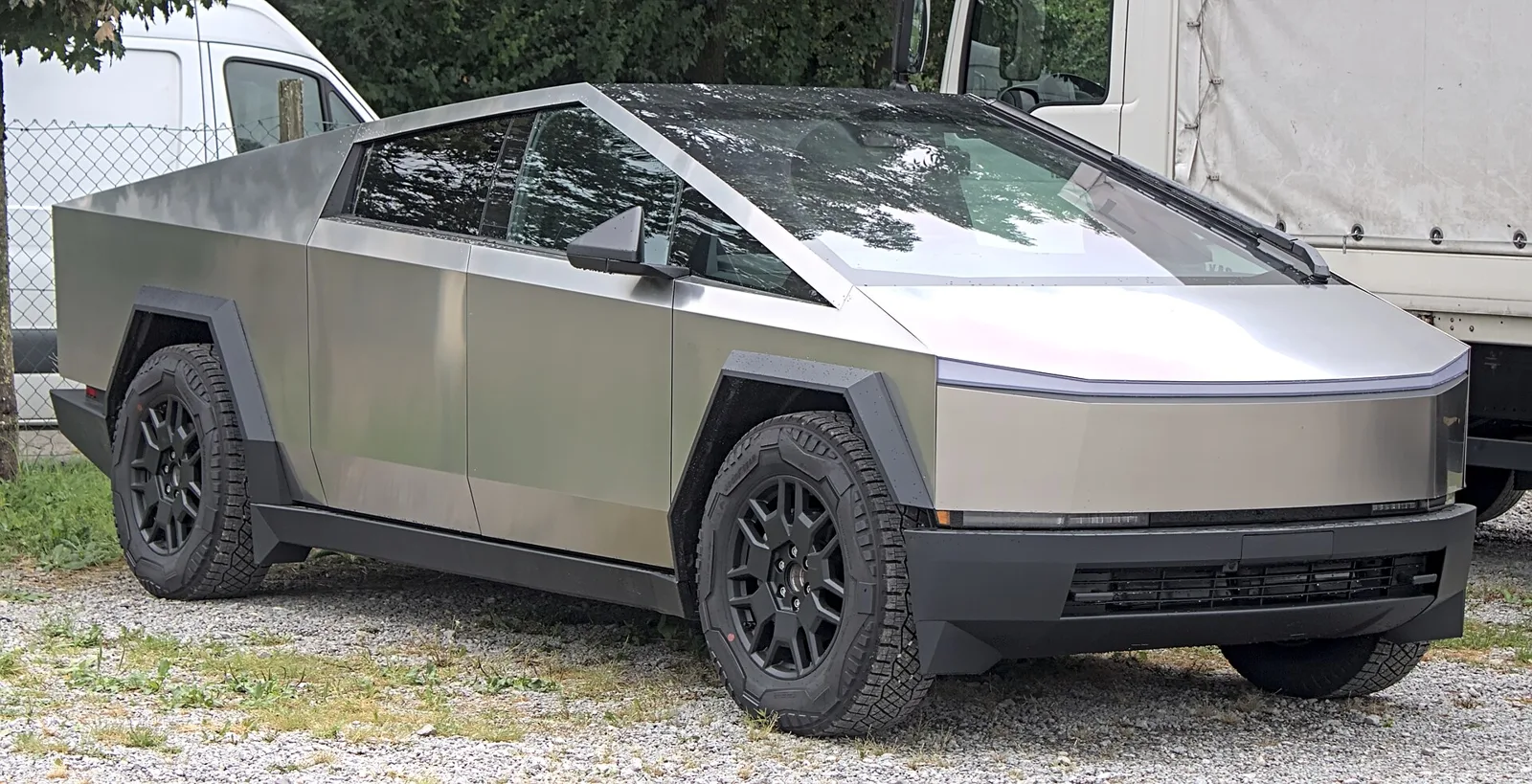
The Model Y shows what scale that can mean. It has sold more than 2.16 million units worldwide and, in 2023, with 1.2 million deliveries, was the world's best-selling vehicle, the first electric one to take that title.
How big are the presses?
The word giga is earned. Press size is measured by clamping force, the force that holds the two halves of the die shut against the pressure of the injected metal.
| Machine or plan | Clamping force |
|---|---|
| Idra Giga Press, as of 2020 | 55,000 to 61,000 kN (5,600 to 6,200 tf) |
| Planned eight machines at Giga Berlin, July 2020 | 6,100 tonnes-force (60,000 kN) each |
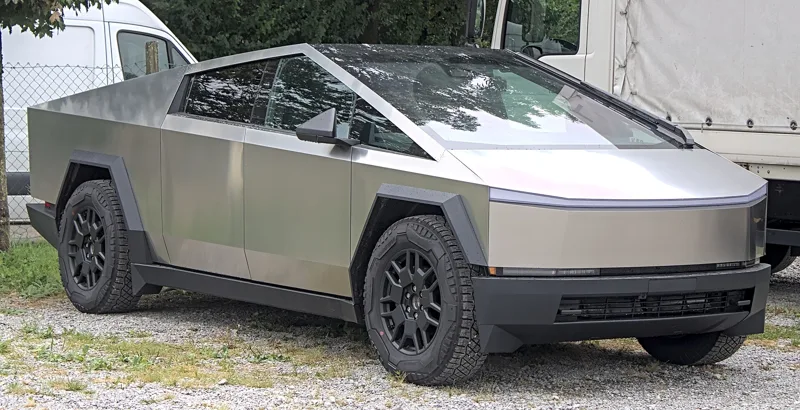
| Press shared by Cybertruck fronts and Model Y frames at Giga Texas, December 2023 | 6500 tons |
| Cybertruck rear press, per Musk in January 2021 | Larger than 8,000 tonnes-force (80,000 kN) |
| Idra press assembled in mid-2022 | 9,000 tonnes-force (88,000 kN) |
| Needed for a whole small-car underbody, per a 2023 report | 16,000 tons or more |
| For comparison: forging presses | 50,000 tons |
Who is using giga press machines?
Tesla led the way. By October 2021 it had five casting machines at Giga Shanghai, two at its Fremont factory, two at Giga Berlin and two going into Giga Texas. Shanghai had three presses built locally by LK Machinery, the Impress-Plus DCC6000, in assembly by late 2020. By December 2023, Giga Texas had two 9,000-ton presses for Cybertruck rear sections, plus four smaller presses.
Fremont, Texas and the early days
The first public hint came in 2019, when Tesla executive Jerome Guillen said the company was working on a giant machine to make full-size cars the way toy cars are made. In April 2020 Musk said Tesla had bought the two largest casting machines anywhere for the Model Y rear chassis and crash rails. At Fremont, permits for the foundations were issued in June 2020, and by September 2020 the first press was making trial Model Y castings while a second was installed. At Giga Texas, concrete for three press foundations was poured on the night of 18 and 19 January 2021, and from 2022 the Model Y there gained a single-piece front section alongside the single-piece rear.
Others are now following. Toyota said in June 2023 that it would take up large casting for its electric cars. The Japanese parts maker Ryobi said the same year that it intends to produce big EV body parts by casting, and it expects to trim car body manufacturing costs by 20%. Two presses rated at 9000 tonnes-force were ordered by November 2023 for Volvo's new electric car plant at Kosice in Slovakia.
The machines have uses beyond cars. A Glovitech plant in Vietnam took delivery of an Impress-Plus press in December 2020 to cast big radio-frequency enclosures for 5G base stations.
Gigacasting repair cost
Owners ask first about repairs, and one-piece structural parts can be hard, or expensive, to repair.
The other challenges sit on the factory side:
- Capital cost: the machines and dies are expensive. Making a large metal mould can cost $1.5 million, and multiple iterations and tweaks are often needed.
- Tooling wear: dies are under heavy thermal and mechanical stress, which limits their lifespan. The main failure mode is wear or erosion, followed by heat checking, which is surface cracking caused by large temperature swings every cycle, and thermal fatigue from the sheer number of cycles.
- Defect control: porosity and thermal distortion have to be managed closely, and each casting is X-rayed for internal flaws.
- Fire risk: on 11 March 2021 one of the Fremont presses caught fire when molten aluminium ignited hydraulic fluid. No injuries were reported.
Where this goes next
The next step under discussion is bigger still. A report in September 2023 said Tesla was weighing a single casting for the entire underbody of a planned small car. Doing so would mean learning to use larger machines, reducing the cost of mould design and fitting hollow subframes. One idea is to use 3D-printed sand to make cast prototypes cheaply, with binder jet printers building moulds out of layers of sand. Production casting would still use metal moulds. The press would need a clamping force of 16,000 tons or more.
Whether that happens is unclear. One account says that in May 2024 Tesla put its single-piece casting plans on hold and stayed with three-piece casting on its current range, a move linked to falling sales and profits. Another, citing Reuters, says Tesla had abandoned the one-piece process because of large upfront costs and a shift in strategy towards autonomous driving. Either way, others continue: Toyota, Ryobi and Volvo are all working with the large casting approach, according to their own announcements and orders.